 Add to Chrome
 Add to Firefox
 Add to Edge
Counting Trees from Satellite Imagery with Noisy Supervision
Jun 25, 2026
Counting individual trees is a fundamental task for environmental monitoring, yet remains largely unexplored with satellite imagery. At these resolutions, isolated trees may still be identifiable, but crown boundaries become ambiguous in dense forests, making the notion of an individual tree inherently ill-defined. Moreover, large-scale manual annotations of individual trees are prohibitively expensive. While scalable supervision can be derived from airborne LiDAR, the resulting annotations are noisy and difficult to exploit effectively. We address these challenges by formulating tree counting as a spatial density matching problem supervised through Unbalanced Optimal Transport. This formulation naturally accommodates both precise localization of isolate trees and robust density estimation in dense forests. We further introduce a self-correction mechanism that leverages transport residuals to progressively refine noisy supervision during training. We evaluate our approach on TinyTrees, a new benchmark spanning three continents and three satellite sensors, comprising over 216 million tree annotations (including 639k manually verified instances) across $25\,890$ km$^2$. Our method consistently outperforms detection-based, regression-based, and transport-based distribution-matching baselines, demonstrating the effectiveness of unbalanced transport and reliability-aware supervision for large-scale tree counting from satellite imagery. Code, data and models are available at https://github.com/dgominski/treematch.

Mega-cities dominate China's urban greening
Jul 03, 2023


Trees play a crucial role in urban environments, offering various ecosystem services that contribute to public health and human well-being. China has initiated a range of urban greening policies over the past decades, however, monitoring their impact on urban tree dynamics at a national scale has proven challenging. In this study, we deployed nano-satellites to quantify urban tree coverage in all major Chinese cities larger than 50 km2 in 2010 and 2019. Our findings indicate that approximately 6000 km2 (11%) of urban areas were covered by trees in 2019, and 76% of these cities experienced an increase in tree cover compared to 2010. Notably, the increase in tree cover in mega-cities such as Beijing, and Shanghai was approximately twice as large as in most other cities (7.69% vs 3.94%). The study employs a data-driven approach towards assessing urban tree cover changes in relation to greening policies, showing clear signs of tree cover increases but also suggesting an uneven implementation primarily benefiting a few mega-cities.
One "Ruler" for All Languages: Multi-Lingual Dialogue Evaluation with Adversarial Multi-Task Learning
May 08, 2018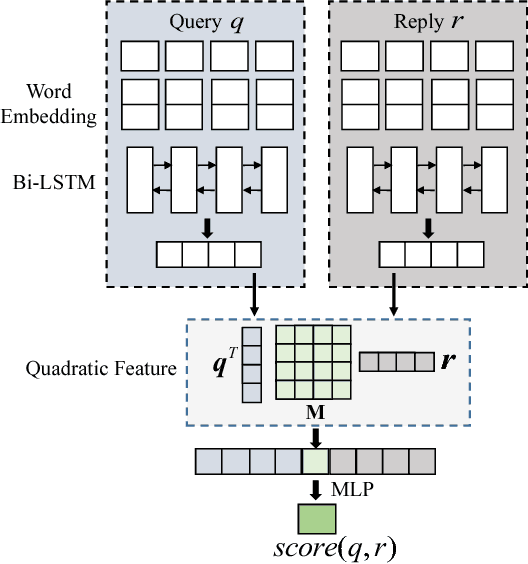
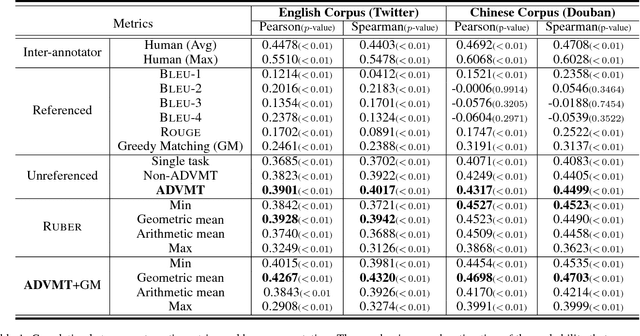
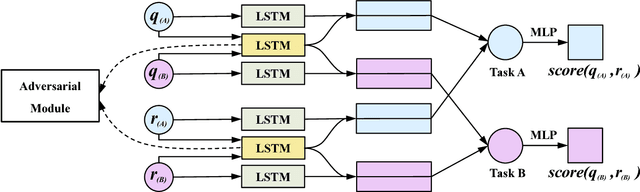

Automatic evaluating the performance of Open-domain dialogue system is a challenging problem. Recent work in neural network-based metrics has shown promising opportunities for automatic dialogue evaluation. However, existing methods mainly focus on monolingual evaluation, in which the trained metric is not flexible enough to transfer across different languages. To address this issue, we propose an adversarial multi-task neural metric (ADVMT) for multi-lingual dialogue evaluation, with shared feature extraction across languages. We evaluate the proposed model in two different languages. Experiments show that the adversarial multi-task neural metric achieves a high correlation with human annotation, which yields better performance than monolingual ones and various existing metrics.