 Add to Chrome
 Add to Firefox
 Add to Edge
Do LLMs Know What to Ask and When? Evaluating Multi-Turn Information Seeking
Aug 14, 2026
When a user question is underspecified, a capable model should recognize that its context is insufficient, identify the missing information, ask for it, and respond only once that information determines a unique answer. We formalize multi-turn information seeking as solving a k-underspecified constraint satisfaction problem, where k is the number of variables jointly required to determine the target and therefore measures the degree of missing information. We instantiate the formulation in MT-InfoSeek, a controlled evaluation suite of 5,251 problems and 9,006 task instances spanning mathematics, logic, biology, medicine, and general knowledge. We evaluate models along three axes: what they ask, when they ask it, and how the acquired information affects the final answer. Performance degrades across models and domains as underspecification increases. Models recognize that additional information is needed but underestimate how much, and in logical problems at k = 2 they under-predict the degree of missing information about four times as often as they over-predict it. They also fail to identify a minimal sufficient set of queries, improve only marginally when given the true k, and often stop before acquiring sufficient information. In tasks with ordered dependencies, an incorrect query order reduces final accuracy even when the model eventually acquires all necessary information. We measure information seeking directly through final sufficiency, which records whether the acquired information determines the target independent of answer generation. This separation shows differences between models that final accuracy alone does not capture, and indicates that the ability to seek information over multiple turns is distinct from the ability to generate answers and is not measured by current LLM evaluations.

An AI agent for treatment reasoning over a biomedical tool universe
Jun 27, 2026Treatment reasoning underpins every therapeutic decision, integrating disease context, comorbidities, medications, contraindications, and evolving biomedical knowledge to select an appropriate therapy. It is inherently iterative: candidates are weighed against many constraints, revised as evidence emerges, and grounded in verifiable sources. Here we introduce ATHENA-R1, an AI agent for treatment reasoning across all FDA approved drugs since 1939, trained by reinforcement learning over a universe of 212 biomedical tools. At each step it identifies missing information, selects and runs relevant tools, and incorporates the evidence. To train it without human-annotated traces, we build a two-level self-learning framework: multi-agent systems construct the tools, tasks, and reasoning trajectories for supervised fine-tuning, then reinforcement learning with scientific feedback rewards reasoning quality (evidence gathering, grounded tool use, logical non-redundancy). Across five benchmarks of 3,168 drug reasoning tasks and 456 patient treatment cases, ATHENA-R1 outperforms language models and tool-use systems, reaching 94.7% accuracy on open-ended drug reasoning and 82.9% on treatment reasoning, 17.8 and 10.7 points above GPT-5. In blinded evaluations by experts from 28 rare disease organizations, it is preferred over reference models on all criteria, and physicians rated it favorably on complex hospitalized cardiovascular and infectious-disease cases. Adverse-event hypotheses it generated, tested in electronic health records from 5.4 million patients, reached adjusted odds ratios of 1.48-1.84, with no elevation among negative controls. Because it requires knowing what evidence to seek before concluding, treatment reasoning has long been hard for AI; we show it can be reframed as a learnable process of iterative evidence gathering that reinforcement learning can train AI to perform.
STRAND: Sequence-Conditioned Transport for Single-Cell Perturbations
Feb 10, 2026Predicting how genetic perturbations change cellular state is a core problem for building controllable models of gene regulation. Perturbations targeting the same gene can produce different transcriptional responses depending on their genomic locus, including different transcription start sites and regulatory elements. Gene-level perturbation models collapse these distinct interventions into the same representation. We introduce STRAND, a generative model that predicts single-cell transcriptional responses by conditioning on regulatory DNA sequence. STRAND represents a perturbation by encoding the sequence at its genomic locus and uses this representation to parameterize a conditional transport process from control to perturbed cell states. Representing perturbations by sequence, rather than by a fixed set of gene identifiers, supports zero-shot inference at loci not seen during training and expands inference-time genomic coverage from ~1.5% for gene-level single-cell foundation models to ~95% of the genome. We evaluate STRAND on CRISPR perturbation datasets in K562, Jurkat, and RPE1 cells. STRAND improves discrimination scores by up to 33% in low-sample regimes, achieves the best average rank on unseen gene perturbation benchmarks, and improves transfer to novel cell lines by up to 0.14 in Pearson correlation. Ablations isolate the gains to sequence conditioning and transport, and case studies show that STRAND resolves functionally alternative transcription start sites missed by gene-level models.
TxAgent: An AI Agent for Therapeutic Reasoning Across a Universe of Tools
Mar 14, 2025Precision therapeutics require multimodal adaptive models that generate personalized treatment recommendations. We introduce TxAgent, an AI agent that leverages multi-step reasoning and real-time biomedical knowledge retrieval across a toolbox of 211 tools to analyze drug interactions, contraindications, and patient-specific treatment strategies. TxAgent evaluates how drugs interact at molecular, pharmacokinetic, and clinical levels, identifies contraindications based on patient comorbidities and concurrent medications, and tailors treatment strategies to individual patient characteristics. It retrieves and synthesizes evidence from multiple biomedical sources, assesses interactions between drugs and patient conditions, and refines treatment recommendations through iterative reasoning. It selects tools based on task objectives and executes structured function calls to solve therapeutic tasks that require clinical reasoning and cross-source validation. The ToolUniverse consolidates 211 tools from trusted sources, including all US FDA-approved drugs since 1939 and validated clinical insights from Open Targets. TxAgent outperforms leading LLMs, tool-use models, and reasoning agents across five new benchmarks: DrugPC, BrandPC, GenericPC, TreatmentPC, and DescriptionPC, covering 3,168 drug reasoning tasks and 456 personalized treatment scenarios. It achieves 92.1% accuracy in open-ended drug reasoning tasks, surpassing GPT-4o and outperforming DeepSeek-R1 (671B) in structured multi-step reasoning. TxAgent generalizes across drug name variants and descriptions. By integrating multi-step inference, real-time knowledge grounding, and tool-assisted decision-making, TxAgent ensures that treatment recommendations align with established clinical guidelines and real-world evidence, reducing the risk of adverse events and improving therapeutic decision-making.
Multimodal Medical Code Tokenizer
Feb 06, 2025
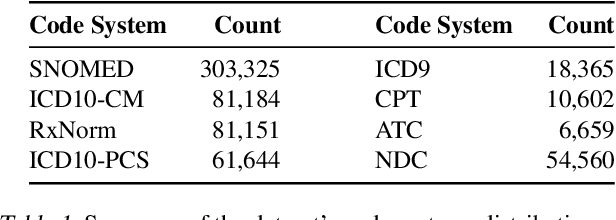

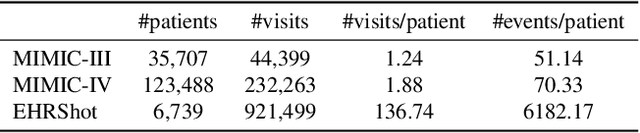
Foundation models trained on patient electronic health records (EHRs) require tokenizing medical data into sequences of discrete vocabulary items. Existing tokenizers treat medical codes from EHRs as isolated textual tokens. However, each medical code is defined by its textual description, its position in ontological hierarchies, and its relationships to other codes, such as disease co-occurrences and drug-treatment associations. Medical vocabularies contain more than 600,000 codes with critical information for clinical reasoning. We introduce MedTok, a multimodal medical code tokenizer that uses the text descriptions and relational context of codes. MedTok processes text using a language model encoder and encodes the relational structure with a graph encoder. It then quantizes both modalities into a unified token space, preserving modality-specific and cross-modality information. We integrate MedTok into five EHR models and evaluate it on operational and clinical tasks across in-patient and out-patient datasets, including outcome prediction, diagnosis classification, drug recommendation, and risk stratification. Swapping standard EHR tokenizers with MedTok improves AUPRC across all EHR models, by 4.10% on MIMIC-III, 4.78% on MIMIC-IV, and 11.30% on EHRShot, with the largest gains in drug recommendation. Beyond EHR modeling, we demonstrate using MedTok tokenizer with medical QA systems. Our results demonstrate the potential of MedTok as a unified tokenizer for medical codes, improving tokenization for medical foundation models.
Knowledge Graph Based Agent for Complex, Knowledge-Intensive QA in Medicine
Oct 07, 2024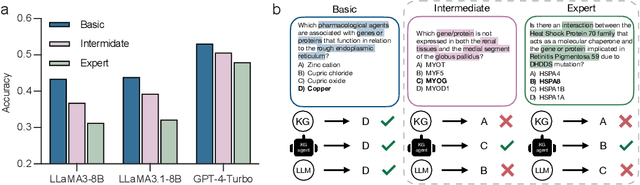
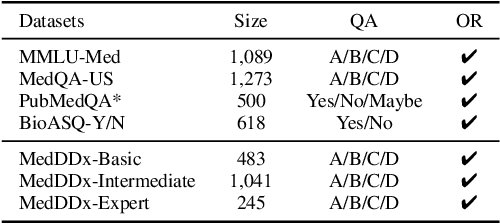

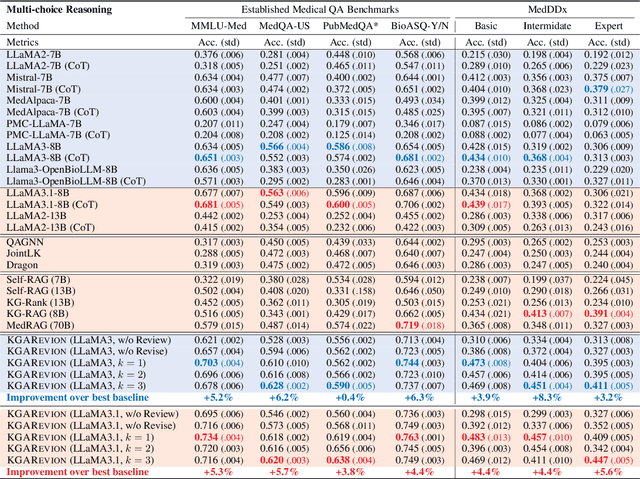
Biomedical knowledge is uniquely complex and structured, requiring distinct reasoning strategies compared to other scientific disciplines like physics or chemistry. Biomedical scientists do not rely on a single approach to reasoning; instead, they use various strategies, including rule-based, prototype-based, and case-based reasoning. This diversity calls for flexible approaches that accommodate multiple reasoning strategies while leveraging in-domain knowledge. We introduce KGARevion, a knowledge graph (KG) based agent designed to address the complexity of knowledge-intensive medical queries. Upon receiving a query, KGARevion generates relevant triplets by using the knowledge base of the LLM. These triplets are then verified against a grounded KG to filter out erroneous information and ensure that only accurate, relevant data contribute to the final answer. Unlike RAG-based models, this multi-step process ensures robustness in reasoning while adapting to different models of medical reasoning. Evaluations on four gold-standard medical QA datasets show that KGARevion improves accuracy by over 5.2%, outperforming 15 models in handling complex medical questions. To test its capabilities, we curated three new medical QA datasets with varying levels of semantic complexity, where KGARevion achieved a 10.4% improvement in accuracy.