 Add to Chrome
 Add to Firefox
 Add to Edge
SciFigDetect: A Benchmark for AI-Generated Scientific Figure Detection
Apr 09, 2026
Modern multimodal generators can now produce scientific figures at near-publishable quality, creating a new challenge for visual forensics and research integrity. Unlike conventional AI-generated natural images, scientific figures are structured, text-dense, and tightly aligned with scholarly semantics, making them a distinct and difficult detection target. However, existing AI-generated image detection benchmarks and methods are almost entirely developed for open-domain imagery, leaving this setting largely unexplored. We present the first benchmark for AI-generated scientific figure detection. To construct it, we develop an agent-based data pipeline that retrieves licensed source papers, performs multimodal understanding of paper text and figures, builds structured prompts, synthesizes candidate figures, and filters them through a review-driven refinement loop. The resulting benchmark covers multiple figure categories, multiple generation sources and aligned real--synthetic pairs. We benchmark representative detectors under zero-shot, cross-generator, and degraded-image settings. Results show that current methods fail dramatically in zero-shot transfer, exhibit strong generator-specific overfitting, and remain fragile under common post-processing corruptions. These findings reveal a substantial gap between existing AIGI detection capabilities and the emerging distribution of high-quality scientific figures. We hope this benchmark can serve as a foundation for future research on robust and generalizable scientific-figure forensics. The dataset is available at https://github.com/Joyce-yoyo/SciFigDetect.

MVRD-Bench: Multi-View Learning and Benchmarking for Dynamic Remote Photoplethysmography under Occlusion
Mar 24, 2026Remote photoplethysmography (rPPG) is a non-contact technique that estimates physiological signals by analyzing subtle skin color changes in facial videos. Existing rPPG methods often encounter performance degradation under facial motion and occlusion scenarios due to their reliance on static and single-view facial videos. Thus, this work focuses on tackling the motion-induced occlusion problem for rPPG measurement in unconstrained multi-view facial videos. Specifically, we introduce a Multi-View rPPG Dataset (MVRD), a high-quality benchmark dataset featuring synchronized facial videos from three viewpoints under stationary, speaking, and head movement scenarios to better match real-world conditions. We also propose MVRD-rPPG, a unified multi-view rPPG learning framework that fuses complementary visual cues to maintain robust facial skin coverage, especially under motion conditions. Our method integrates an Adaptive Temporal Optical Compensation (ATOC) module for motion artifact suppression, a Rhythm-Visual Dual-Stream Network to disentangle rhythmic and appearance-related features, and a Multi-View Correlation-Aware Attention (MVCA) for adaptive view-wise signal aggregation. Furthermore, we introduce a Correlation Frequency Adversarial (CFA) learning strategy, which jointly enforces temporal accuracy, spectral consistency, and perceptual realism in the predicted signals. Extensive experiments and ablation studies on the MVRD dataset demonstrate the superiority of our approach. In the MVRD movement scenario, MVRD-rPPG achieves an MAE of 0.90 and a Pearson correlation coefficient (R) of 0.99. The source code and dataset will be made available.
Active Inference for Micro-Gesture Recognition: EFE-Guided Temporal Sampling and Adaptive Learning
Mar 08, 2026Micro-gestures are subtle and transient movements triggered by unconscious neural and emotional activities, holding great potential for human-computer interaction and clinical monitoring. However, their low amplitude, short duration, and strong inter-subject variability make existing deep models prone to degradation under low-sample, noisy, and cross-subject conditions. This paper presents an active inference-based framework for micro-gesture recognition, featuring Expected Free Energy (EFE)-guided temporal sampling and uncertainty-aware adaptive learning. The model actively selects the most discriminative temporal segments under EFE guidance, enabling dynamic observation and information gain maximization. Meanwhile, sample weighting driven by predictive uncertainty mitigates the effects of label noise and distribution shift. Experiments on the SMG dataset demonstrate the effectiveness of the proposed method, achieving consistent improvements across multiple mainstream backbones. Ablation studies confirm that both the EFE-guided observation and the adaptive learning mechanism are crucial to the performance gains. This work offers an interpretable and scalable paradigm for temporal behavior modeling under low-resource and noisy conditions, with broad applicability to wearable sensing, HCI, and clinical emotion monitoring.
Vision Large Language Models Are Good Noise Handlers in Engagement Analysis
Nov 18, 2025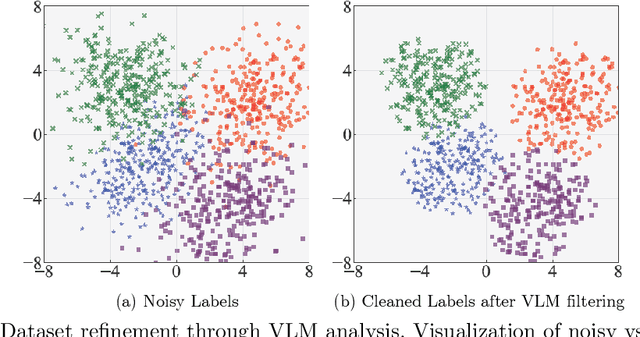
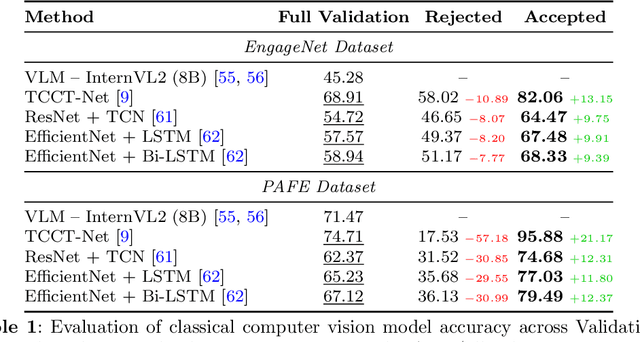
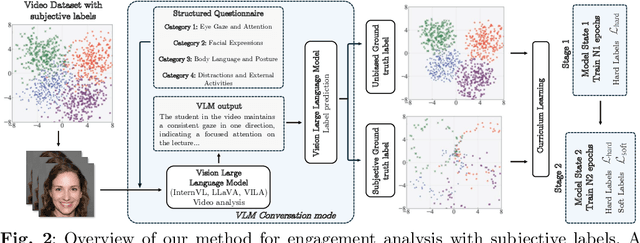
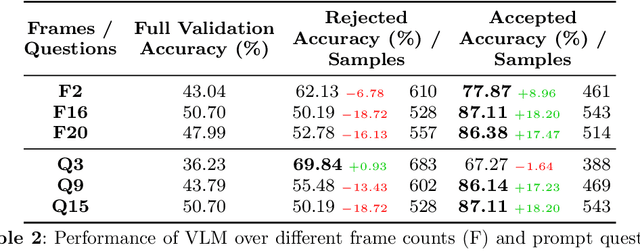
Engagement recognition in video datasets, unlike traditional image classification tasks, is particularly challenged by subjective labels and noise limiting model performance. To overcome the challenges of subjective and noisy engagement labels, we propose a framework leveraging Vision Large Language Models (VLMs) to refine annotations and guide the training process. Our framework uses a questionnaire to extract behavioral cues and split data into high- and low-reliability subsets. We also introduce a training strategy combining curriculum learning with soft label refinement, gradually incorporating ambiguous samples while adjusting supervision to reflect uncertainty. We demonstrate that classical computer vision models trained on refined high-reliability subsets and enhanced with our curriculum strategy show improvements, highlighting benefits of addressing label subjectivity with VLMs. This method surpasses prior state of the art across engagement benchmarks such as EngageNet (three of six feature settings, maximum improvement of +1.21%), and DREAMS / PAFE with F1 gains of +0.22 / +0.06.
Radar-APLANC: Unsupervised Radar-based Heartbeat Sensing via Augmented Pseudo-Label and Noise Contrast
Nov 11, 2025Frequency Modulated Continuous Wave (FMCW) radars can measure subtle chest wall oscillations to enable non-contact heartbeat sensing. However, traditional radar-based heartbeat sensing methods face performance degradation due to noise. Learning-based radar methods achieve better noise robustness but require costly labeled signals for supervised training. To overcome these limitations, we propose the first unsupervised framework for radar-based heartbeat sensing via Augmented Pseudo-Label and Noise Contrast (Radar-APLANC). We propose to use both the heartbeat range and noise range within the radar range matrix to construct the positive and negative samples, respectively, for improved noise robustness. Our Noise-Contrastive Triplet (NCT) loss only utilizes positive samples, negative samples, and pseudo-label signals generated by the traditional radar method, thereby avoiding dependence on expensive ground-truth physiological signals. We further design a pseudo-label augmentation approach featuring adaptive noise-aware label selection to improve pseudo-label signal quality. Extensive experiments on the Equipleth dataset and our collected radar dataset demonstrate that our unsupervised method achieves performance comparable to state-of-the-art supervised methods. Our code, dataset, and supplementary materials can be accessed from https://github.com/RadarHRSensing/Radar-APLANC.
MEGC2025: Micro-Expression Grand Challenge on Spot Then Recognize and Visual Question Answering
Jun 18, 2025
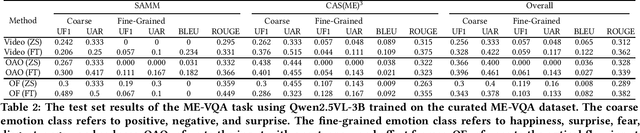
Facial micro-expressions (MEs) are involuntary movements of the face that occur spontaneously when a person experiences an emotion but attempts to suppress or repress the facial expression, typically found in a high-stakes environment. In recent years, substantial advancements have been made in the areas of ME recognition, spotting, and generation. However, conventional approaches that treat spotting and recognition as separate tasks are suboptimal, particularly for analyzing long-duration videos in realistic settings. Concurrently, the emergence of multimodal large language models (MLLMs) and large vision-language models (LVLMs) offers promising new avenues for enhancing ME analysis through their powerful multimodal reasoning capabilities. The ME grand challenge (MEGC) 2025 introduces two tasks that reflect these evolving research directions: (1) ME spot-then-recognize (ME-STR), which integrates ME spotting and subsequent recognition in a unified sequential pipeline; and (2) ME visual question answering (ME-VQA), which explores ME understanding through visual question answering, leveraging MLLMs or LVLMs to address diverse question types related to MEs. All participating algorithms are required to run on this test set and submit their results on a leaderboard. More details are available at https://megc2025.github.io.
Active Multimodal Distillation for Few-shot Action Recognition
Jun 16, 2025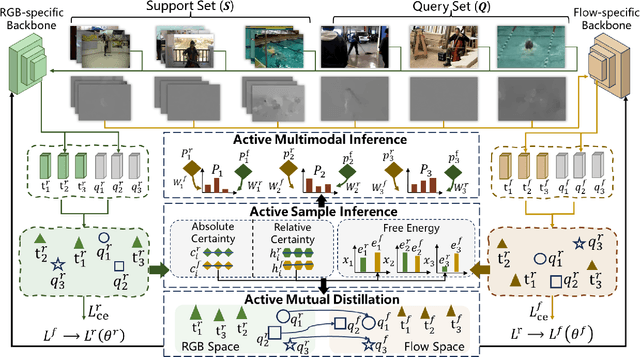
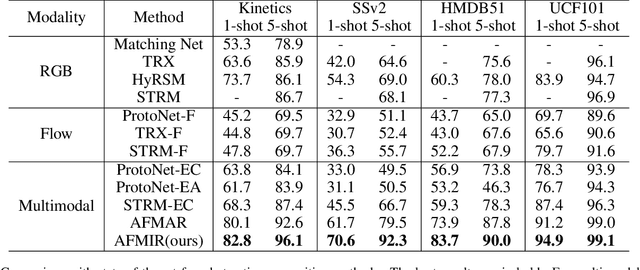
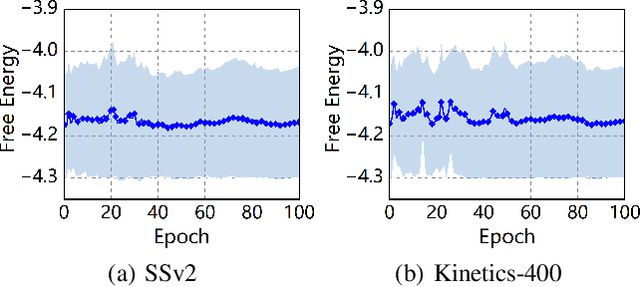
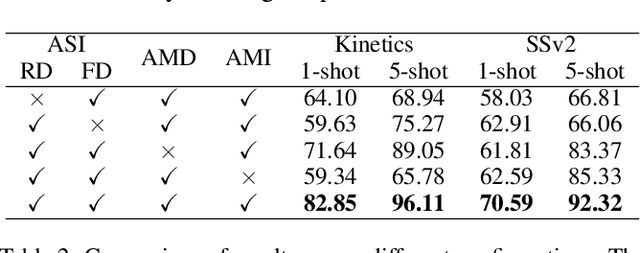
Owing to its rapid progress and broad application prospects, few-shot action recognition has attracted considerable interest. However, current methods are predominantly based on limited single-modal data, which does not fully exploit the potential of multimodal information. This paper presents a novel framework that actively identifies reliable modalities for each sample using task-specific contextual cues, thus significantly improving recognition performance. Our framework integrates an Active Sample Inference (ASI) module, which utilizes active inference to predict reliable modalities based on posterior distributions and subsequently organizes them accordingly. Unlike reinforcement learning, active inference replaces rewards with evidence-based preferences, making more stable predictions. Additionally, we introduce an active mutual distillation module that enhances the representation learning of less reliable modalities by transferring knowledge from more reliable ones. Adaptive multimodal inference is employed during the meta-test to assign higher weights to reliable modalities. Extensive experiments across multiple benchmarks demonstrate that our method significantly outperforms existing approaches.
A Benchmark for Incremental Micro-expression Recognition
Jan 31, 2025

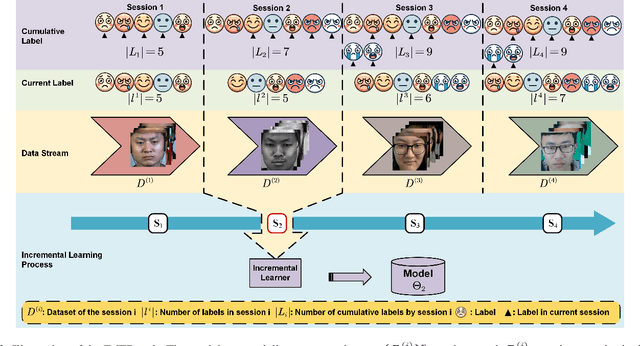

Micro-expression recognition plays a pivotal role in understanding hidden emotions and has applications across various fields. Traditional recognition methods assume access to all training data at once, but real-world scenarios involve continuously evolving data streams. To respond to the requirement of adapting to new data while retaining previously learned knowledge, we introduce the first benchmark specifically designed for incremental micro-expression recognition. Our contributions include: Firstly, we formulate the incremental learning setting tailored for micro-expression recognition. Secondly, we organize sequential datasets with carefully curated learning orders to reflect real-world scenarios. Thirdly, we define two cross-evaluation-based testing protocols, each targeting distinct evaluation objectives. Finally, we provide six baseline methods and their corresponding evaluation results. This benchmark lays the groundwork for advancing incremental micro-expression recognition research. All code used in this study will be made publicly available.
PsyDraw: A Multi-Agent Multimodal System for Mental Health Screening in Left-Behind Children
Dec 19, 2024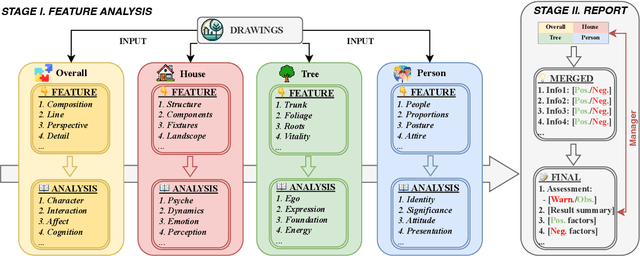
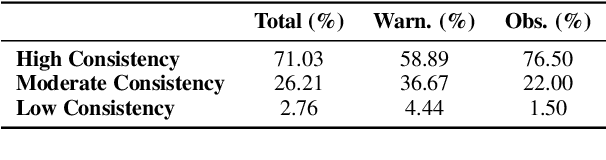

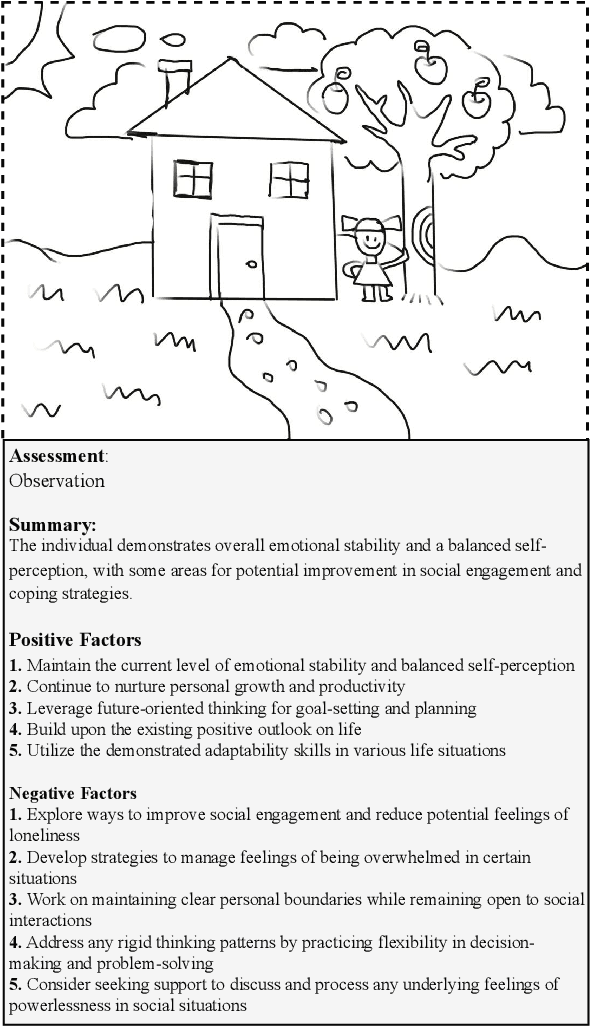
Left-behind children (LBCs), numbering over 66 million in China, face severe mental health challenges due to parental migration for work. Early screening and identification of at-risk LBCs is crucial, yet challenging due to the severe shortage of mental health professionals, especially in rural areas. While the House-Tree-Person (HTP) test shows higher child participation rates, its requirement for expert interpretation limits its application in resource-scarce regions. To address this challenge, we propose PsyDraw, a multi-agent system based on Multimodal Large Language Models that assists mental health professionals in analyzing HTP drawings. The system employs specialized agents for feature extraction and psychological interpretation, operating in two stages: comprehensive feature analysis and professional report generation. Evaluation of HTP drawings from 290 primary school students reveals that 71.03% of the analyzes achieved High Consistency with professional evaluations, 26.21% Moderate Consistency and only 2.41% Low Consistency. The system identified 31.03% of cases requiring professional attention, demonstrating its effectiveness as a preliminary screening tool. Currently deployed in pilot schools, \method shows promise in supporting mental health professionals, particularly in resource-limited areas, while maintaining high professional standards in psychological assessment.
VisioPhysioENet: Multimodal Engagement Detection using Visual and Physiological Signals
Sep 24, 2024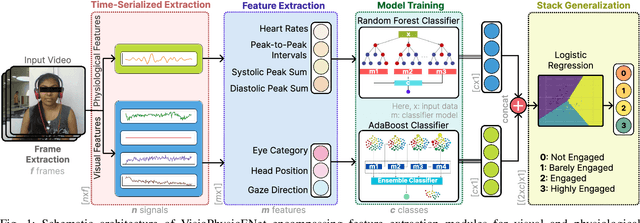
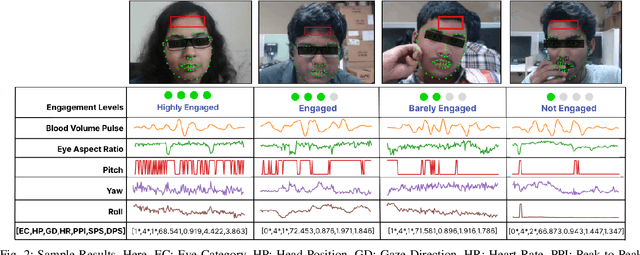
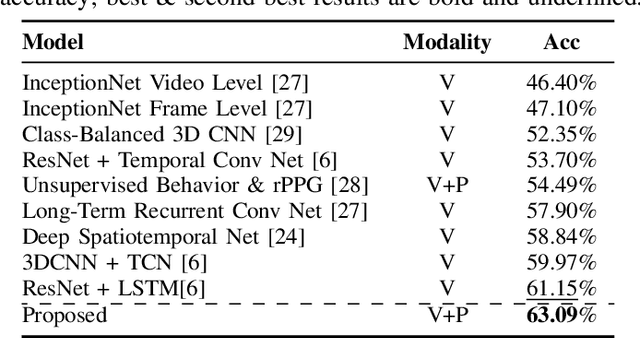

This paper presents VisioPhysioENet, a novel multimodal system that leverages visual cues and physiological signals to detect learner engagement. It employs a two-level approach for visual feature extraction using the Dlib library for facial landmark extraction and the OpenCV library for further estimations. This is complemented by extracting physiological signals using the plane-orthogonal-to-skin method to assess cardiovascular activity. These features are integrated using advanced machine learning classifiers, enhancing the detection of various engagement levels. We rigorously evaluate VisioPhysioENet on the DAiSEE dataset, where it achieves an accuracy of 63.09%, demonstrating a superior ability to discern various levels of engagement compared to existing methodologies. The proposed system's code can be accessed at https://github.com/MIntelligence-Group/VisioPhysioENet.