 Add to Chrome
 Add to Firefox
 Add to Edge
Continuous-Time Digital Twin with Analogue Memristive Neural Ordinary Differential Equation Solver
Jun 12, 2024
Digital twins, the cornerstone of Industry 4.0, replicate real-world entities through computer models, revolutionising fields such as manufacturing management and industrial automation. Recent advances in machine learning provide data-driven methods for developing digital twins using discrete-time data and finite-depth models on digital computers. However, this approach fails to capture the underlying continuous dynamics and struggles with modelling complex system behaviour. Additionally, the architecture of digital computers, with separate storage and processing units, necessitates frequent data transfers and Analogue-Digital (A/D) conversion, thereby significantly increasing both time and energy costs. Here, we introduce a memristive neural ordinary differential equation (ODE) solver for digital twins, which is capable of capturing continuous-time dynamics and facilitates the modelling of complex systems using an infinite-depth model. By integrating storage and computation within analogue memristor arrays, we circumvent the von Neumann bottleneck, thus enhancing both speed and energy efficiency. We experimentally validate our approach by developing a digital twin of the HP memristor, which accurately extrapolates its nonlinear dynamics, achieving a 4.2-fold projected speedup and a 41.4-fold projected decrease in energy consumption compared to state-of-the-art digital hardware, while maintaining an acceptable error margin. Additionally, we demonstrate scalability through experimentally grounded simulations of Lorenz96 dynamics, exhibiting projected performance improvements of 12.6-fold in speed and 189.7-fold in energy efficiency relative to traditional digital approaches. By harnessing the capabilities of fully analogue computing, our breakthrough accelerates the development of digital twins, offering an efficient and rapid solution to meet the demands of Industry 4.0.

Zero-shot Image Editing with Reference Imitation
Jun 11, 2024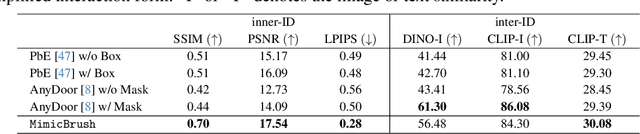
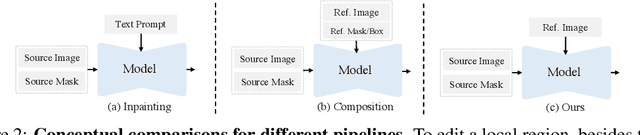

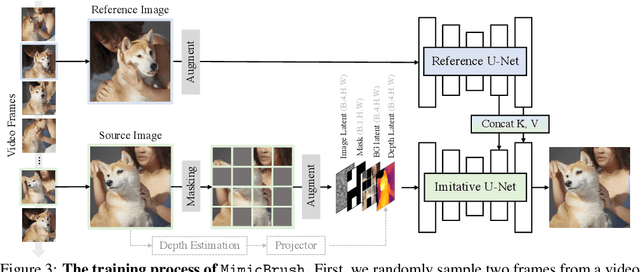
Image editing serves as a practical yet challenging task considering the diverse demands from users, where one of the hardest parts is to precisely describe how the edited image should look like. In this work, we present a new form of editing, termed imitative editing, to help users exercise their creativity more conveniently. Concretely, to edit an image region of interest, users are free to directly draw inspiration from some in-the-wild references (e.g., some relative pictures come across online), without having to cope with the fit between the reference and the source. Such a design requires the system to automatically figure out what to expect from the reference to perform the editing. For this purpose, we propose a generative training framework, dubbed MimicBrush, which randomly selects two frames from a video clip, masks some regions of one frame, and learns to recover the masked regions using the information from the other frame. That way, our model, developed from a diffusion prior, is able to capture the semantic correspondence between separate images in a self-supervised manner. We experimentally show the effectiveness of our method under various test cases as well as its superiority over existing alternatives. We also construct a benchmark to facilitate further research.
Untrained Neural Nets for Snapshot Compressive Imaging: Theory and Algorithms
Jun 06, 2024


Snapshot compressive imaging (SCI) recovers high-dimensional (3D) data cubes from a single 2D measurement, enabling diverse applications like video and hyperspectral imaging to go beyond standard techniques in terms of acquisition speed and efficiency. In this paper, we focus on SCI recovery algorithms that employ untrained neural networks (UNNs), such as deep image prior (DIP), to model source structure. Such UNN-based methods are appealing as they have the potential of avoiding the computationally intensive retraining required for different source models and different measurement scenarios. We first develop a theoretical framework for characterizing the performance of such UNN-based methods. The theoretical framework, on the one hand, enables us to optimize the parameters of data-modulating masks, and on the other hand, provides a fundamental connection between the number of data frames that can be recovered from a single measurement to the parameters of the untrained NN. We also employ the recently proposed bagged-deep-image-prior (bagged-DIP) idea to develop SCI Bagged Deep Video Prior (SCI-BDVP) algorithms that address the common challenges faced by standard UNN solutions. Our experimental results show that in video SCI our proposed solution achieves state-of-the-art among UNN methods, and in the case of noisy measurements, it even outperforms supervised solutions.
Phy-Diff: Physics-guided Hourglass Diffusion Model for Diffusion MRI Synthesis
Jun 05, 2024Diffusion MRI (dMRI) is an important neuroimaging technique with high acquisition costs. Deep learning approaches have been used to enhance dMRI and predict diffusion biomarkers through undersampled dMRI. To generate more comprehensive raw dMRI, generative adversarial network based methods are proposed to include b-values and b-vectors as conditions, but they are limited by unstable training and less desirable diversity. The emerging diffusion model (DM) promises to improve generative performance. However, it remains challenging to include essential information in conditioning DM for more relevant generation, i.e., the physical principles of dMRI and white matter tract structures. In this study, we propose a physics-guided diffusion model to generate high-quality dMRI. Our model introduces the physical principles of dMRI in the noise evolution in the diffusion process and introduce a query-based conditional mapping within the difussion model. In addition, to enhance the anatomical fine detials of the generation, we introduce the XTRACT atlas as prior of white matter tracts by adopting an adapter technique. Our experiment results show that our method outperforms other state-of-the-art methods and has the potential to advance dMRI enhancement.
EPIDetect: Video-based convulsive seizure detection in chronic epilepsy mouse model for anti-epilepsy drug screening
May 31, 2024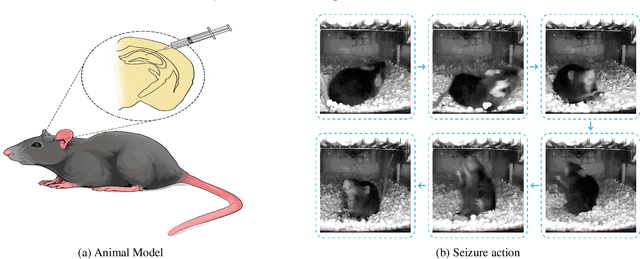
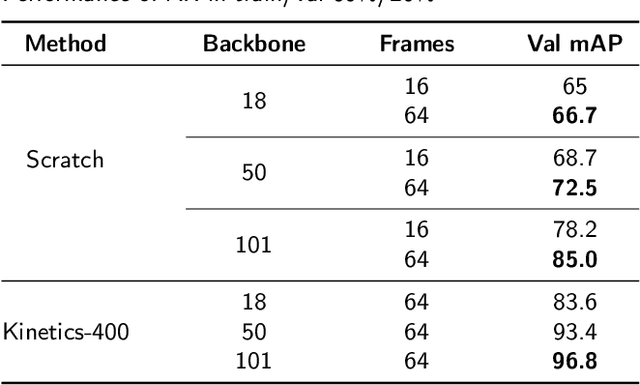
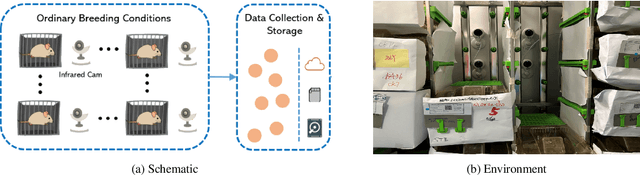

In the preclinical translational studies, drug candidates with remarkable anti-epileptic efficacy demonstrate long-term suppression of spontaneous recurrent seizures (SRSs), particularly convulsive seizures (CSs), in mouse models of chronic epilepsy. However, the current methods for monitoring CSs have limitations in terms of invasiveness, specific laboratory settings, high cost, and complex operation, which hinder drug screening efforts. In this study, a camera-based system for automated detection of CSs in chronically epileptic mice is first established to screen potential anti-epilepsy drugs.
Yuan 2.0-M32: Mixture of Experts with Attention Router
May 29, 2024Yuan 2.0-M32, with a similar base architecture as Yuan-2.0 2B, uses a mixture-of-experts architecture with 32 experts of which 2 experts are active. A new router network, Attention Router, is proposed and adopted for a more efficient selection of experts, which improves the accuracy compared to the model with classical router network. Yuan 2.0-M32 is trained with 2000B tokens from scratch, and the training computation consumption is only 9.25% of a dense model at the same parameter scale. Yuan 2.0-M32 demonstrates competitive capability on coding, math, and various domains of expertise, with only 3.7B active parameters of 40B in total, and 7.4 GFlops forward computation per token, both of which are only 1/19 of Llama3-70B. Yuan 2.0-M32 surpass Llama3-70B on MATH and ARC-Challenge benchmark, with accuracy of 55.89 and 95.8 respectively. The models and source codes of Yuan 2.0-M32 are released at Github1.
MindStar: Enhancing Math Reasoning in Pre-trained LLMs at Inference Time
May 25, 2024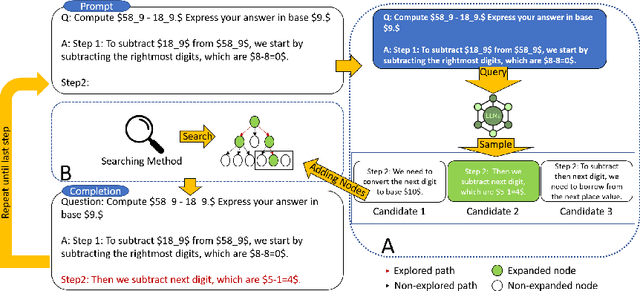
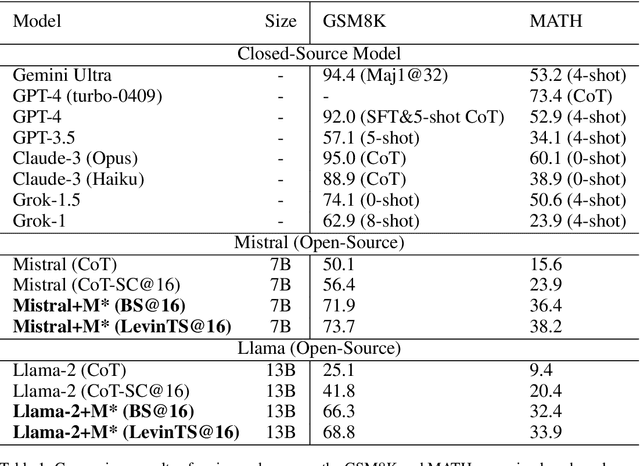
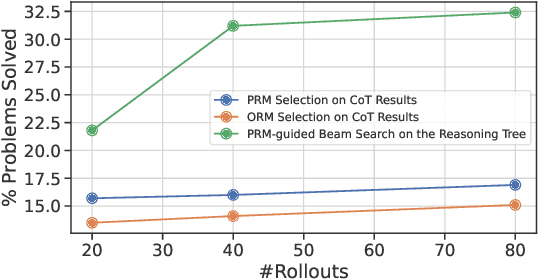

Although Large Language Models (LLMs) achieve remarkable performance across various tasks, they often struggle with complex reasoning tasks, such as answering mathematical questions. Recent efforts to address this issue have primarily focused on leveraging mathematical datasets through supervised fine-tuning or self-improvement techniques. However, these methods often depend on high-quality datasets that are difficult to prepare, or they require substantial computational resources for fine-tuning. Inspired by findings that LLMs know how to produce right answer but struggle to select the correct reasoning path, we propose a purely inference-based searching method called MindStar (M*), which treats reasoning tasks as search problems. This method utilizes a step-wise reasoning approach to navigate the tree space. To enhance search efficiency, we propose two tree-search ideas to identify the optimal reasoning paths. We evaluate the M* framework on both the GSM8K and MATH datasets, comparing its performance with existing open and closed-source LLMs. Our results demonstrate that M* significantly enhances the reasoning abilities of open-source models, such as Llama-2-13B and Mistral-7B, and achieves comparable performance to GPT-3.5 and Grok-1, but with substantially reduced model size and computational costs.
VTG-LLM: Integrating Timestamp Knowledge into Video LLMs for Enhanced Video Temporal Grounding
May 22, 2024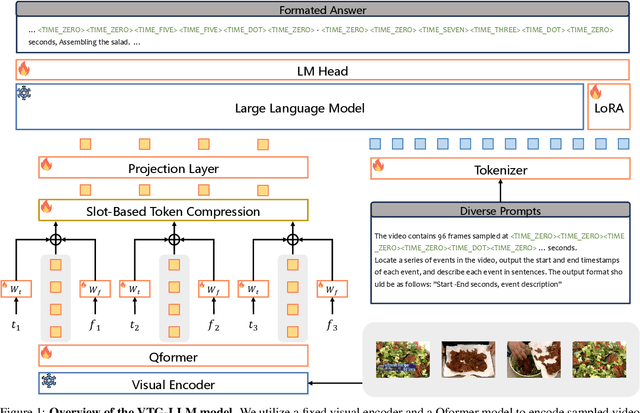

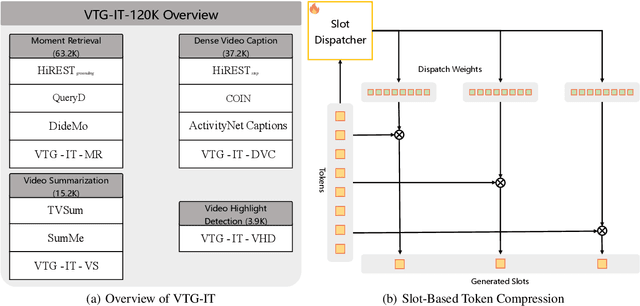
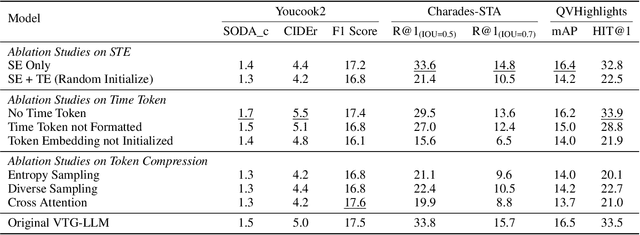
Video Temporal Grounding (VTG) focuses on accurately identifying event timestamps within a particular video based on a linguistic query, playing a vital role in downstream tasks such as video browsing and editing. While Video Large Language Models (video LLMs) have made significant progress in understanding video content, they often face challenges in accurately pinpointing timestamps within videos, which limits their performance on VTG tasks. Therefore, to improve video LLMs' ability to effectively locate timestamps, we argue that two critical aspects need to be enhanced. First, it is essential to have high-quality instructional tuning datasets that encompass mainstream VTG tasks. Second, directly incorporating timestamp knowledge into video LLMs is crucial, as it enables models to efficiently comprehend timestamp information. To address these needs, we first introduce VTG-IT-120K, a high-quality and comprehensive instruction tuning dataset that covers VTG tasks such as moment retrieval, dense video captioning, video summarization, and video highlight detection. Furthermore, we propose a specially designed video LLM model for VTG tasks, VTG-LLM, which (1) effectively integrates timestamp knowledge into visual tokens; (2) incorporates absolute-time tokens that specifically handle timestamp knowledge, thereby avoiding concept shifts; and (3) introduces a lightweight, high-performance slot-based token compression method to facilitate the sampling of more video frames. Comprehensive experiments showcase the superior performance of VTG-LLM in comparison to other video LLM methods across various VTG tasks. Our code and datasets are available at \url{https://github.com/gyxxyg/VTG-LLM}.
A Multilingual Similarity Dataset for News Article Frame
May 22, 2024Understanding the writing frame of news articles is vital for addressing social issues, and thus has attracted notable attention in the fields of communication studies. Yet, assessing such news article frames remains a challenge due to the absence of a concrete and unified standard dataset that considers the comprehensive nuances within news content. To address this gap, we introduce an extended version of a large labeled news article dataset with 16,687 new labeled pairs. Leveraging the pairwise comparison of news articles, our method frees the work of manual identification of frame classes in traditional news frame analysis studies. Overall we introduce the most extensive cross-lingual news article similarity dataset available to date with 26,555 labeled news article pairs across 10 languages. Each data point has been meticulously annotated according to a codebook detailing eight critical aspects of news content, under a human-in-the-loop framework. Application examples demonstrate its potential in unearthing country communities within global news coverage, exposing media bias among news outlets, and quantifying the factors related to news creation. We envision that this news similarity dataset will broaden our understanding of the media ecosystem in terms of news coverage of events and perspectives across countries, locations, languages, and other social constructs. By doing so, it can catalyze advancements in social science research and applied methodologies, thereby exerting a profound impact on our society.
Global News Synchrony and Diversity During the Start of the COVID-19 Pandemic
May 01, 2024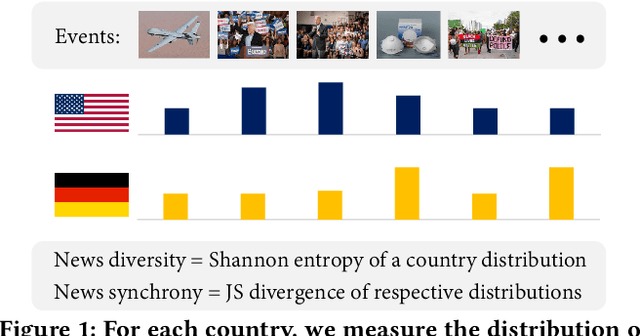


News coverage profoundly affects how countries and individuals behave in international relations. Yet, we have little empirical evidence of how news coverage varies across countries. To enable studies of global news coverage, we develop an efficient computational methodology that comprises three components: (i) a transformer model to estimate multilingual news similarity; (ii) a global event identification system that clusters news based on a similarity network of news articles; and (iii) measures of news synchrony across countries and news diversity within a country, based on country-specific distributions of news coverage of the global events. Each component achieves state-of-the art performance, scaling seamlessly to massive datasets of millions of news articles. We apply the methodology to 60 million news articles published globally between January 1 and June 30, 2020, across 124 countries and 10 languages, detecting 4357 news events. We identify the factors explaining diversity and synchrony of news coverage across countries. Our study reveals that news media tend to cover a more diverse set of events in countries with larger Internet penetration, more official languages, larger religious diversity, higher economic inequality, and larger populations. Coverage of news events is more synchronized between countries that not only actively participate in commercial and political relations -- such as, pairs of countries with high bilateral trade volume, and countries that belong to the NATO military alliance or BRICS group of major emerging economies -- but also countries that share certain traits: an official language, high GDP, and high democracy indices.