 Add to Chrome
 Add to Firefox
 Add to Edge
RECIPER: A Dual-View Retrieval Pipeline for Procedure-Oriented Materials Question Answering
Apr 13, 2026
Retrieving procedure-oriented evidence from materials science papers is difficult because key synthesis details are often scattered across long, context-heavy documents and are not well captured by paragraph-only dense retrieval. We present RECIPER, a dual-view retrieval pipeline that indexes both paragraph-level context and compact large language model-extracted procedural summaries, then combines the two candidate streams with lightweight lexical reranking. Across four dense retrieval backbones, RECIPER consistently improves early-rank retrieval over paragraph-only dense retrieval, achieving average gains of +3.73 in Recall@1, +2.85 in nDCG@10, and +3.13 in MRR. With BGE-large-en-v1.5, it reaches 86.82%, 97.07%, and 97.85% on Recall@1, Recall@5, and Recall@10, respectively. We further observe improved downstream question answering under automatic metrics, suggesting that procedural summaries can serve as a useful complementary retrieval signal for procedure-oriented materials question answering. Code and data are available at https://github.com/ReaganWu/RECIPER.

Improving Infinitely Deep Bayesian Neural Networks with Nesterov's Accelerated Gradient Method
Mar 26, 2026As a representative continuous-depth neural network approach, stochastic differential equation (SDE)-based Bayesian neural networks (BNNs) have attracted considerable attention due to their solid theoretical foundations and strong potential for real-world applications. However, their reliance on numerical SDE solvers inevitably incurs a large number of function evaluations (NFEs), resulting in high computational cost and occasional convergence instability. To address these challenges, we propose a Nesterov-accelerated gradient (NAG) enhanced SDE-BNN model. By integrating NAG into the SDE-BNN framework along with an NFE-dependent residual skip connection, our method accelerates convergence and substantially reduces NFEs during both training and testing. Extensive empirical results show that our model consistently outperforms conventional SDE-BNNs across various tasks, including image classification and sequence modeling, achieving lower NFEs and improved predictive accuracy.
EndoCaver: Handling Fog, Blur and Glare in Endoscopic Images via Joint Deblurring-Segmentation
Jan 30, 2026Endoscopic image analysis is vital for colorectal cancer screening, yet real-world conditions often suffer from lens fogging, motion blur, and specular highlights, which severely compromise automated polyp detection. We propose EndoCaver, a lightweight transformer with a unidirectional-guided dual-decoder architecture, enabling joint multi-task capability for image deblurring and segmentation while significantly reducing computational complexity and model parameters. Specifically, it integrates a Global Attention Module (GAM) for cross-scale aggregation, a Deblurring-Segmentation Aligner (DSA) to transfer restoration cues, and a cosine-based scheduler (LoCoS) for stable multi-task optimisation. Experiments on the Kvasir-SEG dataset show that EndoCaver achieves 0.922 Dice on clean data and 0.889 under severe image degradation, surpassing state-of-the-art methods while reducing model parameters by 90%. These results demonstrate its efficiency and robustness, making it well-suited for on-device clinical deployment. Code is available at https://github.com/ReaganWu/EndoCaver.
RT-Focuser: A Real-Time Lightweight Model for Edge-side Image Deblurring
Dec 26, 2025Motion blur caused by camera or object movement severely degrades image quality and poses challenges for real-time applications such as autonomous driving, UAV perception, and medical imaging. In this paper, a lightweight U-shaped network tailored for real-time deblurring is presented and named RT-Focuser. To balance speed and accuracy, we design three key components: Lightweight Deblurring Block (LD) for edge-aware feature extraction, Multi-Level Integrated Aggregation module (MLIA) for encoder integration, and Cross-source Fusion Block (X-Fuse) for progressive decoder refinement. Trained on a single blurred input, RT-Focuser achieves 30.67 dB PSNR with only 5.85M parameters and 15.76 GMACs. It runs 6ms per frame on GPU and mobile, exceeds 140 FPS on both, showing strong potential for deployment on the edge. The official code and usage are available on: https://github.com/ReaganWu/RT-Focuser.
Noise-robust Contrastive Learning for Critical Transition Detection in Dynamical Systems
Dec 14, 2025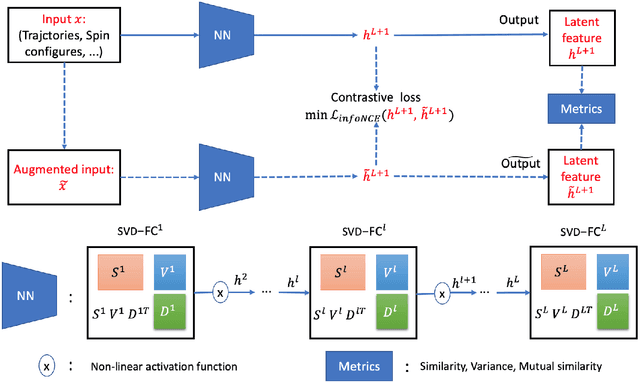
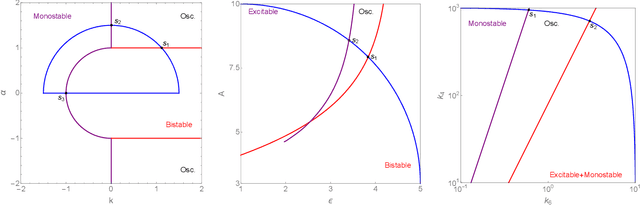
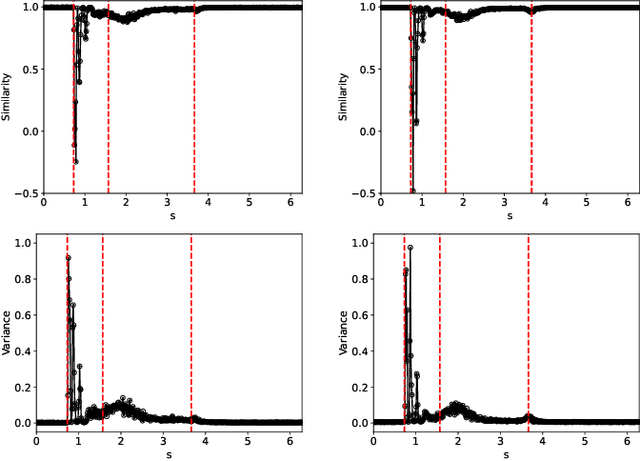
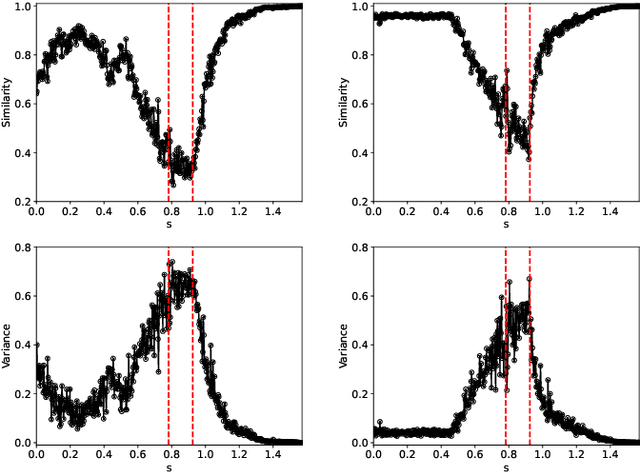
Detecting critical transitions in complex, noisy time-series data is a fundamental challenge across science and engineering. Such transitions may be anticipated by the emergence of a low-dimensional order parameter, whose signature is often masked by high-amplitude stochastic variability. Standard contrastive learning approaches based on deep neural networks, while promising for detecting critical transitions, are often overparameterized and sensitive to irrelevant noise, leading to inaccurate identification of critical points. To address these limitations, we propose a neural network architecture, constructed using singular value decomposition technique, together with a strictly semi-orthogonality-constrained training algorithm, to enhance the performance of traditional contrastive learning. Extensive experiments demonstrate that the proposed method matches the performance of traditional contrastive learning techniques in identifying critical transitions, yet is considerably more lightweight and markedly more resistant to noise.
Constants of motion network revisited
Apr 13, 2025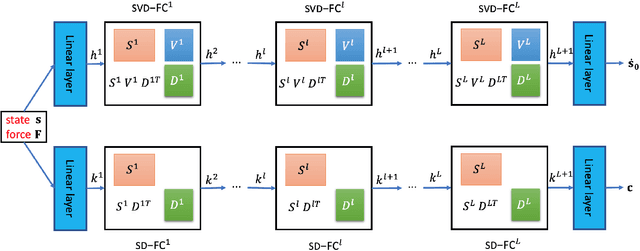
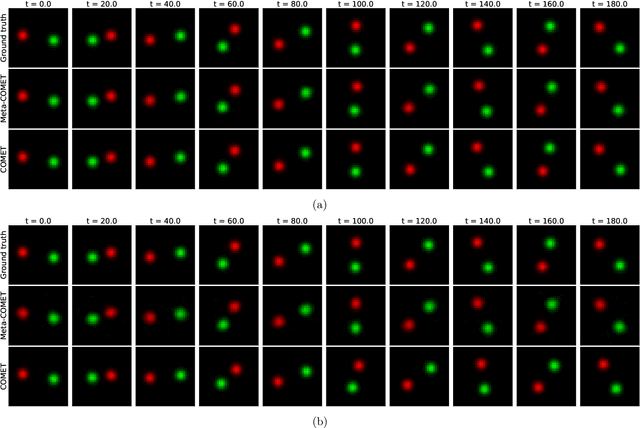
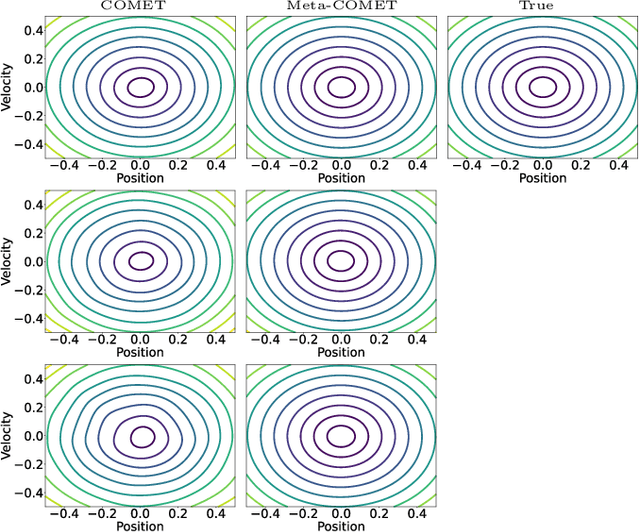
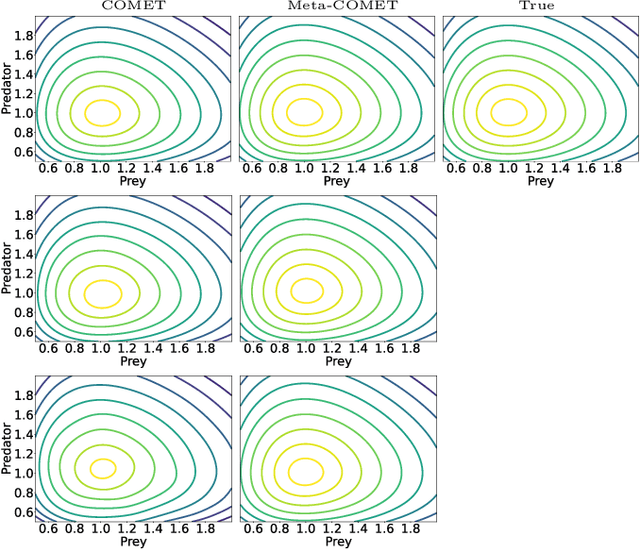
Discovering constants of motion is meaningful in helping understand the dynamical systems, but inevitably needs proficient mathematical skills and keen analytical capabilities. With the prevalence of deep learning, methods employing neural networks, such as Constant Of Motion nETwork (COMET), are promising in handling this scientific problem. Although the COMET method can produce better predictions on dynamics by exploiting the discovered constants of motion, there is still plenty of room to sharpen it. In this paper, we propose a novel neural network architecture, built using the singular-value-decomposition (SVD) technique, and a two-phase training algorithm to improve the performance of COMET. Extensive experiments show that our approach not only retains the advantages of COMET, such as applying to non-Hamiltonian systems and indicating the number of constants of motion, but also can be more lightweight and noise-robust than COMET.
Spectrum Gaussian Processes Based On Tunable Basis Functions
Jul 14, 2021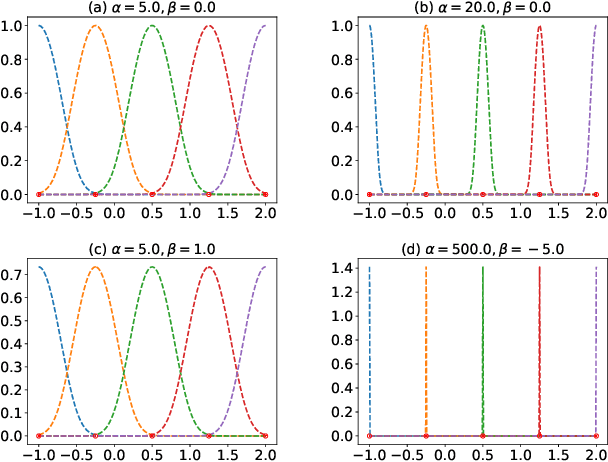
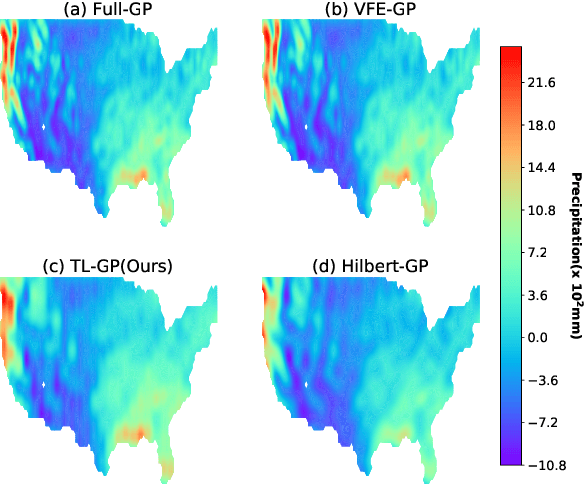
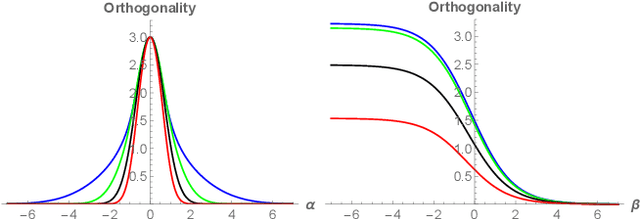
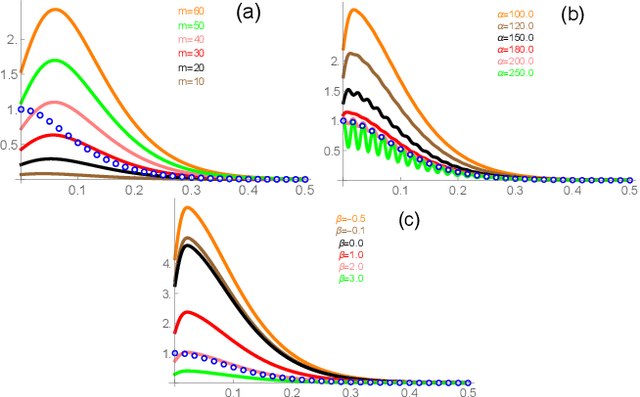
Spectral approximation and variational inducing learning for the Gaussian process are two popular methods to reduce computational complexity. However, in previous research, those methods always tend to adopt the orthonormal basis functions, such as eigenvectors in the Hilbert space, in the spectrum method, or decoupled orthogonal components in the variational framework. In this paper, inspired by quantum physics, we introduce a novel basis function, which is tunable, local and bounded, to approximate the kernel function in the Gaussian process. There are two adjustable parameters in these functions, which control their orthogonality to each other and limit their boundedness. And we conduct extensive experiments on open-source datasets to testify its performance. Compared to several state-of-the-art methods, it turns out that the proposed method can obtain satisfactory or even better results, especially with poorly chosen kernel functions.
Sparse Gaussian Process Based On Hat Basis Functions
Jun 15, 2020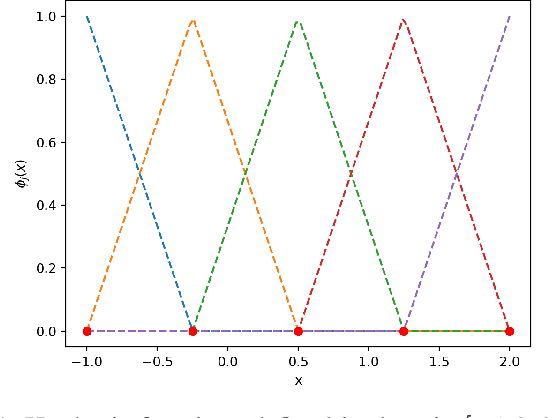
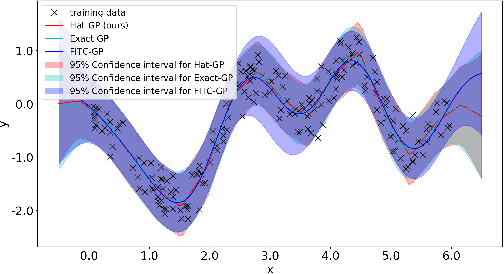
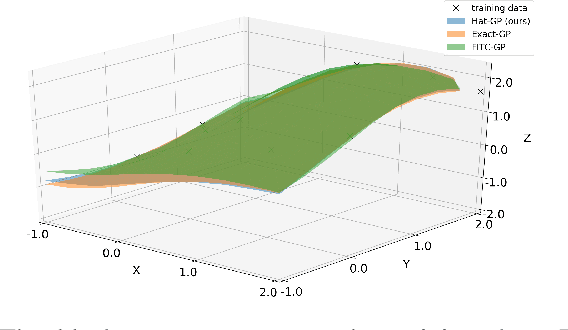
Gaussian process is one of the most popular non-parametric Bayesian methodologies for modeling the regression problem. It is completely determined by its mean and covariance functions. And its linear property makes it relatively straightforward to solve the prediction problem. Although Gaussian process has been successfully applied in many fields, it is still not enough to deal with physical systems that satisfy inequality constraints. This issue has been addressed by the so-called constrained Gaussian process in recent years. In this paper, we extend the core ideas of constrained Gaussian process. According to the range of training or test data, we redefine the hat basis functions mentioned in the constrained Gaussian process. Based on hat basis functions, we propose a new sparse Gaussian process method to solve the unconstrained regression problem. Similar to the exact Gaussian process and Gaussian process with Fully Independent Training Conditional approximation, our method obtains satisfactory approximate results on open-source datasets or analytical functions. In terms of performance, the proposed method reduces the overall computational complexity from $O(n^{3})$ computation in exact Gaussian process to $O(nm^{2})$ with $m$ hat basis functions and $n$ training data points.