 Add to Chrome
 Add to Firefox
 Add to Edge
Shared-Structure 4D Spectral Gaussian Representation for Sparse-View Spectral CT Reconstruction
Aug 17, 2026
Sparse-view spectral computed tomography (CT) reconstructs energy-resolved attenuation volumes from limited projection views, requiring simultaneous handling of angular undersampling and spectral coupling. We propose a SharedStructure 4D Spectral Gaussian Representation (4D-SG) that learns shared Gaussian geometry from full spectrum structural projections and uses a Gaussian-wise Spectral Density Curve Network (GSC-Net) to predict Gaussian raw density transformations. This factorization separates shared spatial structure from spectral attenuation variation, avoids independent channel geometry optimization, and establishes a continuous 4D-SG representation from discrete spectral measurements for unobserved spectral channel queries. Experiments on six synthesized, simulated projection, and real projection datasets with 50 views demonstrate the best average performance. Compared with the strongest Gaussian baseline, 4D-SG improves PSNR from 35.56 dB to 36.61 dB, increases SSIM from 0.909 to 0.914, and reduces LPIPS from 0.208 to 0.194, demonstrating its effectiveness for sparse-view spectral CT reconstruction.

FORCE-Interior: A Poisson Flow Generative Prior for Interior Tomography Reconstruction
Jul 15, 2026Interior tomography reconstructs a region of interest (ROI) from truncated projection measurements. However, projection truncation makes the inverse problem severely ill-posed, leading to non-unique solutions, oversmoothing, and truncation-induced artifacts when conventional reconstruction methods are directly applied to interior tomography. Existing learning-based interior CT methods have shown promising performance, but their generalization across different truncation patterns, ROI sizes, and noise levels remains an important challenge. Meanwhile, current generative model-based reconstruction methods are primarily designed for non-interior tomography settings and do not directly address ROI-based projection truncation. Moreover, without sufficient data-consistency constraints, generative sampling may yield anatomically plausible but measurement-inconsistent structures. To address these challenges, we propose FORCE-Interior, a Poisson-flow generative reconstruction framework for interior tomography. FORCE-Interior combines a full-FOV measurement-constrained initialization with per-step data consistency for ROI-truncated measurements, anchoring generative sampling to the acquired measurements throughout reconstruction. Experiments show that FORCE-Interior achieves improved structural and perceptual reconstruction quality at the two more severely truncated ROI sizes, with competitive results at the largest, while maintaining projection-domain consistency.
Real-time fall detection based on vision for low-power edge platforms
Jul 14, 2026Falling detection is vital for elderly care and intelligent surveillance; however, prevailing vision-based approaches predominantly frame it as static pose classification or discrete temporal pattern matching, fundamentally overlooking the instability dynamics of the human support system. This paper proposes a physics-informed falling detection framework that recasts falling as a stability-loss event in a coupled dynamical system. We introduce a novel dual-LTC architecture comprising a Center-of-Mass (CoM) subsystem and a Base-of-Support (BoS) subsystem, both instantiated as Liquid Time-Constant (LTC) neural networks to continuously model inertial trajectory evolution and ground-contact adjustment through adaptive time constants, Physical interpretability of falling motion. A learnable coupling module emulates physical interaction between the two subsystems, while a Stability Manifold classifier operates in the joint latent space to detect boundary crossing via Lyapunov-inspired stability metrics. Complementary counterfactual trajectory projection and Time-to-Collision (TTC) estimation further enable irreversibility assessment and early warning. The architecture is designed to support a three-state prediction paradigm (Normal, Falling, Fallen); in this preliminary study, we validate the core stability discrimination capability on a two-class dataset (Normal vs. Falling), leaving the full three-state temporal transition to future work. Unlike conventional CNN--RNN pipelines, the proposed formulation encodes continuous-time mechanical inertia, yielding a sub-50K-parameter network capable of real-time inference on resource-constrained edge devices. Extensive experiments demonstrate competitive accuracy with superior physical interpretability, validating its efficacy for low-compute visual fall detection.
From Data Completeness to Data Sufficiency: A Task-Driven Imaging Framework for Intraoperative CBCT under Quality-Time-Dose Trade-offs
Jul 08, 2026Mobile C-arm cone-beam computed tomography (CBCT) has been widely used for real-time intraoperative 3D imaging. However, current practice often mechanically applies the fan-beam CT criterion of "180° plus fan angle" in pursuit of "data completeness" in reconstruction. This review argues that, under the single circular trajectory of three-dimensional cone-beam geometry, complete data are mathematically unattainable; moreover, blindly increasing sampling may exacerbate the trade-off among intraoperative image quality (Q), imaging time (T), and radiation dose (D). Against this background, this review reframes the evaluation of intraoperative CBCT around "data sufficiency" rather than "data completeness." This perspective moves beyond the excessive pursuit of absolute mathematical and analytic accuracy, and instead emphasizes task-specific minimum image-quality thresholds required for clinical decision-making. By synthesizing evidence from multiple clinical scenarios, this review suggests that approximation errors can be acceptable when clinical decision-making requirements are satisfied, thereby achieving a Q-T-D balance.
Information-Maximized Soft Variable Discretization for Self-Supervised Image Representation Learning
Jan 07, 2025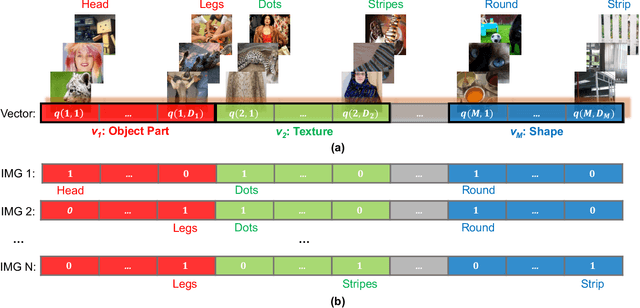
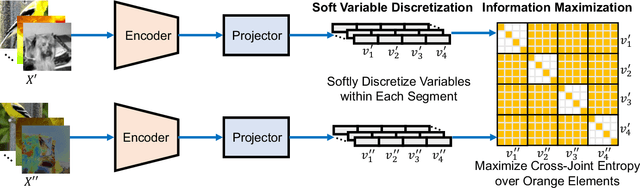
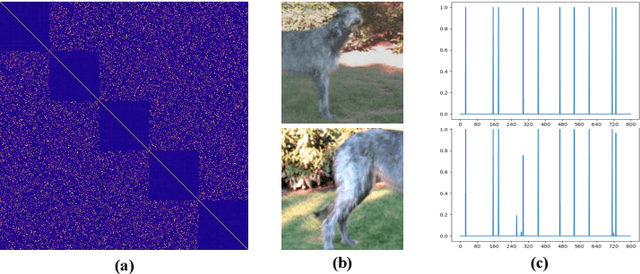
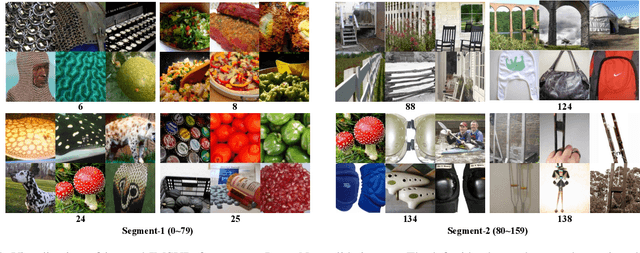
Self-supervised learning (SSL) has emerged as a crucial technique in image processing, encoding, and understanding, especially for developing today's vision foundation models that utilize large-scale datasets without annotations to enhance various downstream tasks. This study introduces a novel SSL approach, Information-Maximized Soft Variable Discretization (IMSVD), for image representation learning. Specifically, IMSVD softly discretizes each variable in the latent space, enabling the estimation of their probability distributions over training batches and allowing the learning process to be directly guided by information measures. Motivated by the MultiView assumption, we propose an information-theoretic objective function to learn transform-invariant, non-travail, and redundancy-minimized representation features. We then derive a joint-cross entropy loss function for self-supervised image representation learning, which theoretically enjoys superiority over the existing methods in reducing feature redundancy. Notably, our non-contrastive IMSVD method statistically performs contrastive learning. Extensive experimental results demonstrate the effectiveness of IMSVD on various downstream tasks in terms of both accuracy and efficiency. Thanks to our variable discretization, the embedding features optimized by IMSVD offer unique explainability at the variable level. IMSVD has the potential to be adapted to other learning paradigms. Our code is publicly available at https://github.com/niuchuangnn/IMSVD.
Diffusion Prior Regularized Iterative Reconstruction for Low-dose CT
Oct 10, 2023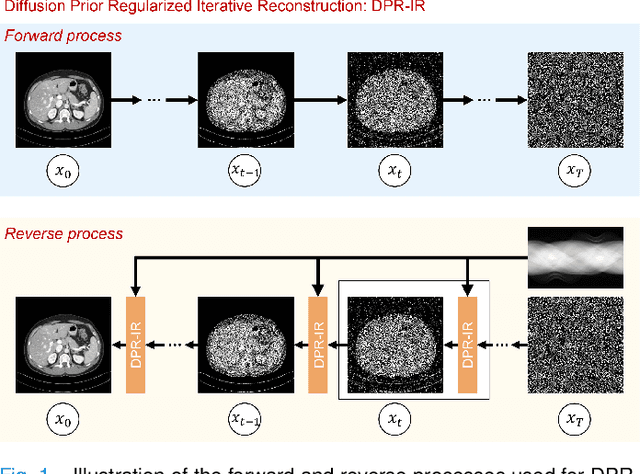
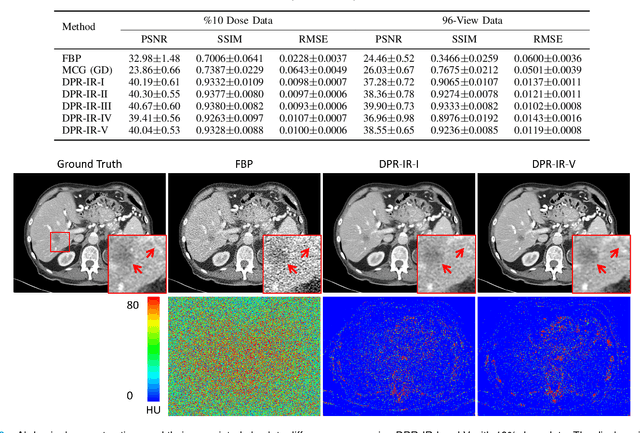
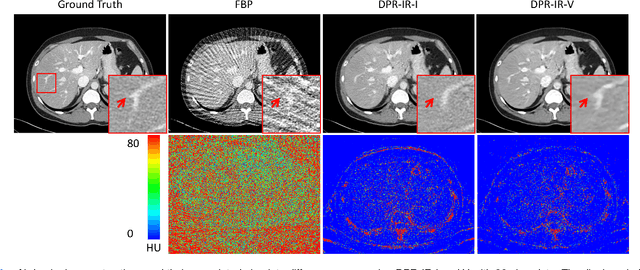
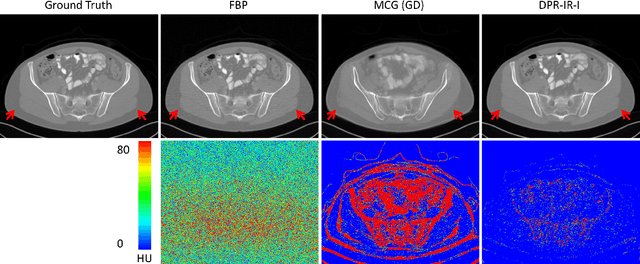
Computed tomography (CT) involves a patient's exposure to ionizing radiation. To reduce the radiation dose, we can either lower the X-ray photon count or down-sample projection views. However, either of the ways often compromises image quality. To address this challenge, here we introduce an iterative reconstruction algorithm regularized by a diffusion prior. Drawing on the exceptional imaging prowess of the denoising diffusion probabilistic model (DDPM), we merge it with a reconstruction procedure that prioritizes data fidelity. This fusion capitalizes on the merits of both techniques, delivering exceptional reconstruction results in an unsupervised framework. To further enhance the efficiency of the reconstruction process, we incorporate the Nesterov momentum acceleration technique. This enhancement facilitates superior diffusion sampling in fewer steps. As demonstrated in our experiments, our method offers a potential pathway to high-definition CT image reconstruction with minimized radiation.
Blind CT Image Quality Assessment Using DDPM-derived Content and Transformer-based Evaluator
Oct 04, 2023Lowering radiation dose per view and utilizing sparse views per scan are two common CT scan modes, albeit often leading to distorted images characterized by noise and streak artifacts. Blind image quality assessment (BIQA) strives to evaluate perceptual quality in alignment with what radiologists perceive, which plays an important role in advancing low-dose CT reconstruction techniques. An intriguing direction involves developing BIQA methods that mimic the operational characteristic of the human visual system (HVS). The internal generative mechanism (IGM) theory reveals that the HVS actively deduces primary content to enhance comprehension. In this study, we introduce an innovative BIQA metric that emulates the active inference process of IGM. Initially, an active inference module, implemented as a denoising diffusion probabilistic model (DDPM), is constructed to anticipate the primary content. Then, the dissimilarity map is derived by assessing the interrelation between the distorted image and its primary content. Subsequently, the distorted image and dissimilarity map are combined into a multi-channel image, which is inputted into a transformer-based image quality evaluator. Remarkably, by exclusively utilizing this transformer-based quality evaluator, we won the second place in the MICCAI 2023 low-dose computed tomography perceptual image quality assessment grand challenge. Leveraging the DDPM-derived primary content, our approach further improves the performance on the challenge dataset.
Sub-volume-based Denoising Diffusion Probabilistic Model for Cone-beam CT Reconstruction from Incomplete Data
Mar 25, 2023Deep learning (DL) has emerged as a new approach in the field of computed tomography (CT) with many applicaitons. A primary example is CT reconstruction from incomplete data, such as sparse-view image reconstruction. However, applying DL to sparse-view cone-beam CT (CBCT) remains challenging. Many models learn the mapping from sparse-view CT images to the ground truth but often fail to achieve satisfactory performance. Incorporating sinogram data and performing dual-domain reconstruction improve image quality with artifact suppression, but a straightforward 3D implementation requires storing an entire 3D sinogram in memory and many parameters of dual-domain networks. This remains a major challenge, limiting further research, development and applications. In this paper, we propose a sub-volume-based 3D denoising diffusion probabilistic model (DDPM) for CBCT image reconstruction from down-sampled data. Our DDPM network, trained on data cubes extracted from paired fully sampled sinograms and down-sampled sinograms, is employed to inpaint down-sampled sinograms. Our method divides the entire sinogram into overlapping cubes and processes them in parallel on multiple GPUs, successfully overcoming the memory limitation. Experimental results demonstrate that our approach effectively suppresses few-view artifacts while preserving textural details faithfully.
Patch-Based Denoising Diffusion Probabilistic Model for Sparse-View CT Reconstruction
Nov 18, 2022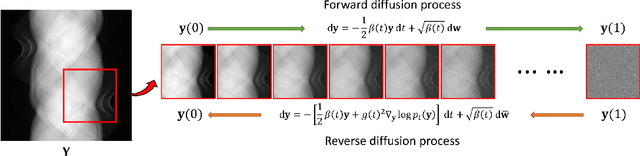
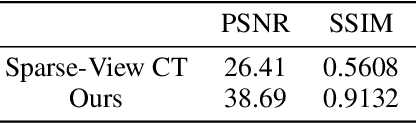
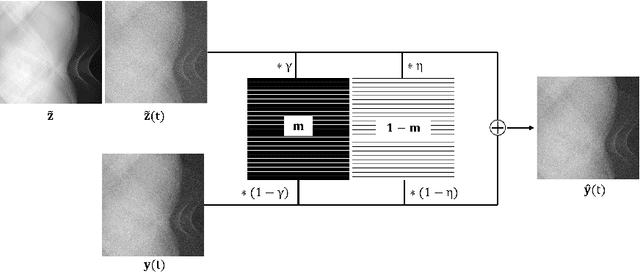
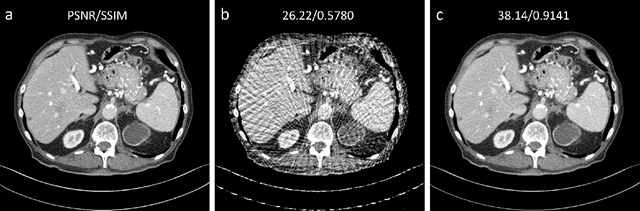
Sparse-view computed tomography (CT) can be used to reduce radiation dose greatly but is suffers from severe image artifacts. Recently, the deep learning based method for sparse-view CT reconstruction has attracted a major attention. However, neural networks often have a limited ability to remove the artifacts when they only work in the image domain. Deep learning-based sinogram processing can achieve a better anti-artifact performance, but it inevitably requires feature maps of the whole image in a video memory, which makes handling large-scale or three-dimensional (3D) images rather challenging. In this paper, we propose a patch-based denoising diffusion probabilistic model (DDPM) for sparse-view CT reconstruction. A DDPM network based on patches extracted from fully sampled projection data is trained and then used to inpaint down-sampled projection data. The network does not require paired full-sampled and down-sampled data, enabling unsupervised learning. Since the data processing is patch-based, the deep learning workflow can be distributed in parallel, overcoming the memory problem of large-scale data. Our experiments show that the proposed method can effectively suppress few-view artifacts while faithfully preserving textural details.
Low-Dose CT Using Denoising Diffusion Probabilistic Model for 20$\times$ Speedup
Sep 29, 2022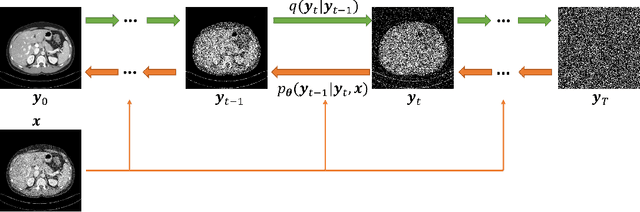
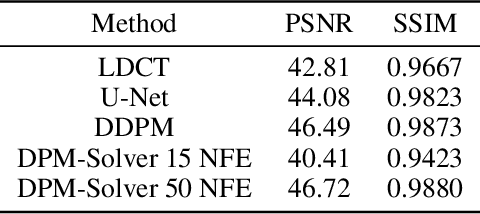
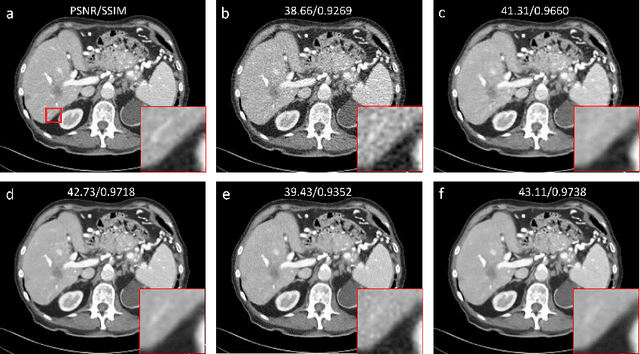
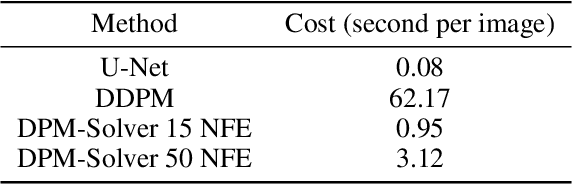
Low-dose computed tomography (LDCT) is an important topic in the field of radiology over the past decades. LDCT reduces ionizing radiation-induced patient health risks but it also results in a low signal-to-noise ratio (SNR) and a potential compromise in the diagnostic performance. In this paper, to improve the LDCT denoising performance, we introduce the conditional denoising diffusion probabilistic model (DDPM) and show encouraging results with a high computational efficiency. Specifically, given the high sampling cost of the original DDPM model, we adapt the fast ordinary differential equation (ODE) solver for a much-improved sampling efficiency. The experiments show that the accelerated DDPM can achieve 20x speedup without compromising image quality.