 Add to Chrome
 Add to Firefox
 Add to Edge
Leveraging AI for fine-grained food safety risk forecasting in sparse data conditions
Aug 03, 2026
Ensuring food safety represents a critical public health challenge, particularly when inspection resources are limited and regional sampling data are sparse. This study proposes a Transformer-based framework capable of forecasting fine-grained, city-level food safety risks by unifying over 11 million inspection records with supplemental demographic, economic, and environmental indicators extracted from the Statistical Yearbook. A three-stage pretraining design leverages partial supervision from the Wilson interval (capturing both safety and risk rankings), together with semi-supervised label refinement, to effectively utilize historical records even when local sample sizes are insufficient. Experimental evaluations on data from 2022 show that the proposed approach outperforms baselines significantly. A subsequent field experiment in collaboration with the Zhejiang Provincial Administration for Market Regulation further demonstrates improved detection rates and more efficient allocation of inspection resources compared to a manually developed plan. Observations of regulatory decision-making reveal a threshold-based heuristic employed by inspectors, hinting that additional training or decision-support interfaces could further enhance the impact of AI-generated risk scores. Overall, these findings underscore that a rigorous integration of large-scale public inspection data, Wilson interval-based confidence modeling, and advanced deep learning can facilitate earlier and more granular identification of food safety threats. By reducing reliance on reactive measures alone, the proposed framework has the potential to advance proactive, data-driven oversight of the global food supply.

Task-Oriented Multimodal Edge Intelligence via Integrated Sensing-Communication-Computation
Jul 04, 2026Integrated sensing, communication, and computation (ISCC) has recently emerged as a unified framework for enabling edge intelligence. However, existing ISCC designs predominantly rely on single-modal sensing, which is inherently vulnerable to occlusions, environmental uncertainties, and modality-specific failures, leading to degraded robustness in real-world deployments. This motivates the need for multi-modal ISCC, yet its design remains insufficiently explored. Compared with the single-modal case, multi-modal ISCC is more challenging because heterogeneous modalities enlarge data dimensionality and tighten communication/computation/energy budgets, while inter-modal correlations further complicate performance characterization. To address these challenges, we propose a task-oriented multi-modal ISCC framework that integrates device-side feature extraction with edge-side joint multi-modal inference. A central component of our approach is the maximal coding rate reduction (MCR^2) criterion, which enables each device to learn compact and discriminative task-relevant features, offering clear advantages over conventional cross-entropy-based extractors. We further leverage MCR^2 as a principled metric for edge-side sensing evaluation. On this basis, we formulate a sensing accuracy maximization problem under delay and resource constraints and develop an efficient block coordinate descent (BCD) algorithm after transforming the problem into a more tractable equivalent form. Focusing on a human activity recognition task, we conduct extensive experiments on publicly available datasets to evaluate the performance of the proposed ISCC framework. The results demonstrate that our approach consistently outperforms three baseline schemes under limited resource conditions.
Toward Efficient Sensing in Multi-Device ISCC by Removing Frequency Domain Redundancy
Jun 30, 2026Integrated sensing, communication, and computation (ISCC) is envisioned as a key enabler for intelligent services in future wireless networks. However, in multi-device ISCC systems, directly offloading full orthogonal frequency division multiplexing (OFDM) sensing data to the edge may incur excessive overhead, thereby limiting sensing performance under practical resource constraints. In this paper, we propose a subcarrier selection-based sensing framework for multi-device ISCC systems, where frequency-domain redundancy in OFDM sensing data is removed during local preprocessing to reduce sensing data transmission and processing overhead. Based on the proposed framework, we establish analytical models for sensing accuracy, delay, and energy consumption, and formulate a sensing accuracy maximization problem under practical resource constraints. To solve this problem, we develop an alternating direction method of multipliers (ADMM)-based algorithm. Experiments on commodity wireless devices validate the effectiveness of the proposed framework and show that it consistently outperforms three baseline schemes under various resource constraints.
Harvesting AI Computation at the Edge via Generic Approximation
Jun 28, 2026With the widespread adoption of AI in various IoT scenarios such as smart sensing and processing, AI chips have become a common component at the edge. These chips are typically specialized for structured neural network (NN) processing and are designed to meet peak workload demands. However, they are often underutilized and suffer from considerable computational waste due to temporal or spatial redundancy in processing. Conversely, general-purpose processing engines at the edge may struggle with compute-intensive tasks such as signal processing and complex numerical operations because of stringent resource constraints. To address this imbalance, we propose a framework that harvests unused AI computation resources using general-purpose approximation techniques. The core idea is to automatically convert traditional computing tasks into neural network models via a representative neural architecture search (NAS) method. These approximate versions of general-purpose tasks are then deployed on AI engines during their idle periods. Specifically, we introduce a runtime scheduler that offloads these tasks to AI chips without compromising the performance of primary AI workloads, thereby alleviating the burden on general-purpose processors. Experiments on a representative AIoT processor show that our proposed AI computation harvesting strategy delivers substantial performance improvements across a set of edge processing tasks.
Machine Learning Methods for Studying Latent Neural Activity Dynamics
Jun 09, 2026Recent developments in brain recording are driving a demand for machine learning tools capable of decoding the latent structure of large populations of neurons. In this paper, we provide a comprehensive survey that outlines the trajectory of Latent Variable Models (LVMs) from early state-space models to more recent deep generative models. We organize the literature into three closely related domains: (1) Single-Region Latent Dynamics, which includes models such as linear dynamical systems to more complex dynamics represented by Recurrent Neural Networks (RNNs) and Neural Ordinary Differential Equations (ODEs); (2) Multi-Region Communication, which employs probabilistic as well as subspace methods to study how information is transferred across different brain areas considering synaptic propagation delays and network connectivity; and (3) Behavior-Aligned Modeling, which seeks to disentangle neural activity related to task performance from other internal states via supervised or contrastive learning. This survey also includes large-scale neural foundation models, such as Transformers and diffusion models, that rely on large-scale pre-training for optimal performance across subjects. Finally, we conclude and discuss benchmarks, evaluation criteria, and open challenges, such as the ability to identify causal links or directionality of communication, to facilitate future research for bridging interpretable brain dynamics with reliable neural decoding.
Flash-WAM: Modality-Aware Distillation for World Action Models
Jun 03, 2026World-action models (WAMs) jointly generate future video and robot actions through iterative diffusion, achieving strong performance on manipulation benchmarks but requiring tens of denoising steps, a cost that precludes real-time control. Step distillation has emerged as the natural remedy, but off-the-shelf methods break down in the joint video-action setting because video and action streams use different SNR-shifted noise schedules and reach training with substantially different marginal noise distributions, an asymmetry that single-modality distillation methods cannot accommodate. We introduce \textbf{Flash-WAM}, a modality-aware step-distillation framework inspired by consistency distillation that selects the consistency function for each modality to match its noise regime: a linear-gradient-scaling parametrization for the action stream's low-noise regime, paired with a variance-preserving parametrization for the video stream's high-noise regime, grounded in a structural analysis of the consistency-function family that characterizes the achievable gradient scaling under the consistency boundary condition. Instantiated on LingBot-VA, Flash-WAM compresses inference to a single step in each modality. On RoboTwin 2.0, this reduces per-chunk latency from $8.1$ seconds to $348$ ms on NVIDIA L40S, a $23{\times}$ speedup that enables real-time inference. Flash-WAM preserves task success on simulation benchmarks ($85.5\%$ RoboTwin 2.0, $95.7\%$ LIBERO) and substantially recovers real-world performance ($60\%$ average on a Unitree G1 humanoid robot), while naive consistency distillation drops to $24\%$ at the same step budget.
PhyWorld: Physics-Faithful World Model for Video Generation
May 19, 2026World simulators can provide safe and scalable environments for training Physical AI systems before real-world deployment. Large video generation models are emerging as a promising basis for such simulators because they can generate diverse and realistic visual futures. However, using them as world simulators requires physically faithful video continuations, namely, generated videos that preserve the physical state implied by the conditioning input, and evolve in ways consistent with basic physical principles. We propose PhyWorld, a video generation world model designed to produce temporally coherent and physically faithful scene continuations through two-stage post-training. In the first stage, we improve video-to-video continuation with flow matching fine-tuning, encouraging stable visual attributes and coherent motion dynamics across frames. In the second stage, we align generated dynamics with physical principles using Direct Preference Optimization (DPO) over physics preference pairs, guiding the model toward outputs with higher physical plausibility. To evaluate PhyWorld, we use both standard video-quality benchmarks and a dedicated physical-faithfulness benchmark with per-law scoring. Experiments show that PhyWorld improves video consistency, achieving an average score of 0.769 on VBench compared with 0.756 or below for state-of-the-art baselines. PhyWorld also improves physical plausibility, reaching an average score of 3.09 on our physical-faithfulness benchmark compared with 2.99 for the strongest baseline. These results suggest that post-training large video generation models with continuation and physics-preference signals can make them more effective world simulators for Physical AI.
Sensing Framework Design and Performance Optimization with Action Detection for ISCC
May 05, 2025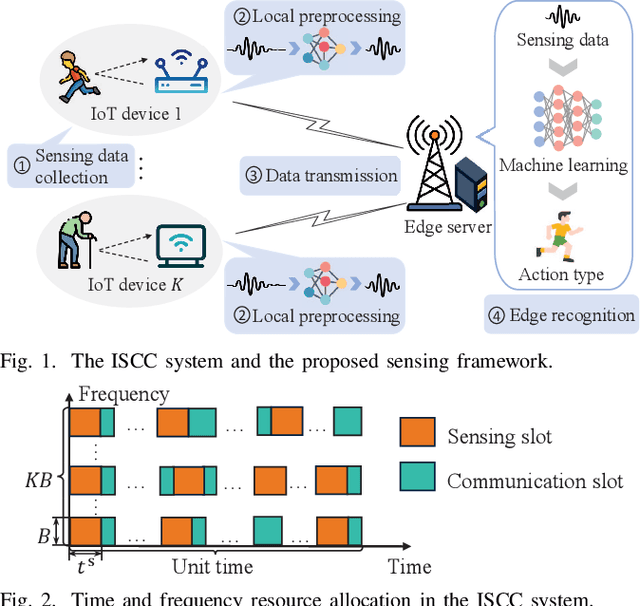
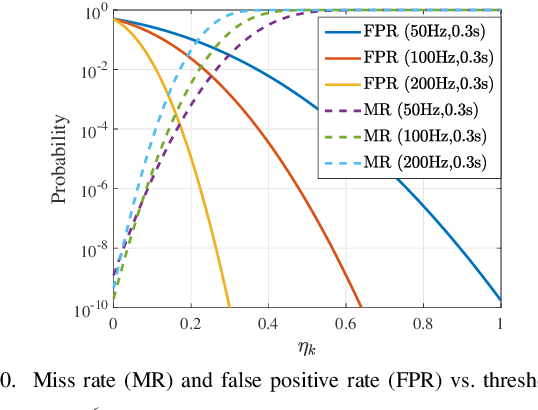
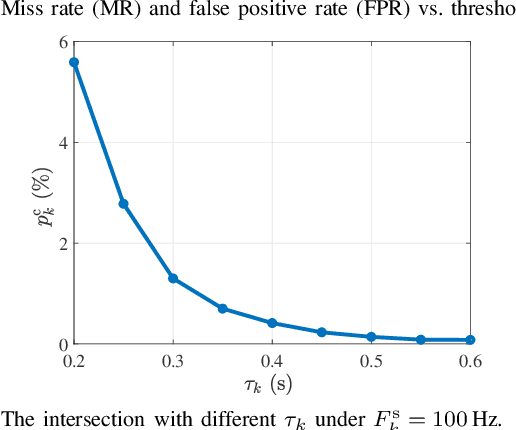
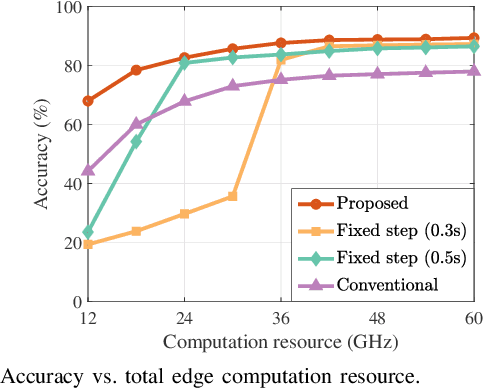
Integrated sensing, communication, and computation (ISCC) has been regarded as a prospective technology for the next-generation wireless network, supporting humancentric intelligent applications. However, the delay sensitivity of these computation-intensive applications, especially in a multidevice ISCC system with limited resources, highlights the urgent need for efficient sensing task execution frameworks. To address this, we propose a resource-efficient sensing framework in this paper. Different from existing solutions, it features a novel action detection module deployed at each device to detect the onset of an action. Only time windows filled with signals of interest are offloaded to the edge server and processed by the edge recognition module, thus reducing overhead. Furthermore, we quantitatively analyze the sensing performance of the proposed sensing framework and formulate a sensing accuracy maximization problem under power, delay, and resource limitations for the multi-device ISCC system. By decomposing it into two subproblems, we develop an alternating direction method of multipliers (ADMM)-based distributed algorithm. It alternatively solves a sensing accuracy maximization subproblem at each device and employs a closed-form computation resource allocation strategy at the edge server till convergence. Finally, a real-world test is conducted using commodity wireless devices to validate the sensing performance analysis. Extensive test results demonstrate that our proposal achieves higher sensing accuracy under the limited resource compared to two baselines.
NHA12D: A New Pavement Crack Dataset and a Comparison Study Of Crack Detection Algorithms
May 02, 2022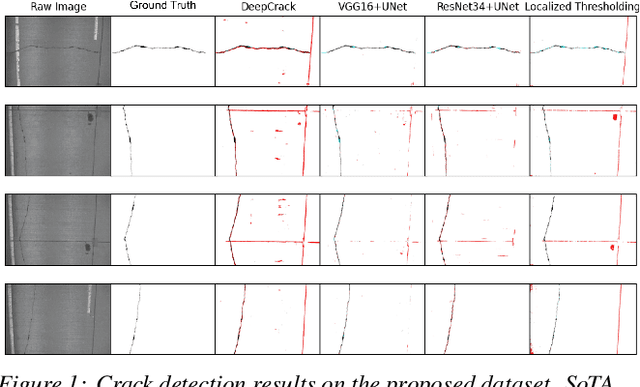
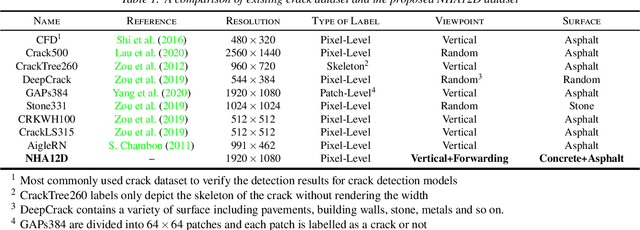
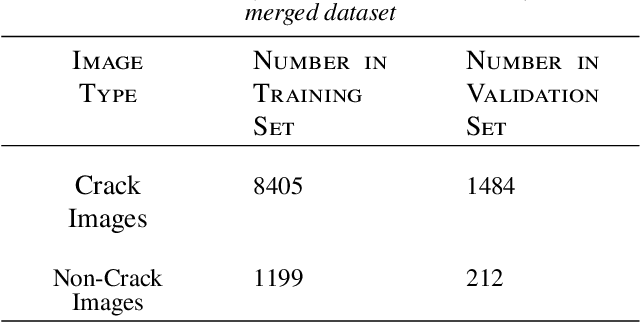

Crack detection plays a key role in automated pavement inspection. Although a large number of algorithms have been developed in recent years to further boost performance, there are still remaining challenges in practice, due to the complexity of pavement images. To further accelerate the development and identify the remaining challenges, this paper conducts a comparison study to evaluate the performance of the state of the art crack detection algorithms quantitatively and objectively. A more comprehensive annotated pavement crack dataset (NHA12D) that contains images with different viewpoints and pavements types is proposed. In the comparison study, crack detection algorithms were trained equally on the largest public crack dataset collected and evaluated on the proposed dataset (NHA12D). Overall, the U-Net model with VGG-16 as backbone has the best all-around performance, but models generally fail to distinguish cracks from concrete joints, leading to a high false-positive rate. It also found that detecting cracks from concrete pavement images still has huge room for improvement. Dataset for concrete pavement images is also missing in the literature. Future directions in this area include filling the gap for concrete pavement images and using domain adaptation techniques to enhance the detection results on unseen datasets.
Partial Symbol Recovery for Interference Resilience in Low-Power Wide Area Networks
Sep 08, 2021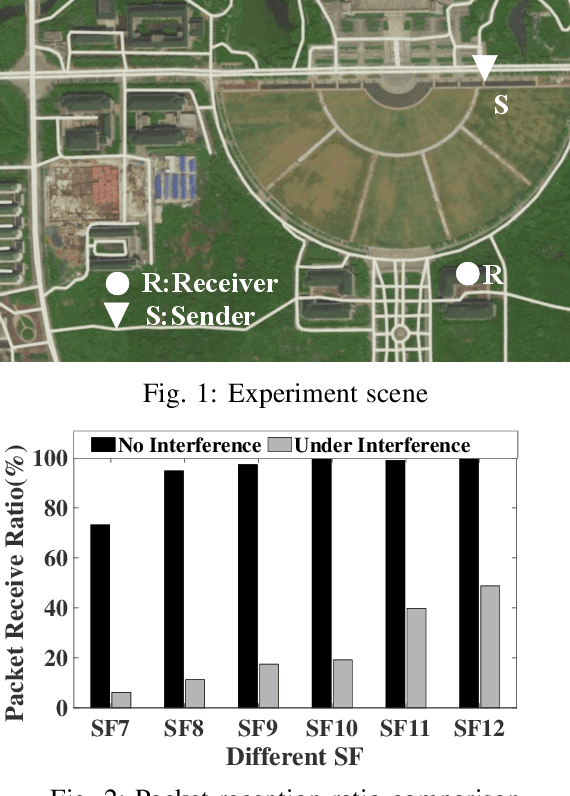
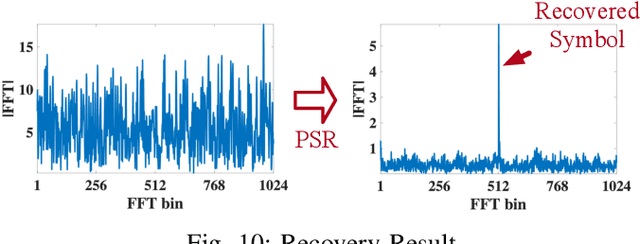
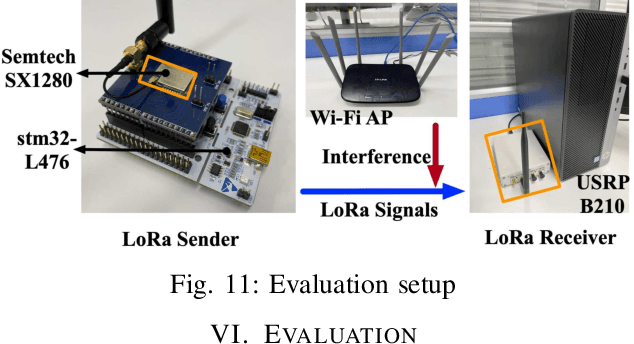
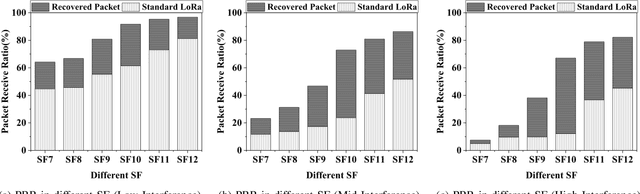
Recent years have witnessed the proliferation of Low-power Wide Area Networks (LPWANs) in the unlicensed band for various Internet-of-Things (IoT) applications. Due to the ultra-low transmission power and long transmission duration, LPWAN devices inevitably suffer from high power Cross Technology Interference (CTI), such as interference from Wi-Fi, coexisting in the same spectrum. To alleviate this issue, this paper introduces the Partial Symbol Recovery (PSR) scheme for improving the CTI resilience of LPWAN. We verify our idea on LoRa, a widely adopted LPWAN technique, as a proof of concept. At the PHY layer, although CTI has much higher power, its duration is relatively shorter compared with LoRa symbols, leaving part of a LoRa symbol uncorrupted. Moreover, due to its high redundancy, LoRa chips within a symbol are highly correlated. This opens the possibility of detecting a LoRa symbol with only part of the chips. By examining the unique frequency patterns in LoRa symbols with time-frequency analysis, our design effectively detects the clean LoRa chips that are free of CTI. This enables PSR to only rely on clean LoRa chips for successfully recovering from communication failures. We evaluate our PSR design with real-world testbeds, including SX1280 LoRa chips and USRP B210, under Wi-Fi interference in various scenarios. Extensive experiments demonstrate that our design offers reliable packet recovery performance, successfully boosting the LoRa packet reception ratio from 45.2% to 82.2% with a performance gain of 1.8 times.