 Add to Chrome
 Add to Firefox
 Add to Edge
Captioning Daily Activity Images in Early Childhood Education: Benchmark and Algorithm
Apr 02, 2026
Image captioning for Early Childhood Education (ECE) is essential for automated activity understanding and educational assessment. However, existing methods face two key challenges. First, the lack of large-scale, domain-specific datasets limits the model's ability to capture fine-grained semantic concepts unique to ECE scenarios, resulting in generic and imprecise descriptions. Second, conventional training paradigms exhibit limitations in enhancing professional object description capability, as supervised learning tends to favor high-frequency expressions, while reinforcement learning may suffer from unstable optimization on difficult samples. To address these limitations, we introduce ECAC, a large-scale benchmark for ECE daily activity image captioning, comprising 256,121 real-world images annotated with expert-level captions and fine-grained labels. ECAC is further equipped with a domain-oriented evaluation protocol, the Teaching Toy Recognition Score (TTS), to explicitly measure professional object naming accuracy. Furthermore, we propose RSRS (Reward-Conditional Switch of Reinforcement Learning and Supervised Fine-Tuning), a hybrid training framework that dynamically alternates between RL and supervised optimization. By rerouting hard samples with zero rewards to supervised fine-tuning, RSRS effectively mitigates advantage collapse and enables stable optimization for fine-grained recognition. Leveraging ECAC and RSRS, we develop KinderMM-Cap-3B, a domain-adapted multimodal large language model. Extensive experiments demonstrate that our model achieves a TTS of 51.06, substantially outperforming state-of-the-art baselines while maintaining superior caption quality, highlighting its potential for specialized educational applications.

Technique Report of CVPR 2024 PBDL Challenges
Jun 15, 2024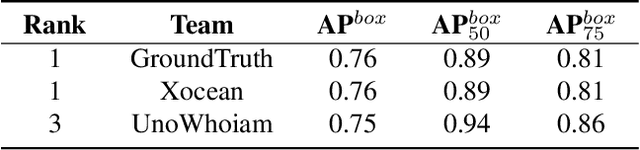
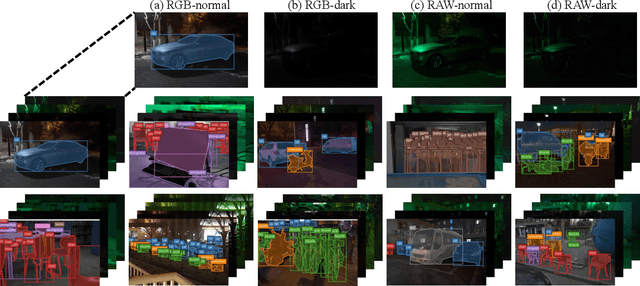
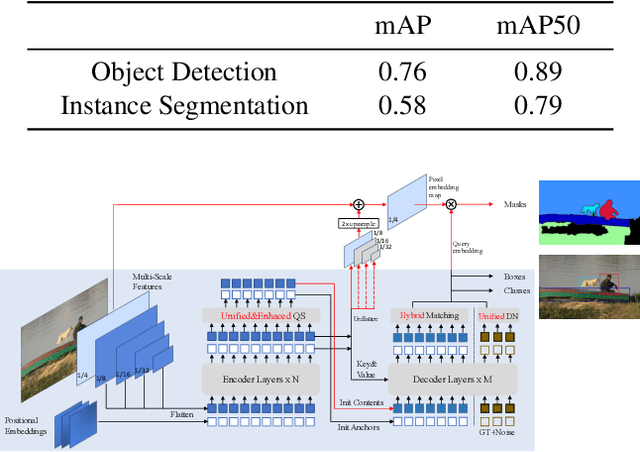

The intersection of physics-based vision and deep learning presents an exciting frontier for advancing computer vision technologies. By leveraging the principles of physics to inform and enhance deep learning models, we can develop more robust and accurate vision systems. Physics-based vision aims to invert the processes to recover scene properties such as shape, reflectance, light distribution, and medium properties from images. In recent years, deep learning has shown promising improvements for various vision tasks, and when combined with physics-based vision, these approaches can enhance the robustness and accuracy of vision systems. This technical report summarizes the outcomes of the Physics-Based Vision Meets Deep Learning (PBDL) 2024 challenge, held in CVPR 2024 workshop. The challenge consisted of eight tracks, focusing on Low-Light Enhancement and Detection as well as High Dynamic Range (HDR) Imaging. This report details the objectives, methodologies, and results of each track, highlighting the top-performing solutions and their innovative approaches.