 Add to Chrome
 Add to Firefox
 Add to Edge
CosFly: Plan in the Matrix, Fly in the World
May 18, 2026
We present CosFly, a box-structured planning and multimodal simulation pipeline for aerial tracking, together with CosFly-Track, a large-scale UAV dataset for dynamic target tracking across diverse environments including urban centers, highways, rural landscapes, forests, and coastal towns. In our current implementation on CARLA, CosFly provides a modular 7-step construction pipeline that converts complex 3D worlds into structured obstacle representations for planning, then projects the resulting trajectories back into multi-modal sensor data -- including RGB images, high-precision depth maps, and semantic segmentation masks -- paired with natural language navigation instructions. A key feature is the support for configurable fixed-FOV zoom levels (one FOV setting drawn per trajectory and held constant throughout), enabling simulation of various focal lengths through camera-intrinsic adjustments. The pipeline covers the complete workflow from 3D map export through grid simplification, pedestrian and drone trajectory planning, multi-modal rendering with 6-DOF pose annotations, quality inspection, and teacher-student caption generation. We analyze two trajectory-planning paradigms for aerial target tracking: a conventional two-stage pipeline with front-end candidate generation and backend refinement, and a direct gradient-based formulation that optimizes multiple tracking constraints in a single objective. The public CosFly-Track release contains 250 validated trajectories and approximately 100,000 rendered images with complete 6-DOF drone pose annotations (position x, y, z and orientation yaw, pitch, roll). Together, the pipeline and dataset establish a scalable foundation for aerial-ground collaborative research, supporting dynamic target tracking, UAV navigation, and multi-modal perception across diverse environments.

Vision-and-Language Navigation for UAVs: Progress, Challenges, and a Research Roadmap
Apr 15, 2026Vision-and-Language Navigation for Unmanned Aerial Vehicles (UAV-VLN) represents a pivotal challenge in embodied artificial intelligence, focused on enabling UAVs to interpret high-level human commands and execute long-horizon tasks in complex 3D environments. This paper provides a comprehensive and structured survey of the field, from its formal task definition to the current state of the art. We establish a methodological taxonomy that charts the technological evolution from early modular and deep learning approaches to contemporary agentic systems driven by large foundation models, including Vision-Language Models (VLMs), Vision-Language-Action (VLA) models, and the emerging integration of generative world models with VLA architectures for physically-grounded reasoning. The survey systematically reviews the ecosystem of essential resources simulators, datasets, and evaluation metrics that facilitates standardized research. Furthermore, we conduct a critical analysis of the primary challenges impeding real-world deployment: the simulation-to-reality gap, robust perception in dynamic outdoor settings, reasoning with linguistic ambiguity, and the efficient deployment of large models on resource-constrained hardware. By synthesizing current benchmarks and limitations, this survey concludes by proposing a forward-looking research roadmap to guide future inquiry into key frontiers such as multi-agent swarm coordination and air-ground collaborative robotics.
CARLA-Air: Fly Drones Inside a CARLA World -- A Unified Infrastructure for Air-Ground Embodied Intelligence
Mar 30, 2026The convergence of low-altitude economies, embodied intelligence, and air-ground cooperative systems creates growing demand for simulation infrastructure capable of jointly modeling aerial and ground agents within a single physically coherent environment. Existing open-source platforms remain domain-segregated: driving simulators lack aerial dynamics, while multirotor simulators lack realistic ground scenes. Bridge-based co-simulation introduces synchronization overhead and cannot guarantee strict spatial-temporal consistency. We present CARLA-Air, an open-source infrastructure that unifies high-fidelity urban driving and physics-accurate multirotor flight within a single Unreal Engine process. The platform preserves both CARLA and AirSim native Python APIs and ROS 2 interfaces, enabling zero-modification code reuse. Within a shared physics tick and rendering pipeline, CARLA-Air delivers photorealistic environments with rule-compliant traffic, socially-aware pedestrians, and aerodynamically consistent UAV dynamics, synchronously capturing up to 18 sensor modalities across all platforms at each tick. The platform supports representative air-ground embodied intelligence workloads spanning cooperation, embodied navigation and vision-language action, multi-modal perception and dataset construction, and reinforcement-learning-based policy training. An extensible asset pipeline allows integration of custom robot platforms into the shared world. By inheriting AirSim's aerial capabilities -- whose upstream development has been archived -- CARLA-Air ensures this widely adopted flight stack continues to evolve within a modern infrastructure. Released with prebuilt binaries and full source: https://github.com/louiszengCN/CarlaAir
NeeCo: Image Synthesis of Novel Instrument States Based on Dynamic and Deformable 3D Gaussian Reconstruction
Aug 11, 2025
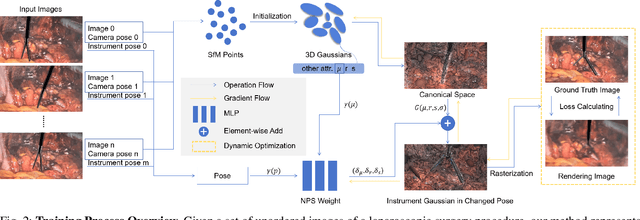
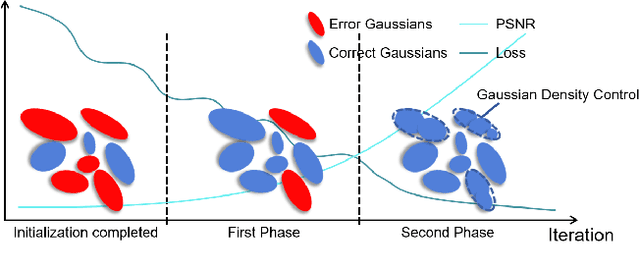
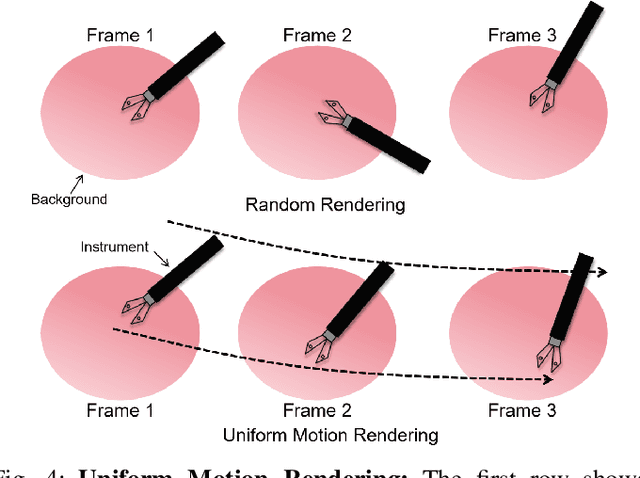
Computer vision-based technologies significantly enhance surgical automation by advancing tool tracking, detection, and localization. However, Current data-driven approaches are data-voracious, requiring large, high-quality labeled image datasets, which limits their application in surgical data science. Our Work introduces a novel dynamic Gaussian Splatting technique to address the data scarcity in surgical image datasets. We propose a dynamic Gaussian model to represent dynamic surgical scenes, enabling the rendering of surgical instruments from unseen viewpoints and deformations with real tissue backgrounds. We utilize a dynamic training adjustment strategy to address challenges posed by poorly calibrated camera poses from real-world scenarios. Additionally, we propose a method based on dynamic Gaussians for automatically generating annotations for our synthetic data. For evaluation, we constructed a new dataset featuring seven scenes with 14,000 frames of tool and camera motion and tool jaw articulation, with a background of an ex-vivo porcine model. Using this dataset, we synthetically replicate the scene deformation from the ground truth data, allowing direct comparisons of synthetic image quality. Experimental results illustrate that our method generates photo-realistic labeled image datasets with the highest values in Peak-Signal-to-Noise Ratio (29.87). We further evaluate the performance of medical-specific neural networks trained on real and synthetic images using an unseen real-world image dataset. Our results show that the performance of models trained on synthetic images generated by the proposed method outperforms those trained with state-of-the-art standard data augmentation by 10%, leading to an overall improvement in model performances by nearly 15%.
Implementing blind navigation through multi-modal sensing and gait guidance
Jun 24, 2025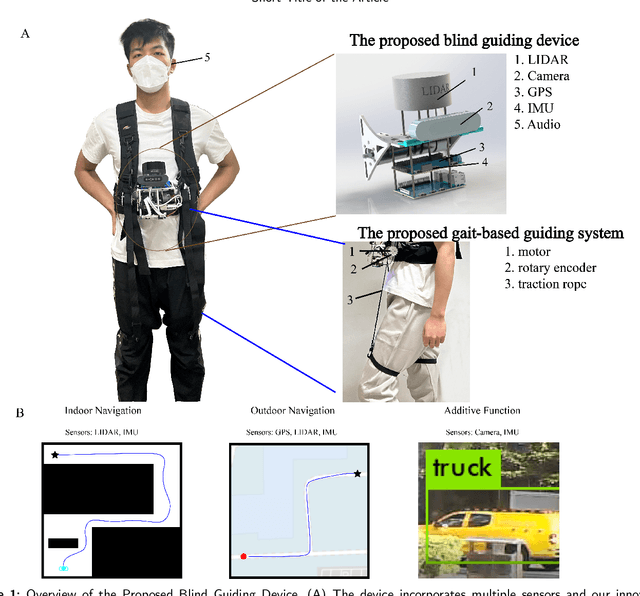
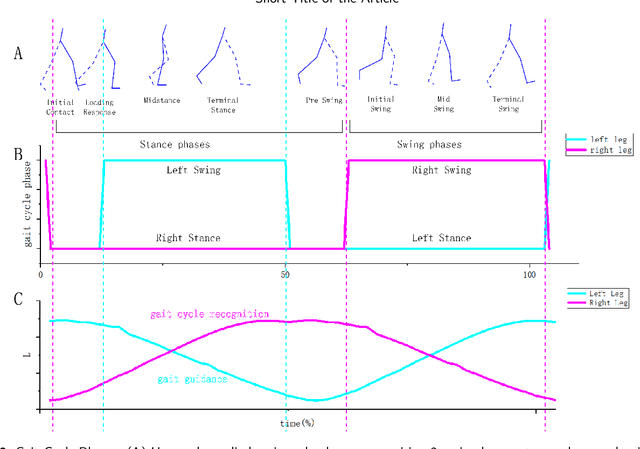
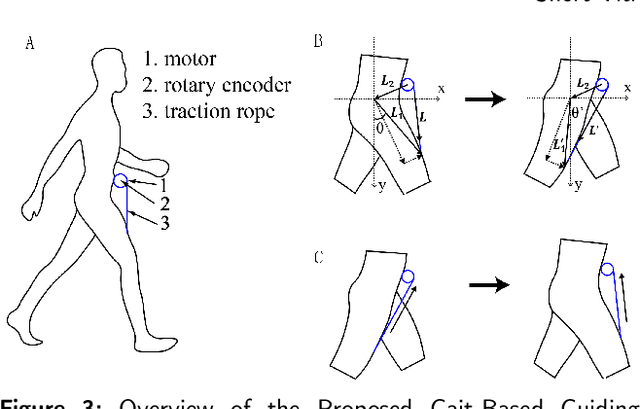
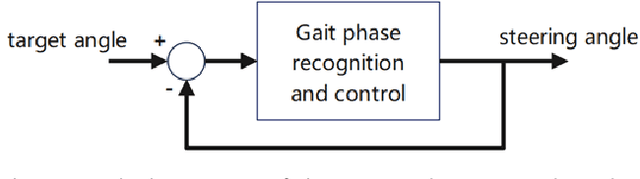
By the year 2023, the global population of individuals with impaired vision has surpassed 220 million. People with impaired vision will find it difficult while finding path or avoiding obstacles, and must ask for auxiliary tools for help. Although traditional aids such as guide canes and guide dogs exist, they still have some shortcomings. In this paper, we present our wearable blind guiding device, what perform navigation guidance through our proposed Gait-based Guiding System. Our device innovatively integrates gait phase analysis for walking guide, and in terms of environmental perception, we use multimodal sensing to acquire diverse environment information. During the experiment, we conducted both indoor and outdoor experiments, and compared with the standard guide cane. The result shows superior performance of our device in blind guidance.
YOCO: You Only Calibrate Once for Accurate Extrinsic Parameter in LiDAR-Camera Systems
Jul 25, 2024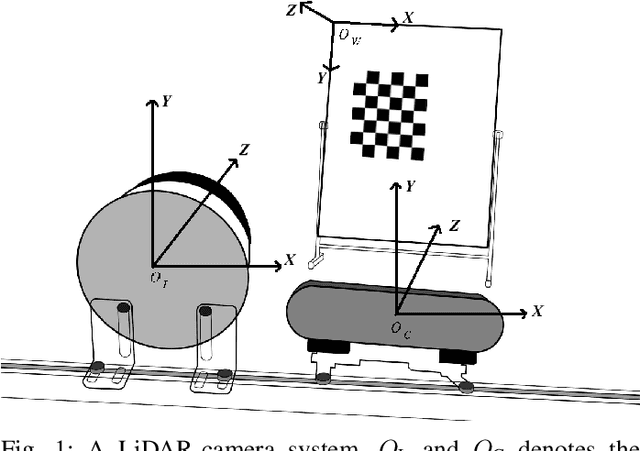
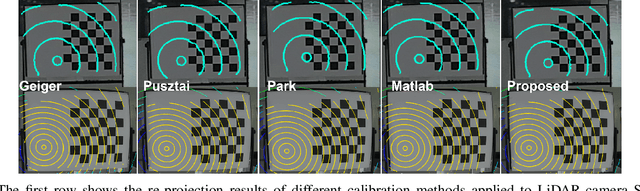
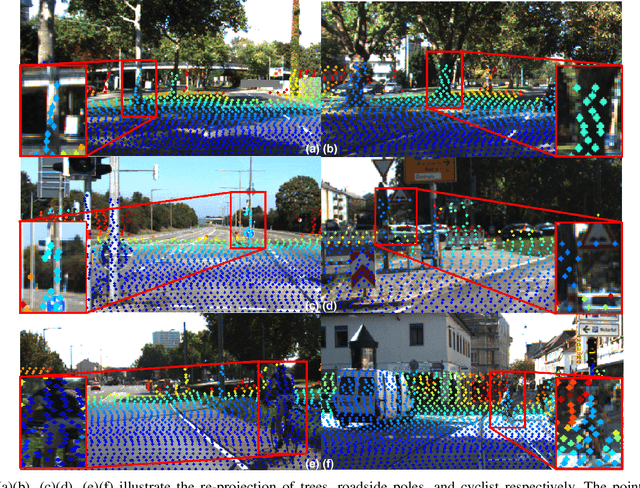
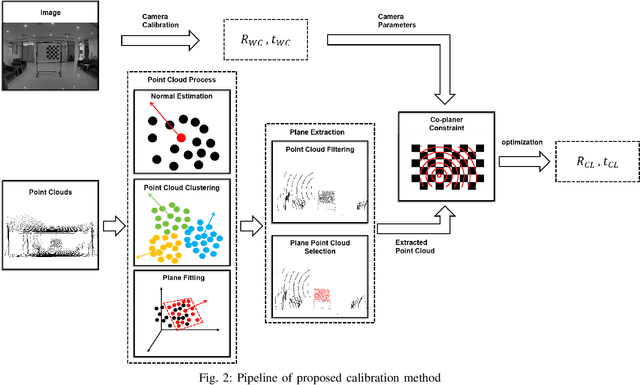
In a multi-sensor fusion system composed of cameras and LiDAR, precise extrinsic calibration contributes to the system's long-term stability and accurate perception of the environment. However, methods based on extracting and registering corresponding points still face challenges in terms of automation and precision. This paper proposes a novel fully automatic extrinsic calibration method for LiDAR-camera systems that circumvents the need for corresponding point registration. In our approach, a novel algorithm to extract required LiDAR correspondence point is proposed. This method can effectively filter out irrelevant points by computing the orientation of plane point clouds and extracting points by applying distance- and density-based thresholds. We avoid the need for corresponding point registration by introducing extrinsic parameters between the LiDAR and camera into the projection of extracted points and constructing co-planar constraints. These parameters are then optimized to solve for the extrinsic. We validated our method across multiple sets of LiDAR-camera systems. In synthetic experiments, our method demonstrates superior performance compared to current calibration techniques. Real-world data experiments further confirm the precision and robustness of the proposed algorithm, with average rotation and translation calibration errors between LiDAR and camera of less than 0.05 degree and 0.015m, respectively. This method enables automatic and accurate extrinsic calibration in a single one step, emphasizing the potential of calibration algorithms beyond using corresponding point registration to enhance the automation and precision of LiDAR-camera system calibration.
* IEEE TRANSACTIONS ON INSTRUMENTATION AND MEASUREMENT
Realistic Surgical Image Dataset Generation Based On 3D Gaussian Splatting
Jul 20, 2024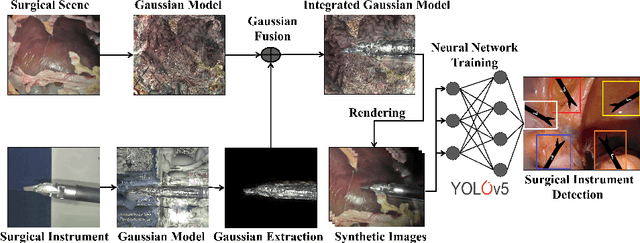
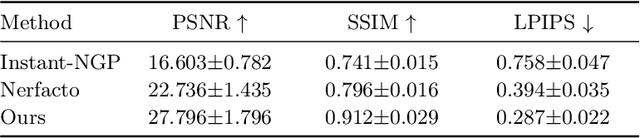
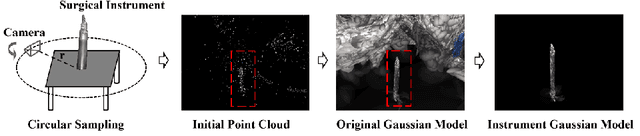
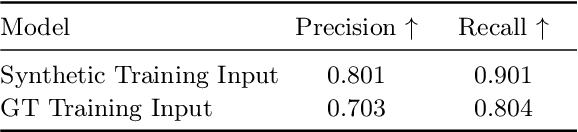
Computer vision technologies markedly enhance the automation capabilities of robotic-assisted minimally invasive surgery (RAMIS) through advanced tool tracking, detection, and localization. However, the limited availability of comprehensive surgical datasets for training represents a significant challenge in this field. This research introduces a novel method that employs 3D Gaussian Splatting to generate synthetic surgical datasets. We propose a method for extracting and combining 3D Gaussian representations of surgical instruments and background operating environments, transforming and combining them to generate high-fidelity synthetic surgical scenarios. We developed a data recording system capable of acquiring images alongside tool and camera poses in a surgical scene. Using this pose data, we synthetically replicate the scene, thereby enabling direct comparisons of the synthetic image quality (29.592 PSNR). As a further validation, we compared two YOLOv5 models trained on the synthetic and real data, respectively, and assessed their performance in an unseen real-world test dataset. Comparing the performances, we observe an improvement in neural network performance, with the synthetic-trained model outperforming the real-world trained model by 12%, testing both on real-world data.
* This paper has already been accepted by INTERNATIONAL CONFERENCE ON MEDICAL IMAGE COMPUTING AND COMPUTER ASSISTED INTERVENTION (MICCAI 2024)