 Add to Chrome
 Add to Firefox
 Add to Edge
BASIIS: Bistatic Angular Sampling and Interpolation for ISAC Setups
Jun 16, 2026
Integrated Sensing and Communications (ISAC) is a defining feature of 6G, extending cellular networks with radar-like sensing at limited additional overhead. In bistatic deployments, sensing requires coordinating the transmitter (TX) and receiver (RX) arrays to scan the Cartesian product of angle of departure and arrival, resulting in a four-dimensional sampling problem in the angular domain. This work establishes a complete angular sampling framework for bistatic ISAC, extending the DFT-based optimal-sampling methodology to the full azimuth and elevation domains of both arrays. We show that the bistatic geometry couples the TX and RX elevation angles, and represent this coupling through the ortho-baseline coarray, a virtual array that captures the joint elevation aperture of the array pair. From the coarray we derive a minimal sampling and interpolation scheme, near-lossless and realizable with any beamforming architecture. Monte Carlo simulations confirm the proposed minimal acquisition essentially equalizes the detection accuracy of dense oversampled imaging while acquiring 3 to 5 times fewer TX-RX direction pairs. This allows having bistatic operations with drastically reduced overhead on the radio resource usage of ISAC systems.

Parametric Channel Estimation with Hardware Impaired Hybrid Beamformers: Sensing, Communications, and Power Efficiency Tradeoffs
Jun 10, 2026Due to high power consumption and hardware costs of fully digital arrays, hybrid beamformers are often considered as a more economic alternative. Furthermore, using high resolution analog to digital converters (ADCs) can also have prohibitive power consumption, which leads to lower resolution converters being considered for radio frequency (RF) front end design. The finite quantization resolution as well as the nonlinearities caused by the power amplifiers (PAs) and low noise amplifiers (LNAs) can have a substantial impact on system performance. While widely studied for communications, the impact of hardware impairments on sensing performance is considerably less explored. In this work, we study the interplay between hybrid beamforming architectures, hardware impairments, and sensing and communications performance. Additionally, we define the concept of double-isotropy for pilot-combiner pairs, formalizing the notion of a perfectly energy-fair beam sweep. The multiple start (MS) space alternating generalized expectation maximization algorithm (SAGE) is also introduced, aimed at addressing the optimization issues arising from parametric channel estimation (PCE) in hybrid beamformed systems. We then provide a set of numerical results assessing the impacts of beamformer architecture and ADC resolution on PCE, sensing, and communications performance. The results show that medium resolution ADCs lead to the most power efficient configurations, with the best tradeoff between power consumption and performance for the majority of beamforming architectures. Additionally, fully digital beamforming architectures with high resolution converters can often be substituted for a hybrid beamformer setup with medium resolution converters without significant performance loss at a lower power consumption and overall hardware cost.
Reliable UAV Detection with ISAC
May 22, 2026Unmanned Aerial Vehicle (UAV) detection is one prominent use case of Integrated Sensing and Communication (ISAC) systems in 5G-Advanced and future 6G networks. In this paper, we present experimental results for the detection of a small UAV using unmodified commercial 5G hardware for mono-static Orthogonal Frequency-Division Multiplexing (OFDM) radar and compare them with the expected performance based on models for link budget and hardware impairments. We show that reliable detection with sub-meter accuracy is still possible in over 500 meters distance in a challenging radio environment rich of strong clutter.
Reliable Non-Line-of-Sight Intrusion Detection with Integrated Sensing and Communications Hardware
Apr 09, 2026Non-line-of-sight (NLOS) sensing has the potential to enable use cases like intrusion detection in occluded areas, increasing the value provided by Integrated Sensing and Communications (ISAC) in future 6G cellular networks. In this paper, we present a reliable NLOS intrusion detection system based on a millimeter-wave ISAC proof-of-concept. By leveraging reflections off a large surface, the proposed system addresses the challenge of detecting moving targets in cluttered indoor industrial scenarios where the direct line-of-sight is obstructed. A signal processing pipeline including a probability hypothesis density (PHD) filter is applied to detect targets and track movements in NLOS. Experimental validation conducted in the ARENA2036 industrial research campus demonstrates that our system can reliably detect target presence in NLOS while avoiding false alarms. Tests with synthetically generated false peaks further demonstrate the robustness of our system to false alarms. Overall, the results underline the potential of NLOS ISAC as a promising technology for enabling intrusion detection and monitoring use cases.
Breaking the CP Limit: Robust Long-Range OFDM Sensing via Interference Cleaning
Feb 23, 2026In orthogonal frequency-division multiplexing-based radar and integrated sensing and communication systems, the sensing range is traditionally limited by the round-trip time corresponding to the cyclic prefix duration. Targets whose echoes arrive after this duration induce intersymbol interference (ISI) and associated intercarrier interference (ICI), which significantly degrade detection performance, elevate the interference-noise floor in the radar image, and reduce the useful signal power due to window mismatch. Existing methods face a trade-off between recovering useful signal and suppressing interference, particularly in multi-target scenarios. This paper proposes two frameworks to resolve this dilemma, offering a flexible trade-off between computational cost and target detection performance. First, a signal model is derived, demonstrating that ISI and ICI-oriented interference often dominates thermal noise in high-dynamic-range scenarios. To combat the ISI and ICI-based interference-noise floor increase, joint-interference cancellation with coherent compensation is proposed. This approach is an efficient evolution of the successive-interference cancellation algorithm, utilizing high-precision chirp Z-transform estimation and frequency-domain coherent compensation to recover weak distant targets. For scenarios requiring maximum precision, the full reconstruction-based sliding window scheme is presented, which shifts the receive window to capture optimal signal energy while performing full-signal reconstruction for all detected targets. Numerical results show that both methods outperform state-of-the-art benchmarks.
Synthetic Aperture Communication: Principles and Application to Massive IoT Satellite Uplink
Feb 16, 2026While synthetic aperture radar is widely adopted to provide high-resolution imaging at long distances using small arrays, the concept of coherent synthetic aperture communication (SAC) has not yet been explored. This article introduces the principles of SAC for direct satellite-to-device uplink, showcasing precise direction-of-arrival estimation for user equipment (UE) devices, facilitating spatial signal separation, localization, and easing link budget constraints. Simulations for a low Earth orbit satellite at 600 km orbit and two UE devices performing orthogonal frequency-division multiplexing-based transmission with polar coding at 3.5 GHz demonstrate block error rates below 0.1 with transmission powers as low as -10 dBm, even under strong interference when UE devices are resolved but fall on each other's strongest angular sidelobe. These results validate the ability of the proposed scheme to address mutual interference and stringent power limitations, paving the way for massive Internet of Things connectivity in non-terrestrial networks.
Bistatic ISAC: Practical Challenges and Solutions
Jan 22, 2026This article presents and discusses challenges and solutions for practical issues in bistatic integrated sensing and communication (ISAC) in 6G networks. Considering orthogonal frequency-division multiplexing as the adopted waveform, a discussion on system design aiming to achieve both a desired sensing key performance indicators and limit the impact of hardware impairments is presented. In addition, signal processing techniques to enable over-the-air synchronization and generation of periodograms with range, Doppler shift, and angular information are discussed. Simulation results are then presented for a cellular-based ISAC scenario considering system parameterization compliant to current 5G and, finally, a discussion on open challenges for future deployments is presented.
Weather Estimation for Integrated Sensing and Communication
Jan 21, 2026One of the key features of sixth generation (6G) mobile communications will be integrated sensing and communication (ISAC). While the main goal of ISAC in standardization efforts is to detect objects, the byproducts of radar operations can be used to enable new services in 6G, such as weather sensing. Even though weather radars are the most prominent technology for weather detection and monitoring, they are expensive and usually neglect areas in close vicinity. To this end, we propose reusing the dense deployment of 6G base stations for weather sensing purposes by detecting and estimating weather conditions. We implement both a classifier and a regressor as a convolutional neural network trained across measurements with varying precipitation rates and wind speeds. We implement our approach in an ISAC proof-of-concept, and conduct a multi-week experiment campaign. Experimental results show that we are able to jointly and accurately classify weather conditions with accuracies of 99.38% and 98.99% for precipitation rate and wind speed, respectively. For estimation, we obtain errors of 1.2 mm/h and 1.5 km/h, for precipitation rate and wind speed, respectively. These findings indicate that weather sensing services can be reliably deployed in 6G ISAC networks, broadening their service portfolio and boosting their market value.
Hybrid Resource Allocation Scheme for Bistatic ISAC with Data Channels
Jan 16, 2026Bistatic integrated sensing and communication (ISAC) enables efficient reuse of the existing cellular infrastructure and is likely to play an important role in future sensing networks. In this context, ISAC using the data channel is a promising approach to improve the bistatic sensing performance compared to relying solely on pilots. One of the challenges associated with this approach is resource allocation: the communication link aims to transmit higher modulation order (MO) symbols to maximize the throughput, whereas a lower MO is preferable for sensing to achieve a higher signal-to-noise ratio in the radar image. To address this conflict, this paper introduces a hybrid resource allocation scheme. By placing lower MO symbols as pseudo-pilots on a suitable sensing grid, we enhance the bistatic sensing performance while only slightly reducing the spectral efficiency of the communication link. Simulation results validate our approach against different baselines and provide practical insights into how decoding errors affect the sensing performance.
Target Classification for Integrated Sensing and Communication in Industrial Deployments
Dec 23, 2025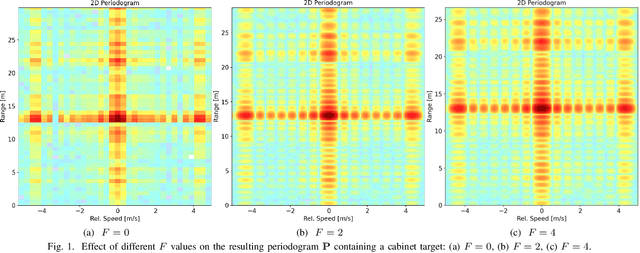
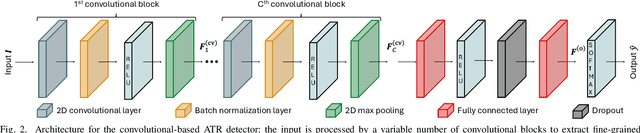
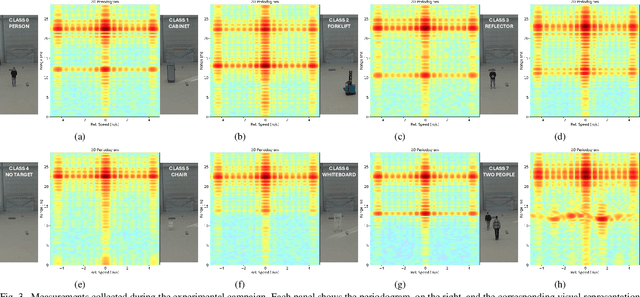
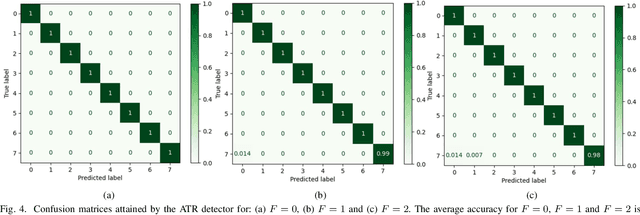
Integrated Sensing and Communication (ISAC) systems enable cellular networks to jointly operate as communication technology and sense the environment. While opportunities and potential performance have been largely investigated in simulations, few experimental works have showcased Automatic Target Recognition (ATR) effectiveness in a real-world deployment based on cellular radio units. To bridge this gap, this paper presents an initial study investigating the feasibility of ATR for ISAC. Our ATR solution uses a Deep Learning (DL)-based detector to infer the target class directly from the radar images generated by the ISAC system. The DL detector is evaluated with experimental data from a ISAC testbed based on commercially available mmWave radio units in the ARENA 2036 industrial research campus located in Stuttgart, Germany. Experimental results demonstrate accurate classification performance, demonstrating the feasibility of ATR ISAC with cellular hardware in our setup. We finally provide insights about the open generalization challenges, that will fuel future work on the topic.