 Add to Chrome
 Add to Firefox
 Add to Edge
PB-LRDWWS System for the SLT 2024 Low-Resource Dysarthria Wake-Up Word Spotting Challenge
Sep 07, 2024
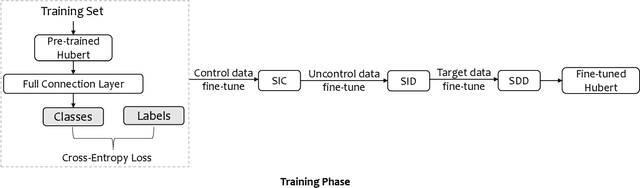
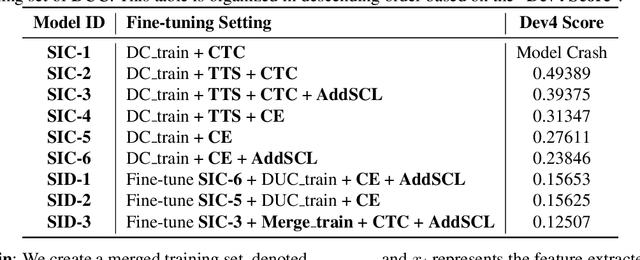
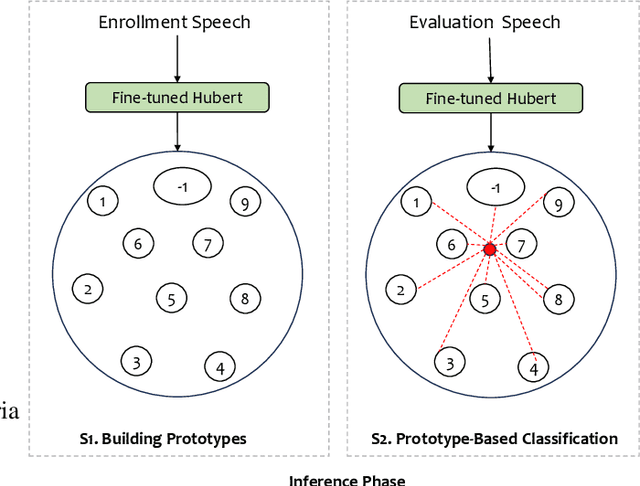

For the SLT 2024 Low-Resource Dysarthria Wake-Up Word Spotting (LRDWWS) Challenge, we introduce the PB-LRDWWS system. This system combines a dysarthric speech content feature extractor for prototype construction with a prototype-based classification method. The feature extractor is a fine-tuned HuBERT model obtained through a three-stage fine-tuning process using cross-entropy loss. This fine-tuned HuBERT extracts features from the target dysarthric speaker's enrollment speech to build prototypes. Classification is achieved by calculating the cosine similarity between the HuBERT features of the target dysarthric speaker's evaluation speech and prototypes. Despite its simplicity, our method demonstrates effectiveness through experimental results. Our system achieves second place in the final Test-B of the LRDWWS Challenge.

Strategic Chain-of-Thought: Guiding Accurate Reasoning in LLMs through Strategy Elicitation
Sep 05, 2024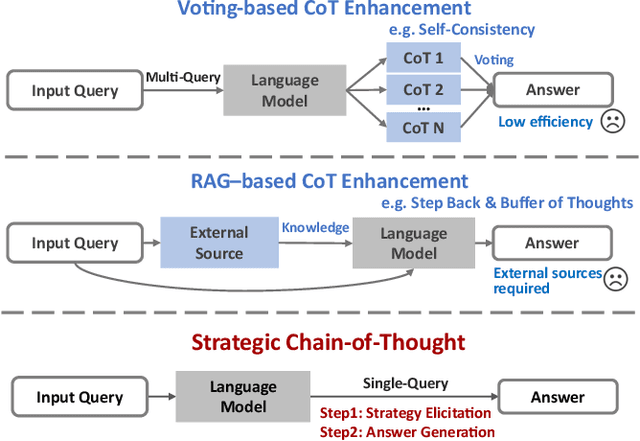
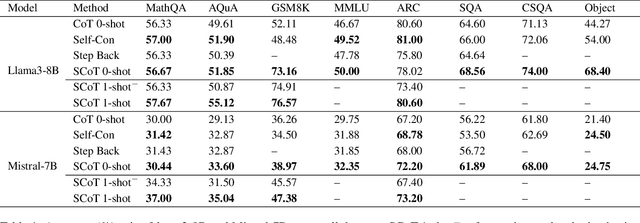
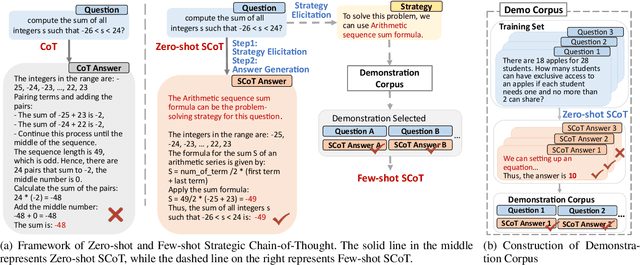
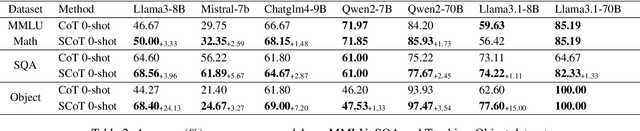
The Chain-of-Thought (CoT) paradigm has emerged as a critical approach for enhancing the reasoning capabilities of large language models (LLMs). However, despite their widespread adoption and success, CoT methods often exhibit instability due to their inability to consistently ensure the quality of generated reasoning paths, leading to sub-optimal reasoning performance. To address this challenge, we propose the \textbf{Strategic Chain-of-Thought} (SCoT), a novel methodology designed to refine LLM performance by integrating strategic knowledge prior to generating intermediate reasoning steps. SCoT employs a two-stage approach within a single prompt: first eliciting an effective problem-solving strategy, which is then used to guide the generation of high-quality CoT paths and final answers. Our experiments across eight challenging reasoning datasets demonstrate significant improvements, including a 21.05\% increase on the GSM8K dataset and 24.13\% on the Tracking\_Objects dataset, respectively, using the Llama3-8b model. Additionally, we extend the SCoT framework to develop a few-shot method with automatically matched demonstrations, yielding even stronger results. These findings underscore the efficacy of SCoT, highlighting its potential to substantially enhance LLM performance in complex reasoning tasks.
Uncertainty-Aware Mean Opinion Score Prediction
Aug 23, 2024Mean Opinion Score (MOS) prediction has made significant progress in specific domains. However, the unstable performance of MOS prediction models across diverse samples presents ongoing challenges in the practical application of these systems. In this paper, we point out that the absence of uncertainty modeling is a significant limitation hindering MOS prediction systems from applying to the real and open world. We analyze the sources of uncertainty in the MOS prediction task and propose to establish an uncertainty-aware MOS prediction system that models aleatory uncertainty and epistemic uncertainty by heteroscedastic regression and Monte Carlo dropout separately. The experimental results show that the system captures uncertainty well and is capable of performing selective prediction and out-of-domain detection. Such capabilities significantly enhance the practical utility of MOS systems in diverse real and open-world environments.
Re-TASK: Revisiting LLM Tasks from Capability, Skill, and Knowledge Perspectives
Aug 13, 2024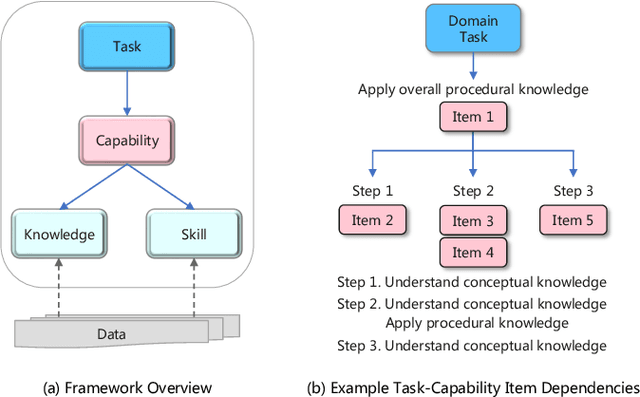
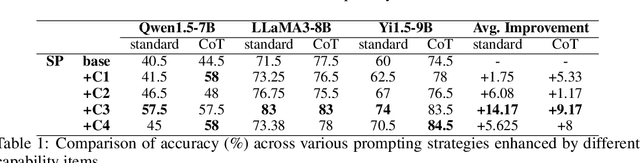

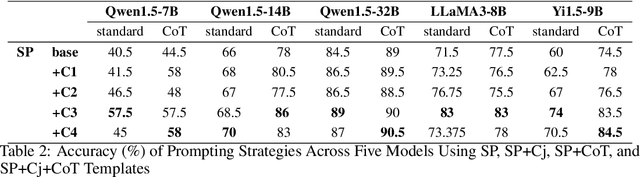
As large language models (LLMs) continue to scale, their enhanced performance often proves insufficient for solving domain-specific tasks. Systematically analyzing their failures and effectively enhancing their performance remain significant challenges. This paper introduces the Re-TASK framework, a novel theoretical model that Revisits LLM Tasks from cApability, Skill, Knowledge perspectives, guided by the principles of Bloom's Taxonomy and Knowledge Space Theory. The Re-TASK framework provides a systematic methodology to deepen our understanding, evaluation, and enhancement of LLMs for domain-specific tasks. It explores the interplay among an LLM's capabilities, the knowledge it processes, and the skills it applies, elucidating how these elements are interconnected and impact task performance. Our application of the Re-TASK framework reveals that many failures in domain-specific tasks can be attributed to insufficient knowledge or inadequate skill adaptation. With this insight, we propose structured strategies for enhancing LLMs through targeted knowledge injection and skill adaptation. Specifically, we identify key capability items associated with tasks and employ a deliberately designed prompting strategy to enhance task performance, thereby reducing the need for extensive fine-tuning. Alternatively, we fine-tune the LLM using capability-specific instructions, further validating the efficacy of our framework. Experimental results confirm the framework's effectiveness, demonstrating substantial improvements in both the performance and applicability of LLMs.
Iterative Prototype Refinement for Ambiguous Speech Emotion Recognition
Aug 01, 2024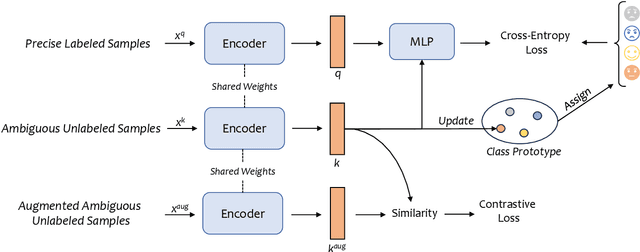
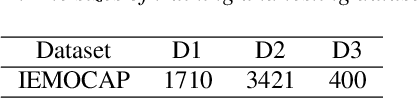
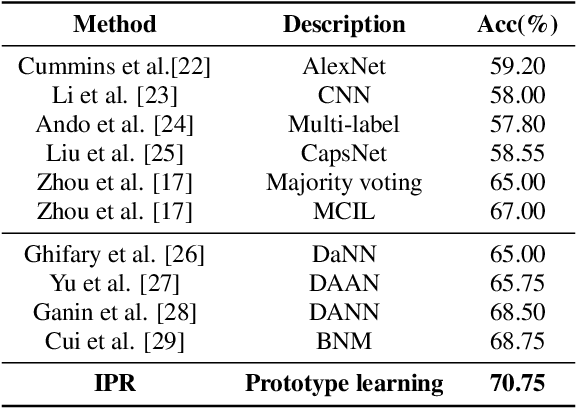
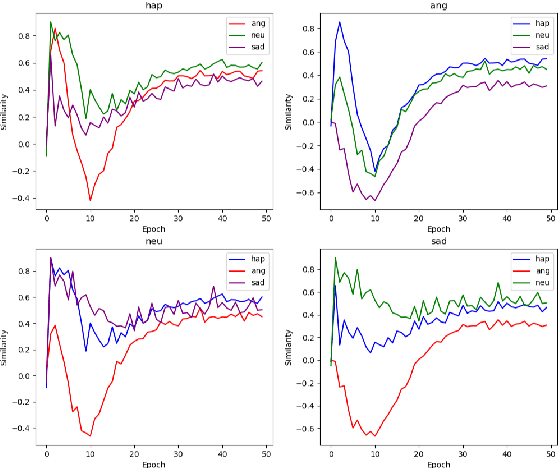
Recognizing emotions from speech is a daunting task due to the subtlety and ambiguity of expressions. Traditional speech emotion recognition (SER) systems, which typically rely on a singular, precise emotion label, struggle with this complexity. Therefore, modeling the inherent ambiguity of emotions is an urgent problem. In this paper, we propose an iterative prototype refinement framework (IPR) for ambiguous SER. IPR comprises two interlinked components: contrastive learning and class prototypes. The former provides an efficient way to obtain high-quality representations of ambiguous samples. The latter are dynamically updated based on ambiguous labels -- the similarity of the ambiguous data to all prototypes. These refined embeddings yield precise pseudo labels, thus reinforcing representation quality. Experimental evaluations conducted on the IEMOCAP dataset validate the superior performance of IPR over state-of-the-art methods, thus proving the effectiveness of our proposed method.
Enhancing Dysarthric Speech Recognition for Unseen Speakers via Prototype-Based Adaptation
Jul 26, 2024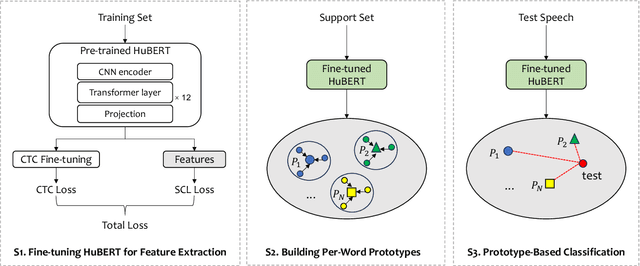
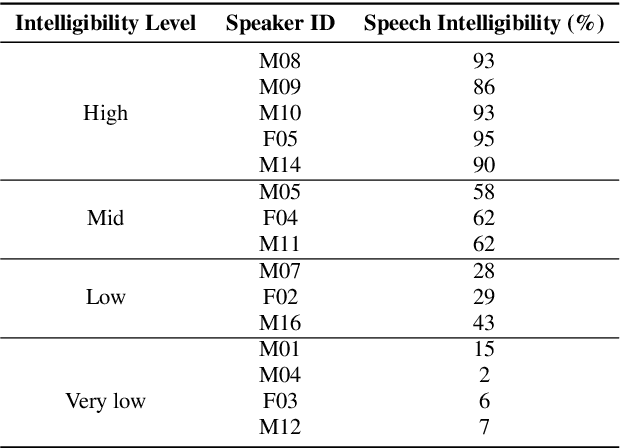
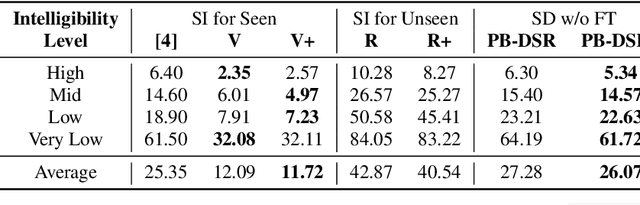
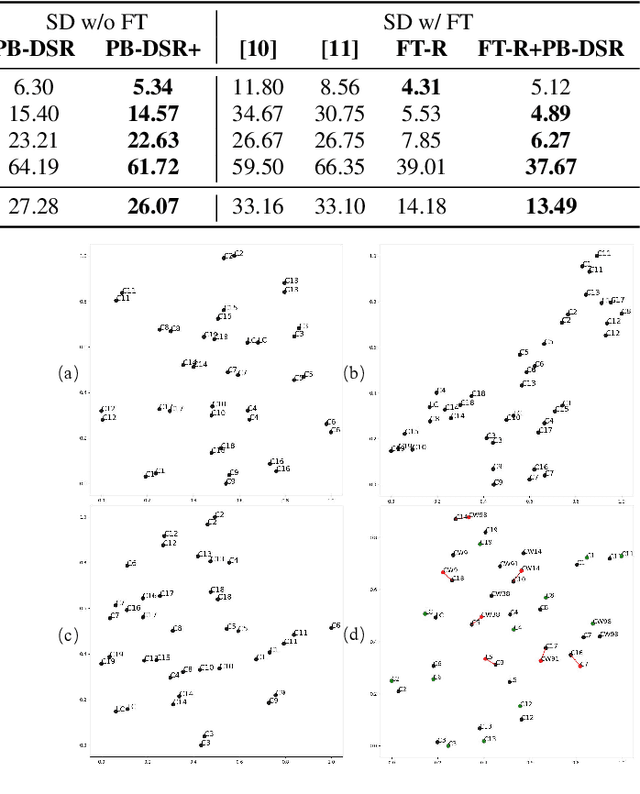
Dysarthric speech recognition (DSR) presents a formidable challenge due to inherent inter-speaker variability, leading to severe performance degradation when applying DSR models to new dysarthric speakers. Traditional speaker adaptation methodologies typically involve fine-tuning models for each speaker, but this strategy is cost-prohibitive and inconvenient for disabled users, requiring substantial data collection. To address this issue, we introduce a prototype-based approach that markedly improves DSR performance for unseen dysarthric speakers without additional fine-tuning. Our method employs a feature extractor trained with HuBERT to produce per-word prototypes that encapsulate the characteristics of previously unseen speakers. These prototypes serve as the basis for classification. Additionally, we incorporate supervised contrastive learning to refine feature extraction. By enhancing representation quality, we further improve DSR performance, enabling effective personalized DSR. We release our code at https://github.com/NKU-HLT/PB-DSR.
* accepted by Interspeech 2024
Enhancing Emotion Recognition in Incomplete Data: A Novel Cross-Modal Alignment, Reconstruction, and Refinement Framework
Jul 12, 2024
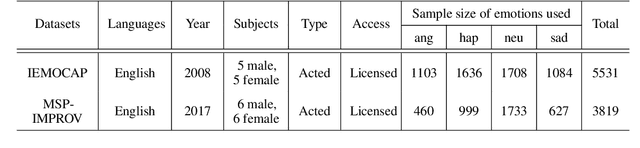

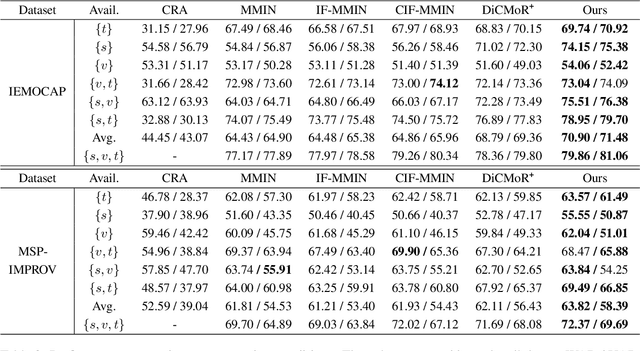
Multimodal emotion recognition systems rely heavily on the full availability of modalities, suffering significant performance declines when modal data is incomplete. To tackle this issue, we present the Cross-Modal Alignment, Reconstruction, and Refinement (CM-ARR) framework, an innovative approach that sequentially engages in cross-modal alignment, reconstruction, and refinement phases to handle missing modalities and enhance emotion recognition. This framework utilizes unsupervised distribution-based contrastive learning to align heterogeneous modal distributions, reducing discrepancies and modeling semantic uncertainty effectively. The reconstruction phase applies normalizing flow models to transform these aligned distributions and recover missing modalities. The refinement phase employs supervised point-based contrastive learning to disrupt semantic correlations and accentuate emotional traits, thereby enriching the affective content of the reconstructed representations. Extensive experiments on the IEMOCAP and MSP-IMPROV datasets confirm the superior performance of CM-ARR under conditions of both missing and complete modalities. Notably, averaged across six scenarios of missing modalities, CM-ARR achieves absolute improvements of 2.11% in WAR and 2.12% in UAR on the IEMOCAP dataset, and 1.71% and 1.96% in WAR and UAR, respectively, on the MSP-IMPROV dataset.
Self-Prompt Tuning: Enable Autonomous Role-Playing in LLMs
Jul 12, 2024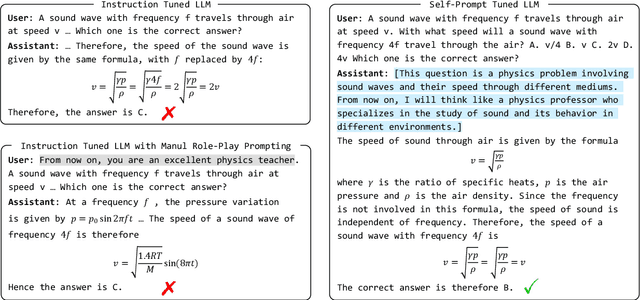
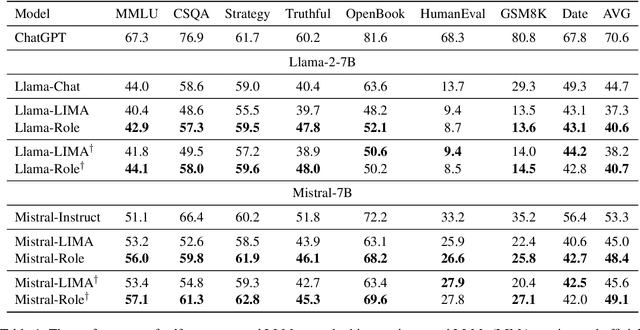
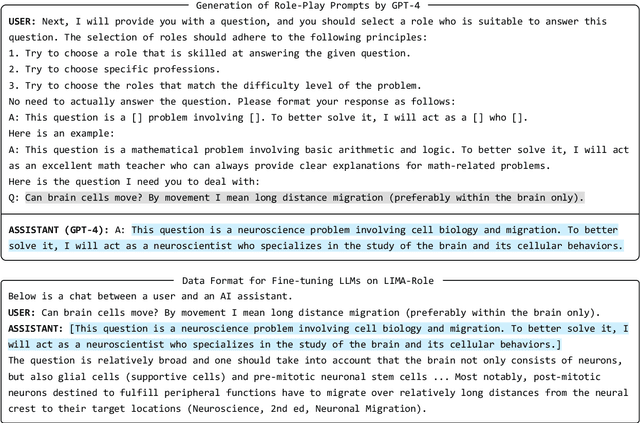
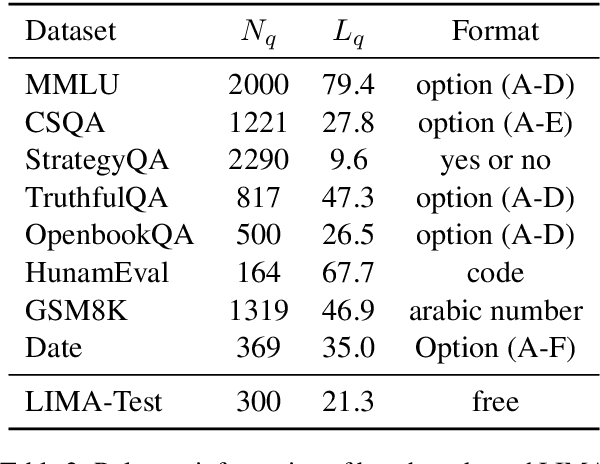
Recent advancements in LLMs have showcased their remarkable role-playing capabilities, able to accurately simulate the dialogue styles and cognitive processes of various roles based on different instructions and contexts. Studies indicate that assigning LLMs the roles of experts, a strategy known as role-play prompting, can enhance their performance in the corresponding domains. However, the prompt needs to be manually designed for the given problem, requiring certain expertise and iterative modifications. To this end, we propose self-prompt tuning, making LLMs themselves generate role-play prompts through fine-tuning. Leveraging the LIMA dataset as our foundational corpus, we employ GPT-4 to annotate role-play prompts for each data points, resulting in the creation of the LIMA-Role dataset. We then fine-tune LLMs like Llama-2-7B and Mistral-7B on LIMA-Role. Consequently, the self-prompt tuned LLMs can automatically generate expert role prompts for any given question. We extensively evaluate self-prompt tuned LLMs on widely used NLP benchmarks and open-ended question test. Our empirical results illustrate that self-prompt tuned LLMs outperform standard instruction tuned baselines across most datasets. This highlights the great potential of utilizing fine-tuning to enable LLMs to self-prompt, thereby automating complex prompting strategies. We release the dataset, models, and code at this \href{https://anonymous.4open.science/r/Self-Prompt-Tuning-739E/}{url}.
Improving Zero-Shot Chinese-English Code-Switching ASR with kNN-CTC and Gated Monolingual Datastores
Jun 06, 2024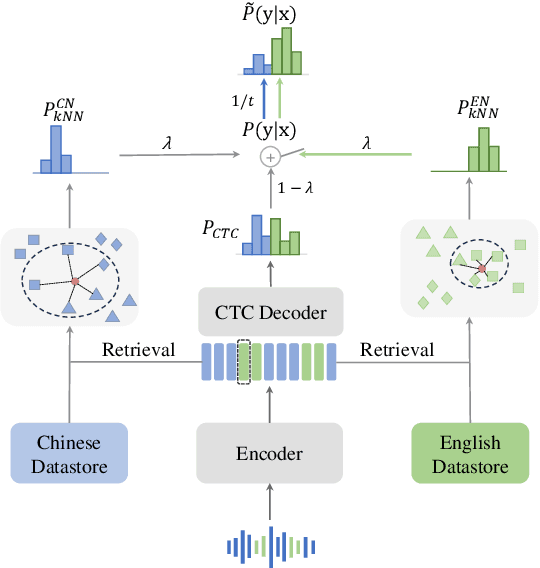
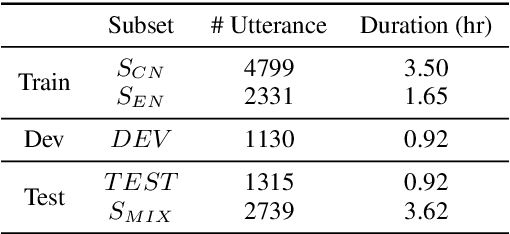
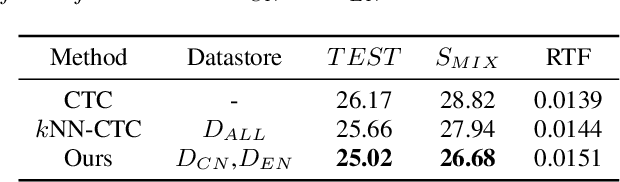
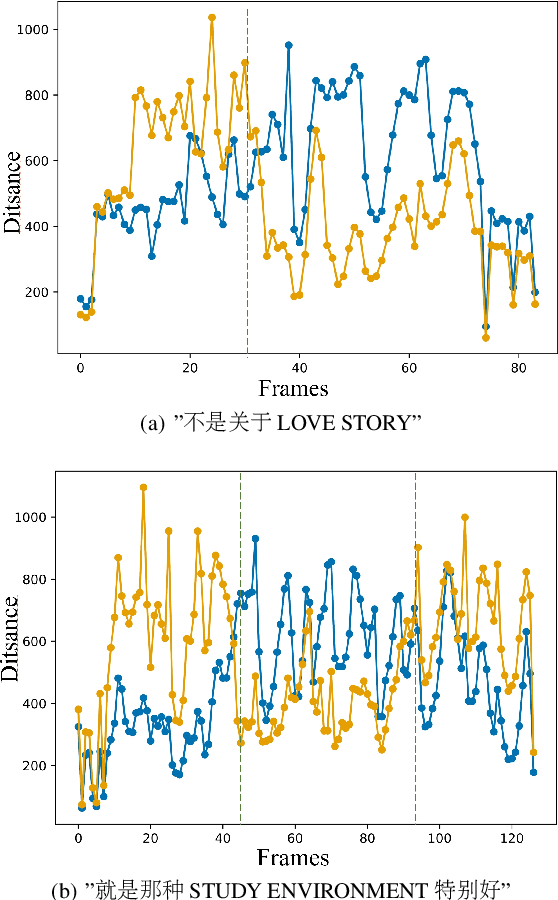
The kNN-CTC model has proven to be effective for monolingual automatic speech recognition (ASR). However, its direct application to multilingual scenarios like code-switching, presents challenges. Although there is potential for performance improvement, a kNN-CTC model utilizing a single bilingual datastore can inadvertently introduce undesirable noise from the alternative language. To address this, we propose a novel kNN-CTC-based code-switching ASR (CS-ASR) framework that employs dual monolingual datastores and a gated datastore selection mechanism to reduce noise interference. Our method selects the appropriate datastore for decoding each frame, ensuring the injection of language-specific information into the ASR process. We apply this framework to cutting-edge CTC-based models, developing an advanced CS-ASR system. Extensive experiments demonstrate the remarkable effectiveness of our gated datastore mechanism in enhancing the performance of zero-shot Chinese-English CS-ASR.
kNN-CTC: Enhancing ASR via Retrieval of CTC Pseudo Labels
Dec 21, 2023The success of retrieval-augmented language models in various natural language processing (NLP) tasks has been constrained in automatic speech recognition (ASR) applications due to challenges in constructing fine-grained audio-text datastores. This paper presents kNN-CTC, a novel approach that overcomes these challenges by leveraging Connectionist Temporal Classification (CTC) pseudo labels to establish frame-level audio-text key-value pairs, circumventing the need for precise ground truth alignments. We further introduce a skip-blank strategy, which strategically ignores CTC blank frames, to reduce datastore size. kNN-CTC incorporates a k-nearest neighbors retrieval mechanism into pre-trained CTC ASR systems, achieving significant improvements in performance. By incorporating a k-nearest neighbors retrieval mechanism into pre-trained CTC ASR systems and leveraging a fine-grained, pruned datastore, kNN-CTC consistently achieves substantial improvements in performance under various experimental settings. Our code is available at https://github.com/NKU-HLT/KNN-CTC.