 Add to Chrome
 Add to Firefox
 Add to Edge
Toward Stable Value Alignment: Introducing Independent Modules for Consistent Value Guidance
May 12, 2026
Aligning large language models (LLMs) with human values typically relies on post-training or inference-time steering that directly manipulates the backbone's parameters or representation space. However, a critical gap exists: the model's residual stream is highly dynamic, in which values exist as fragile, low-dimensional properties, inherently incompatible with the stability required for consistent value expression. In this paper, we propose the Stable Value Guidance Transformer (SVGT), which addresses this gap through an independent value module incorporating two key designs: (1) independent value modeling, maintaining normative representations in a dedicated value space isolated from the backbone, and (2) explicit behavioral guidance, transducing these stable signals into learnable latent Bridge Tokens. These tokens serve as dynamic value anchors to explicitly steer the generative trajectory, ensuring robust adherence across diverse contexts without disrupting the backbone's internal representations. Experiments across multiple backbones and safety benchmarks show that SVGT generally reduces harmful scores by over 70% while maintaining generation fluency, demonstrating the efficacy of architecturally grounded value modeling. Our code is available at https://github.com/Clervils/SVGT.git.

Mozi: Governed Autonomy for Drug Discovery LLM Agents
Mar 04, 2026Tool-augmented large language model (LLM) agents promise to unify scientific reasoning with computation, yet their deployment in high-stakes domains like drug discovery is bottlenecked by two critical barriers: unconstrained tool-use governance and poor long-horizon reliability. In dependency-heavy pharmaceutical pipelines, autonomous agents often drift into irreproducible trajectories, where early-stage hallucinations multiplicatively compound into downstream failures. To overcome this, we present Mozi, a dual-layer architecture that bridges the flexibility of generative AI with the deterministic rigor of computational biology. Layer A (Control Plane) establishes a governed supervisor--worker hierarchy that enforces role-based tool isolation, limits execution to constrained action spaces, and drives reflection-based replanning. Layer B (Workflow Plane) operationalizes canonical drug discovery stages -- from Target Identification to Lead Optimization -- as stateful, composable skill graphs. This layer integrates strict data contracts and strategic human-in-the-loop (HITL) checkpoints to safeguard scientific validity at high-uncertainty decision boundaries. Operating on the design principle of ``free-form reasoning for safe tasks, structured execution for long-horizon pipelines,'' Mozi provides built-in robustness mechanisms and trace-level audibility to completely mitigate error accumulation. We evaluate Mozi on PharmaBench, a curated benchmark for biomedical agents, demonstrating superior orchestration accuracy over existing baselines. Furthermore, through end-to-end therapeutic case studies, we demonstrate Mozi's ability to navigate massive chemical spaces, enforce stringent toxicity filters, and generate highly competitive in silico candidates, effectively transforming the LLM from a fragile conversationalist into a reliable, governed co-scientist.
Efficient Antibody Structure Refinement Using Energy-Guided SE(3) Flow Matching
Oct 22, 2024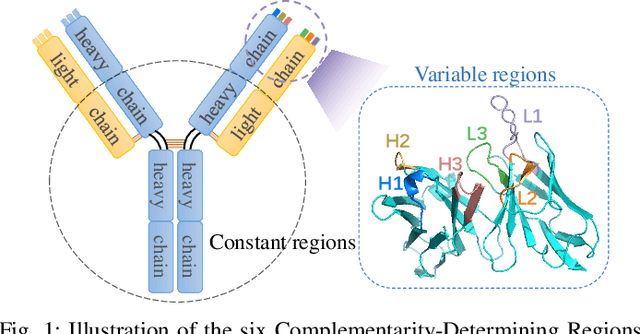
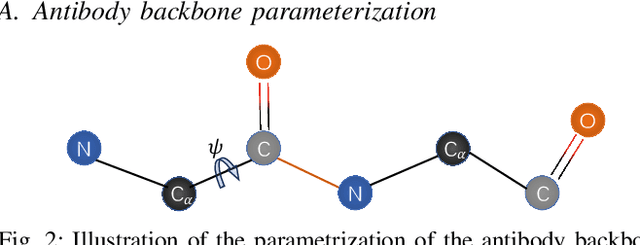
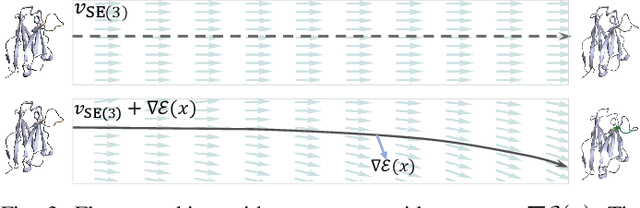
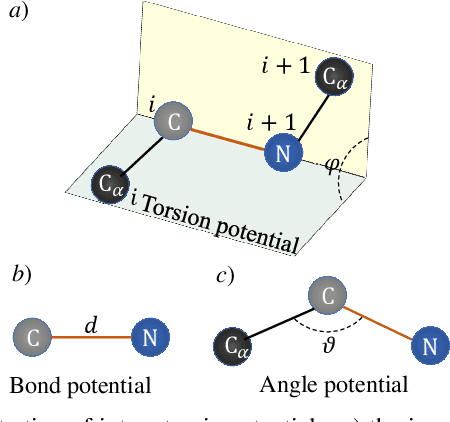
Antibodies are proteins produced by the immune system that recognize and bind to specific antigens, and their 3D structures are crucial for understanding their binding mechanism and designing therapeutic interventions. The specificity of antibody-antigen binding predominantly depends on the complementarity-determining regions (CDR) within antibodies. Despite recent advancements in antibody structure prediction, the quality of predicted CDRs remains suboptimal. In this paper, we develop a novel antibody structure refinement method termed FlowAB based on energy-guided flow matching. FlowAB adopts the powerful deep generative method SE(3) flow matching and simultaneously incorporates important physical prior knowledge into the flow model to guide the generation process. The extensive experiments demonstrate that FlowAB can significantly improve the antibody CDR structures. It achieves new state-of-the-art performance on the antibody structure prediction task when used in conjunction with an appropriate prior model while incurring only marginal computational overhead. This advantage makes FlowAB a practical tool in antibody engineering.
MoleculeQA: A Dataset to Evaluate Factual Accuracy in Molecular Comprehension
Mar 13, 2024Large language models are playing an increasingly significant role in molecular research, yet existing models often generate erroneous information, posing challenges to accurate molecular comprehension. Traditional evaluation metrics for generated content fail to assess a model's accuracy in molecular understanding. To rectify the absence of factual evaluation, we present MoleculeQA, a novel question answering (QA) dataset which possesses 62K QA pairs over 23K molecules. Each QA pair, composed of a manual question, a positive option and three negative options, has consistent semantics with a molecular description from authoritative molecular corpus. MoleculeQA is not only the first benchmark for molecular factual bias evaluation but also the largest QA dataset for molecular research. A comprehensive evaluation on MoleculeQA for existing molecular LLMs exposes their deficiencies in specific areas and pinpoints several particularly crucial factors for molecular understanding.