 Add to Chrome
 Add to Firefox
 Add to Edge
Evaluating Alignment of Behavioral Dispositions in LLMs
Feb 11, 2026
As LLMs integrate into our daily lives, understanding their behavior becomes essential. In this work, we focus on behavioral dispositions$-$the underlying tendencies that shape responses in social contexts$-$and introduce a framework to study how closely the dispositions expressed by LLMs align with those of humans. Our approach is grounded in established psychological questionnaires but adapts them for LLMs by transforming human self-report statements into Situational Judgment Tests (SJTs). These SJTs assess behavior by eliciting natural recommendations in realistic user-assistant scenarios. We generate 2,500 SJTs, each validated by three human annotators, and collect preferred actions from 10 annotators per SJT, from a large pool of 550 participants. In a comprehensive study involving 25 LLMs, we find that models often do not reflect the distribution of human preferences: (1) in scenarios with low human consensus, LLMs consistently exhibit overconfidence in a single response; (2) when human consensus is high, smaller models deviate significantly, and even some frontier models do not reflect the consensus in 15-20% of cases; (3) traits can exhibit cross-LLM patterns, e.g., LLMs may encourage emotion expression in contexts where human consensus favors composure. Lastly, mapping psychometric statements directly to behavioral scenarios presents a unique opportunity to evaluate the predictive validity of self-reports, revealing considerable gaps between LLMs' stated values and their revealed behavior.

Gemma 3 Technical Report
Mar 25, 2025We introduce Gemma 3, a multimodal addition to the Gemma family of lightweight open models, ranging in scale from 1 to 27 billion parameters. This version introduces vision understanding abilities, a wider coverage of languages and longer context - at least 128K tokens. We also change the architecture of the model to reduce the KV-cache memory that tends to explode with long context. This is achieved by increasing the ratio of local to global attention layers, and keeping the span on local attention short. The Gemma 3 models are trained with distillation and achieve superior performance to Gemma 2 for both pre-trained and instruction finetuned versions. In particular, our novel post-training recipe significantly improves the math, chat, instruction-following and multilingual abilities, making Gemma3-4B-IT competitive with Gemma2-27B-IT and Gemma3-27B-IT comparable to Gemini-1.5-Pro across benchmarks. We release all our models to the community.
LLMs Accelerate Annotation for Medical Information Extraction
Dec 04, 2023
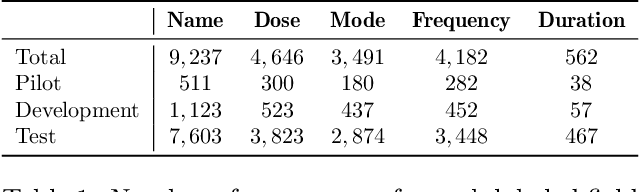
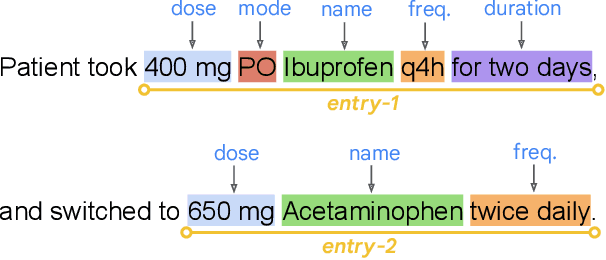
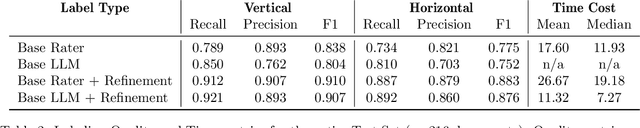
The unstructured nature of clinical notes within electronic health records often conceals vital patient-related information, making it challenging to access or interpret. To uncover this hidden information, specialized Natural Language Processing (NLP) models are required. However, training these models necessitates large amounts of labeled data, a process that is both time-consuming and costly when relying solely on human experts for annotation. In this paper, we propose an approach that combines Large Language Models (LLMs) with human expertise to create an efficient method for generating ground truth labels for medical text annotation. By utilizing LLMs in conjunction with human annotators, we significantly reduce the human annotation burden, enabling the rapid creation of labeled datasets. We rigorously evaluate our method on a medical information extraction task, demonstrating that our approach not only substantially cuts down on human intervention but also maintains high accuracy. The results highlight the potential of using LLMs to improve the utilization of unstructured clinical data, allowing for the swift deployment of tailored NLP solutions in healthcare.