 Add to Chrome
 Add to Firefox
 Add to Edge
The FACTS Leaderboard: A Comprehensive Benchmark for Large Language Model Factuality
Dec 11, 2025
We introduce The FACTS Leaderboard, an online leaderboard suite and associated set of benchmarks that comprehensively evaluates the ability of language models to generate factually accurate text across diverse scenarios. The suite provides a holistic measure of factuality by aggregating the performance of models on four distinct sub-leaderboards: (1) FACTS Multimodal, which measures the factuality of responses to image-based questions; (2) FACTS Parametric, which assesses models' world knowledge by answering closed-book factoid questions from internal parameters; (3) FACTS Search, which evaluates factuality in information-seeking scenarios, where the model must use a search API; and (4) FACTS Grounding (v2), which evaluates whether long-form responses are grounded in provided documents, featuring significantly improved judge models. Each sub-leaderboard employs automated judge models to score model responses, and the final suite score is an average of the four components, designed to provide a robust and balanced assessment of a model's overall factuality. The FACTS Leaderboard Suite will be actively maintained, containing both public and private splits to allow for external participation while guarding its integrity. It can be found at https://www.kaggle.com/benchmarks/google/facts .

LLMs Accelerate Annotation for Medical Information Extraction
Dec 04, 2023
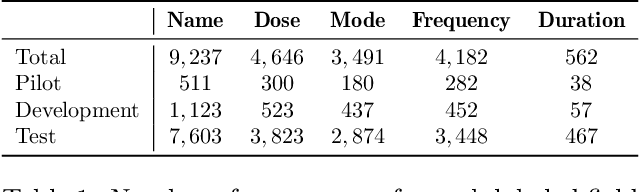
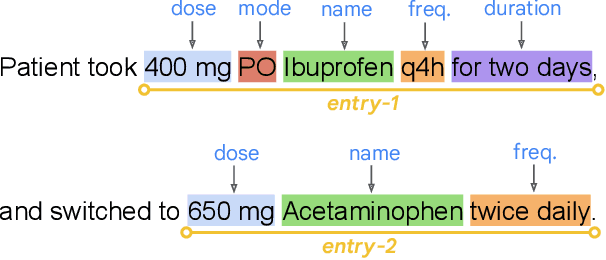
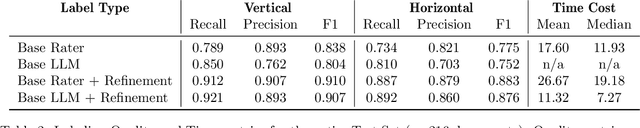
The unstructured nature of clinical notes within electronic health records often conceals vital patient-related information, making it challenging to access or interpret. To uncover this hidden information, specialized Natural Language Processing (NLP) models are required. However, training these models necessitates large amounts of labeled data, a process that is both time-consuming and costly when relying solely on human experts for annotation. In this paper, we propose an approach that combines Large Language Models (LLMs) with human expertise to create an efficient method for generating ground truth labels for medical text annotation. By utilizing LLMs in conjunction with human annotators, we significantly reduce the human annotation burden, enabling the rapid creation of labeled datasets. We rigorously evaluate our method on a medical information extraction task, demonstrating that our approach not only substantially cuts down on human intervention but also maintains high accuracy. The results highlight the potential of using LLMs to improve the utilization of unstructured clinical data, allowing for the swift deployment of tailored NLP solutions in healthcare.