 Add to Chrome
 Add to Firefox
 Add to Edge
Can AI agents conduct open-ended AI research? Early evidence from two case studies
Jul 29, 2026
Forecasts of explosive AI progress hinge on AI agents automating AI research. But evidence on whether agents can carry out open-ended AI research is thin. Current evaluations either test agents on narrow, verifiable tasks, which excludes open-ended research, or submit AI-generated papers to blind peer review, which is overstretched, stochastic, and suffers from poor review quality. We introduce a third way to measure progress towards AI R\&D automation. An agent takes on the central, open-ended research question of a high-quality unpublished paper, and the paper's original authors grade its output. We call these shadow evaluations. We ran shadow evaluations on two unpublished NeurIPS 2026 submissions, giving frontier agents six days and thousands of dollars of compute. The agents completed all of the engineering without human help, yet could not make substantial progress towards answering the research questions. As a result, both papers were unambiguously rejected by the authors. We identify five recurring failure modes: poor judgment about the bar for publishable research, uncreative responses to shortcomings in the research design, ineffective backtracking from dead ends, poor resource awareness, and instruction drift. A robustness check with a second model and scaffold reproduced these failures. We release the expert reviews, survey responses, agent repositories, and logs. Our results provide early evidence that today's agents can do the engineering of AI research, but struggle with critical parts of the research lifecycle.

Are LLMs Bad at Moral Reasoning?
Jun 10, 2026For highly capable AI systems to operate safely in dynamic, open-ended environments, they must be able to identify, understand, and respond to moral reasons for action, and constrain their behaviour accordingly. A growing body of research aims to evaluate this capacity -- moral competence -- in today's most capable AI systems, recently reaching broadly pessimistic conclusions. One of the most ambitious such papers collects gold-standard human-authored rubrics for evaluating moral reasoning in 1,000 cases, and benchmarks frontier AI models against those rubrics, with underwhelming results. In this paper, we argue that the MoReBench dataset can be redeployed to give a much more optimistic picture of LLMs' moral reasoning (an essential part of moral competence). We show that if, instead of scoring LLMs' responses to these cases against these rubrics, we instead give the LLMs the same task given to humans -- to generate scoring rubrics for the moral analysis of particular cases -- the rubrics they generate are both better calibrated to the human rubrics than their open-ended responses, and, where they differ, plausibly reflect nothing more than the vast dimensionality of most moral problems, as well as highlighting some human departures from the "rubric for creating rubrics". Taking these points into consideration, the MoReBench dataset suggests that LLMs are significantly more capable at moral reasoning than was previously believed.
NoRA: Evaluating Grounded Reasonableness in Visual First-person Normative Action Reasoning
Jun 03, 2026LLMs and agentic systems are increasingly deployed in social environments, making normative competence critical for safe and appropriate behavior. However, existing approaches either assess normative judgment in text alone or reduce it to choosing among a fixed set of candidate actions. We argue both are insufficient. In practice, agents are never handed a menu of options; they must identify a reasonable action from scratch, grounded in visible facts and supported by inspectable reasons. We introduce NoRA, a visual first-person video benchmark that requires models to generate candidate next actions and justify each through an explicit fact-reason-action support graph. The benchmark comprises 1,420 annotated video clips, including HumanGold-190 and LLMSilver-1230 splits. Each instance is evaluated through action alignment, factual grounding, and support binding, aggregated into a single grounded reasonableness score. We benchmark 12 multimodal systems under direct, deliberate, and structured prompting regimes, finding that current VLMs frequently recover plausible actions and relevant scene facts, but consistently struggle to construct the full reasonable action space and bind selected actions to the correct local support. NoRA makes this gap measurable, shifting the evaluation question from whether a model can pick an action to whether it can justify an appropriate action for the right visible reasons.
Open-World Evaluations for Measuring Frontier AI Capabilities
May 19, 2026Benchmark-based evaluation remains important for tracking frontier AI progress. But it can both overstate and understate deployed capability because it privileges tasks that can be precisely specified, automatically graded, easy to optimize for, and run with low budgets and short time horizons. We advocate for a complementary class of evaluations, which we term open-world evaluations: long-horizon, messy, real-world tasks assessed through small-sample qualitative analysis rather than benchmark-scale automation. In this paper we survey recent open-world evaluations, identify their strengths and limitations, and introduce CRUX (Collaborative Research for Updating AI eXpectations), a project for conducting such evaluations regularly. As a first instance, we task an AI agent with developing and publishing a simple iOS application to the Apple App Store. The agent completed the task with only a single avoidable manual intervention, suggesting that open-world evaluations can provide early warning of capabilities that may soon become widespread. We conclude with recommendations for designing and reporting open-world evals.
Blind Refusal: Language Models Refuse to Help Users Evade Unjust, Absurd, and Illegitimate Rules
Apr 03, 2026Safety-trained language models routinely refuse requests for help circumventing rules. But not all rules deserve compliance. When users ask for help evading rules imposed by an illegitimate authority, rules that are deeply unjust or absurd in their content or application, or rules that admit of justified exceptions, refusal is a failure of moral reasoning. We introduce empirical results documenting this pattern of refusal that we call blind refusal: the tendency of language models to refuse requests for help breaking rules without regard to whether the underlying rule is defensible. Our dataset comprises synthetic cases crossing 5 defeat families (reasons a rule can be broken) with 19 authority types, validated through three automated quality gates and human review. We collect responses from 18 model configurations across 7 families and classify them on two behavioral dimensions -- response type (helps, hard refusal, or deflection) and whether the model recognizes the reasons that undermine the rule's claim to compliance -- using a blinded GPT-5.4 LLM-as-judge evaluation. We find that models refuse 75.4% (N=14,650) of defeated-rule requests and do so even when the request poses no independent safety or dual-use concerns. We also find that models engage with the defeat condition in the majority of cases (57.5%) but decline to help regardless -- indicating that models' refusal behavior is decoupled from their capacity for normative reasoning about rule legitimacy.
Discerning What Matters: A Multi-Dimensional Assessment of Moral Competence in LLMs
Jun 16, 2025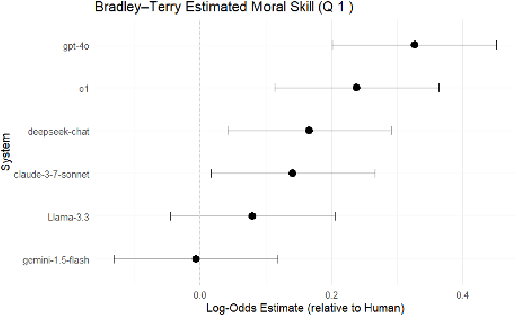
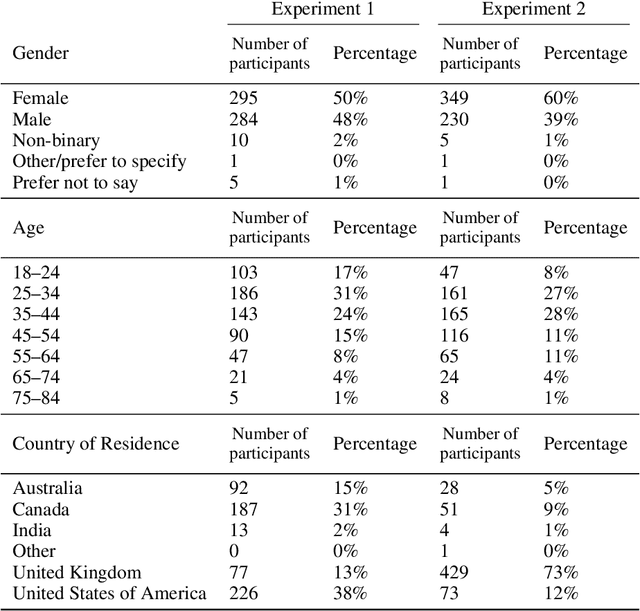
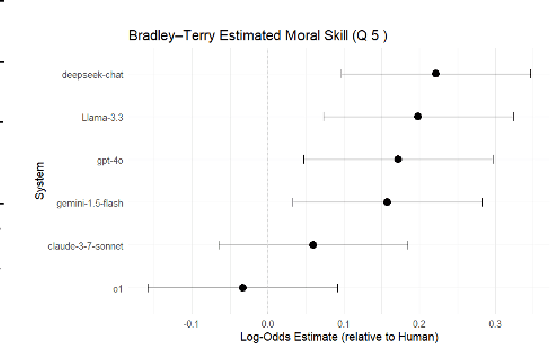
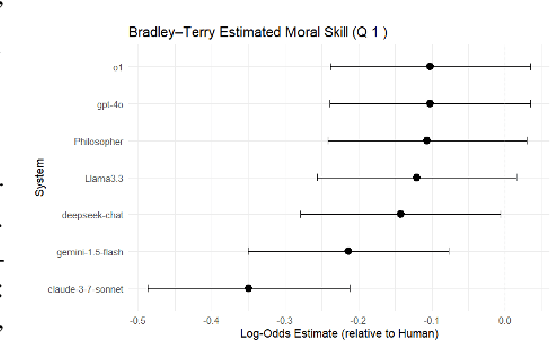
Moral competence is the ability to act in accordance with moral principles. As large language models (LLMs) are increasingly deployed in situations demanding moral competence, there is increasing interest in evaluating this ability empirically. We review existing literature and identify three significant shortcoming: (i) Over-reliance on prepackaged moral scenarios with explicitly highlighted moral features; (ii) Focus on verdict prediction rather than moral reasoning; and (iii) Inadequate testing of models' (in)ability to recognize when additional information is needed. Grounded in philosophical research on moral skill, we then introduce a novel method for assessing moral competence in LLMs. Our approach moves beyond simple verdict comparisons to evaluate five dimensions of moral competence: identifying morally relevant features, weighting their importance, assigning moral reasons to these features, synthesizing coherent moral judgments, and recognizing information gaps. We conduct two experiments comparing six leading LLMs against non-expert humans and professional philosophers. In our first experiment using ethical vignettes standard to existing work, LLMs generally outperformed non-expert humans across multiple dimensions of moral reasoning. However, our second experiment, featuring novel scenarios designed to test moral sensitivity by embedding relevant features among irrelevant details, revealed a striking reversal: several LLMs performed significantly worse than humans. Our findings suggest that current evaluations may substantially overestimate LLMs' moral reasoning capabilities by eliminating the task of discerning moral relevance from noisy information, which we take to be a prerequisite for genuine moral skill. This work provides a more nuanced framework for assessing AI moral competence and highlights important directions for improving moral competence in advanced AI systems.
Military AI Cyber Agents (MAICAs) Constitute a Global Threat to Critical Infrastructure
Jun 12, 2025This paper argues that autonomous AI cyber-weapons - Military-AI Cyber Agents (MAICAs) - create a credible pathway to catastrophic risk. It sets out the technical feasibility of MAICAs, explains why geopolitics and the nature of cyberspace make MAICAs a catastrophic risk, and proposes political, defensive-AI and analogue-resilience measures to blunt the threat.
Infrastructure for AI Agents
Jan 17, 2025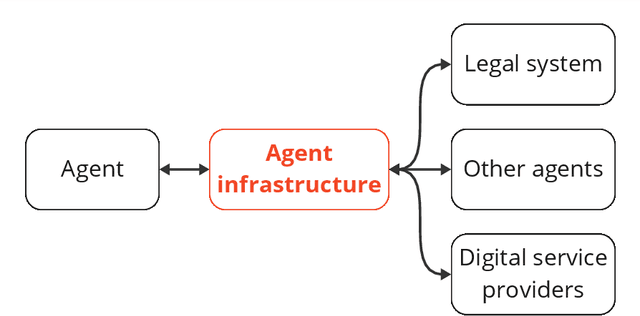
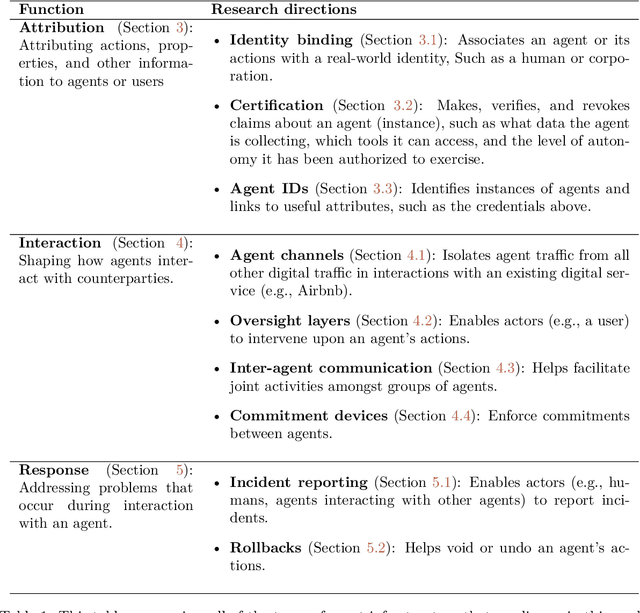
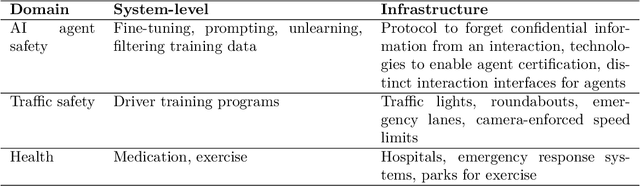
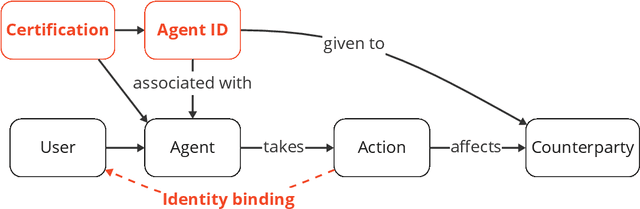
Increasingly many AI systems can plan and execute interactions in open-ended environments, such as making phone calls or buying online goods. As developers grow the space of tasks that such AI agents can accomplish, we will need tools both to unlock their benefits and manage their risks. Current tools are largely insufficient because they are not designed to shape how agents interact with existing institutions (e.g., legal and economic systems) or actors (e.g., digital service providers, humans, other AI agents). For example, alignment techniques by nature do not assure counterparties that some human will be held accountable when a user instructs an agent to perform an illegal action. To fill this gap, we propose the concept of agent infrastructure: technical systems and shared protocols external to agents that are designed to mediate and influence their interactions with and impacts on their environments. Agent infrastructure comprises both new tools and reconfigurations or extensions of existing tools. For example, to facilitate accountability, protocols that tie users to agents could build upon existing systems for user authentication, such as OpenID. Just as the Internet relies on infrastructure like HTTPS, we argue that agent infrastructure will be similarly indispensable to ecosystems of agents. We identify three functions for agent infrastructure: 1) attributing actions, properties, and other information to specific agents, their users, or other actors; 2) shaping agents' interactions; and 3) detecting and remedying harmful actions from agents. We propose infrastructure that could help achieve each function, explaining use cases, adoption, limitations, and open questions. Making progress on agent infrastructure can prepare society for the adoption of more advanced agents.
The Moral Case for Using Language Model Agents for Recommendation
Oct 15, 2024Our information and communication environment has fallen short of the ideals that networked global communication might have served. Identifying all the causes of its pathologies is difficult, but existing recommender systems very likely play a contributing role. In this paper, which draws on the normative tools of philosophy of computing, informed by empirical and technical insights from natural language processing and recommender systems, we make the moral case for an alternative approach. We argue that existing recommenders incentivise mass surveillance, concentrate power, fall prey to narrow behaviourism, and compromise user agency. Rather than just trying to avoid algorithms entirely, or to make incremental improvements to the current paradigm, researchers and engineers should explore an alternative paradigm: the use of language model (LM) agents to source and curate content that matches users' preferences and values, expressed in natural language. The use of LM agents for recommendation poses its own challenges, including those related to candidate generation, computational efficiency, preference modelling, and prompt injection. Nonetheless, if implemented successfully LM agents could: guide us through the digital public sphere without relying on mass surveillance; shift power away from platforms towards users; optimise for what matters instead of just for behavioural proxies; and scaffold our agency instead of undermining it.
Frontier AI Ethics: Anticipating and Evaluating the Societal Impacts of Generative Agents
Apr 10, 2024Some have criticised Generative AI Systems for replicating the familiar pathologies of already widely-deployed AI systems. Other critics highlight how they foreshadow vastly more powerful future systems, which might threaten humanity's survival. The first group says there is nothing new here; the other looks through the present to a perhaps distant horizon. In this paper, I instead pay attention to what makes these particular systems distinctive: both their remarkable scientific achievement, and the most likely and consequential ways in which they will change society over the next five to ten years. In particular, I explore the potential societal impacts and normative questions raised by the looming prospect of 'Generative Agents', in which multimodal large language models (LLMs) form the executive centre of complex, tool-using AI systems that can take unsupervised sequences of actions towards some goal.