 Add to Chrome
 Add to Firefox
 Add to Edge
Item Response Theory for AI Safety
Aug 05, 2026
Language models differ in how safely they behave and these differences are measured by safety benchmarks. But aggregated benchmark scores are hard to trust and interpret, because benchmarks duplicate one another, correlate heavily, and models may sandbag when they detect evaluation. To address these issues, we draw on Item Response Theory (IRT), a statistical toolkit for measuring these latents from performance on items with inferred psychometric properties. We fit IRT models to eight safety benchmarks across 192 language models, the largest psychometric analysis of LLM safety evaluations to date, and contribute three results. First, we find that three interpretable factors of refusal strictness, truthfulness, and contextual harm explain most of the variance between models across benchmarks. Second, psychometrically selected items recover full benchmark scores with lower error than random subsets of the same size, and roughly ten adaptively chosen items suffice for several individual benchmarks, cutting evaluation cost by 97-99%. Third, IRT supports audits of individual models, showing that it can be used to detect naive sandbagging and changes of model behind APIs. Overall, we show IRT is a ready-made toolkit for reading, reducing, and auditing safety benchmarks, which we recommend frontier labs and evaluators adopt.

Can AI agents conduct open-ended AI research? Early evidence from two case studies
Jul 29, 2026Forecasts of explosive AI progress hinge on AI agents automating AI research. But evidence on whether agents can carry out open-ended AI research is thin. Current evaluations either test agents on narrow, verifiable tasks, which excludes open-ended research, or submit AI-generated papers to blind peer review, which is overstretched, stochastic, and suffers from poor review quality. We introduce a third way to measure progress towards AI R\&D automation. An agent takes on the central, open-ended research question of a high-quality unpublished paper, and the paper's original authors grade its output. We call these shadow evaluations. We ran shadow evaluations on two unpublished NeurIPS 2026 submissions, giving frontier agents six days and thousands of dollars of compute. The agents completed all of the engineering without human help, yet could not make substantial progress towards answering the research questions. As a result, both papers were unambiguously rejected by the authors. We identify five recurring failure modes: poor judgment about the bar for publishable research, uncreative responses to shortcomings in the research design, ineffective backtracking from dead ends, poor resource awareness, and instruction drift. A robustness check with a second model and scaffold reproduced these failures. We release the expert reviews, survey responses, agent repositories, and logs. Our results provide early evidence that today's agents can do the engineering of AI research, but struggle with critical parts of the research lifecycle.
Persona Cartography: Charting Language Model Personality Traits in Weight Space
Jul 08, 2026Large language models exhibit recurring behavioural patterns -- personas -- that shape generalisation and safety, but we lack reliable tools for decomposing, measuring, and controlling them. Our central insight is to treat personas as positions in a space of behavioural traits, using the OCEAN framework to describe model personas in terms of Openness, Conscientiousness, Extraversion, Agreeableness, and Neuroticism. We train low-rank adapters to amplify or suppress individual traits, and evaluate their effects using an LLM-judge calibrated against a human-validated panel, trait-specific multiple-choice benchmarks, and standard capability evaluations. Across six models from three families (4B-32B), we find that each adapter moves its target trait largely monotonically with scale, combines approximately additively with other adapters to construct mixed personas, and preserves performance on capability benchmarks at moderate scales. We further show that the induced trait axes affect safety-relevant behaviour in downstream evaluations: for example, moving along neuroticism and agreeableness axes affects frustration and sycophancy respectively. We also introduce an unsupervised psychometric pipeline that recovers four interpretable behavioural factors (tone, initiative, didacticism, epistemic caution) from model rollouts. Persona control can then be considered in terms of learning, scaling, and composing traits in weight space, providing a bridge between personality measurement, model editing, and safety.
In-Context Function Learning in Large Language Models
Feb 12, 2026Large language models (LLMs) can learn from a few demonstrations provided at inference time. We study this in-context learning phenomenon through the lens of Gaussian Processes (GPs). We build controlled experiments where models observe sequences of multivariate scalar-valued function samples drawn from known GP priors. We evaluate prediction error in relation to the number of demonstrations and compare against two principled references: (i) an empirical GP-regression learner that gives a lower bound on achievable error, and (ii) the expected error of a 1-nearest-neighbor (1-NN) rule, which gives a data-driven upper bound. Across model sizes, we find that LLM learning curves are strongly influenced by the function-generating kernels and approach the GP lower bound as the number of demonstrations increases. We then study the inductive biases of these models using a likelihood-based analysis. We find that LLM predictions are most likely under less smooth GP kernels. Finally, we explore whether post-training can shift these inductive biases and improve sample-efficiency on functions sampled from GPs with smoother kernels. We find that both reinforcement learning and supervised fine-tuning can effectively shift inductive biases in the direction of the training data. Together, our framework quantifies the extent to which LLMs behave like GP learners and provides tools for steering their inductive biases for continuous function learning tasks.
Can vision language models learn intuitive physics from interaction?
Feb 05, 2026Pre-trained vision language models do not have good intuitions about the physical world. Recent work has shown that supervised fine-tuning can improve model performance on simple physical tasks. However, fine-tuned models do not appear to learn robust physical rules that can generalize to new contexts. Based on research in cognitive science, we hypothesize that models need to interact with an environment to properly learn its physical dynamics. We train models that learn through interaction with the environment using reinforcement learning. While learning from interaction allows models to improve their within-task performance, it fails to produce models with generalizable physical intuitions. We find that models trained on one task do not reliably generalize to related tasks, even if the tasks share visual statistics and physical principles, and regardless of whether the models are trained through interaction.
Exploring Major Transitions in the Evolution of Biological Cognition With Artificial Neural Networks
Sep 17, 2025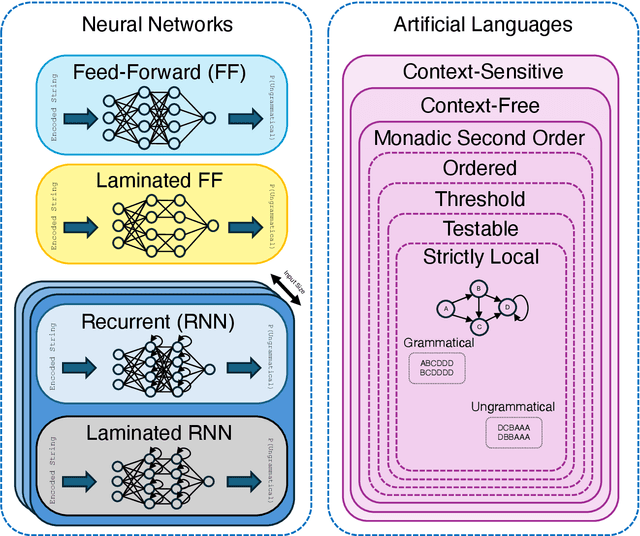
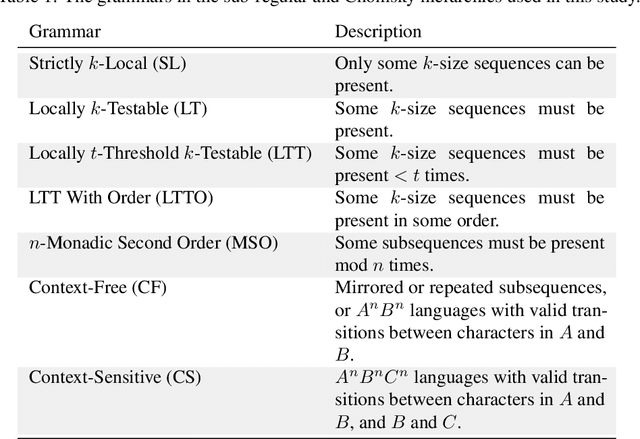
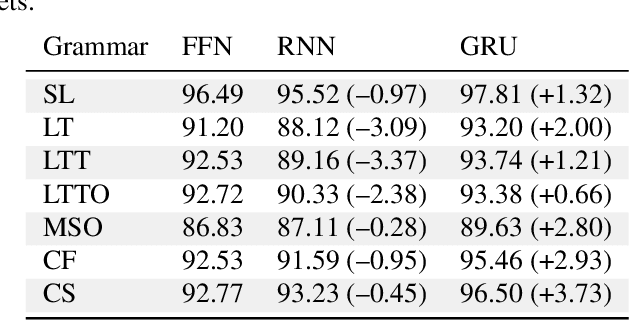
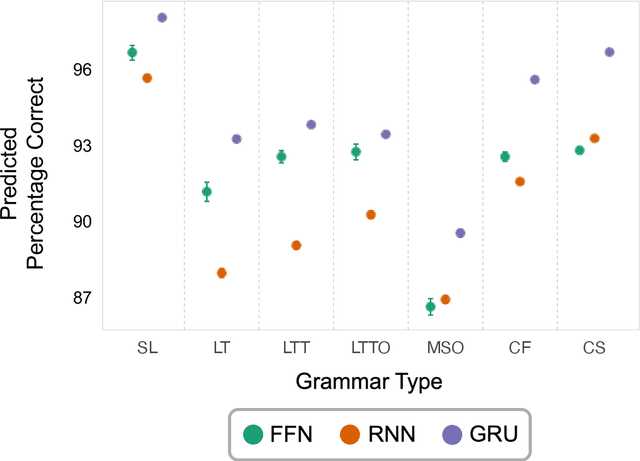
Transitional accounts of evolution emphasise a few changes that shape what is evolvable, with dramatic consequences for derived lineages. More recently it has been proposed that cognition might also have evolved via a series of major transitions that manipulate the structure of biological neural networks, fundamentally changing the flow of information. We used idealised models of information flow, artificial neural networks (ANNs), to evaluate whether changes in information flow in a network can yield a transitional change in cognitive performance. We compared networks with feed-forward, recurrent and laminated topologies, and tested their performance learning artificial grammars that differed in complexity, controlling for network size and resources. We documented a qualitative expansion in the types of input that recurrent networks can process compared to feed-forward networks, and a related qualitative increase in performance for learning the most complex grammars. We also noted how the difficulty in training recurrent networks poses a form of transition barrier and contingent irreversibility -- other key features of evolutionary transitions. Not all changes in network topology confer a performance advantage in this task set. Laminated networks did not outperform non-laminated networks in grammar learning. Overall, our findings show how some changes in information flow can yield transitions in cognitive performance.
Cognitive Science-Inspired Evaluation of Core Capabilities for Object Understanding in AI
Mar 27, 2025

One of the core components of our world models is 'intuitive physics' - an understanding of objects, space, and causality. This capability enables us to predict events, plan action and navigate environments, all of which rely on a composite sense of objecthood. Despite its importance, there is no single, unified account of objecthood, though multiple theoretical frameworks provide insights. In the first part of this paper, we present a comprehensive overview of the main theoretical frameworks in objecthood research - Gestalt psychology, enactive cognition, and developmental psychology - and identify the core capabilities each framework attributes to object understanding, as well as what functional roles they play in shaping world models in biological agents. Given the foundational role of objecthood in world modelling, understanding objecthood is also essential in AI. In the second part of the paper, we evaluate how current AI paradigms approach and test objecthood capabilities compared to those in cognitive science. We define an AI paradigm as a combination of how objecthood is conceptualised, the methods used for studying objecthood, the data utilised, and the evaluation techniques. We find that, whilst benchmarks can detect that AI systems model isolated aspects of objecthood, the benchmarks cannot detect when AI systems lack functional integration across these capabilities, not solving the objecthood challenge fully. Finally, we explore novel evaluation approaches that align with the integrated vision of objecthood outlined in this paper. These methods are promising candidates for advancing from isolated object capabilities toward general-purpose AI with genuine object understanding in real-world contexts.
Bringing Comparative Cognition To Computers
Mar 04, 2025Researchers are increasingly subjecting artificial intelligence systems to psychological testing. But to rigorously compare their cognitive capacities with humans and other animals, we must avoid both over- and under-stating our similarities and differences. By embracing a comparative approach, we can integrate AI cognition research into the broader cognitive sciences.
Testing the limits of fine-tuning to improve reasoning in vision language models
Feb 21, 2025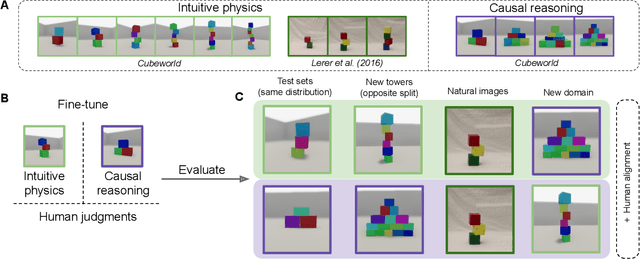
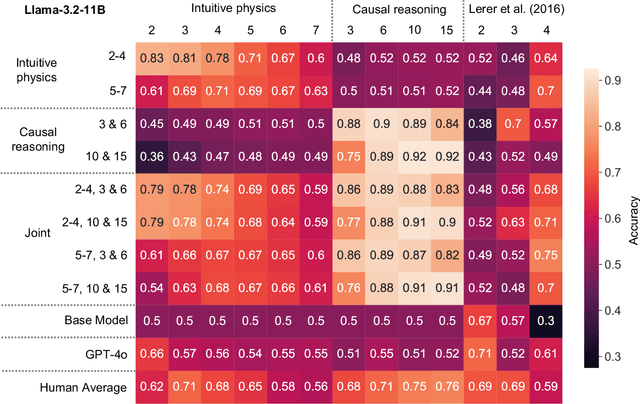
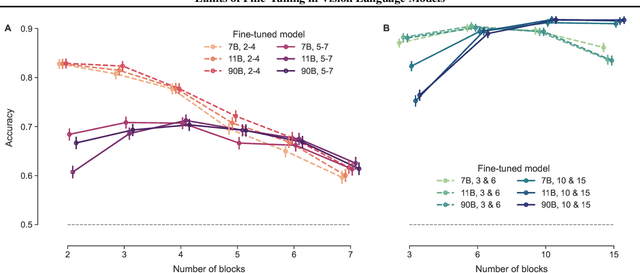
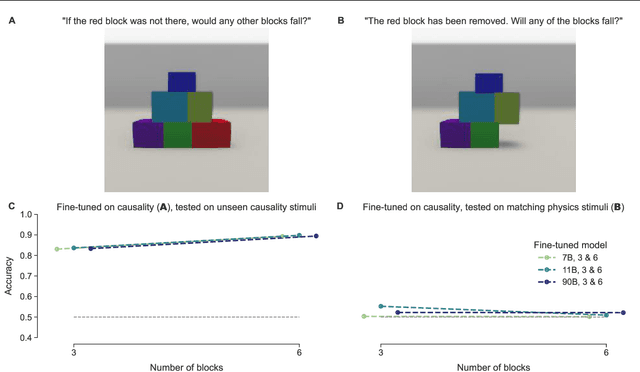
Pre-trained vision language models still fall short of human visual cognition. In an effort to improve visual cognition and align models with human behavior, we introduce visual stimuli and human judgments on visual cognition tasks, allowing us to systematically evaluate performance across cognitive domains under a consistent environment. We fine-tune models on ground truth data for intuitive physics and causal reasoning and find that this improves model performance in the respective fine-tuning domain. Furthermore, it can improve model alignment with human behavior. However, we find that fine-tuning does not contribute to robust human-like generalization to data with other visual characteristics or to tasks in other cognitive domains.
PredictaBoard: Benchmarking LLM Score Predictability
Feb 20, 2025Despite possessing impressive skills, Large Language Models (LLMs) often fail unpredictably, demonstrating inconsistent success in even basic common sense reasoning tasks. This unpredictability poses a significant challenge to ensuring their safe deployment, as identifying and operating within a reliable "safe zone" is essential for mitigating risks. To address this, we present PredictaBoard, a novel collaborative benchmarking framework designed to evaluate the ability of score predictors (referred to as assessors) to anticipate LLM errors on specific task instances (i.e., prompts) from existing datasets. PredictaBoard evaluates pairs of LLMs and assessors by considering the rejection rate at different tolerance errors. As such, PredictaBoard stimulates research into developing better assessors and making LLMs more predictable, not only with a higher average performance. We conduct illustrative experiments using baseline assessors and state-of-the-art LLMs. PredictaBoard highlights the critical need to evaluate predictability alongside performance, paving the way for safer AI systems where errors are not only minimised but also anticipated and effectively mitigated. Code for our benchmark can be found at https://github.com/Kinds-of-Intelligence-CFI/PredictaBoard