 Add to Chrome
 Add to Firefox
 Add to Edge
NoRA: Evaluating Grounded Reasonableness in Visual First-person Normative Action Reasoning
Jun 03, 2026
LLMs and agentic systems are increasingly deployed in social environments, making normative competence critical for safe and appropriate behavior. However, existing approaches either assess normative judgment in text alone or reduce it to choosing among a fixed set of candidate actions. We argue both are insufficient. In practice, agents are never handed a menu of options; they must identify a reasonable action from scratch, grounded in visible facts and supported by inspectable reasons. We introduce NoRA, a visual first-person video benchmark that requires models to generate candidate next actions and justify each through an explicit fact-reason-action support graph. The benchmark comprises 1,420 annotated video clips, including HumanGold-190 and LLMSilver-1230 splits. Each instance is evaluated through action alignment, factual grounding, and support binding, aggregated into a single grounded reasonableness score. We benchmark 12 multimodal systems under direct, deliberate, and structured prompting regimes, finding that current VLMs frequently recover plausible actions and relevant scene facts, but consistently struggle to construct the full reasonable action space and bind selected actions to the correct local support. NoRA makes this gap measurable, shifting the evaluation question from whether a model can pick an action to whether it can justify an appropriate action for the right visible reasons.

Emergence is Overrated: AGI as an Archipelago of Experts
Mar 09, 2026Krakauer, Krakauer, and Mitchell (2025) distinguish between emergent capabilities and emergent intelligence, arguing that true intelligence requires efficient coarse-grained representations enabling diverse problem-solving through analogy and minimal modification. They contend that intelligence means doing "more with less" through compression and generalization, contrasting this with "vast assemblages of diverse calculators" that merely accumulate specialized capabilities. This paper examines whether their framework accurately characterizes human intelligence and its implications for conceptualizing artificial general intelligence. Drawing on empirical evidence from cognitive science, I demonstrate that human expertise operates primarily through domain-specific pattern accumulation rather than elegant compression. Expert performance appears flexible not through unifying principles but through vast repertoires of specialized responses. Creative breakthroughs themselves may emerge through evolutionary processes of blind variation and selective retention rather than principled analogical reasoning. These findings suggest reconceptualizing AGI as an "archipelago of experts": isolated islands of specialized competence without unifying principles or shared representations. If we accept human expertise with its characteristic brittleness as genuine intelligence, then consistency demands recognizing that artificial systems comprising millions of specialized modules could constitute general intelligence despite lacking KKM's emergent intelligence.
Discerning What Matters: A Multi-Dimensional Assessment of Moral Competence in LLMs
Jun 16, 2025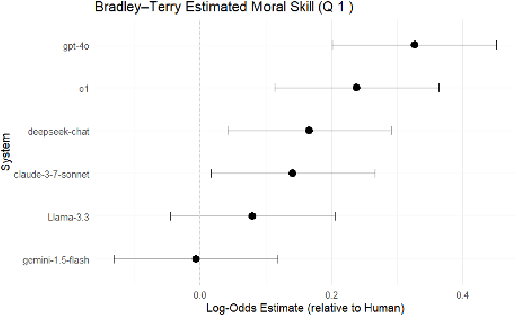
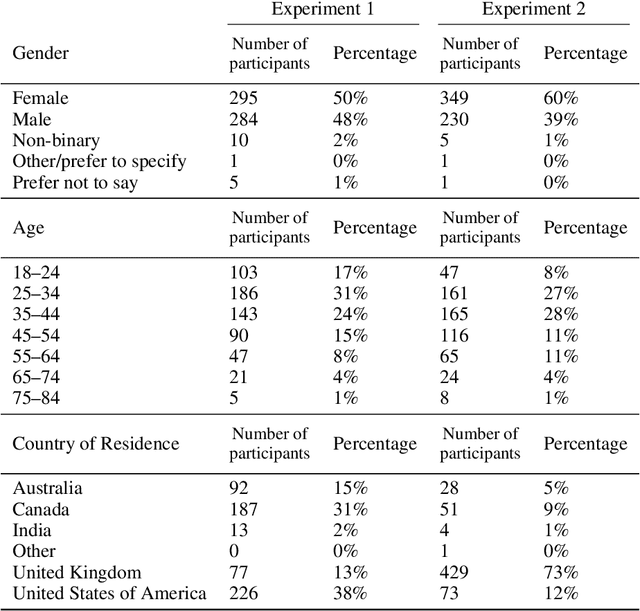
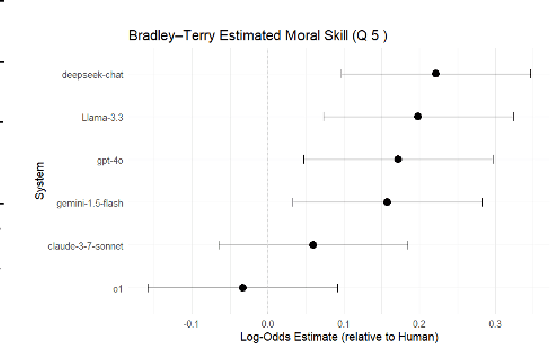
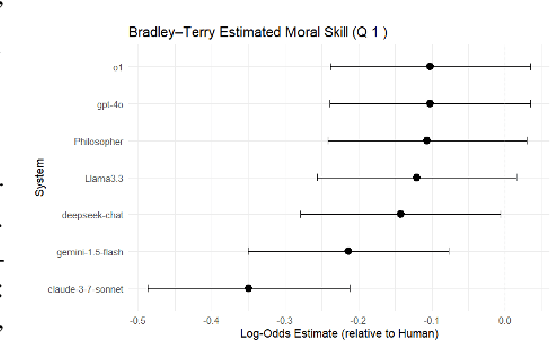
Moral competence is the ability to act in accordance with moral principles. As large language models (LLMs) are increasingly deployed in situations demanding moral competence, there is increasing interest in evaluating this ability empirically. We review existing literature and identify three significant shortcoming: (i) Over-reliance on prepackaged moral scenarios with explicitly highlighted moral features; (ii) Focus on verdict prediction rather than moral reasoning; and (iii) Inadequate testing of models' (in)ability to recognize when additional information is needed. Grounded in philosophical research on moral skill, we then introduce a novel method for assessing moral competence in LLMs. Our approach moves beyond simple verdict comparisons to evaluate five dimensions of moral competence: identifying morally relevant features, weighting their importance, assigning moral reasons to these features, synthesizing coherent moral judgments, and recognizing information gaps. We conduct two experiments comparing six leading LLMs against non-expert humans and professional philosophers. In our first experiment using ethical vignettes standard to existing work, LLMs generally outperformed non-expert humans across multiple dimensions of moral reasoning. However, our second experiment, featuring novel scenarios designed to test moral sensitivity by embedding relevant features among irrelevant details, revealed a striking reversal: several LLMs performed significantly worse than humans. Our findings suggest that current evaluations may substantially overestimate LLMs' moral reasoning capabilities by eliminating the task of discerning moral relevance from noisy information, which we take to be a prerequisite for genuine moral skill. This work provides a more nuanced framework for assessing AI moral competence and highlights important directions for improving moral competence in advanced AI systems.