 Add to Chrome
 Add to Firefox
 Add to Edge
HyperVis: Continuous Latent Visual Relational Graphs on the Lorentz Hyperboloid for Compositional Reasoning
Jun 04, 2026
Vision-Language Models (VLMs) struggle with compositional reasoning that requires understanding inter-object relationships. A natural remedy is to inject explicit scene graph triplets $\langle s, p, o \rangle$ from an off-the-shelf scene graph generator (SGG), but we show this backfires: discrete text labels collide with the continuous visual modality, degrading GQA accuracy from 60.38\% to 58.86\%. We propose \textbf{HyperVis}, which bypasses the SGG semantic bottleneck entirely. From $N$ class-agnostic region proposals, we compute a dense $O(N^2)$ visual relation tensor via spatially-biased cross-attention, project it onto a Lorentz hyperboloid, and enforce hierarchy through spatial physics, namely IoA-driven entailment cones and exterior-angle repulsion. We discover that HyperVis contributes in two complementary ways: (1) as a \emph{training-time regularizer}, the hyperbolic relational losses shape LoRA representations that improve generative VQA (GQA 61.03\% vs.\ 57.21\% for LoRA fine-tuning without relational losses, recovering and surpassing the baseline); and (2) as an \emph{inference-time relational encoder}, hyperbolic prefix tokens boost discriminative compositional scoring (SugarCrepe 79.94\%, $+$6.25pp over baseline). The learned curvature stabilises at $κ{=}4.0$, an order of magnitude above prior hyperbolic VLMs where $κ$ typically collapses toward zero, indicating that continuous visual features genuinely require the exponential volume of strongly curved space. A controlled Euclidean ablation confirms this decomposition: the relational pipeline regularises LoRA comparably in flat space (GQA 60.81\%), but the compositionality gain is specifically hyperbolic (SugarCrepe $+$4.58pp over Euclidean), with entailment loss ${\sim}6{\times}$ higher in Euclidean training. Codes are available at TBA.

Unextractable Protocol Models: Collaborative Training and Inference without Weight Materialization
May 22, 2026We consider a decentralized setup in which the participants collaboratively train and serve a large neural network, and where each participant only processes a subset of the model. In this setup, we explore the possibility of unmaterializable weights, where a full weight set is never available to any one participant. We introduce Unextractable Protocol Models (UPMs): a training and inference framework that leverages the sharded model setup to ensure model shards (i.e., subsets) held by participants are incompatible at different time steps. UPMs periodically inject time-varying, random, invertible transforms at participant boundaries; preserving the overall network function yet rendering cross-time assemblies incoherent. On Qwen-2.5-0.5B and Llama-3.2-1B, 10,000 transforms leave FP32 perplexity unchanged ($Δ$PPL $< 0.01$; Jensen-Shannon drift $< 4 \times 10^{-5}$), and we show how to control growth for lower precision datatypes. Applying a transform every 30s adds 3% latency, 0.1% bandwidth, and 10% GPU-memory overhead at inference, while training overhead falls to 1.6% time and $< 1$% memory. We consider several attacks, showing that the requirements of direct attacks are impractical and easy to defend against, and that gradient-based fine-tuning of stitched partitions consumes $\geq 60$% of the tokens required to train from scratch. By enabling models to be collaboratively trained yet not extracted, UPMs make it practical to embed programmatic incentive mechanisms in community-driven decentralized training.
* Accepted at NeurIPS 2025. 34 pages, 6 figures (5 in main body, 1 in appendix). Alexander Long and Chamin Hewa Koneputugodage contributed equally
NuMuon: Nuclear-Norm-Constrained Muon for Compressible LLM Training
Mar 04, 2026The rapid progress of large language models (LLMs) is increasingly constrained by memory and deployment costs, motivating compression methods for practical deployment. Many state-of-the-art compression pipelines leverage the low-rank structure of trained weight matrices, a phenomenon often associated with the properties of popular optimizers such as Adam. In this context, Muon is a recently proposed optimizer that improves LLM pretraining via full-rank update steps, but its induced weight-space structure has not been characterized yet. In this work, we report a surprising empirical finding: despite imposing full-rank updates, Muon-trained models exhibit pronounced low-rank structure in their weight matrices and are readily compressible under standard pipelines. Motivated by this insight, we propose NuMuon, which augments Muon with a nuclear-norm constraint on the update direction, further constraining the learned weights toward low-rank structure. Across billion-parameter-scale models, we show that NuMuon increases weight compressibility and improves post-compression model quality under state-of-the-art LLM compression pipelines while retaining Muon's favorable convergence behavior.
SENTINEL: Stagewise Integrity Verification for Pipeline Parallel Decentralized Training
Mar 03, 2026Decentralized training introduces critical security risks when executed across untrusted, geographically distributed nodes. While existing Byzantine-tolerant literature addresses data parallel (DP) training through robust aggregation methods, pipeline parallelism (PP) presents fundamentally distinct challenges. In PP, model layers are distributed across workers where the activations and their gradients flow between stages rather than being aggregated, making traditional DP approaches inapplicable. We propose SENTINEL, a verification mechanism for PP training without computation duplication. SENTINEL employs lightweight momentum-based monitoring using exponential moving averages (EMAs) to detect corrupted inter-stage communication. Unlike existing Byzantine-tolerant approaches for DP that aggregate parameter gradients across replicas, our approach verifies sequential activation/gradient transmission between layers. We provide theoretical convergence guarantees for this new setting that recovers classical convergence rates when relaxed to standard training. Experiments demonstrate successful training of up to 4B-parameter LLMs across untrusted distributed environments with up to 176 workers while maintaining model convergence and performance.
AsyncMesh: Fully Asynchronous Optimization for Data and Pipeline Parallelism
Jan 30, 2026Data and pipeline parallelism are key strategies for scaling neural network training across distributed devices, but their high communication cost necessitates co-located computing clusters with fast interconnects, limiting their scalability. We address this communication bottleneck by introducing asynchronous updates across both parallelism axes, relaxing the co-location requirement at the expense of introducing staleness between pipeline stages and data parallel replicas. To mitigate staleness, for pipeline parallelism, we adopt a weight look-ahead approach, and for data parallelism, we introduce an asynchronous sparse averaging method equipped with an exponential moving average based correction mechanism. We provide convergence guarantees for both sparse averaging and asynchronous updates. Experiments on large-scale language models (up to \em 1B parameters) demonstrate that our approach matches the performance of the fully synchronous baseline, while significantly reducing communication overhead.
Nesterov Method for Asynchronous Pipeline Parallel Optimization
May 02, 2025Pipeline Parallelism (PP) enables large neural network training on small, interconnected devices by splitting the model into multiple stages. To maximize pipeline utilization, asynchronous optimization is appealing as it offers 100% pipeline utilization by construction. However, it is inherently challenging as the weights and gradients are no longer synchronized, leading to stale (or delayed) gradients. To alleviate this, we introduce a variant of Nesterov Accelerated Gradient (NAG) for asynchronous optimization in PP. Specifically, we modify the look-ahead step in NAG to effectively address the staleness in gradients. We theoretically prove that our approach converges at a sublinear rate in the presence of fixed delay in gradients. Our experiments on large-scale language modelling tasks using decoder-only architectures with up to 1B parameters, demonstrate that our approach significantly outperforms existing asynchronous methods, even surpassing the synchronous baseline.
VI3NR: Variance Informed Initialization for Implicit Neural Representations
Apr 27, 2025
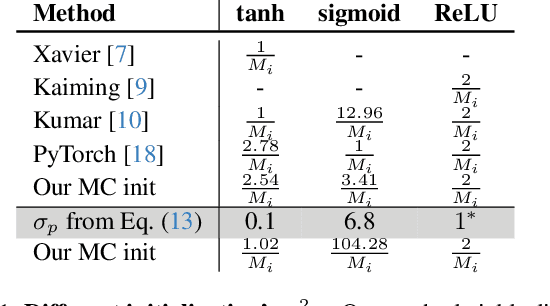
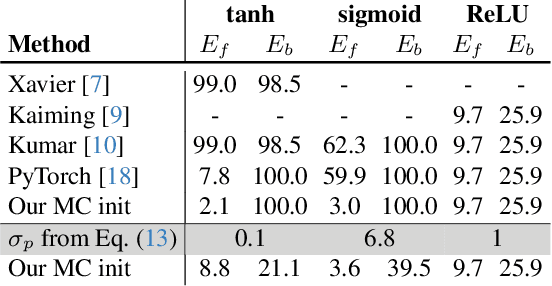
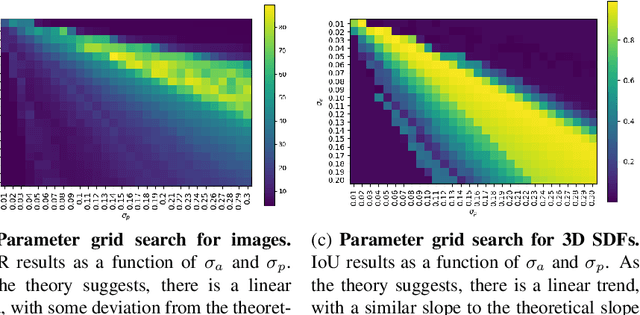
Implicit Neural Representations (INRs) are a versatile and powerful tool for encoding various forms of data, including images, videos, sound, and 3D shapes. A critical factor in the success of INRs is the initialization of the network, which can significantly impact the convergence and accuracy of the learned model. Unfortunately, commonly used neural network initializations are not widely applicable for many activation functions, especially those used by INRs. In this paper, we improve upon previous initialization methods by deriving an initialization that has stable variance across layers, and applies to any activation function. We show that this generalizes many previous initialization methods, and has even better stability for well studied activations. We also show that our initialization leads to improved results with INR activation functions in multiple signal modalities. Our approach is particularly effective for Gaussian INRs, where we demonstrate that the theory of our initialization matches with task performance in multiple experiments, allowing us to achieve improvements in image, audio, and 3D surface reconstruction.
Scaling Prompt Instructed Zero Shot Composed Image Retrieval with Image-Only Data
Apr 01, 2025
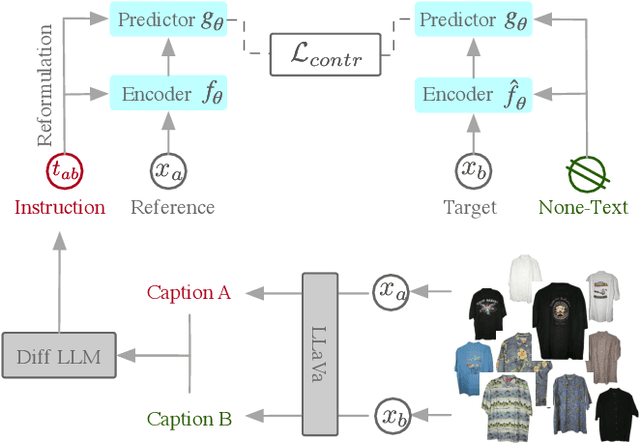
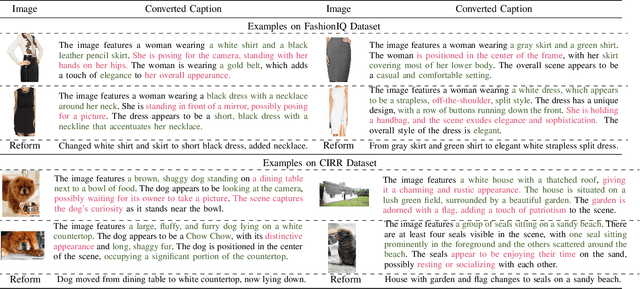
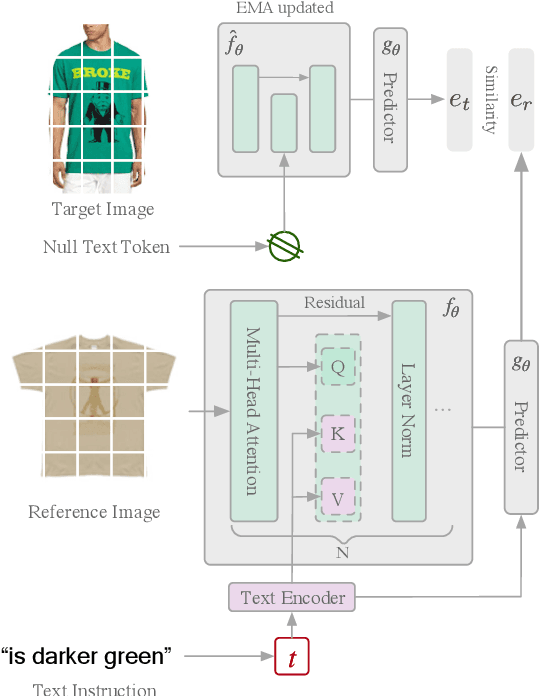
Composed Image Retrieval (CIR) is the task of retrieving images matching a reference image augmented with a text, where the text describes changes to the reference image in natural language. Traditionally, models designed for CIR have relied on triplet data containing a reference image, reformulation text, and a target image. However, curating such triplet data often necessitates human intervention, leading to prohibitive costs. This challenge has hindered the scalability of CIR model training even with the availability of abundant unlabeled data. With the recent advances in foundational models, we advocate a shift in the CIR training paradigm where human annotations can be efficiently replaced by large language models (LLMs). Specifically, we demonstrate the capability of large captioning and language models in efficiently generating data for CIR only relying on unannotated image collections. Additionally, we introduce an embedding reformulation architecture that effectively combines image and text modalities. Our model, named InstructCIR, outperforms state-of-the-art methods in zero-shot composed image retrieval on CIRR and FashionIQ datasets. Furthermore, we demonstrate that by increasing the amount of generated data, our zero-shot model gets closer to the performance of supervised baselines.
DARB-Splatting: Generalizing Splatting with Decaying Anisotropic Radial Basis Functions
Jan 21, 2025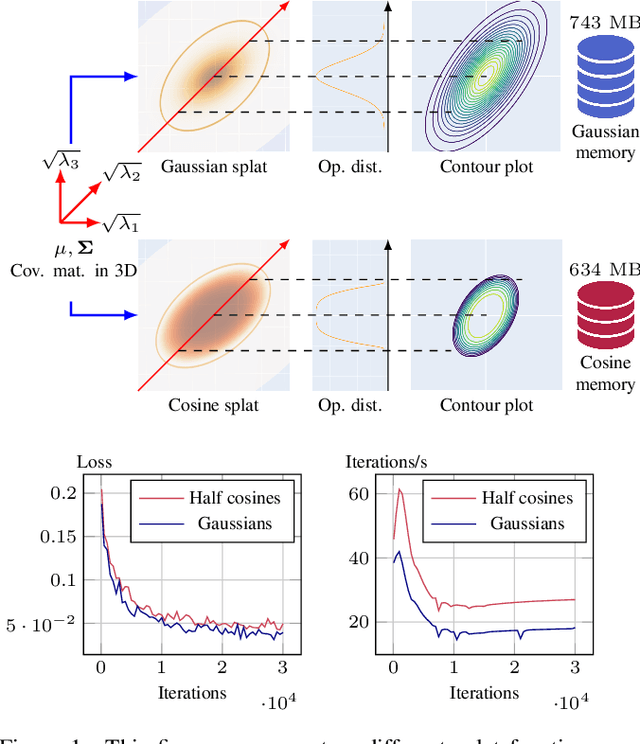
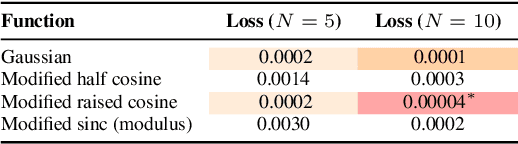
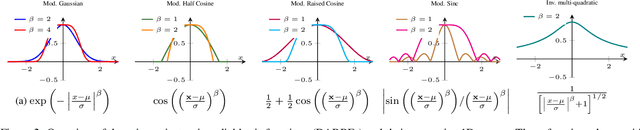
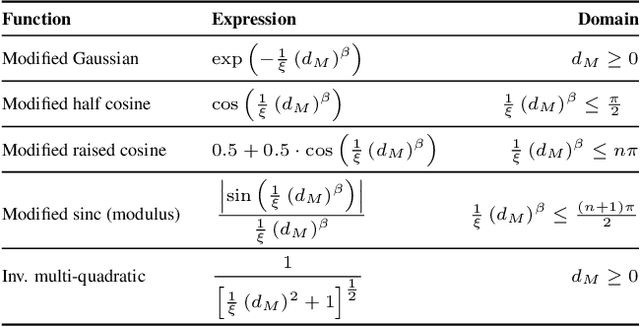
Splatting-based 3D reconstruction methods have gained popularity with the advent of 3D Gaussian Splatting, efficiently synthesizing high-quality novel views. These methods commonly resort to using exponential family functions, such as the Gaussian function, as reconstruction kernels due to their anisotropic nature, ease of projection, and differentiability in rasterization. However, the field remains restricted to variations within the exponential family, leaving generalized reconstruction kernels largely underexplored, partly due to the lack of easy integrability in 3D to 2D projections. In this light, we show that a class of decaying anisotropic radial basis functions (DARBFs), which are non-negative functions of the Mahalanobis distance, supports splatting by approximating the Gaussian function's closed-form integration advantage. With this fresh perspective, we demonstrate up to 34% faster convergence during training and a 15% reduction in memory consumption across various DARB reconstruction kernels, while maintaining comparable PSNR, SSIM, and LPIPS results. We will make the code available.
Learning Visual Hierarchies with Hyperbolic Embeddings
Nov 26, 2024Structuring latent representations in a hierarchical manner enables models to learn patterns at multiple levels of abstraction. However, most prevalent image understanding models focus on visual similarity, and learning visual hierarchies is relatively unexplored. In this work, for the first time, we introduce a learning paradigm that can encode user-defined multi-level visual hierarchies in hyperbolic space without requiring explicit hierarchical labels. As a concrete example, first, we define a part-based image hierarchy using object-level annotations within and across images. Then, we introduce an approach to enforce the hierarchy using contrastive loss with pairwise entailment metrics. Finally, we discuss new evaluation metrics to effectively measure hierarchical image retrieval. Encoding these complex relationships ensures that the learned representations capture semantic and structural information that transcends mere visual similarity. Experiments in part-based image retrieval show significant improvements in hierarchical retrieval tasks, demonstrating the capability of our model in capturing visual hierarchies.