 Add to Chrome
 Add to Firefox
 Add to Edge
TELLER: Non-intrusive Cross-Layer Root-Cause Analysis for LLM Inference
Aug 03, 2026
Large language model (LLM) inference has evolved from an offline workload into a continuously operated software service, yet root-cause analysis remains difficult because a single request spans the inference engine, Python/C++ backend, host CUDA APIs, GPU kernels, and distributed communication. Existing profilers expose raw timelines, while log-based diagnosis often misses cross-layer execution semantics and request-level structure. We present TELLER, a non-intrusive Trace- and Log-aware LLM inference Root-cause analysis framework. TELLER first collects NVTX/CUPTI traces and service logs without modifying model binaries, then reconstructs per-request call-chain trees and aligns log lines with the corresponding execution steps. We introduce a dependency-aware causal-context slice that preserves parent-child structure, temporal order, and communication relations, and a Trace Pair Encoding (TPE) tokenizer that compresses such slices into compact structural token sequences with parent, depth, and duration attributes. On top of these representations, TELLER combines numeric candidate localization with a multimodal root-cause model that jointly predicts abnormal steps, localizes suspicious operators, and generates natural-language explanations. Experiments on multi-node GPU inference workloads show a clear compression-accuracy trade-off: a moderate TPE vocabulary reduces per-step trace length by more than 80% while achieving the best overall performance on both horizontal (cross-node communication) and vertical (within-node execution stack) views, whereas more aggressive compression substantially degrades diagnosis quality. Further analyses under low-fault priors, strengthened baselines, modality ablations, explanation-quality checks, and tracing overhead show that TELLER provides a practical triage and evidence-localization substrate for LLM inference RCA.

Mitigating Matthew Effect: Multi-Hypergraph Boosted Multi-Interest Self-Supervised Learning for Conversational Recommendation
Jul 21, 2026The Matthew effect is a big challenge in Recommender Systems (RSs), where popular items tend to receive increasing attention, while less popular ones are often overlooked, perpetuating existing disparities. Although many existing methods attempt to mitigate Matthew effect in the static or quasi-static recommendation scenarios, such issue will be more pronounced as users engage with the system over time. To this end, we propose a novel framework, Multi-Hypergraph Boosted Multi-Interest Self-Supervised Learning for Conversational Recommendation (HiCore), aiming to address Matthew effect in the Conversational Recommender System (CRS) involving the dynamic user-system feedback loop. It devotes to learn multi-level user interests by building a set of hypergraphs (i.e., item-, entity-, word-oriented multiple-channel hypergraphs) to alleviate the Matthew effec. Extensive experiments on four CRS-based datasets showcase that HiCore attains a new state-of-the-art performance, underscoring its superiority in mitigating the Matthew effect effectively. Our code is available at https://github.com/zysensmile/HiCore.
HyCoRec: Hypergraph-Enhanced Multi-Preference Learning for Alleviating Matthew Effect in Conversational Recommendation
Jul 20, 2026The Matthew effect is a notorious issue in Recommender Systems (RSs), \emph{i.e.}, the rich get richer and the poor get poorer, wherein popular items are overexposed while less popular ones are regularly ignored. Most methods examine Matthew effect in static or nearly-static recommendation scenarios. However, the Matthew effect will be increasingly amplified when the user interacts with the system over time. To address these issues, we propose a novel paradigm, Hypergraph-Enhanced Multi-Preference Learning for Alleviating Matthew Effect in Conversational Recommendation (HyCoRec), which aims to alleviate the Matthew effect in conversational recommendation. Concretely, HyCoRec devotes to alleviate the Matthew effect by learning multi-aspect preferences, \emph{i.e.}, item-, entity-, word-, review-, and knowledge-aspect preferences, to effectively generate responses in the conversational task and accurately predict items in the recommendation task when the user chats with the system over time. Extensive experiments conducted on two benchmarks validate that HyCoRec achieves new state-of-the-art performance and the superior of alleviating Matthew effect. Our code is available at https://github.com/zysensmile/HyCoRec.
Agentic Environment Engineering for Large Language Models: A Survey of Environment Modeling, Synthesis, Evaluation, and Application
Jun 10, 2026Environments serve as interactive systems for large language model (LLM) based agents across diverse scenarios and play a crucial role in driving the continual evolution of model capabilities. Despite this importance, existing work lacks a systematic categorization and deep analysis. This paper systematically studies current researches on agentic environments from the perspective of the environment engineering lifecycle, covering their modeling, synthesis, evaluation and application. Specifically, the paper first introduces representative environments from the perspectives of eight attributes and eight domains, providing detailed analyses of their development paths and highlighting their core capabilities. Second, for automated environment synthesis, two paradigms are introduced, such as symbolic synthesis and neural synthesis. This paper also shows different environment evaluation methods in each paradigm. Thirdly, the corresponding environment applications from the perspective of agent-environment co-evolution are discussed. In specific, the paper characterizes the primary pathways for agent evolution in dynamic environments from four complementary perspectives: memory-centric experience evolution, orchestration-centric workflow evolution, trajectory-centric offline evolution, and exploration-centric online evolution. And three paradigms of environment evolution are identified, namely neural-driven, difficulty-driven, and scaling-driven approaches. At last, several promising future directions are discussed, including Environment-as-a-Service, Multi-agent Environments, and Neural-Symbolic Environments.
E-commerce Webpage Recommendation Scheme Base on Semantic Mining and Neural Networks
Sep 11, 2024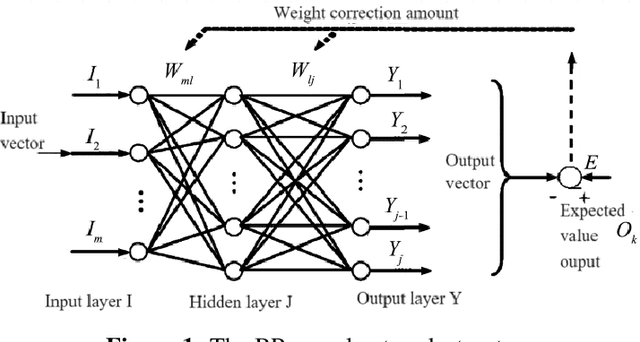
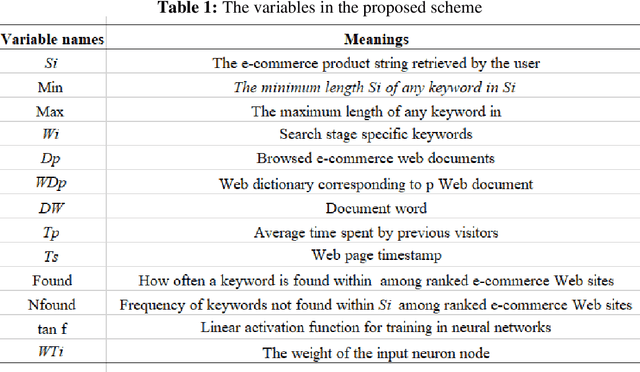
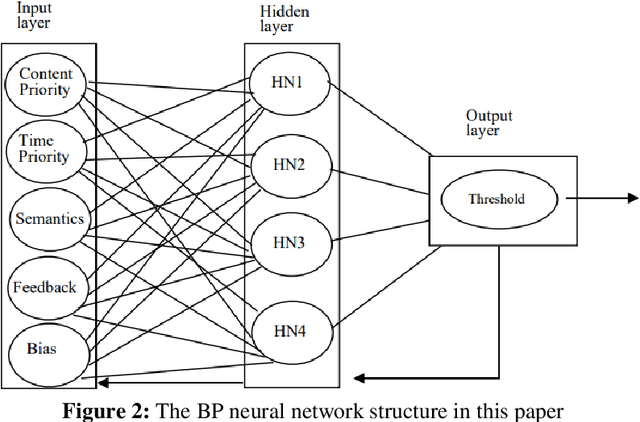

In e-commerce websites, web mining web page recommendation technology has been widely used. However, recommendation solutions often cannot meet the actual application needs of online shopping users. To address this problem, this paper proposes an e-commerce web page recommendation solution that combines semantic web mining and BP neural networks. First, the web logs of user searches are processed, and 5 features are extracted: content priority, time consumption priority, online shopping users' explicit/implicit feedback on the website, recommendation semantics and input deviation amount. Then, these features are used as input features of the BP neural network to classify and identify the priority of the final output web page. Finally, the web pages are sorted according to priority and recommended to users. This project uses book sales webpages as samples for experiments. The results show that this solution can quickly and accurately identify the webpages required by users.
Metaknowledge Extraction Based on Multi-Modal Documents
Feb 05, 2021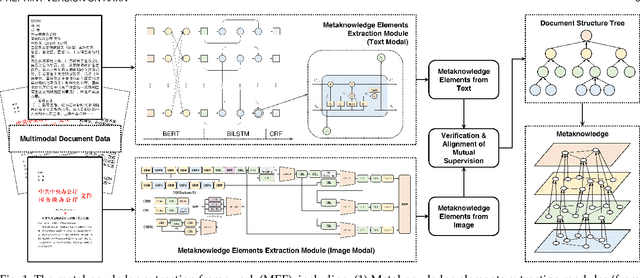
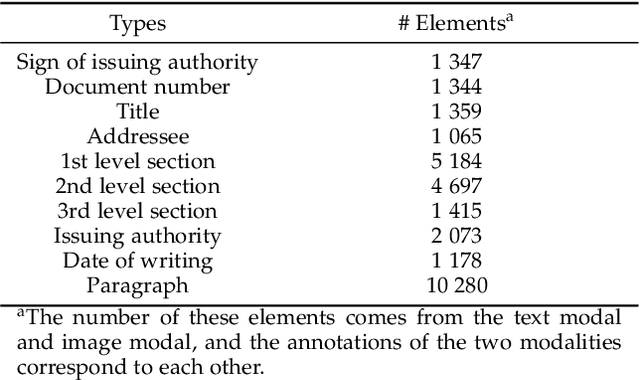
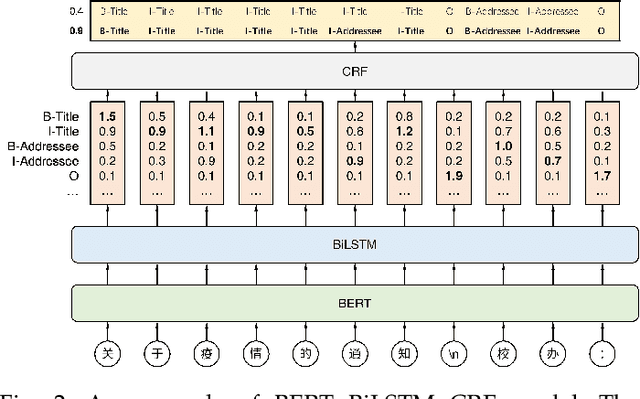
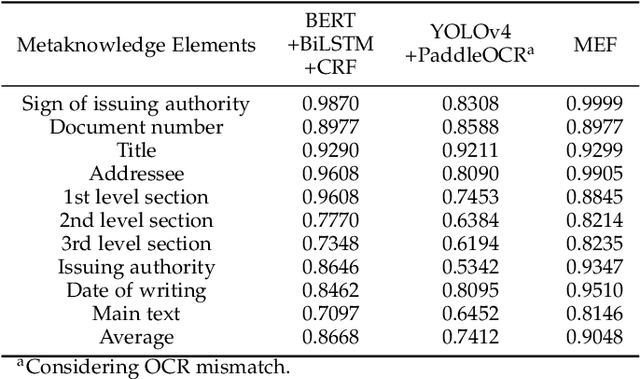
The triple-based knowledge in large-scale knowledge bases is most likely lacking in structural logic and problematic of conducting knowledge hierarchy. In this paper, we introduce the concept of metaknowledge to knowledge engineering research for the purpose of structural knowledge construction. Therefore, the Metaknowledge Extraction Framework and Document Structure Tree model are presented to extract and organize metaknowledge elements (titles, authors, abstracts, sections, paragraphs, etc.), so that it is feasible to extract the structural knowledge from multi-modal documents. Experiment results have proved the effectiveness of metaknowledge elements extraction by our framework. Meanwhile, detailed examples are given to demonstrate what exactly metaknowledge is and how to generate it. At the end of this paper, we propose and analyze the task flow of metaknowledge applications and the associations between knowledge and metaknowledge.
Listening to Sounds of Silence for Speech Denoising
Oct 22, 2020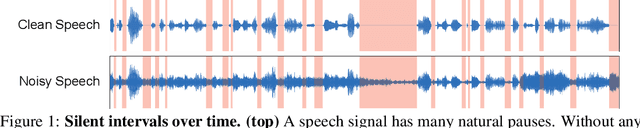
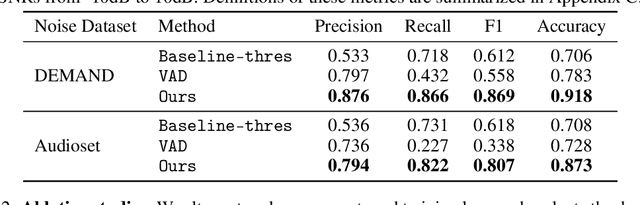
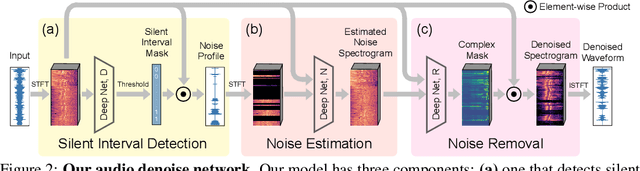
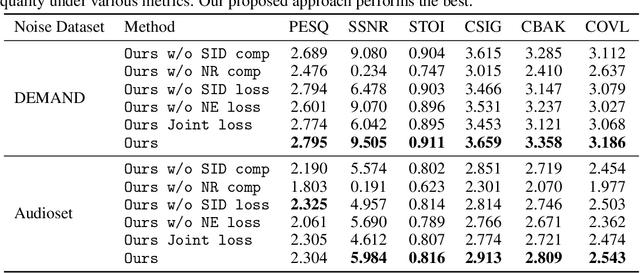
We introduce a deep learning model for speech denoising, a long-standing challenge in audio analysis arising in numerous applications. Our approach is based on a key observation about human speech: there is often a short pause between each sentence or word. In a recorded speech signal, those pauses introduce a series of time periods during which only noise is present. We leverage these incidental silent intervals to learn a model for automatic speech denoising given only mono-channel audio. Detected silent intervals over time expose not just pure noise but its time-varying features, allowing the model to learn noise dynamics and suppress it from the speech signal. Experiments on multiple datasets confirm the pivotal role of silent interval detection for speech denoising, and our method outperforms several state-of-the-art denoising methods, including those that accept only audio input (like ours) and those that denoise based on audiovisual input (and hence require more information). We also show that our method enjoys excellent generalization properties, such as denoising spoken languages not seen during training.