 Add to Chrome
 Add to Firefox
 Add to Edge
A Unified Issue Resolution Benchmark for Requirement Clarification, Planning, and Code Generation for Coding Agents
Aug 10, 2026
Large language model-powered coding agents are increasingly used to modify existing code repositories, for example, by adding features or fixing bugs. Yet existing repository-level benchmarks typically evaluate only whether the final patch passes tests. Satisfying a user request requires a long chain of interdependent reasoning and decisions: an agent must recover explicit and implicit requirements, formulate a repository-grounded implementation plan, and translate it into correct code. A pass/fail outcome cannot characterize how an unsuccessful trajectory diverges from the requirements and implementation process needed for a correct patch. To address this gap, we introduce SWE-RPG, a repository-level benchmark that combines executable patch evaluation with validated ground-truth references (GTs) for (1) Requirement Clarification and (2) Implementation Planning. These intermediate GTs support retrospective, GT-aligned diagnosis of complete coding-agent trajectories across clarification, planning, code generation, and artifact submission. SWE-RPG comprises 163 tasks from 31 Python and Java repositories, including 113 bug fixes and 50 feature additions. We evaluate 3 coding agents, including Claude Code, Codex, and OpenCode, with 6 large language model backends, including Claude-Sonnet-5 and GPT-5.6-Terra. Results show that the evaluated popular coding agents still struggle to implement user requests in existing repositories, achieving an average resolved rate of only 31.5% on SWE-RPG. Intermediate-GT diagnosis further identifies implicit requirement recovery as the main bottleneck, accounting for 24.5%--46.0% of agent runs. This result suggests implicit-requirement recovery as a key candidate direction for improving coding agents. The benchmark data and evaluation code are available at https://github.com/Xin-Zhou-smu/SWE-RPG-Bench.

SemiScope: Disentangling Classifier Tuning and Joint Optimization in Semi-Supervised Security Classification
Jun 30, 2026Background. Labeled data for security classification is scarce. Semi-supervised learning (SSL) propagates labels from a small labeled pool to larger unlabeled pools. Yet security applications often use SSL as a black box: default parameters, a fixed classifier, and no handling of pseudo-label-induced class imbalance. Aims. Recent work reports sizeable gains from optimizing SSL pipelines via joint search, AutoML, or per-component tuning. These gains are hard to attribute: they may reflect useful SSL-classifier interactions, or mostly from simply tuning the downstream classifier. We disentangle these effects for binary tabular security data with classical SSL and tree-based classifiers. Method. We build SemiScope as an analysis instrument, not a deployment recommendation. It uses Bayesian Optimization to jointly tune SSL settings, confidence filtering, oversampling, and the classifier. The key control, Tuned-Clf, fixes SSL to defaults but gets the same 100-trial classifier budget and validation-set threshold tuning as SemiScope. At 10% labels, we compare them with paired TOST using a +/-1.0 g-measure smallest effect of interest. Results. SemiScope beats every default SSL baseline on all five datasets, improving over the strongest by 0.7-12.7 points. Under the equal-budget control, Tuned-Clf is statistically equivalent to the full pipeline on 4 of 5 datasets; Phishing is inconclusive. Classifier HPO alone recovers a median 86% of SemiScope's gain over Default Self-Training (ST) + Random Forest (RF). Conclusions. The reusable contribution is the decomposition protocol. A simpler recipe suffices: use Self-Training, tune the classifier with Bayesian Optimization, and tune the decision threshold on validation data. It reaches within 1 g-measure of Supervised RF at 20-30% labels on four datasets and 40% on Drebin, at the same or lower label rate than Default ST + RF on every dataset.
OpenAI GPT-5 System Card
Dec 19, 2025This is the system card published alongside the OpenAI GPT-5 launch, August 2025. GPT-5 is a unified system with a smart and fast model that answers most questions, a deeper reasoning model for harder problems, and a real-time router that quickly decides which model to use based on conversation type, complexity, tool needs, and explicit intent (for example, if you say 'think hard about this' in the prompt). The router is continuously trained on real signals, including when users switch models, preference rates for responses, and measured correctness, improving over time. Once usage limits are reached, a mini version of each model handles remaining queries. This system card focuses primarily on gpt-5-thinking and gpt-5-main, while evaluations for other models are available in the appendix. The GPT-5 system not only outperforms previous models on benchmarks and answers questions more quickly, but -- more importantly -- is more useful for real-world queries. We've made significant advances in reducing hallucinations, improving instruction following, and minimizing sycophancy, and have leveled up GPT-5's performance in three of ChatGPT's most common uses: writing, coding, and health. All of the GPT-5 models additionally feature safe-completions, our latest approach to safety training to prevent disallowed content. Similarly to ChatGPT agent, we have decided to treat gpt-5-thinking as High capability in the Biological and Chemical domain under our Preparedness Framework, activating the associated safeguards. While we do not have definitive evidence that this model could meaningfully help a novice to create severe biological harm -- our defined threshold for High capability -- we have chosen to take a precautionary approach.
OpenAI o1 System Card
Dec 21, 2024


The o1 model series is trained with large-scale reinforcement learning to reason using chain of thought. These advanced reasoning capabilities provide new avenues for improving the safety and robustness of our models. In particular, our models can reason about our safety policies in context when responding to potentially unsafe prompts, through deliberative alignment. This leads to state-of-the-art performance on certain benchmarks for risks such as generating illicit advice, choosing stereotyped responses, and succumbing to known jailbreaks. Training models to incorporate a chain of thought before answering has the potential to unlock substantial benefits, while also increasing potential risks that stem from heightened intelligence. Our results underscore the need for building robust alignment methods, extensively stress-testing their efficacy, and maintaining meticulous risk management protocols. This report outlines the safety work carried out for the OpenAI o1 and OpenAI o1-mini models, including safety evaluations, external red teaming, and Preparedness Framework evaluations.
Dazzle: Using Optimized Generative Adversarial Networks to Address Security Data Class Imbalance Issue
Mar 22, 2022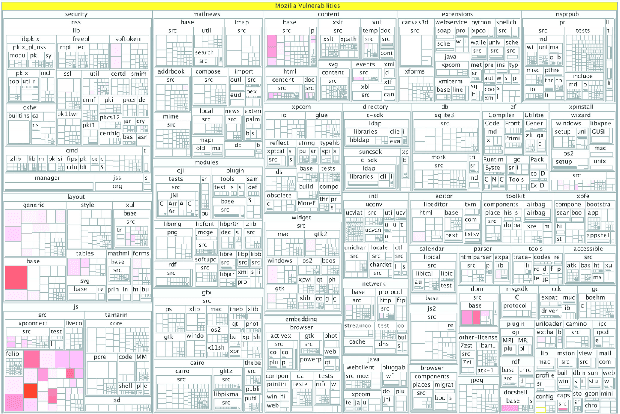

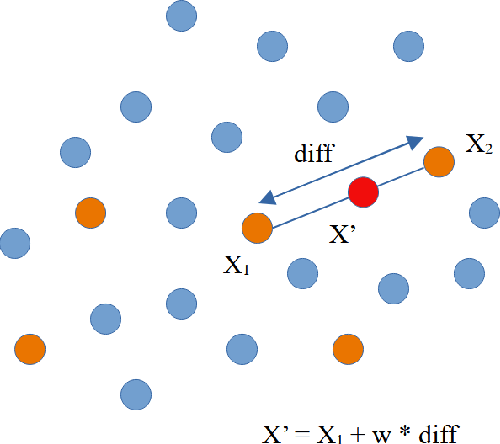
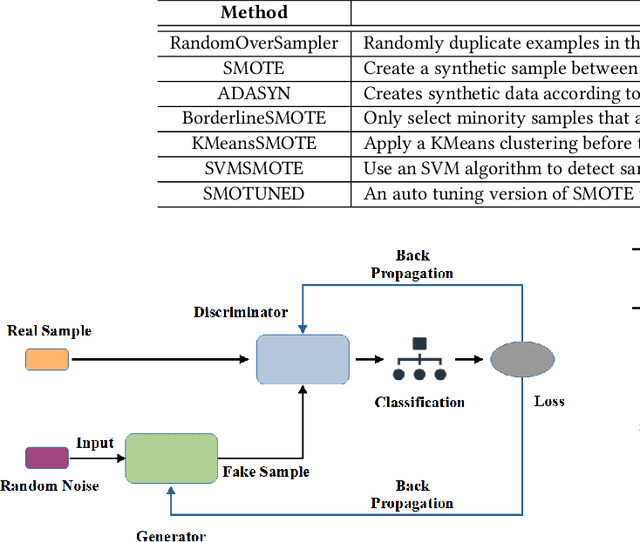
Background: Machine learning techniques have been widely used and demonstrate promising performance in many software security tasks such as software vulnerability prediction. However, the class ratio within software vulnerability datasets is often highly imbalanced (since the percentage of observed vulnerability is usually very low). Goal: To help security practitioners address software security data class imbalanced issues and further help build better prediction models with resampled datasets. Method: We introduce an approach called Dazzle which is an optimized version of conditional Wasserstein Generative Adversarial Networks with gradient penalty (cWGAN-GP). Dazzle explores the architecture hyperparameters of cWGAN-GP with a novel optimizer called Bayesian Optimization. We use Dazzle to generate minority class samples to resample the original imbalanced training dataset. Results: We evaluate Dazzle with three software security datasets, i.e., Moodle vulnerable files, Ambari bug reports, and JavaScript function code. We show that Dazzle is practical to use and demonstrates promising improvement over existing state-of-the-art oversampling techniques such as SMOTE (e.g., with an average of about 60% improvement rate over SMOTE in recall among all datasets). Conclusion: Based on this study, we would suggest the use of optimized GANs as an alternative method for security vulnerability data class imbalanced issues.
Temporal Predictive Coding For Model-Based Planning In Latent Space
Jun 14, 2021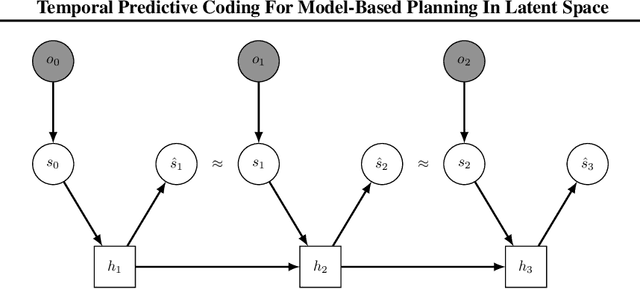
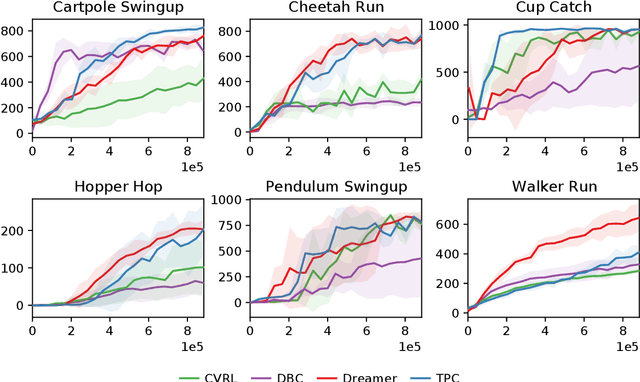
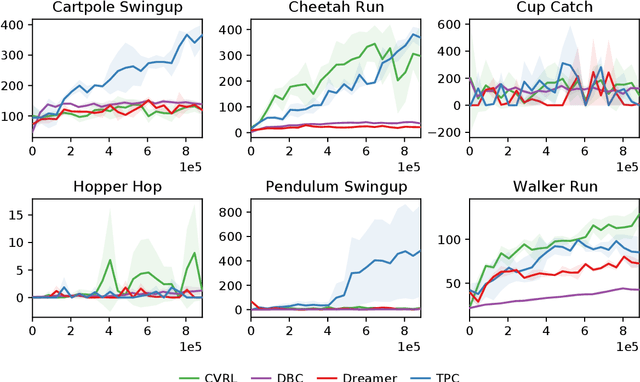
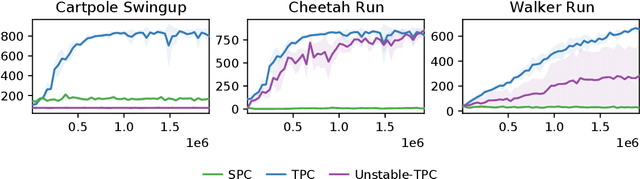
High-dimensional observations are a major challenge in the application of model-based reinforcement learning (MBRL) to real-world environments. To handle high-dimensional sensory inputs, existing approaches use representation learning to map high-dimensional observations into a lower-dimensional latent space that is more amenable to dynamics estimation and planning. In this work, we present an information-theoretic approach that employs temporal predictive coding to encode elements in the environment that can be predicted across time. Since this approach focuses on encoding temporally-predictable information, we implicitly prioritize the encoding of task-relevant components over nuisance information within the environment that are provably task-irrelevant. By learning this representation in conjunction with a recurrent state space model, we can then perform planning in latent space. We evaluate our model on a challenging modification of standard DMControl tasks where the background is replaced with natural videos that contain complex but irrelevant information to the planning task. Our experiments show that our model is superior to existing methods in the challenging complex-background setting while remaining competitive with current state-of-the-art models in the standard setting.
Anytime Sampling for Autoregressive Models via Ordered Autoencoding
Feb 23, 2021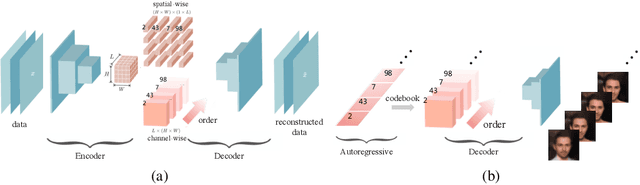
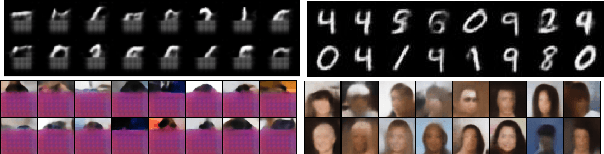
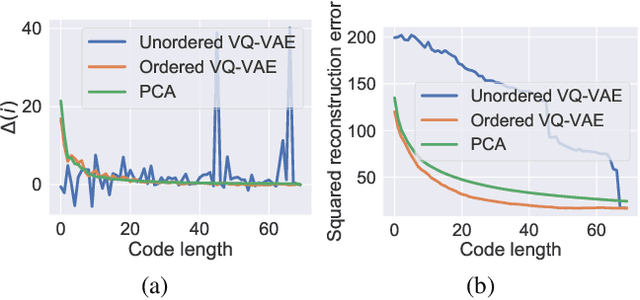
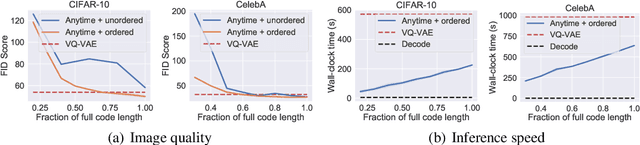
Autoregressive models are widely used for tasks such as image and audio generation. The sampling process of these models, however, does not allow interruptions and cannot adapt to real-time computational resources. This challenge impedes the deployment of powerful autoregressive models, which involve a slow sampling process that is sequential in nature and typically scales linearly with respect to the data dimension. To address this difficulty, we propose a new family of autoregressive models that enables anytime sampling. Inspired by Principal Component Analysis, we learn a structured representation space where dimensions are ordered based on their importance with respect to reconstruction. Using an autoregressive model in this latent space, we trade off sample quality for computational efficiency by truncating the generation process before decoding into the original data space. Experimentally, we demonstrate in several image and audio generation tasks that sample quality degrades gracefully as we reduce the computational budget for sampling. The approach suffers almost no loss in sample quality (measured by FID) using only 60\% to 80\% of all latent dimensions for image data. Code is available at https://github.com/Newbeeer/Anytime-Auto-Regressive-Model .
Omni: Automated Ensemble with Unexpected Models against Adversarial Evasion Attack
Nov 23, 2020
BACKGROUND: Machine learning-based security detection models have become prevalent in modern malware and intrusion detection systems. However, previous studies show that such models are susceptible to adversarial evasion attacks. In this type of attack, inputs (i.e., adversarial examples) are specially crafted by intelligent malicious adversaries, with the aim of being misclassified by existing state-of-the-art models (e.g., deep neural networks). Once the attackers can fool a classifier to think that a malicious input is actually benign, they can render a machine learning-based malware or intrusion detection system ineffective. GOAL: To help security practitioners and researchers build a more robust model against adversarial evasion attack through the use of ensemble learning. METHOD: We propose an approach called OMNI, the main idea of which is to explore methods that create an ensemble of "unexpected models"; i.e., models whose control hyperparameters have a large distance to the hyperparameters of an adversary's target model, with which we then make an optimized weighted ensemble prediction. RESULTS: In studies with five adversarial evasion attacks (FGSM, BIM, JSMA, DeepFool and Carlini-Wagner) on five security datasets (NSL-KDD, CIC-IDS-2017, CSE-CIC-IDS2018, CICAndMal2017 and the Contagio PDF dataset), we show that the improvement rate of OMNI's prediction accuracy over attack accuracy is about 53% (median value) across all datasets, with about 18% (median value) loss rate when comparing pre-attack accuracy and OMNI's prediction accuracy. CONCLUSIONWhen using ensemble learning as a defense method against adversarial evasion attacks, we suggest to create ensemble with unexpected models who are distant from the attacker's expected model (i.e., target model) through methods such as hyperparameter optimization.
Predictive Coding for Locally-Linear Control
Mar 02, 2020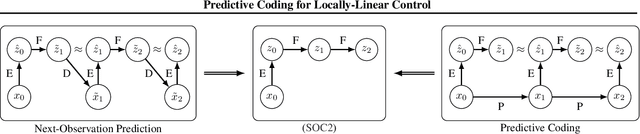
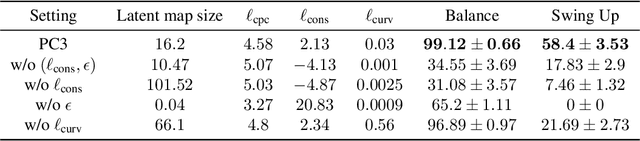


High-dimensional observations and unknown dynamics are major challenges when applying optimal control to many real-world decision making tasks. The Learning Controllable Embedding (LCE) framework addresses these challenges by embedding the observations into a lower dimensional latent space, estimating the latent dynamics, and then performing control directly in the latent space. To ensure the learned latent dynamics are predictive of next-observations, all existing LCE approaches decode back into the observation space and explicitly perform next-observation prediction---a challenging high-dimensional task that furthermore introduces a large number of nuisance parameters (i.e., the decoder) which are discarded during control. In this paper, we propose a novel information-theoretic LCE approach and show theoretically that explicit next-observation prediction can be replaced with predictive coding. We then use predictive coding to develop a decoder-free LCE model whose latent dynamics are amenable to locally-linear control. Extensive experiments on benchmark tasks show that our model reliably learns a controllable latent space that leads to superior performance when compared with state-of-the-art LCE baselines.
Fair Generative Modeling via Weak Supervision
Oct 26, 2019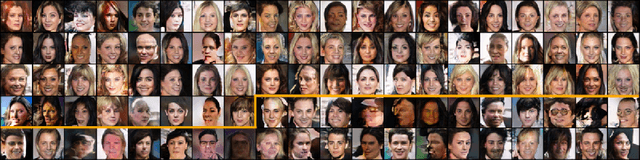
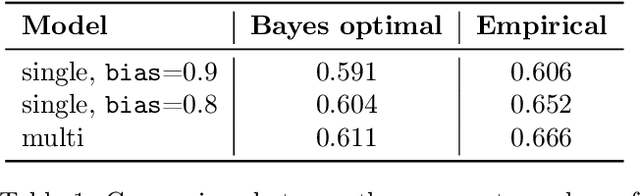

Real-world datasets are often biased with respect to key demographic factors such as race and gender. Due to the latent nature of the underlying factors, detecting and mitigating bias is especially challenging for unsupervised machine learning. We present a weakly supervised algorithm for overcoming dataset bias for deep generative models. Our approach requires access to an additional small, unlabeled but unbiased dataset as the supervision signal, thus sidestepping the need for explicit labels on the underlying bias factors. Using this supplementary dataset, we detect the bias in existing datasets via a density ratio technique and learn generative models which efficiently achieve the twin goals of: 1) data efficiency by using training examples from both biased and unbiased datasets for learning, 2) unbiased data generation at test time. Empirically, we demonstrate the efficacy of our approach which reduces bias w.r.t. latent factors by 57.1% on average over baselines for comparable image generation using generative adversarial networks.