 Add to Chrome
 Add to Firefox
 Add to Edge
What Makes a Good Story and How Can We Measure It? A Comprehensive Survey of Story Evaluation
Aug 26, 2024
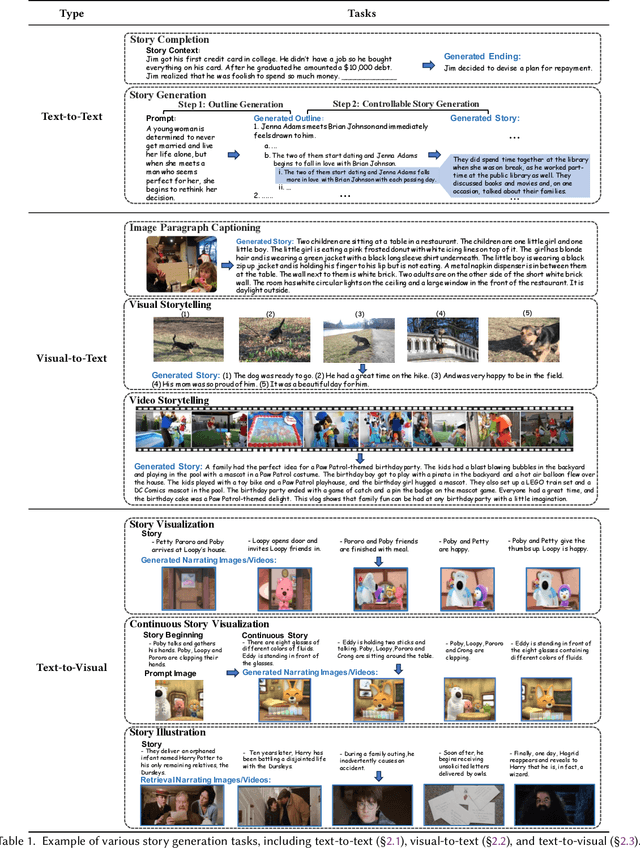
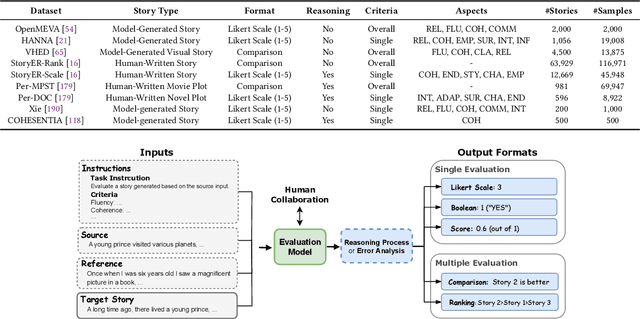
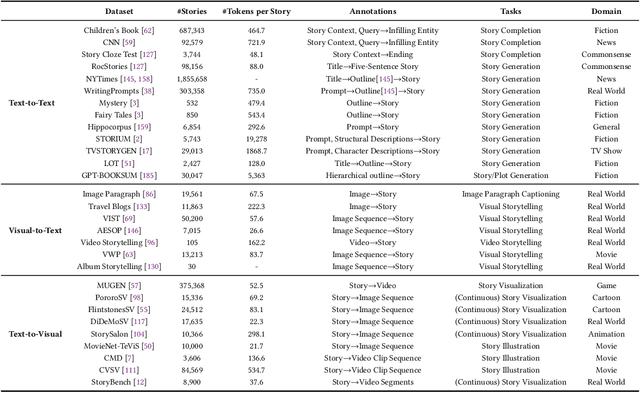
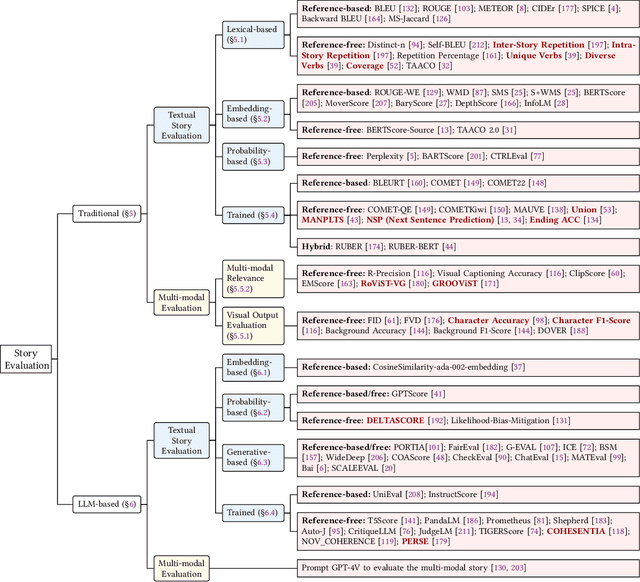
With the development of artificial intelligence, particularly the success of Large Language Models (LLMs), the quantity and quality of automatically generated stories have significantly increased. This has led to the need for automatic story evaluation to assess the generative capabilities of computing systems and analyze the quality of both automatic-generated and human-written stories. Evaluating a story can be more challenging than other generation evaluation tasks. While tasks like machine translation primarily focus on assessing the aspects of fluency and accuracy, story evaluation demands complex additional measures such as overall coherence, character development, interestingness, etc. This requires a thorough review of relevant research. In this survey, we first summarize existing storytelling tasks, including text-to-text, visual-to-text, and text-to-visual. We highlight their evaluation challenges, identify various human criteria to measure stories, and present existing benchmark datasets. Then, we propose a taxonomy to organize evaluation metrics that have been developed or can be adopted for story evaluation. We also provide descriptions of these metrics, along with the discussion of their merits and limitations. Later, we discuss the human-AI collaboration for story evaluation and generation. Finally, we suggest potential future research directions, extending from story evaluation to general evaluations.

UBiSS: A Unified Framework for Bimodal Semantic Summarization of Videos
Jun 24, 2024



With the surge in the amount of video data, video summarization techniques, including visual-modal(VM) and textual-modal(TM) summarization, are attracting more and more attention. However, unimodal summarization inevitably loses the rich semantics of the video. In this paper, we focus on a more comprehensive video summarization task named Bimodal Semantic Summarization of Videos (BiSSV). Specifically, we first construct a large-scale dataset, BIDS, in (video, VM-Summary, TM-Summary) triplet format. Unlike traditional processing methods, our construction procedure contains a VM-Summary extraction algorithm aiming to preserve the most salient content within long videos. Based on BIDS, we propose a Unified framework UBiSS for the BiSSV task, which models the saliency information in the video and generates a TM-summary and VM-summary simultaneously. We further optimize our model with a list-wise ranking-based objective to improve its capacity to capture highlights. Lastly, we propose a metric, $NDCG_{MS}$, to provide a joint evaluation of the bimodal summary. Experiments show that our unified framework achieves better performance than multi-stage summarization pipelines. Code and data are available at https://github.com/MeiYutingg/UBiSS.
* Accepted by ACM International Conference on Multimedia Retrieval (ICMR'24)
QuadrupedGPT: Towards a Versatile Quadruped Agent in Open-ended Worlds
Jun 24, 2024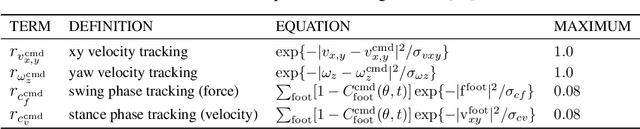
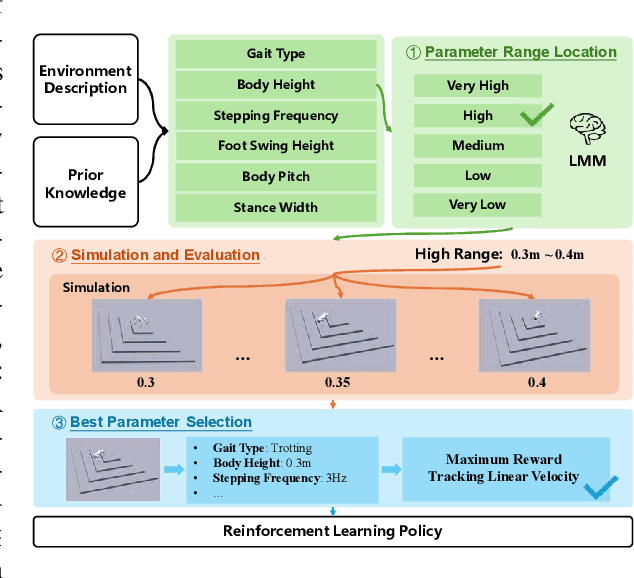

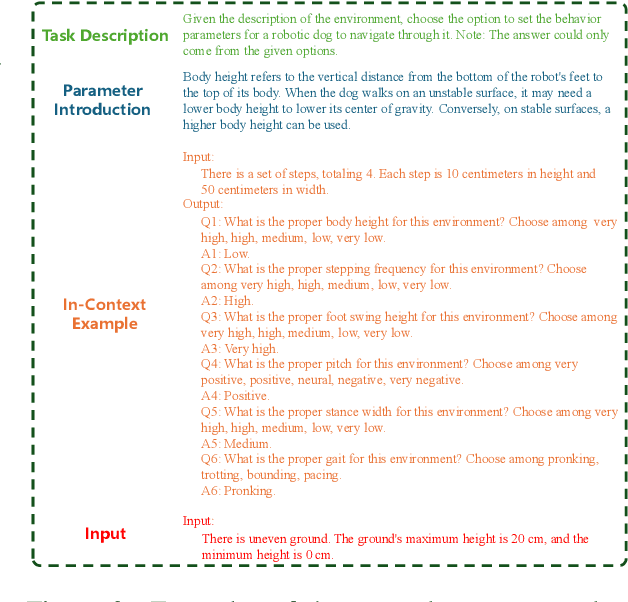
While pets offer companionship, their limited intelligence restricts advanced reasoning and autonomous interaction with humans. Considering this, we propose QuadrupedGPT, a versatile agent designed to master a broad range of complex tasks with agility comparable to that of a pet. To achieve this goal, the primary challenges include: i) effectively leveraging multimodal observations for decision-making; ii) mastering agile control of locomotion and path planning; iii) developing advanced cognition to execute long-term objectives. QuadrupedGPT processes human command and environmental contexts using a large multimodal model (LMM). Empowered by its extensive knowledge base, our agent autonomously assigns appropriate parameters for adaptive locomotion policies and guides the agent in planning a safe but efficient path towards the goal, utilizing semantic-aware terrain analysis. Moreover, QuadrupedGPT is equipped with problem-solving capabilities that enable it to decompose long-term goals into a sequence of executable subgoals through high-level reasoning. Extensive experiments across various benchmarks confirm that QuadrupedGPT can adeptly handle multiple tasks with intricate instructions, demonstrating a significant step towards the versatile quadruped agents in open-ended worlds. Our website and codes can be found at https://quadruped-hub.github.io/Quadruped-GPT/.
SingOMD: Singing Oriented Multi-resolution Discrete Representation Construction from Speech Models
Jun 20, 2024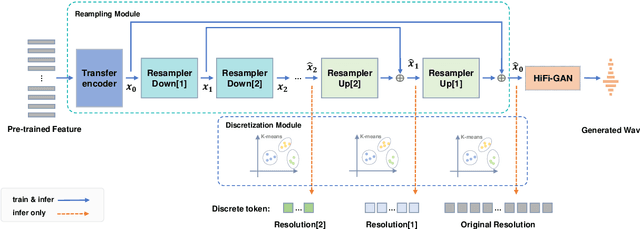
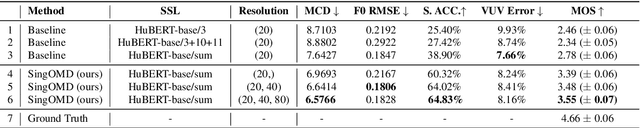
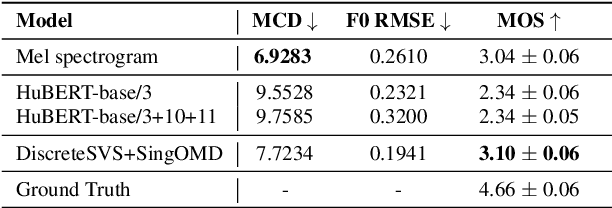
Discrete representation has shown advantages in speech generation tasks, wherein discrete tokens are derived by discretizing hidden features from self-supervised learning (SSL) pre-trained models. However, the direct application of speech SSL models to singing generation encounters domain gaps between speech and singing. Furthermore, singing generation necessitates a more refined representation than typical speech. To address these challenges, we introduce SingOMD, a novel method to extract singing-oriented multi-resolution discrete representations from speech SSL models. Specifically, we first adapt the features from speech SSL through a resynthesis task and incorporate multi-resolution modules based on resampling to better serve singing generation. These adapted multi-resolution features are then discretized via clustering. Extensive experiments demonstrate the robustness, efficiency, and effectiveness of these representations in singing vocoders and singing voice synthesis.
SingMOS: An extensive Open-Source Singing Voice Dataset for MOS Prediction
Jun 16, 2024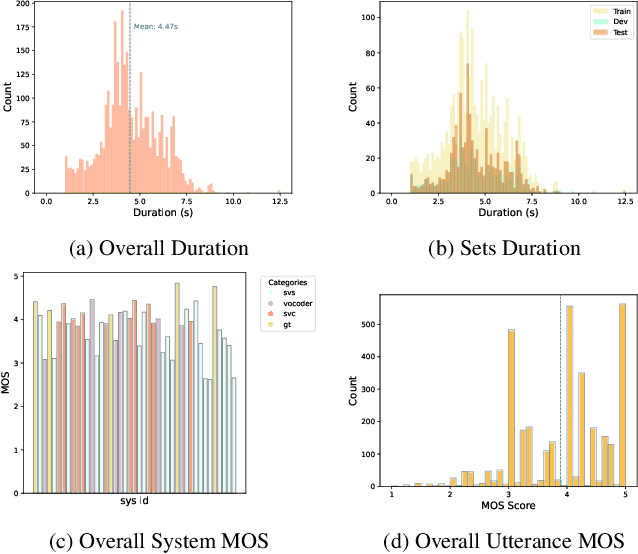
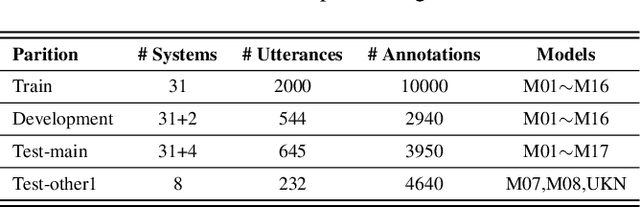
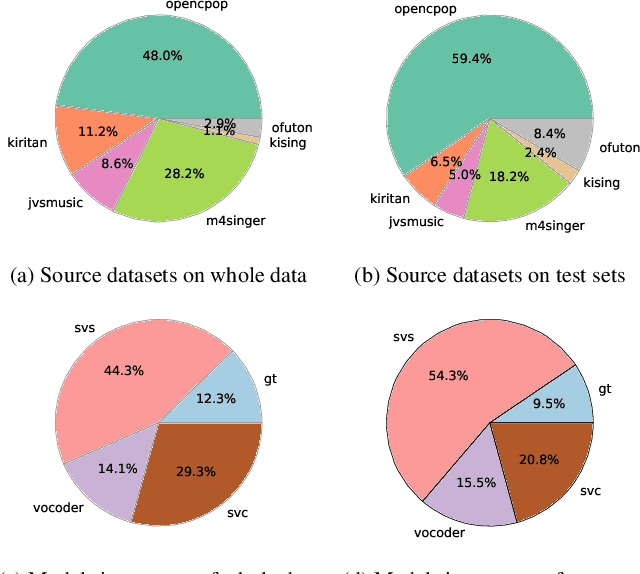
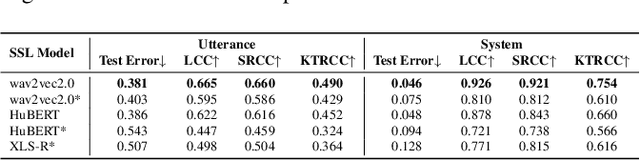
In speech generation tasks, human subjective ratings, usually referred to as the opinion score, are considered the "gold standard" for speech quality evaluation, with the mean opinion score (MOS) serving as the primary evaluation metric. Due to the high cost of human annotation, several MOS prediction systems have emerged in the speech domain, demonstrating good performance. These MOS prediction models are trained using annotations from previous speech-related challenges. However, compared to the speech domain, the singing domain faces data scarcity and stricter copyright protections, leading to a lack of high-quality MOS-annotated datasets for singing. To address this, we propose SingMOS, a high-quality and diverse MOS dataset for singing, covering a range of Chinese and Japanese datasets. These synthesized vocals are generated using state-of-the-art models in singing synthesis, conversion, or resynthesis tasks and are rated by professional annotators alongside real vocals. Data analysis demonstrates the diversity and reliability of our dataset. Additionally, we conduct further exploration on SingMOS, providing insights for singing MOS prediction and guidance for the continued expansion of SingMOS.
ESCoT: Towards Interpretable Emotional Support Dialogue Systems
Jun 16, 2024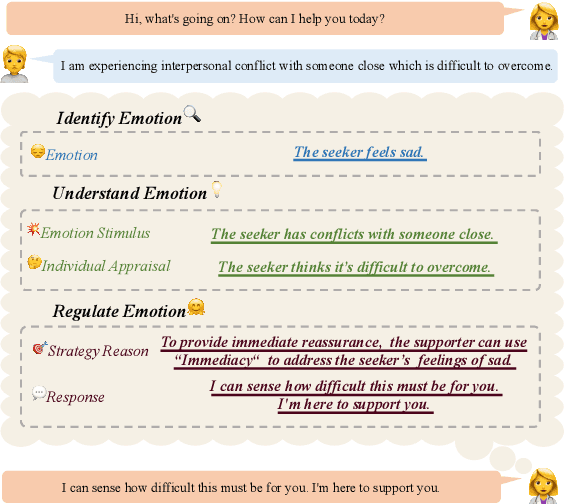
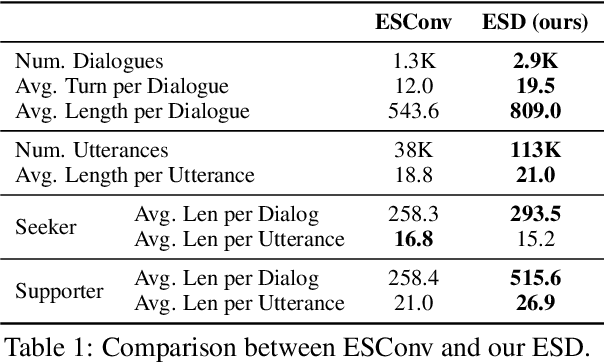
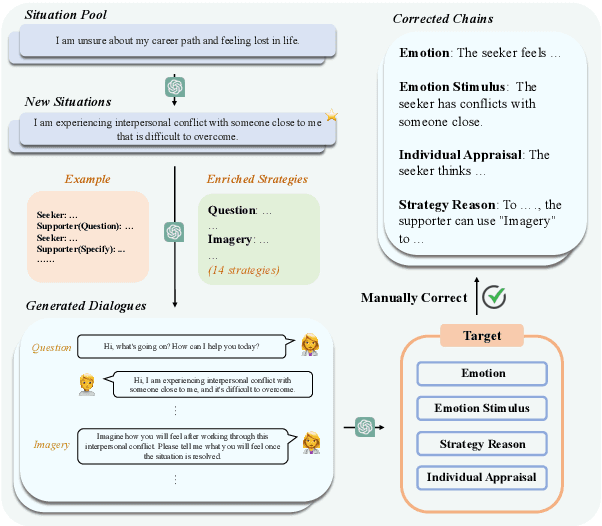
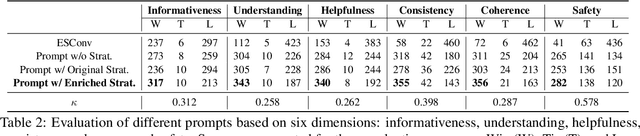
Understanding the reason for emotional support response is crucial for establishing connections between users and emotional support dialogue systems. Previous works mostly focus on generating better responses but ignore interpretability, which is extremely important for constructing reliable dialogue systems. To empower the system with better interpretability, we propose an emotional support response generation scheme, named $\textbf{E}$motion-Focused and $\textbf{S}$trategy-Driven $\textbf{C}$hain-$\textbf{o}$f-$\textbf{T}$hought ($\textbf{ESCoT}$), mimicking the process of $\textit{identifying}$, $\textit{understanding}$, and $\textit{regulating}$ emotions. Specially, we construct a new dataset with ESCoT in two steps: (1) $\textit{Dialogue Generation}$ where we first generate diverse conversation situations, then enhance dialogue generation using richer emotional support strategies based on these situations; (2) $\textit{Chain Supplement}$ where we focus on supplementing selected dialogues with elements such as emotion, stimuli, appraisal, and strategy reason, forming the manually verified chains. Additionally, we further develop a model to generate dialogue responses with better interpretability. We also conduct extensive experiments and human evaluations to validate the effectiveness of the proposed ESCoT and generated dialogue responses. Our data and code are available at $\href{https://github.com/TeigenZhang/ESCoT}{https://github.com/TeigenZhang/ESCoT}$.
Adaptive Temporal Motion Guided Graph Convolution Network for Micro-expression Recognition
Jun 13, 2024Micro-expressions serve as essential cues for understanding individuals' genuine emotional states. Recognizing micro-expressions attracts increasing research attention due to its various applications in fields such as business negotiation and psychotherapy. However, the intricate and transient nature of micro-expressions poses a significant challenge to their accurate recognition. Most existing works either neglect temporal dependencies or suffer from redundancy issues in clip-level recognition. In this work, we propose a novel framework for micro-expression recognition, named the Adaptive Temporal Motion Guided Graph Convolution Network (ATM-GCN). Our framework excels at capturing temporal dependencies between frames across the entire clip, thereby enhancing micro-expression recognition at the clip level. Specifically, the integration of Adaptive Temporal Motion layers empowers our method to aggregate global and local motion features inherent in micro-expressions. Experimental results demonstrate that ATM-GCN not only surpasses existing state-of-the-art methods, particularly on the Composite dataset, but also achieves superior performance on the latest micro-expression dataset CAS(ME)$^3$.
TokSing: Singing Voice Synthesis based on Discrete Tokens
Jun 12, 2024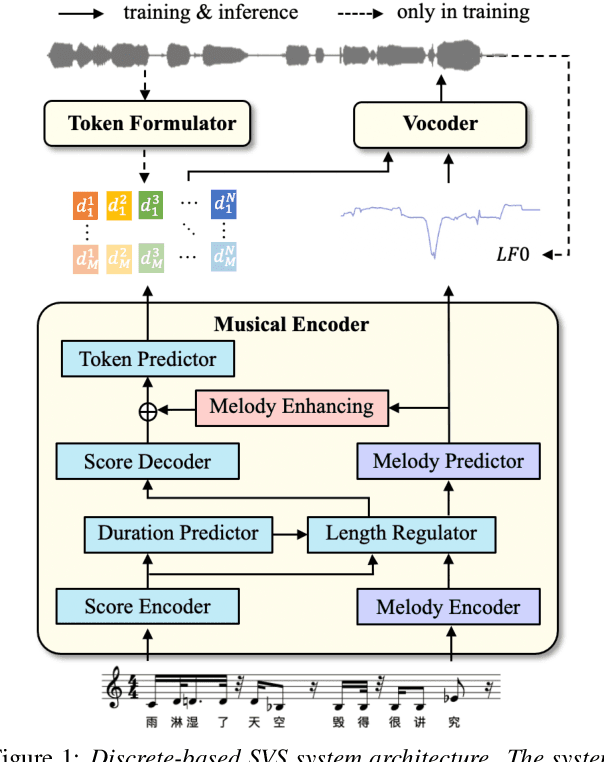
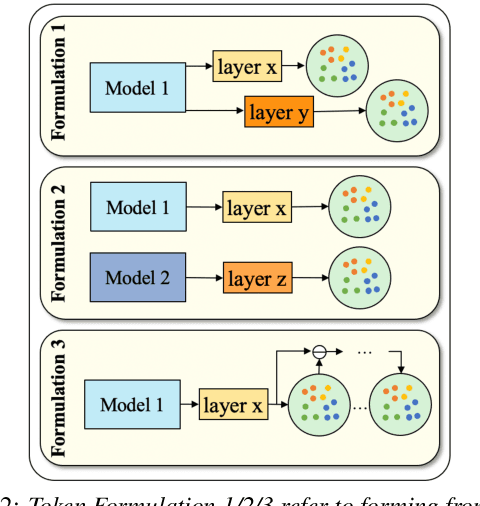
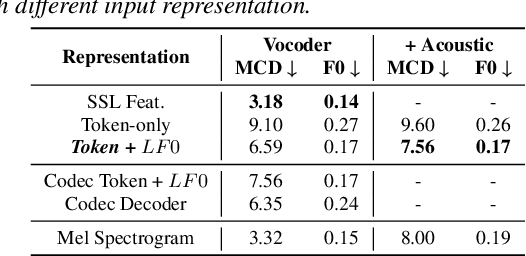
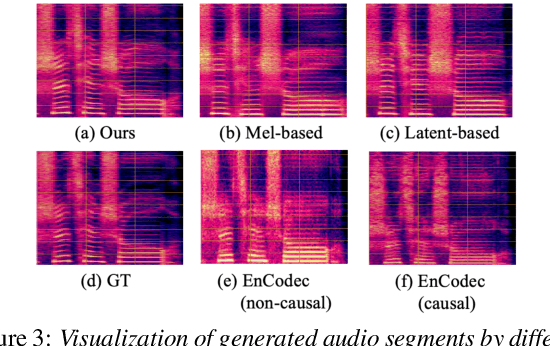
Recent advancements in speech synthesis witness significant benefits by leveraging discrete tokens extracted from self-supervised learning (SSL) models. Discrete tokens offer higher storage efficiency and greater operability in intermediate representations compared to traditional continuous Mel spectrograms. However, when it comes to singing voice synthesis(SVS), achieving higher levels of melody expression poses a great challenge for utilizing discrete tokens. In this paper, we introduce TokSing, a discrete-based SVS system equipped with a token formulator that offers flexible token blendings. We observe a melody degradation during discretization, prompting us to integrate a melody signal with the discrete token and incorporate a specially-designed melody enhancement strategy in the musical encoder. Extensive experiments demonstrate that our TokSing achieves better performance against the Mel spectrogram baselines while offering advantages in intermediate representation space cost and convergence speed.
The Interspeech 2024 Challenge on Speech Processing Using Discrete Units
Jun 11, 2024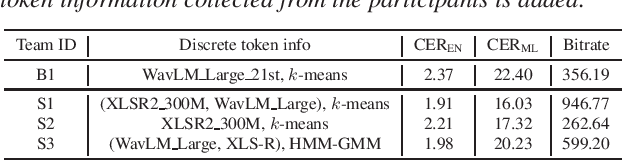
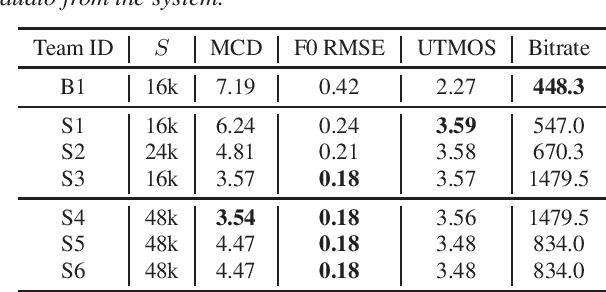
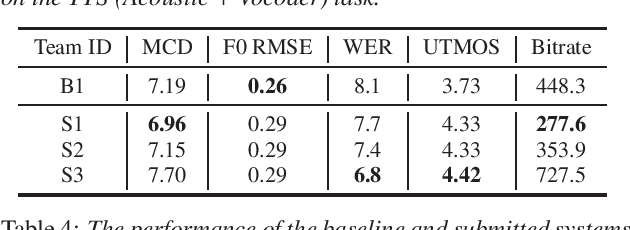
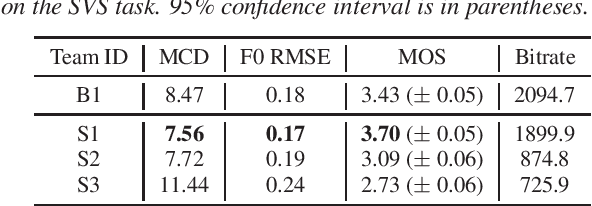
Representing speech and audio signals in discrete units has become a compelling alternative to traditional high-dimensional feature vectors. Numerous studies have highlighted the efficacy of discrete units in various applications such as speech compression and restoration, speech recognition, and speech generation. To foster exploration in this domain, we introduce the Interspeech 2024 Challenge, which focuses on new speech processing benchmarks using discrete units. It encompasses three pivotal tasks, namely multilingual automatic speech recognition, text-to-speech, and singing voice synthesis, and aims to assess the potential applicability of discrete units in these tasks. This paper outlines the challenge designs and baseline descriptions. We also collate baseline and selected submission systems, along with preliminary findings, offering valuable contributions to future research in this evolving field.
EgoNCE++: Do Egocentric Video-Language Models Really Understand Hand-Object Interactions?
May 28, 2024Egocentric video-language pretraining is a crucial paradigm to advance the learning of egocentric hand-object interactions (EgoHOI). Despite the great success on existing testbeds, these benchmarks focus more on closed-set visual concepts or limited scenarios. Due to the occurrence of diverse EgoHOIs in the real world, we propose an open-vocabulary benchmark named EgoHOIBench to reveal the diminished performance of current egocentric video-language models (EgoVLM) on fined-grained concepts, indicating that these models still lack a full spectrum of egocentric understanding. We attribute this performance gap to insufficient fine-grained supervision and strong bias towards understanding objects rather than temporal dynamics in current methods. To tackle these issues, we introduce a novel asymmetric contrastive objective for EgoHOI named EgoNCE++. For video-to-text loss, we enhance text supervision through the generation of negative captions by leveraging the in-context learning of large language models to perform HOI-related word substitution. For text-to-video loss, we propose an object-centric positive video sampling strategy that aggregates video representations by the same nouns. Our extensive experiments demonstrate that EgoNCE++ significantly boosts open-vocabulary HOI recognition, multi-instance retrieval, and action recognition tasks across various egocentric models, with improvements of up to +26.55%. Our code is available at https://github.com/xuboshen/EgoNCEpp.