 Add to Chrome
 Add to Firefox
 Add to Edge
When In-memory Computing Meets Spiking Neural Networks -- A Perspective on Device-Circuit-System-and-Algorithm Co-design
Aug 22, 2024
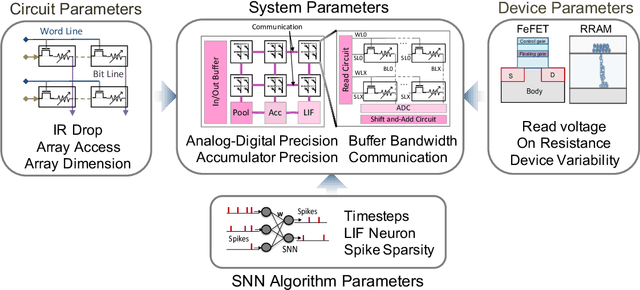

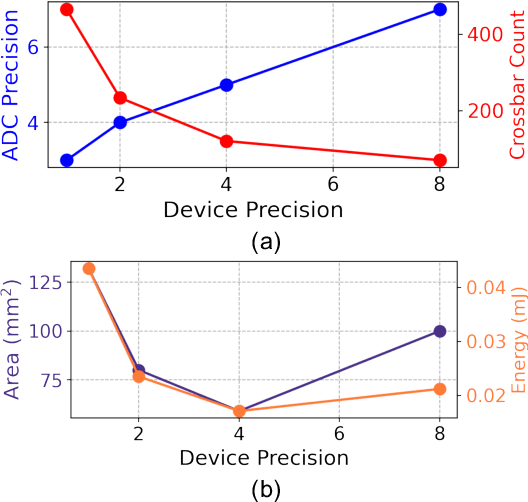
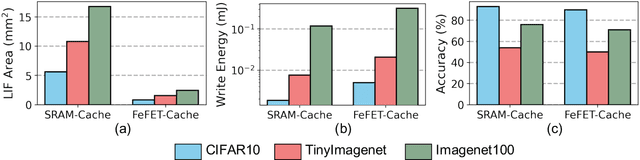
This review explores the intersection of bio-plausible artificial intelligence in the form of Spiking Neural Networks (SNNs) with the analog In-Memory Computing (IMC) domain, highlighting their collective potential for low-power edge computing environments. Through detailed investigation at the device, circuit, and system levels, we highlight the pivotal synergies between SNNs and IMC architectures. Additionally, we emphasize the critical need for comprehensive system-level analyses, considering the inter-dependencies between algorithms, devices, circuit & system parameters, crucial for optimal performance. An in-depth analysis leads to identification of key system-level bottlenecks arising from device limitations which can be addressed using SNN-specific algorithm-hardware co-design techniques. This review underscores the imperative for holistic device to system design space co-exploration, highlighting the critical aspects of hardware and algorithm research endeavors for low-power neuromorphic solutions.

LoAS: Fully Temporal-Parallel Datatflow for Dual-Sparse Spiking Neural Networks
Jul 19, 2024Spiking Neural Networks (SNNs) have gained significant research attention in the last decade due to their potential to drive resource-constrained edge devices. Though existing SNN accelerators offer high efficiency in processing sparse spikes with dense weights, opportunities are less explored in SNNs with sparse weights, i.e., dual-sparsity. In this work, we study the acceleration of dual-sparse SNNs, focusing on their core operation, sparse-matrix-sparse-matrix multiplication (spMspM). We observe that naively running a dual-sparse SNN on existing spMspM accelerators designed for dual-sparse Artificial Neural Networks (ANNs) exhibits sub-optimal efficiency. The main challenge is that processing timesteps, a natural property of SNNs, introduces an extra loop to ANN spMspM, leading to longer latency and more memory traffic. To address the problem, we propose a fully temporal-parallel (FTP) dataflow, which minimizes both data movement across timesteps and the end-to-end latency of dual-sparse SNNs. To maximize the efficiency of FTP dataflow, we propose an FTP-friendly spike compression mechanism that efficiently compresses single-bit spikes and ensures contiguous memory access. We further propose an FTP-friendly inner-join circuit that can lower the cost of the expensive prefix-sum circuits with almost no throughput penalty. All the above techniques for FTP dataflow are encapsulated in LoAS, a Low-latency inference Accelerator for dual-sparse SNNs. With FTP dataflow, compression, and inner-join, running dual-sparse SNN workloads on LoAS demonstrates significant speedup (up to $8.51\times$) and energy reduction (up to $3.68\times$) compared to running it on prior dual-sparse accelerators.
One-stage Prompt-based Continual Learning
Feb 25, 2024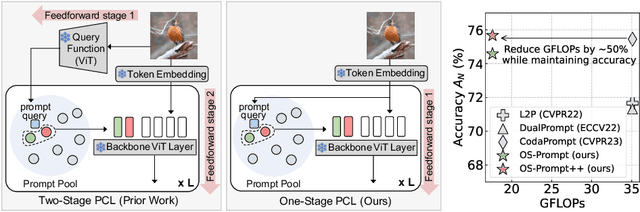

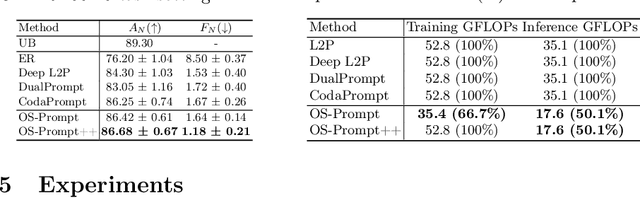

Prompt-based Continual Learning (PCL) has gained considerable attention as a promising continual learning solution as it achieves state-of-the-art performance while preventing privacy violation and memory overhead issues. Nonetheless, existing PCL approaches face significant computational burdens because of two Vision Transformer (ViT) feed-forward stages; one is for the query ViT that generates a prompt query to select prompts inside a prompt pool; the other one is a backbone ViT that mixes information between selected prompts and image tokens. To address this, we introduce a one-stage PCL framework by directly using the intermediate layer's token embedding as a prompt query. This design removes the need for an additional feed-forward stage for query ViT, resulting in ~50% computational cost reduction for both training and inference with marginal accuracy drop < 1%. We further introduce a Query-Pool Regularization (QR) loss that regulates the relationship between the prompt query and the prompt pool to improve representation power. The QR loss is only applied during training time, so there is no computational overhead at inference from the QR loss. With the QR loss, our approach maintains ~ 50% computational cost reduction during inference as well as outperforms the prior two-stage PCL methods by ~1.4% on public class-incremental continual learning benchmarks including CIFAR-100, ImageNet-R, and DomainNet.
ClipFormer: Key-Value Clipping of Transformers on Memristive Crossbars for Write Noise Mitigation
Feb 04, 2024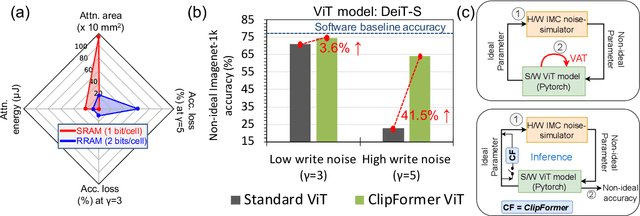
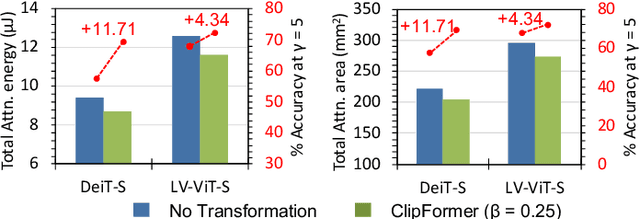
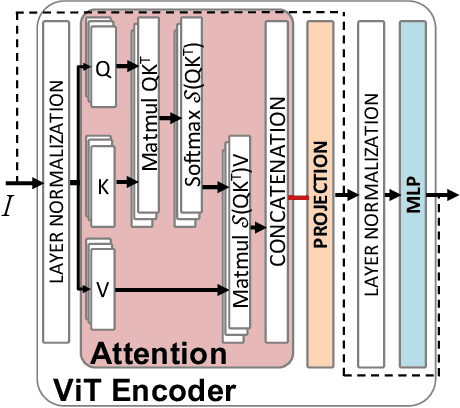
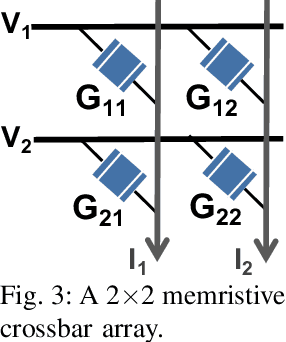
Transformers have revolutionized various real-world applications from natural language processing to computer vision. However, traditional von-Neumann computing paradigm faces memory and bandwidth limitations in accelerating transformers owing to their massive model sizes. To this end, In-memory Computing (IMC) crossbars based on Non-volatile Memories (NVMs), due to their ability to perform highly parallelized Matrix-Vector-Multiplications (MVMs) with high energy-efficiencies, have emerged as a promising solution for accelerating transformers. However, analog MVM operations in crossbars introduce non-idealities, such as stochastic read & write noise, which affect the inference accuracy of the deployed transformers. Specifically, we find pre-trained Vision Transformers (ViTs) to be vulnerable on crossbars due to the impact of write noise on the dynamically-generated Key (K) and Value (V) matrices in the attention layers, an effect not accounted for in prior studies. We, thus, propose ClipFormer, a transformation on the K and V matrices during inference, to boost the non-ideal accuracies of pre-trained ViT models. ClipFormer requires no additional hardware and training overhead and is amenable to transformers deployed on any memristive crossbar platform. Our experiments on Imagenet-1k dataset using pre-trained DeiT-S transformers, subjected to standard training and variation-aware-training, show >10-40% higher non-ideal accuracies at the high write noise regime by applying ClipFormer.
TT-SNN: Tensor Train Decomposition for Efficient Spiking Neural Network Training
Jan 15, 2024Spiking Neural Networks (SNNs) have gained significant attention as a potentially energy-efficient alternative for standard neural networks with their sparse binary activation. However, SNNs suffer from memory and computation overhead due to spatio-temporal dynamics and multiple backpropagation computations across timesteps during training. To address this issue, we introduce Tensor Train Decomposition for Spiking Neural Networks (TT-SNN), a method that reduces model size through trainable weight decomposition, resulting in reduced storage, FLOPs, and latency. In addition, we propose a parallel computation pipeline as an alternative to the typical sequential tensor computation, which can be flexibly integrated into various existing SNN architectures. To the best of our knowledge, this is the first of its kind application of tensor decomposition in SNNs. We validate our method using both static and dynamic datasets, CIFAR10/100 and N-Caltech101, respectively. We also propose a TT-SNN-tailored training accelerator to fully harness the parallelism in TT-SNN. Our results demonstrate substantial reductions in parameter size (7.98X), FLOPs (9.25X), training time (17.7%), and training energy (28.3%) during training for the N-Caltech101 dataset, with negligible accuracy degradation.
StableQ: Enhancing Data-Scarce Quantization with Text-to-Image Data
Dec 07, 2023Though low-bit quantization enables efficient storage and inference of deep neural networks, it often requires the use of training data to maintain resilience against quantization errors. However, training data are frequently subject to privacy or copyright concerns. In this work, we address the challenge of Data-Scarce Quantization, where access to training data is severely limited or non-existent for quantization purposes. Conventional approaches typically rely on inverting dummy images or jointly training generative models to produce synthetic input samples. However, these methods struggle to accurately recreate complex objects in large-scale datasets like ImageNet. To overcome these limitations, we introduce StableQ, a novel method that utilizes an advanced text-to-image diffusion model to generate high-resolution, photo-realistic synthetic data. To verify the quality of the generated data, we implement two robust filtering mechanisms. These mechanisms are designed to select images that closely resemble the intrinsic characteristics of the actual training data. Furthermore, in scenarios where limited training data are available, we use these data to guide the synthetic data generation process by inverting a learnable token embedding in the text encoder. Our extensive experimental results demonstrate that StbaleQ sets a new benchmark in both zero-shot and few-shot quantization, outperforming existing methods in terms of accuracy and efficiency.
Rethinking Skip Connections in Spiking Neural Networks with Time-To-First-Spike Coding
Dec 01, 2023
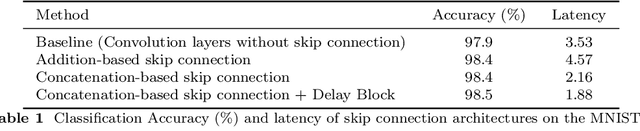

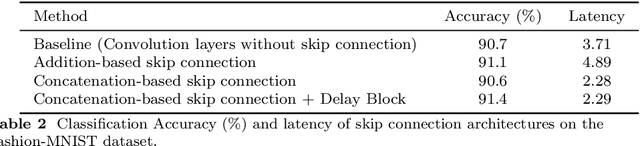
Time-To-First-Spike (TTFS) coding in Spiking Neural Networks (SNNs) offers significant advantages in terms of energy efficiency, closely mimicking the behavior of biological neurons. In this work, we delve into the role of skip connections, a widely used concept in Artificial Neural Networks (ANNs), within the domain of SNNs with TTFS coding. Our focus is on two distinct types of skip connection architectures: (1) addition-based skip connections, and (2) concatenation-based skip connections. We find that addition-based skip connections introduce an additional delay in terms of spike timing. On the other hand, concatenation-based skip connections circumvent this delay but produce time gaps between after-convolution and skip connection paths, thereby restricting the effective mixing of information from these two paths. To mitigate these issues, we propose a novel approach involving a learnable delay for skip connections in the concatenation-based skip connection architecture. This approach successfully bridges the time gap between the convolutional and skip branches, facilitating improved information mixing. We conduct experiments on public datasets including MNIST and Fashion-MNIST, illustrating the advantage of the skip connection in TTFS coding architectures. Additionally, we demonstrate the applicability of TTFS coding on beyond image recognition tasks and extend it to scientific machine-learning tasks, broadening the potential uses of SNNs.
Are SNNs Truly Energy-efficient? $-$ A Hardware Perspective
Sep 06, 2023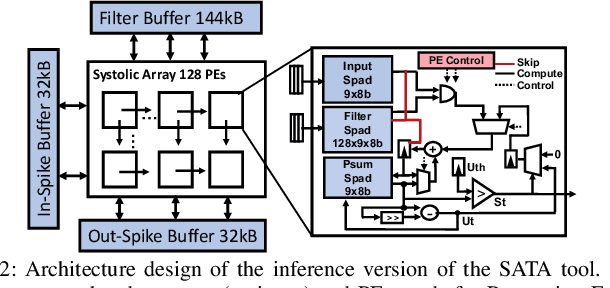
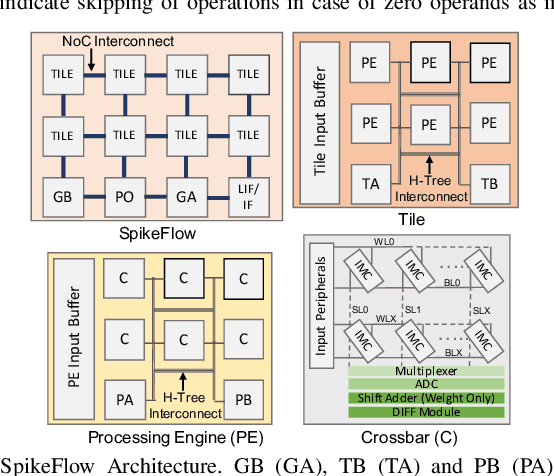
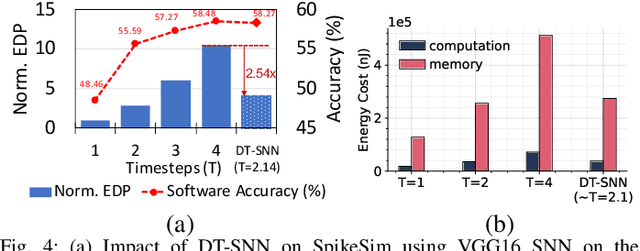
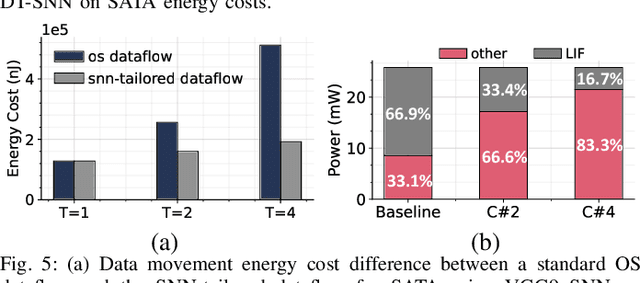
Spiking Neural Networks (SNNs) have gained attention for their energy-efficient machine learning capabilities, utilizing bio-inspired activation functions and sparse binary spike-data representations. While recent SNN algorithmic advances achieve high accuracy on large-scale computer vision tasks, their energy-efficiency claims rely on certain impractical estimation metrics. This work studies two hardware benchmarking platforms for large-scale SNN inference, namely SATA and SpikeSim. SATA is a sparsity-aware systolic-array accelerator, while SpikeSim evaluates SNNs implemented on In-Memory Computing (IMC) based analog crossbars. Using these tools, we find that the actual energy-efficiency improvements of recent SNN algorithmic works differ significantly from their estimated values due to various hardware bottlenecks. We identify and address key roadblocks to efficient SNN deployment on hardware, including repeated computations & data movements over timesteps, neuronal module overhead, and vulnerability of SNNs towards crossbar non-idealities.
Artificial to Spiking Neural Networks Conversion for Scientific Machine Learning
Aug 31, 2023We introduce a method to convert Physics-Informed Neural Networks (PINNs), commonly used in scientific machine learning, to Spiking Neural Networks (SNNs), which are expected to have higher energy efficiency compared to traditional Artificial Neural Networks (ANNs). We first extend the calibration technique of SNNs to arbitrary activation functions beyond ReLU, making it more versatile, and we prove a theorem that ensures the effectiveness of the calibration. We successfully convert PINNs to SNNs, enabling computational efficiency for diverse regression tasks in solving multiple differential equations, including the unsteady Navier-Stokes equations. We demonstrate great gains in terms of overall efficiency, including Separable PINNs (SPINNs), which accelerate the training process. Overall, this is the first work of this kind and the proposed method achieves relatively good accuracy with low spike rates.
Examining the Role and Limits of Batchnorm Optimization to Mitigate Diverse Hardware-noise in In-memory Computing
May 28, 2023In-Memory Computing (IMC) platforms such as analog crossbars are gaining focus as they facilitate the acceleration of low-precision Deep Neural Networks (DNNs) with high area- & compute-efficiencies. However, the intrinsic non-idealities in crossbars, which are often non-deterministic and non-linear, degrade the performance of the deployed DNNs. In addition to quantization errors, most frequently encountered non-idealities during inference include crossbar circuit-level parasitic resistances and device-level non-idealities such as stochastic read noise and temporal drift. In this work, our goal is to closely examine the distortions caused by these non-idealities on the dot-product operations in analog crossbars and explore the feasibility of a nearly training-less solution via crossbar-aware fine-tuning of batchnorm parameters in real-time to mitigate the impact of the non-idealities. This enables reduction in hardware costs in terms of memory and training energy for IMC noise-aware retraining of the DNN weights on crossbars.
* Accepted in Great Lakes Symposium on VLSI 2023 (GLSVLSI 2023) conference