 Add to Chrome
 Add to Firefox
 Add to Edge
BilliardPhys-Bench: Benchmarking Physical Reasoning and Visual Dynamics of Multimodal LLMs
May 29, 2026
Current multimodal models handle static image recognition well, but intuitive physical reasoning remains a weakness. Predicting how objects will move and interact from a single image is still difficult for these systems. We present BilliardPhys-Bench, a benchmark for physical reasoning in synthetic billiards environments. Its procedural engine generates randomized scenarios with friction and elastic collisions. The benchmark tests three abilities: (1) predicting ball-to-ball collisions, (2) reasoning about wall bounces, and (3) estimating final ball positions after motion stops. We evaluate recent MLLMs from the GPT, Claude, Gemini, and Qwen families. Performance drops as simulation time increases and scene geometry grows more complex. We also observe a consistent failure mode we call "stasis bias": when the correct physical outcome is harder to infer, models tend to predict no interaction. These findings show where current MLLMs break down on visual dynamics and point toward the need for better physical inductive biases in multimodal architectures.

CrystalXRD-Bench: Benchmarking Vision-Language Models for XRD Peak Indexing Across Diverse Crystalline Materials
May 28, 2026Miller-index identification from powder XRD patterns requires capabilities untested by existing multimodal benchmarks: the model must read a narrow peak location from a rendered scientific curve and then connect that observation to multi-step crystallographic reasoning. We introduce CrystalXRD-Bench, a 250-sample benchmark built from 10 public crystallographic databases for a single task: recover the full set of HKLs contributing to the highest-intensity peak in an XRD pattern. Each sample pairs the rendered XRD image with the source CIF text and chemical formula, so visual extraction errors and reasoning errors can be examined side by side. We evaluate seven vision-language models. The best Jaccard score is 0.5888 (GPT-5.4) with an exact-match rate of 37.6%, yet six of seven models remain below Jaccard 0.50; the task is far from solved. Error patterns vary systematically: double-peak cases are especially brittle, recall-heavy models gain coverage by over-predicting HKLs, and access to CIF text does not close the gap in crystallographic calculation. Alongside model rankings, the benchmark identifies the conditions under which current VLMs fail on quantitative scientific figures. All data and evaluation code will be publicly available.
FeynmanBench: Benchmarking Multimodal LLMs on Diagrammatic Physics Reasoning
Apr 04, 2026Breakthroughs in frontier theory often depend on the combination of concrete diagrammatic notations with rigorous logic. While multimodal large language models (MLLMs) show promise in general scientific tasks, current benchmarks often focus on local information extraction rather than the global structural logic inherent in formal scientific notations. In this work, we introduce FeynmanBench, the first benchmark centered on Feynman diagram tasks. It is designed to evaluate AI's capacity for multistep diagrammatic reasoning, which requires satisfying conservation laws and symmetry constraints, identifying graph topology, converting between diagrammatic and algebraic representations, and constructing scattering amplitudes under specific conventions and gauges. To support large-scale and reproducible evaluation, we developed an automated pipeline producing diverse Feynman diagrams along with verifiable topological annotations and amplitude results. Our database spans the electromagnetic, weak, and strong interactions of the Standard Model, encompasses over 100 distinct types and includes more than 2000 tasks. Experiments on state-of-the-art MLLMs reveal systematic failure modes, including unstable enforcement of physical constraints and violations of global topological conditions, highlighting the need for physics-grounded benchmarks for visual reasoning over scientific notation. FeynmanBench provides a logically rigorous test of whether AI can effectively engage in scientific discovery, particularly within theoretical physics.
SPM-Bench: Benchmarking Large Language Models for Scanning Probe Microscopy
Feb 26, 2026As LLMs achieved breakthroughs in general reasoning, their proficiency in specialized scientific domains reveals pronounced gaps in existing benchmarks due to data contamination, insufficient complexity, and prohibitive human labor costs. Here we present SPM-Bench, an original, PhD-level multimodal benchmark specifically designed for scanning probe microscopy (SPM). We propose a fully automated data synthesis pipeline that ensures both high authority and low-cost. By employing Anchor-Gated Sieve (AGS) technology, we efficiently extract high-value image-text pairs from arXiv and journal papers published between 2023 and 2025. Through a hybrid cloud-local architecture where VLMs return only spatial coordinates "llbox" for local high-fidelity cropping, our pipeline achieves extreme token savings while maintaining high dataset purity. To accurately and objectively evaluate the performance of the LLMs, we introduce the Strict Imperfection Penalty F1 (SIP-F1) score. This metric not only establishes a rigorous capability hierarchy but also, for the first time, quantifies model "personalities" (Conservative, Aggressive, Gambler, or Wise). By correlating these results with model-reported confidence and perceived difficulty, we expose the true reasoning boundaries of current AI in complex physical scenarios. These insights establish SPM-Bench as a generalizable paradigm for automated scientific data synthesis.
HLE-Verified: A Systematic Verification and Structured Revision of Humanity's Last Exam
Feb 17, 2026Humanity's Last Exam (HLE) has become a widely used benchmark for evaluating frontier large language models on challenging, multi-domain questions. However, community-led analyses have raised concerns that HLE contains a non-trivial number of noisy items, which can bias evaluation results and distort cross-model comparisons. To address this challenge, we introduce HLE-Verified, a verified and revised version of HLE with a transparent verification protocol and fine-grained error taxonomy. Our construction follows a two-stage validation-and-repair workflow resulting in a certified benchmark. In Stage I, each item undergoes binary validation of the problem and final answer through domain-expert review and model-based cross-checks, yielding 641 verified items. In Stage II, flawed but fixable items are revised under strict constraints preserving the original evaluation intent, through dual independent expert repairs, model-assisted auditing, and final adjudication, resulting in 1,170 revised-and-certified items. The remaining 689 items are released as a documented uncertain set with explicit uncertainty sources and expertise tags for future refinement. We evaluate seven state-of-the-art language models on HLE and HLE-Verified, observing an average absolute accuracy gain of 7--10 percentage points on HLE-Verified. The improvement is particularly pronounced on items where the original problem statement and/or reference answer is erroneous, with gains of 30--40 percentage points. Our analyses further reveal a strong association between model confidence and the presence of errors in the problem statement or reference answer, supporting the effectiveness of our revisions. Overall, HLE-Verified improves HLE-style evaluations by reducing annotation noise and enabling more faithful measurement of model capabilities. Data is available at: https://github.com/SKYLENAGE-AI/HLE-Verified
DeepMTL2R: A Library for Deep Multi-task Learning to Rank
Feb 16, 2026This paper presents DeepMTL2R, an open-source deep learning framework for Multi-task Learning to Rank (MTL2R), where multiple relevance criteria must be optimized simultaneously. DeepMTL2R integrates heterogeneous relevance signals into a unified, context-aware model by leveraging the self-attention mechanism of transformer architectures, enabling effective learning across diverse and potentially conflicting objectives. The framework includes 21 state-of-the-art multi-task learning algorithms and supports multi-objective optimization to identify Pareto-optimal ranking models. By capturing complex dependencies and long-range interactions among items and labels, DeepMTL2R provides a scalable and expressive solution for modern ranking systems and facilitates controlled comparisons across MTL strategies. We demonstrate its effectiveness on a publicly available dataset, report competitive performance, and visualize the resulting trade-offs among objectives. DeepMTL2R is available at \href{https://github.com/amazon-science/DeepMTL2R}{https://github.com/amazon-science/DeepMTL2R}.
Scalable Bilevel Loss Balancing for Multi-Task Learning
Feb 12, 2025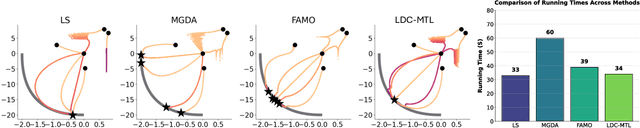
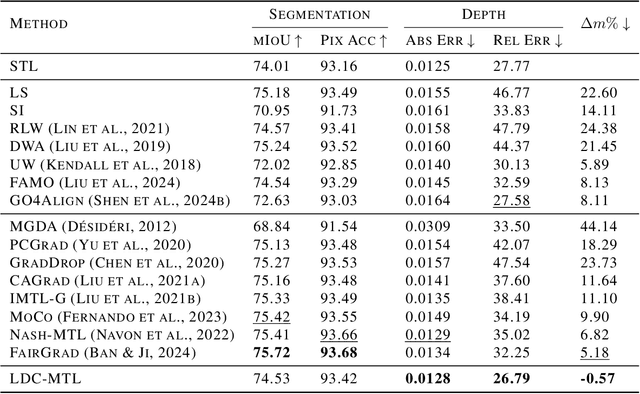
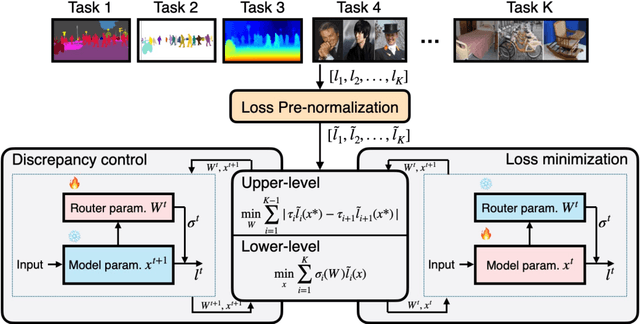
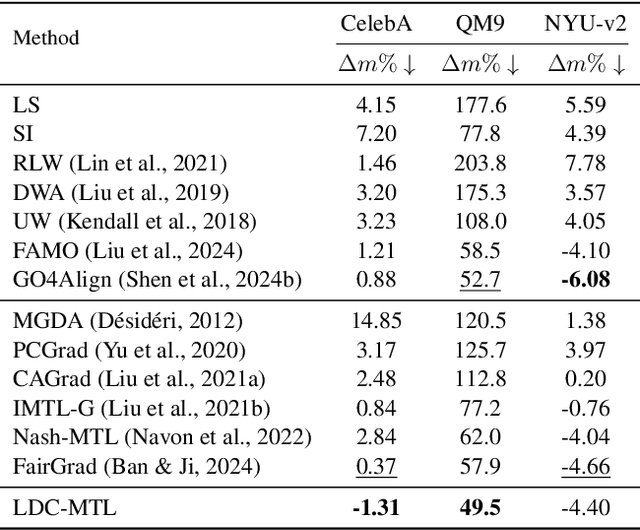
Multi-task learning (MTL) has been widely adopted for its ability to simultaneously learn multiple tasks. While existing gradient manipulation methods often yield more balanced solutions than simple scalarization-based approaches, they typically incur a significant computational overhead of $\mathcal{O}(K)$ in both time and memory, where $K$ is the number of tasks. In this paper, we propose BiLB4MTL, a simple and scalable loss balancing approach for MTL, formulated from a novel bilevel optimization perspective. Our method incorporates three key components: (i) an initial loss normalization, (ii) a bilevel loss-balancing formulation, and (iii) a scalable first-order algorithm that requires only $\mathcal{O}(1)$ time and memory. Theoretically, we prove that BiLB4MTL guarantees convergence not only to a stationary point of the bilevel loss balancing problem but also to an $\epsilon$-accurate Pareto stationary point for all $K$ loss functions under mild conditions. Extensive experiments on diverse multi-task datasets demonstrate that BiLB4MTL achieves state-of-the-art performance in both accuracy and efficiency. Code is available at https://github.com/OptMN-Lab/-BiLB4MTL.
ReGNet: Reciprocal Space-Aware Long-Range Modeling and Multi-Property Prediction for Crystals
Feb 04, 2025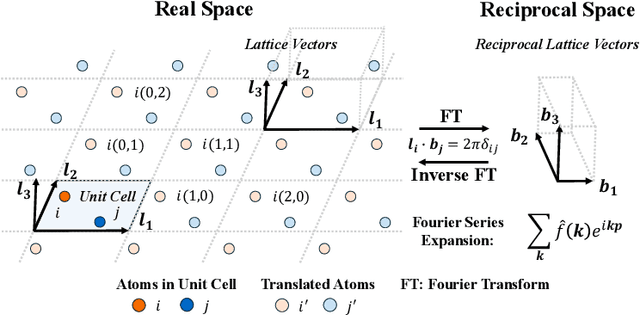
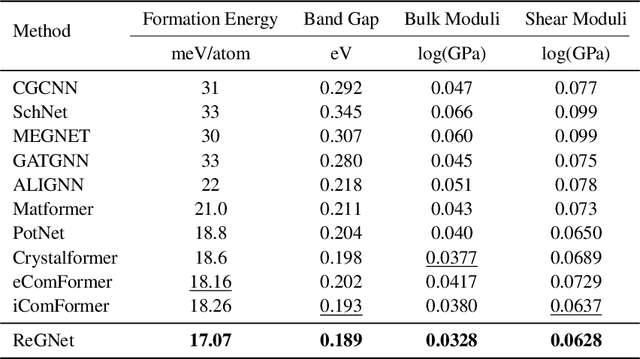
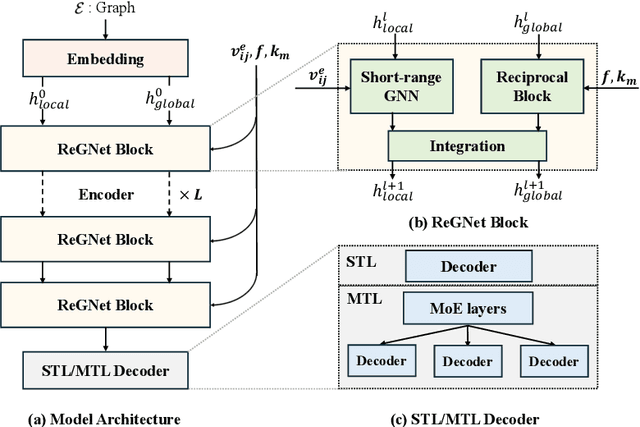
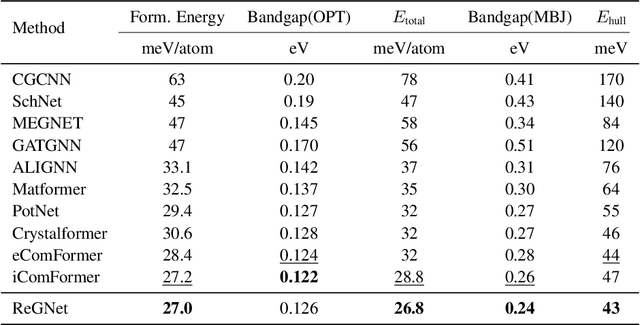
Predicting properties of crystals from their structures is a fundamental yet challenging task in materials science. Unlike molecules, crystal structures exhibit infinite periodic arrangements of atoms, requiring methods capable of capturing both local and global information effectively. However, most current works fall short of capturing long-range interactions within periodic structures. To address this limitation, we leverage reciprocal space to efficiently encode long-range interactions with learnable filters within Fourier transforms. We introduce Reciprocal Geometry Network (ReGNet), a novel architecture that integrates geometric GNNs and reciprocal blocks to model short-range and long-range interactions, respectively. Additionally, we introduce ReGNet-MT, a multi-task extension that employs mixture of experts (MoE) for multi-property prediction. Experimental results on the JARVIS and Materials Project benchmarks demonstrate that ReGNet achieves significant performance improvements. Moreover, ReGNet-MT attains state-of-the-art results on two bandgap properties due to positive transfer, while maintaining high computational efficiency. These findings highlight the potential of our model as a scalable and accurate solution for crystal property prediction. The code will be released upon paper acceptance.
On the Convergence of Multi-objective Optimization under Generalized Smoothness
May 29, 2024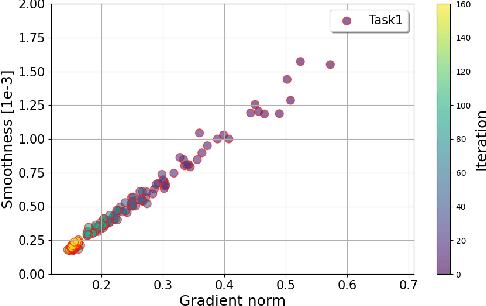
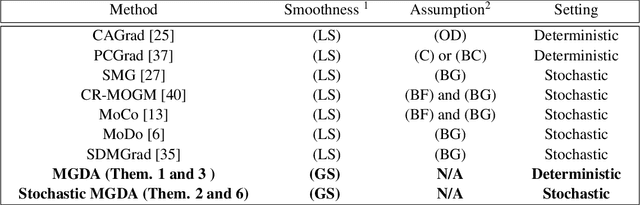
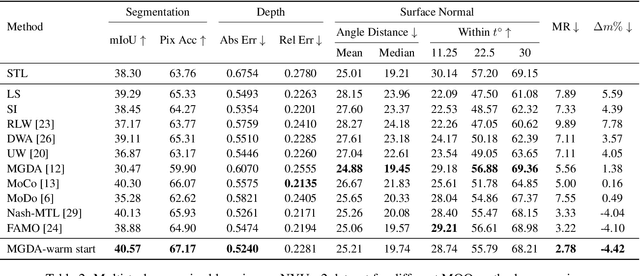
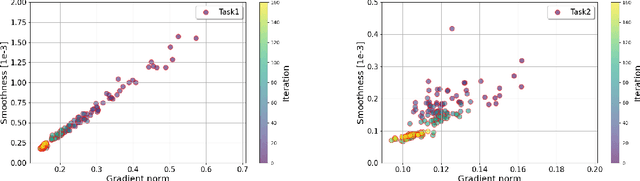
Multi-objective optimization (MOO) is receiving more attention in various fields such as multi-task learning. Recent works provide some effective algorithms with theoretical analysis but they are limited by the standard $L$-smooth or bounded-gradient assumptions, which are typically unsatisfactory for neural networks, such as recurrent neural networks (RNNs) and transformers. In this paper, we study a more general and realistic class of $\ell$-smooth loss functions, where $\ell$ is a general non-decreasing function of gradient norm. We develop two novel single-loop algorithms for $\ell$-smooth MOO problems, Generalized Smooth Multi-objective Gradient descent (GSMGrad) and its stochastic variant, Stochastic Generalized Smooth Multi-objective Gradient descent (SGSMGrad), which approximate the conflict-avoidant (CA) direction that maximizes the minimum improvement among objectives. We provide a comprehensive convergence analysis of both algorithms and show that they converge to an $\epsilon$-accurate Pareto stationary point with a guaranteed $\epsilon$-level average CA distance (i.e., the gap between the updating direction and the CA direction) over all iterations, where totally $\mathcal{O}(\epsilon^{-2})$ and $\mathcal{O}(\epsilon^{-4})$ samples are needed for deterministic and stochastic settings, respectively. Our algorithms can also guarantee a tighter $\epsilon$-level CA distance in each iteration using more samples. Moreover, we propose a practical variant of GSMGrad named GSMGrad-FA using only constant-level time and space, while achieving the same performance guarantee as GSMGrad. Our experiments validate our theory and demonstrate the effectiveness of the proposed methods.
Finite-Time Analysis for Conflict-Avoidant Multi-Task Reinforcement Learning
May 25, 2024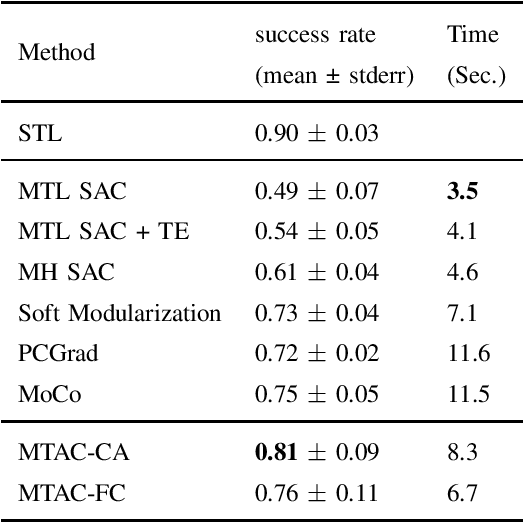
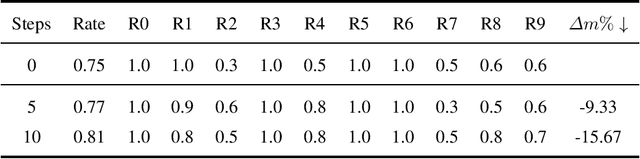
Multi-task reinforcement learning (MTRL) has shown great promise in many real-world applications. Existing MTRL algorithms often aim to learn a policy that optimizes individual objective functions simultaneously with a given prior preference (or weights) on different tasks. However, these methods often suffer from the issue of \textit{gradient conflict} such that the tasks with larger gradients dominate the update direction, resulting in a performance degeneration on other tasks. In this paper, we develop a novel dynamic weighting multi-task actor-critic algorithm (MTAC) under two options of sub-procedures named as CA and FC in task weight updates. MTAC-CA aims to find a conflict-avoidant (CA) update direction that maximizes the minimum value improvement among tasks, and MTAC-FC targets at a much faster convergence rate. We provide a comprehensive finite-time convergence analysis for both algorithms. We show that MTAC-CA can find a $\epsilon+\epsilon_{\text{app}}$-accurate Pareto stationary policy using $\mathcal{O}({\epsilon^{-5}})$ samples, while ensuring a small $\epsilon+\sqrt{\epsilon_{\text{app}}}$-level CA distance (defined as the distance to the CA direction), where $\epsilon_{\text{app}}$ is the function approximation error. The analysis also shows that MTAC-FC improves the sample complexity to $\mathcal{O}(\epsilon^{-3})$, but with a constant-level CA distance. Our experiments on MT10 demonstrate the improved performance of our algorithms over existing MTRL methods with fixed preference.