 Add to Chrome
 Add to Firefox
 Add to Edge
No Need to Look Back: An Efficient and Scalable Approach for Temporal Network Representation Learning
Feb 03, 2024

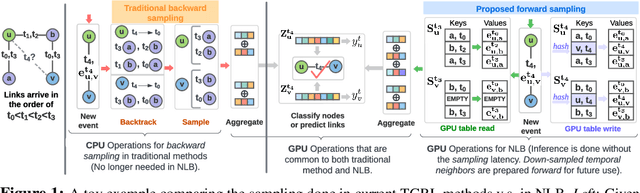
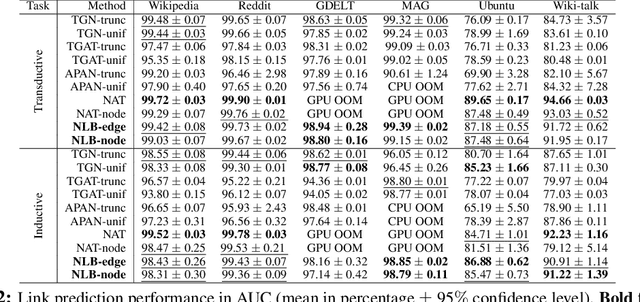
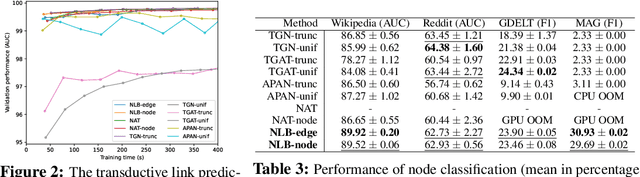
Temporal graph representation learning (TGRL) is crucial for modeling complex, dynamic systems in real-world networks. Traditional TGRL methods, though effective, suffer from high computational demands and inference latency. This is mainly induced by their inefficient sampling of temporal neighbors by backtracking the interaction history of each node when making model inference. This paper introduces a novel efficient TGRL framework, No-Looking-Back (NLB). NLB employs a "forward recent sampling" strategy, which bypasses the need for backtracking historical interactions. This strategy is implemented using a GPU-executable size-constrained hash table for each node, recording down-sampled recent interactions, which enables rapid response to queries with minimal inference latency. The maintenance of this hash table is highly efficient, with $O(1)$ complexity. NLB is fully compatible with GPU processing, maximizing programmability, parallelism, and power efficiency. Empirical evaluations demonstrate that NLB matches or surpasses state-of-the-art methods in accuracy for link prediction and node classification across six real-world datasets. Significantly, it is 1.32-4.40 $\times$ faster in training, 1.2-7.94 $\times$ more energy efficient, and 1.97-5.02 $\times$ more effective in reducing inference latency compared to the most competitive baselines. The link to the code: https://github.com/Graph-COM/NLB.

Langevin Unlearning: A New Perspective of Noisy Gradient Descent for Machine Unlearning
Feb 01, 2024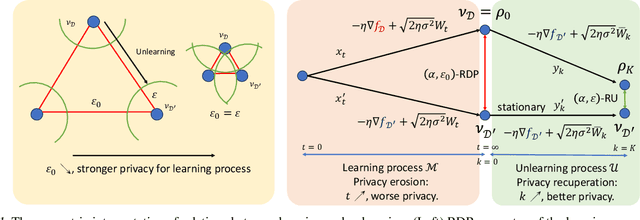
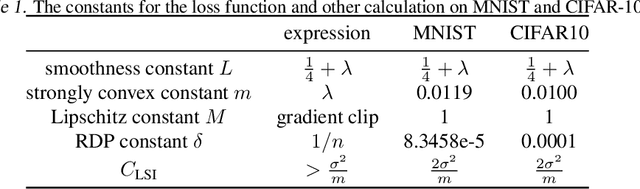
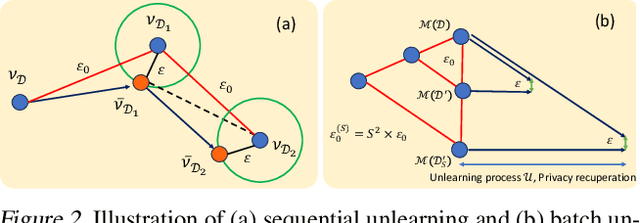
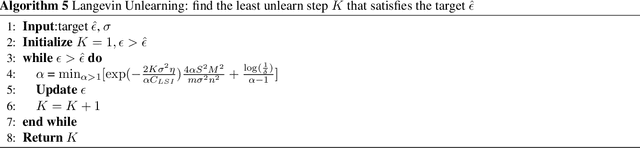
Machine unlearning has raised significant interest with the adoption of laws ensuring the ``right to be forgotten''. Researchers have provided a probabilistic notion of approximate unlearning under a similar definition of Differential Privacy (DP), where privacy is defined as statistical indistinguishability to retraining from scratch. We propose Langevin unlearning, an unlearning framework based on noisy gradient descent with privacy guarantees for approximate unlearning problems. Langevin unlearning unifies the DP learning process and the privacy-certified unlearning process with many algorithmic benefits. These include approximate certified unlearning for non-convex problems, complexity saving compared to retraining, sequential and batch unlearning for multiple unlearning requests. We verify the practicality of Langevin unlearning by studying its privacy-utility-complexity trade-off via experiments on benchmark datasets, and also demonstrate its superiority against gradient-decent-plus-output-perturbation based approximate unlearning.
MEA-Defender: A Robust Watermark against Model Extraction Attack
Jan 26, 2024Recently, numerous highly-valuable Deep Neural Networks (DNNs) have been trained using deep learning algorithms. To protect the Intellectual Property (IP) of the original owners over such DNN models, backdoor-based watermarks have been extensively studied. However, most of such watermarks fail upon model extraction attack, which utilizes input samples to query the target model and obtains the corresponding outputs, thus training a substitute model using such input-output pairs. In this paper, we propose a novel watermark to protect IP of DNN models against model extraction, named MEA-Defender. In particular, we obtain the watermark by combining two samples from two source classes in the input domain and design a watermark loss function that makes the output domain of the watermark within that of the main task samples. Since both the input domain and the output domain of our watermark are indispensable parts of those of the main task samples, the watermark will be extracted into the stolen model along with the main task during model extraction. We conduct extensive experiments on four model extraction attacks, using five datasets and six models trained based on supervised learning and self-supervised learning algorithms. The experimental results demonstrate that MEA-Defender is highly robust against different model extraction attacks, and various watermark removal/detection approaches.
xTrimoPGLM: Unified 100B-Scale Pre-trained Transformer for Deciphering the Language of Protein
Jan 11, 2024Protein language models have shown remarkable success in learning biological information from protein sequences. However, most existing models are limited by either autoencoding or autoregressive pre-training objectives, which makes them struggle to handle protein understanding and generation tasks concurrently. We propose a unified protein language model, xTrimoPGLM, to address these two types of tasks simultaneously through an innovative pre-training framework. Our key technical contribution is an exploration of the compatibility and the potential for joint optimization of the two types of objectives, which has led to a strategy for training xTrimoPGLM at an unprecedented scale of 100 billion parameters and 1 trillion training tokens. Our extensive experiments reveal that 1) xTrimoPGLM significantly outperforms other advanced baselines in 18 protein understanding benchmarks across four categories. The model also facilitates an atomic-resolution view of protein structures, leading to an advanced 3D structural prediction model that surpasses existing language model-based tools. 2) xTrimoPGLM not only can generate de novo protein sequences following the principles of natural ones, but also can perform programmable generation after supervised fine-tuning (SFT) on curated sequences. These results highlight the substantial capability and versatility of xTrimoPGLM in understanding and generating protein sequences, contributing to the evolving landscape of foundation models in protein science.
Learning Scalable Structural Representations for Link Prediction with Bloom Signatures
Dec 28, 2023



Graph neural networks (GNNs) have shown great potential in learning on graphs, but they are known to perform sub-optimally on link prediction tasks. Existing GNNs are primarily designed to learn node-wise representations and usually fail to capture pairwise relations between target nodes, which proves to be crucial for link prediction. Recent works resort to learning more expressive edge-wise representations by enhancing vanilla GNNs with structural features such as labeling tricks and link prediction heuristics, but they suffer from high computational overhead and limited scalability. To tackle this issue, we propose to learn structural link representations by augmenting the message-passing framework of GNNs with Bloom signatures. Bloom signatures are hashing-based compact encodings of node neighborhoods, which can be efficiently merged to recover various types of edge-wise structural features. We further show that any type of neighborhood overlap-based heuristic can be estimated by a neural network that takes Bloom signatures as input. GNNs with Bloom signatures are provably more expressive than vanilla GNNs and also more scalable than existing edge-wise models. Experimental results on five standard link prediction benchmarks show that our proposed model achieves comparable or better performance than existing edge-wise GNN models while being 3-200 $\times$ faster and more memory-efficient for online inference.
KnowledgeNavigator: Leveraging Large Language Models for Enhanced Reasoning over Knowledge Graph
Dec 26, 2023Large language model (LLM) has achieved outstanding performance on various downstream tasks with its powerful natural language understanding and zero-shot capability, but LLM still suffers from knowledge limitation. Especially in scenarios that require long logical chains or complex reasoning, the hallucination and knowledge limitation of LLM limit its performance in question answering (QA). In this paper, we propose a novel framework KnowledgeNavigator to address these challenges by efficiently and accurately retrieving external knowledge from knowledge graph and using it as a key factor to enhance LLM reasoning. Specifically, KnowledgeNavigator first mines and enhances the potential constraints of the given question to guide the reasoning. Then it retrieves and filters external knowledge that supports answering through iterative reasoning on knowledge graph with the guidance of LLM and the question. Finally, KnowledgeNavigator constructs the structured knowledge into effective prompts that are friendly to LLM to help its reasoning. We evaluate KnowledgeNavigator on multiple public KGQA benchmarks, the experiments show the framework has great effectiveness and generalization, outperforming previous knowledge graph enhanced LLM methods and is comparable to the fully supervised models.
High Pileup Particle Tracking with Object Condensation
Dec 06, 2023


Recent work has demonstrated that graph neural networks (GNNs) can match the performance of traditional algorithms for charged particle tracking while improving scalability to meet the computing challenges posed by the HL-LHC. Most GNN tracking algorithms are based on edge classification and identify tracks as connected components from an initial graph containing spurious connections. In this talk, we consider an alternative based on object condensation (OC), a multi-objective learning framework designed to cluster points (hits) belonging to an arbitrary number of objects (tracks) and regress the properties of each object. Building on our previous results, we present a streamlined model and show progress toward a one-shot OC tracking algorithm in a high-pileup environment.
ABKD: Graph Neural Network Compression with Attention-Based Knowledge Distillation
Oct 24, 2023
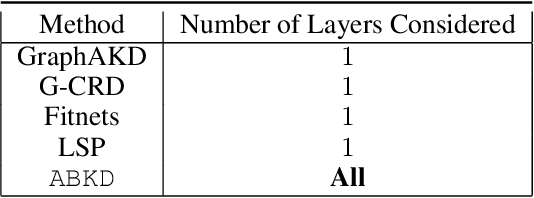
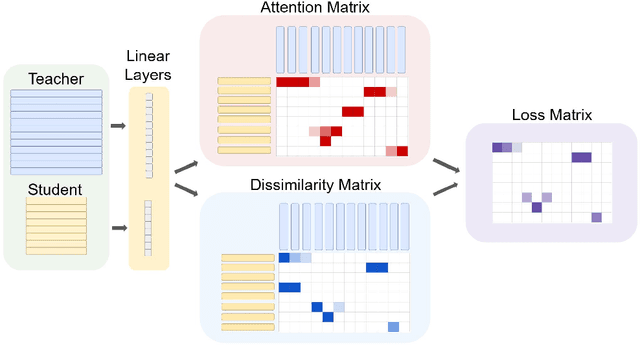

Graph Neural Networks (GNNs) have proven to be quite versatile for a variety of applications, including recommendation systems, fake news detection, drug discovery, and even computer vision. Due to the expanding size of graph-structured data, GNN models have also increased in complexity, leading to substantial latency issues. This is primarily attributed to the irregular structure of graph data and its access pattern into memory. The natural solution to reduce latency is to compress large GNNs into small GNNs. One way to do this is via knowledge distillation (KD). However, most KD approaches for GNNs only consider the outputs of the last layers and do not consider the outputs of the intermediate layers of the GNNs; these layers may contain important inductive biases indicated by the graph structure. To address this shortcoming, we propose a novel KD approach to GNN compression that we call Attention-Based Knowledge Distillation (ABKD). ABKD is a KD approach that uses attention to identify important intermediate teacher-student layer pairs and focuses on aligning their outputs. ABKD enables higher compression of GNNs with a smaller accuracy dropoff compared to existing KD approaches. On average, we achieve a 1.79% increase in accuracy with a 32.3x compression ratio on OGBN-Mag, a large graph dataset, compared to state-of-the-art approaches.
On the Inherent Privacy Properties of Discrete Denoising Diffusion Models
Oct 24, 2023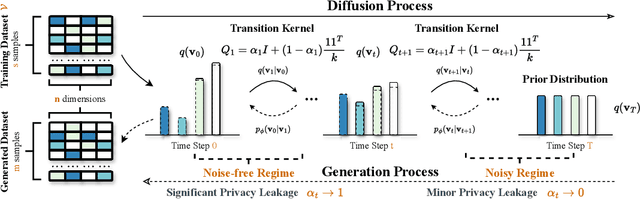
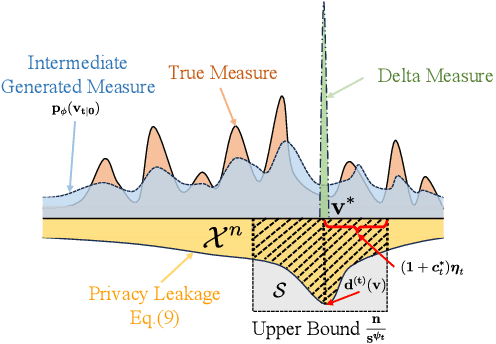
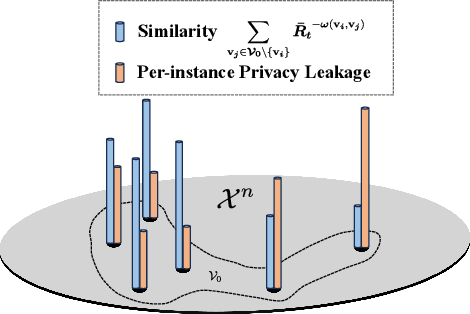
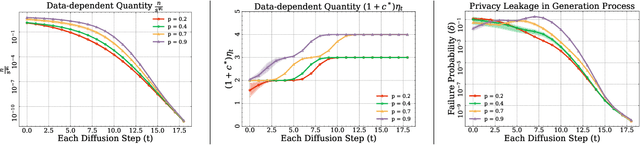
Privacy concerns have led to a surge in the creation of synthetic datasets, with diffusion models emerging as a promising avenue. Although prior studies have performed empirical evaluations on these models, there has been a gap in providing a mathematical characterization of their privacy-preserving capabilities. To address this, we present the pioneering theoretical exploration of the privacy preservation inherent in discrete diffusion models (DDMs) for discrete dataset generation. Focusing on per-instance differential privacy (pDP), our framework elucidates the potential privacy leakage for each data point in a given training dataset, offering insights into data preprocessing to reduce privacy risks of the synthetic dataset generation via DDMs. Our bounds also show that training with $s$-sized data points leads to a surge in privacy leakage from $(\epsilon, \mathcal{O}(\frac{1}{s^2\epsilon}))$-pDP to $(\epsilon, \mathcal{O}(\frac{1}{s\epsilon}))$-pDP during the transition from the pure noise to the synthetic clean data phase, and a faster decay in diffusion coefficients amplifies the privacy guarantee. Finally, we empirically verify our theoretical findings on both synthetic and real-world datasets.
GraphMaker: Can Diffusion Models Generate Large Attributed Graphs?
Oct 20, 2023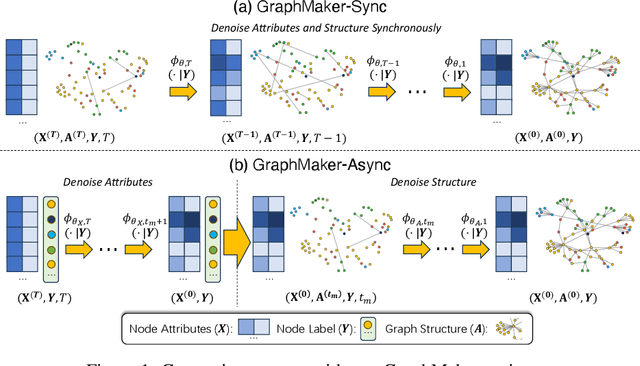
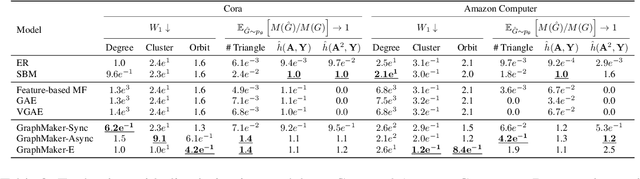
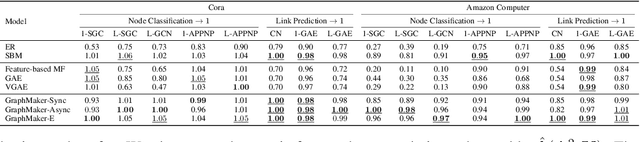
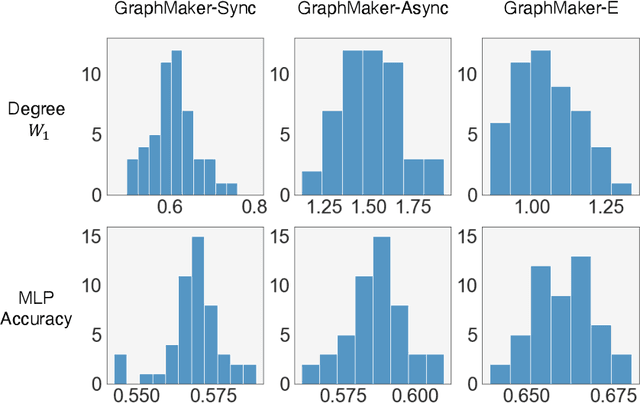
Large-scale graphs with node attributes are fundamental in real-world scenarios, such as social and financial networks. The generation of synthetic graphs that emulate real-world ones is pivotal in graph machine learning, aiding network evolution understanding and data utility preservation when original data cannot be shared. Traditional models for graph generation suffer from limited model capacity. Recent developments in diffusion models have shown promise in merely graph structure generation or the generation of small molecular graphs with attributes. However, their applicability to large attributed graphs remains unaddressed due to challenges in capturing intricate patterns and scalability. This paper introduces GraphMaker, a novel diffusion model tailored for generating large attributed graphs. We study the diffusion models that either couple or decouple graph structure and node attribute generation to address their complex correlation. We also employ node-level conditioning and adopt a minibatch strategy for scalability. We further propose a new evaluation pipeline using models trained on generated synthetic graphs and tested on original graphs to evaluate the quality of synthetic data. Empirical evaluations on real-world datasets showcase GraphMaker's superiority in generating realistic and diverse large-attributed graphs beneficial for downstream tasks.