 Add to Chrome
 Add to Firefox
 Add to Edge
What Are Good Positional Encodings for Directed Graphs?
Jul 30, 2024
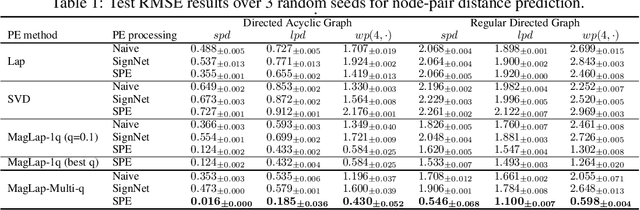
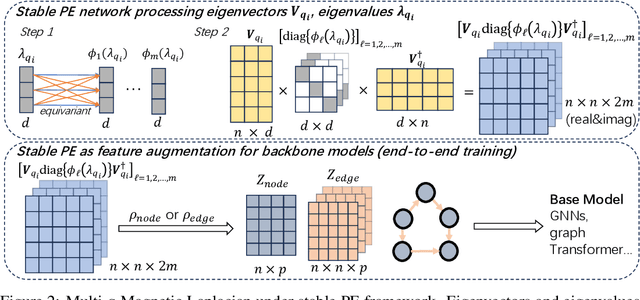
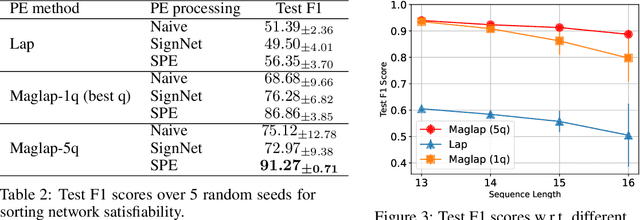
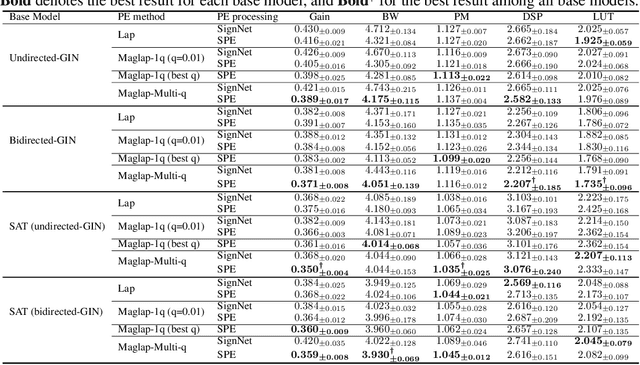
Positional encodings (PE) for graphs are essential in constructing powerful and expressive graph neural networks and graph transformers as they effectively capture relative spatial relations between nodes. While PEs for undirected graphs have been extensively studied, those for directed graphs remain largely unexplored, despite the fundamental role of directed graphs in representing entities with strong logical dependencies, such as those in program analysis and circuit designs. This work studies the design of PEs for directed graphs that are expressive to represent desired directed spatial relations. We first propose walk profile, a generalization of walk counting sequence to directed graphs. We identify limitations in existing PE methods, including symmetrized Laplacian PE, Singular Value Decomposition PE, and Magnetic Laplacian PE, in their ability to express walk profiles. To address these limitations, we propose the Multi-q Magnetic Laplacian PE, which extends Magnetic Laplacian PE with multiple potential factors. This simple variant turns out to be capable of provably expressing walk profiles. Furthermore, we generalize previous basis-invariant and stable networks to handle complex-domain PEs decomposed from Magnetic Laplacians. Our numerical experiments demonstrate the effectiveness of Multi-q Magnetic Laplacian PE with a stable neural architecture, outperforming previous PE methods (with stable networks) on predicting directed distances/walk profiles, sorting network satisfiability, and on general circuit benchmarks. Our code is available at https://github.com/Graph-COM/Multi-q-Maglap.

Deep Pareto Reinforcement Learning for Multi-Objective Recommender System
Jul 04, 2024Optimizing multiple objectives simultaneously is an important task in recommendation platforms to improve their performance on different fronts. However, this task is particularly challenging since the relationships between different objectives are heterogeneous across different consumers and dynamically fluctuating according to different contexts. Especially in those cases when objectives become conflicting with each other, the result of recommendations will form a pareto-frontier, where the improvements on any objective comes at the cost of a performance decrease in another objective. Unfortunately, existing multi-objective recommender systems do not systematically consider such relationships; instead, they balance between these objectives in a static and uniform manner, resulting in performance that is significantly worse than the pareto-optimality. In this paper, we propose a Deep Pareto Reinforcement Learning (DeepPRL) approach, where we (1) comprehensively model the complex relationships between multiple objectives in recommendations; (2) effectively capture the personalized and contextual consumer preference towards each objective and update the recommendations correspondingly; (3) optimize both the short-term and the long-term performance of multi-objective recommendations. As a result, our method achieves significant pareto-dominance over state-of-the-art baselines in extensive offline experiments conducted on three real-world datasets. Furthermore, we conduct a large-scale online controlled experiment at the video streaming platform of Alibaba, where our method simultaneously improves the three conflicting objectives of Click-Through Rate, Video View, and Dwell Time by 2%, 5%, and 7% respectively over the latest production system, demonstrating its tangible economic impact in industrial applications.
Differentially Private Graph Diffusion with Applications in Personalized PageRanks
Jul 02, 2024


Graph diffusion, which iteratively propagates real-valued substances among the graph, is used in numerous graph/network-involved applications. However, releasing diffusion vectors may reveal sensitive linking information in the data such as transaction information in financial network data. However, protecting the privacy of graph data is challenging due to its interconnected nature. This work proposes a novel graph diffusion framework with edge-level differential privacy guarantees by using noisy diffusion iterates. The algorithm injects Laplace noise per diffusion iteration and adopts a degree-based thresholding function to mitigate the high sensitivity induced by low-degree nodes. Our privacy loss analysis is based on Privacy Amplification by Iteration (PABI), which to our best knowledge, is the first effort that analyzes PABI with Laplace noise and provides relevant applications. We also introduce a novel Infinity-Wasserstein distance tracking method, which tightens the analysis of privacy leakage and makes PABI more applicable in practice. We evaluate this framework by applying it to Personalized Pagerank computation for ranking tasks. Experiments on real-world network data demonstrate the superiority of our method under stringent privacy conditions.
Towards Understanding Sensitive and Decisive Patterns in Explainable AI: A Case Study of Model Interpretation in Geometric Deep Learning
Jun 30, 2024The interpretability of machine learning models has gained increasing attention, particularly in scientific domains where high precision and accountability are crucial. This research focuses on distinguishing between two critical data patterns -- sensitive patterns (model-related) and decisive patterns (task-related) -- which are commonly used as model interpretations but often lead to confusion. Specifically, this study compares the effectiveness of two main streams of interpretation methods: post-hoc methods and self-interpretable methods, in detecting these patterns. Recently, geometric deep learning (GDL) has shown superior predictive performance in various scientific applications, creating an urgent need for principled interpretation methods. Therefore, we conduct our study using several representative GDL applications as case studies. We evaluate thirteen interpretation methods applied to three major GDL backbone models, using four scientific datasets to assess how well these methods identify sensitive and decisive patterns. Our findings indicate that post-hoc methods tend to provide interpretations better aligned with sensitive patterns, whereas certain self-interpretable methods exhibit strong and stable performance in detecting decisive patterns. Additionally, our study offers valuable insights into improving the reliability of these interpretation methods. For example, ensembling post-hoc interpretations from multiple models trained on the same task can effectively uncover the task's decisive patterns.
MSAGPT: Neural Prompting Protein Structure Prediction via MSA Generative Pre-Training
Jun 11, 2024Multiple Sequence Alignment (MSA) plays a pivotal role in unveiling the evolutionary trajectories of protein families. The accuracy of protein structure predictions is often compromised for protein sequences that lack sufficient homologous information to construct high quality MSA. Although various methods have been proposed to generate virtual MSA under these conditions, they fall short in comprehensively capturing the intricate coevolutionary patterns within MSA or require guidance from external oracle models. Here we introduce MSAGPT, a novel approach to prompt protein structure predictions via MSA generative pretraining in the low MSA regime. MSAGPT employs a simple yet effective 2D evolutionary positional encoding scheme to model complex evolutionary patterns. Endowed by this, its flexible 1D MSA decoding framework facilitates zero or few shot learning. Moreover, we demonstrate that leveraging the feedback from AlphaFold2 can further enhance the model capacity via Rejective Fine tuning (RFT) and Reinforcement Learning from AF2 Feedback (RLAF). Extensive experiments confirm the efficacy of MSAGPT in generating faithful virtual MSA to enhance the structure prediction accuracy. The transfer learning capabilities also highlight its great potential for facilitating other protein tasks.
What Can We Learn from State Space Models for Machine Learning on Graphs?
Jun 09, 2024Machine learning on graphs has recently found extensive applications across domains. However, the commonly used Message Passing Neural Networks (MPNNs) suffer from limited expressive power and struggle to capture long-range dependencies. Graph transformers offer a strong alternative due to their global attention mechanism, but they come with great computational overheads, especially for large graphs. In recent years, State Space Models (SSMs) have emerged as a compelling approach to replace full attention in transformers to model sequential data. It blends the strengths of RNNs and CNNs, offering a) efficient computation, b) the ability to capture long-range dependencies, and c) good generalization across sequences of various lengths. However, extending SSMs to graph-structured data presents unique challenges due to the lack of canonical node ordering in graphs. In this work, we propose Graph State Space Convolution (GSSC) as a principled extension of SSMs to graph-structured data. By leveraging global permutation-equivariant set aggregation and factorizable graph kernels that rely on relative node distances as the convolution kernels, GSSC preserves all three advantages of SSMs. We demonstrate the provably stronger expressiveness of GSSC than MPNNs in counting graph substructures and show its effectiveness across 10 real-world, widely used benchmark datasets, where GSSC achieves best results on 7 out of 10 datasets with all significant improvements compared to the state-of-the-art baselines and second-best results on the other 3 datasets. Our findings highlight the potential of GSSC as a powerful and scalable model for graph machine learning. Our code is available at https://github.com/Graph-COM/GSSC.
Graph as Point Set
May 05, 2024Graph is a fundamental data structure to model interconnections between entities. Set, on the contrary, stores independent elements. To learn graph representations, current Graph Neural Networks (GNNs) primarily use message passing to encode the interconnections. In contrast, this paper introduces a novel graph-to-set conversion method that bijectively transforms interconnected nodes into a set of independent points and then uses a set encoder to learn the graph representation. This conversion method holds dual significance. Firstly, it enables using set encoders to learn from graphs, thereby significantly expanding the design space of GNNs. Secondly, for Transformer, a specific set encoder, we provide a novel and principled approach to inject graph information losslessly, different from all the heuristic structural/positional encoding methods adopted in previous graph transformers. To demonstrate the effectiveness of our approach, we introduce Point Set Transformer (PST), a transformer architecture that accepts a point set converted from a graph as input. Theoretically, PST exhibits superior expressivity for both short-range substructure counting and long-range shortest path distance tasks compared to existing GNNs. Extensive experiments further validate PST's outstanding real-world performance. Besides Transformer, we also devise a Deepset-based set encoder, which achieves performance comparable to representative GNNs, affirming the versatility of our graph-to-set method.
Stochastic Gradient Langevin Unlearning
Mar 25, 2024


``The right to be forgotten'' ensured by laws for user data privacy becomes increasingly important. Machine unlearning aims to efficiently remove the effect of certain data points on the trained model parameters so that it can be approximately the same as if one retrains the model from scratch. This work proposes stochastic gradient Langevin unlearning, the first unlearning framework based on noisy stochastic gradient descent (SGD) with privacy guarantees for approximate unlearning problems under convexity assumption. Our results show that mini-batch gradient updates provide a superior privacy-complexity trade-off compared to the full-batch counterpart. There are numerous algorithmic benefits of our unlearning approach, including complexity saving compared to retraining, and supporting sequential and batch unlearning. To examine the privacy-utility-complexity trade-off of our method, we conduct experiments on benchmark datasets compared against prior works. Our approach achieves a similar utility under the same privacy constraint while using $2\%$ and $10\%$ of the gradient computations compared with the state-of-the-art gradient-based approximate unlearning methods for mini-batch and full-batch settings, respectively.
Pairwise Alignment Improves Graph Domain Adaptation
Mar 02, 2024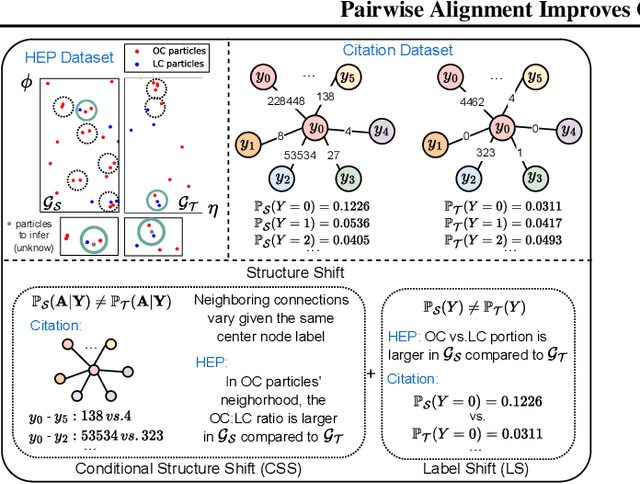
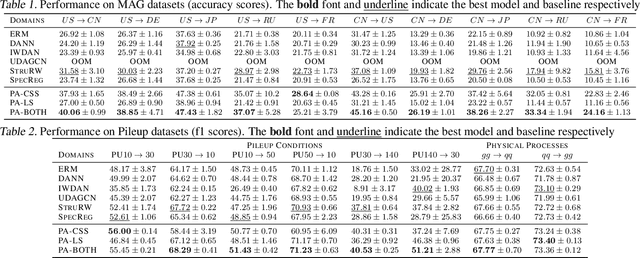

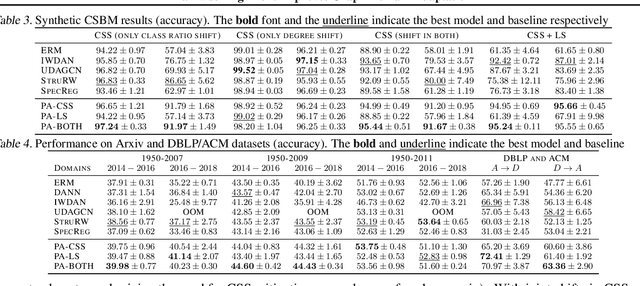
Graph-based methods, pivotal for label inference over interconnected objects in many real-world applications, often encounter generalization challenges, if the graph used for model training differs significantly from the graph used for testing. This work delves into Graph Domain Adaptation (GDA) to address the unique complexities of distribution shifts over graph data, where interconnected data points experience shifts in features, labels, and in particular, connecting patterns. We propose a novel, theoretically principled method, Pairwise Alignment (Pair-Align) to counter graph structure shift by mitigating conditional structure shift (CSS) and label shift (LS). Pair-Align uses edge weights to recalibrate the influence among neighboring nodes to handle CSS and adjusts the classification loss with label weights to handle LS. Our method demonstrates superior performance in real-world applications, including node classification with region shift in social networks, and the pileup mitigation task in particle colliding experiments. For the first application, we also curate the largest dataset by far for GDA studies. Our method shows strong performance in synthetic and other existing benchmark datasets.
Locality-Sensitive Hashing-Based Efficient Point Transformer with Applications in High-Energy Physics
Feb 19, 2024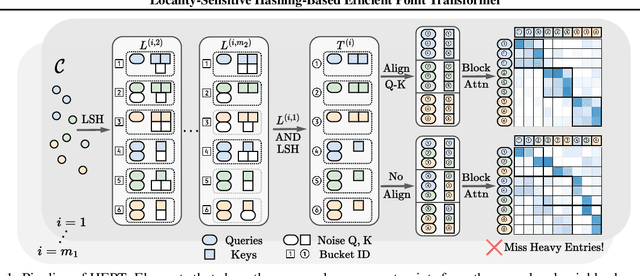
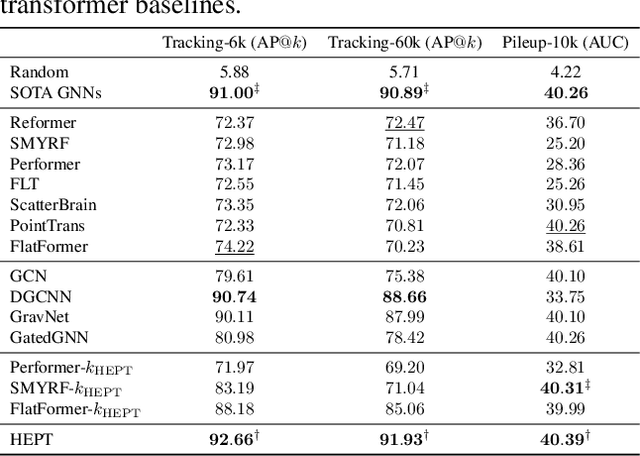
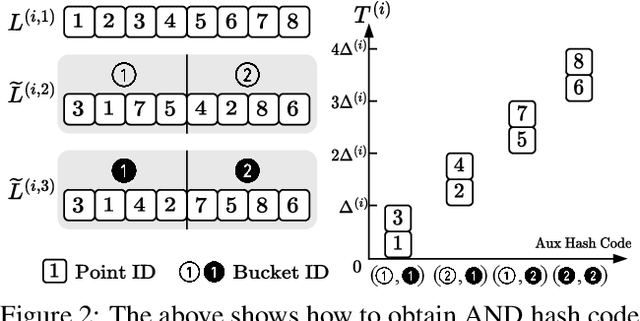
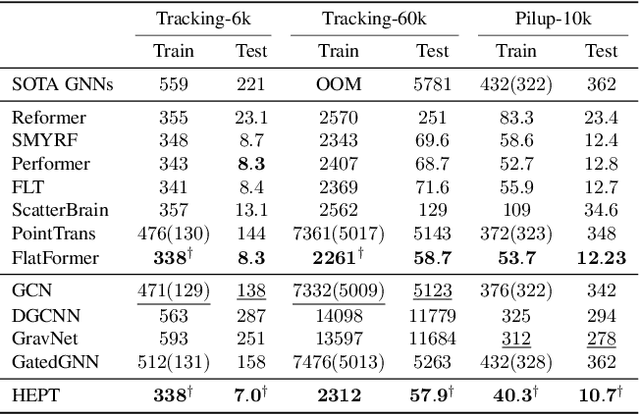
This study introduces a novel transformer model optimized for large-scale point cloud processing in scientific domains such as high-energy physics (HEP) and astrophysics. Addressing the limitations of graph neural networks and standard transformers, our model integrates local inductive bias and achieves near-linear complexity with hardware-friendly regular operations. One contribution of this work is the quantitative analysis of the error-complexity tradeoff of various sparsification techniques for building efficient transformers. Our findings highlight the superiority of using locality-sensitive hashing (LSH), especially OR \& AND-construction LSH, in kernel approximation for large-scale point cloud data with local inductive bias. Based on this finding, we propose LSH-based Efficient Point Transformer (\textbf{HEPT}), which combines E$^2$LSH with OR \& AND constructions and is built upon regular computations. HEPT demonstrates remarkable performance in two critical yet time-consuming HEP tasks, significantly outperforming existing GNNs and transformers in accuracy and computational speed, marking a significant advancement in geometric deep learning and large-scale scientific data processing. Our code is available at \url{https://github.com/Graph-COM/HEPT}.