 Add to Chrome
 Add to Firefox
 Add to Edge
Architecting Trust in Artificial Epistemic Agents
Mar 03, 2026
Large language models increasingly function as epistemic agents -- entities that can 1) autonomously pursue epistemic goals and 2) actively shape our shared knowledge environment. They curate the information we receive, often supplanting traditional search-based methods, and are frequently used to generate both personal and deeply specialized advice. How they perform these functions, including whether they are reliable and properly calibrated to both individual and collective epistemic norms, is therefore highly consequential for the choices we make. We argue that the potential impact of epistemic AI agents on practices of knowledge creation, curation and synthesis, particularly in the context of complex multi-agent interactions, creates new informational interdependencies that necessitate a fundamental shift in evaluation and governance of AI. While a well-calibrated ecosystem could augment human judgment and collective decision-making, poorly aligned agents risk causing cognitive deskilling and epistemic drift, making the calibration of these models to human norms a high-stakes necessity. To ensure a beneficial human-AI knowledge ecosystem, we propose a framework centered on building and cultivating the trustworthiness of epistemic AI agents; aligning AI these agents with human epistemic goals; and reinforcing the surrounding socio-epistemic infrastructure. In this context, trustworthy AI agents must demonstrate epistemic competence, robust falsifiability, and epistemically virtuous behaviors, supported by technical provenance systems and "knowledge sanctuaries" designed to protect human resilience. This normative roadmap provides a path toward ensuring that future AI systems act as reliable partners in a robust and inclusive knowledge ecosystem.

Generative AI Misuse: A Taxonomy of Tactics and Insights from Real-World Data
Jun 19, 2024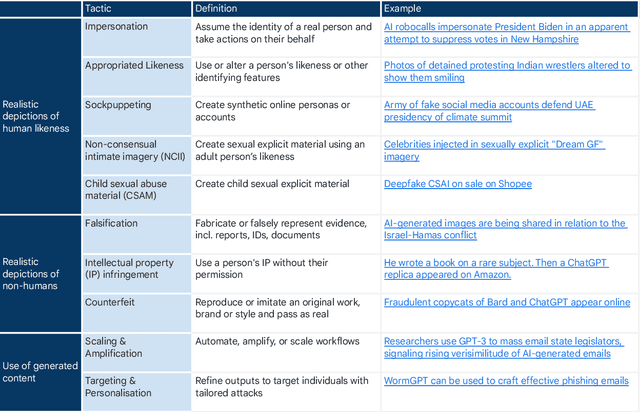
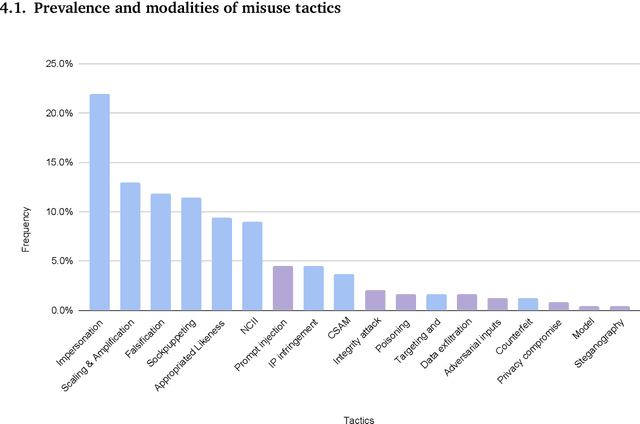

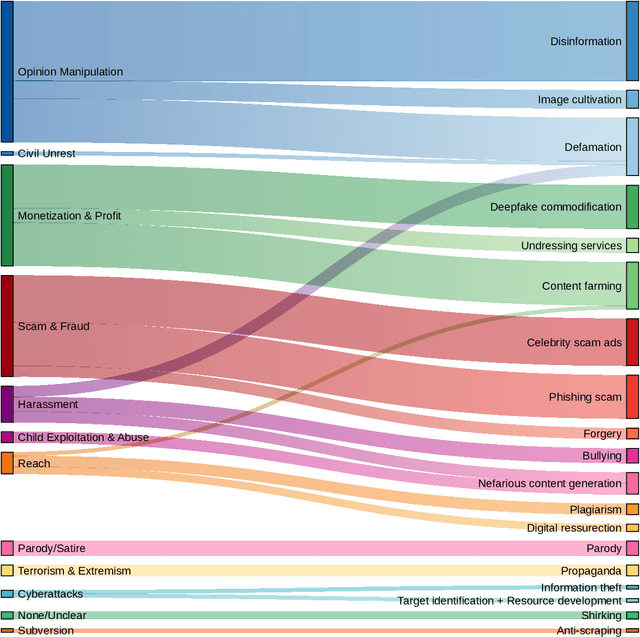
Generative, multimodal artificial intelligence (GenAI) offers transformative potential across industries, but its misuse poses significant risks. Prior research has shed light on the potential of advanced AI systems to be exploited for malicious purposes. However, we still lack a concrete understanding of how GenAI models are specifically exploited or abused in practice, including the tactics employed to inflict harm. In this paper, we present a taxonomy of GenAI misuse tactics, informed by existing academic literature and a qualitative analysis of approximately 200 observed incidents of misuse reported between January 2023 and March 2024. Through this analysis, we illuminate key and novel patterns in misuse during this time period, including potential motivations, strategies, and how attackers leverage and abuse system capabilities across modalities (e.g. image, text, audio, video) in the wild.
STAR: SocioTechnical Approach to Red Teaming Language Models
Jun 17, 2024This research introduces STAR, a sociotechnical framework that improves on current best practices for red teaming safety of large language models. STAR makes two key contributions: it enhances steerability by generating parameterised instructions for human red teamers, leading to improved coverage of the risk surface. Parameterised instructions also provide more detailed insights into model failures at no increased cost. Second, STAR improves signal quality by matching demographics to assess harms for specific groups, resulting in more sensitive annotations. STAR further employs a novel step of arbitration to leverage diverse viewpoints and improve label reliability, treating disagreement not as noise but as a valuable contribution to signal quality.
A Mechanism-Based Approach to Mitigating Harms from Persuasive Generative AI
Apr 23, 2024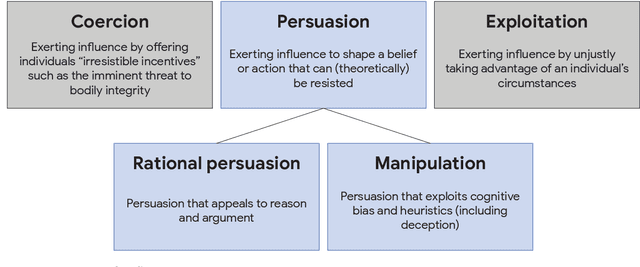


Recent generative AI systems have demonstrated more advanced persuasive capabilities and are increasingly permeating areas of life where they can influence decision-making. Generative AI presents a new risk profile of persuasion due the opportunity for reciprocal exchange and prolonged interactions. This has led to growing concerns about harms from AI persuasion and how they can be mitigated, highlighting the need for a systematic study of AI persuasion. The current definitions of AI persuasion are unclear and related harms are insufficiently studied. Existing harm mitigation approaches prioritise harms from the outcome of persuasion over harms from the process of persuasion. In this paper, we lay the groundwork for the systematic study of AI persuasion. We first put forward definitions of persuasive generative AI. We distinguish between rationally persuasive generative AI, which relies on providing relevant facts, sound reasoning, or other forms of trustworthy evidence, and manipulative generative AI, which relies on taking advantage of cognitive biases and heuristics or misrepresenting information. We also put forward a map of harms from AI persuasion, including definitions and examples of economic, physical, environmental, psychological, sociocultural, political, privacy, and autonomy harm. We then introduce a map of mechanisms that contribute to harmful persuasion. Lastly, we provide an overview of approaches that can be used to mitigate against process harms of persuasion, including prompt engineering for manipulation classification and red teaming. Future work will operationalise these mitigations and study the interaction between different types of mechanisms of persuasion.
Sociotechnical Safety Evaluation of Generative AI Systems
Oct 31, 2023Generative AI systems produce a range of risks. To ensure the safety of generative AI systems, these risks must be evaluated. In this paper, we make two main contributions toward establishing such evaluations. First, we propose a three-layered framework that takes a structured, sociotechnical approach to evaluating these risks. This framework encompasses capability evaluations, which are the main current approach to safety evaluation. It then reaches further by building on system safety principles, particularly the insight that context determines whether a given capability may cause harm. To account for relevant context, our framework adds human interaction and systemic impacts as additional layers of evaluation. Second, we survey the current state of safety evaluation of generative AI systems and create a repository of existing evaluations. Three salient evaluation gaps emerge from this analysis. We propose ways forward to closing these gaps, outlining practical steps as well as roles and responsibilities for different actors. Sociotechnical safety evaluation is a tractable approach to the robust and comprehensive safety evaluation of generative AI systems.
Model evaluation for extreme risks
May 24, 2023
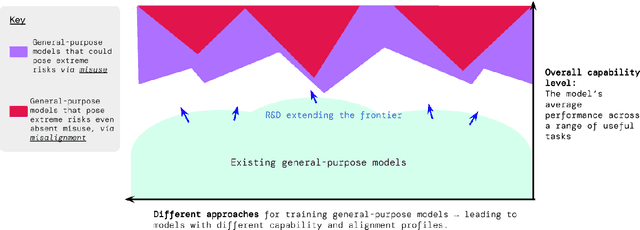
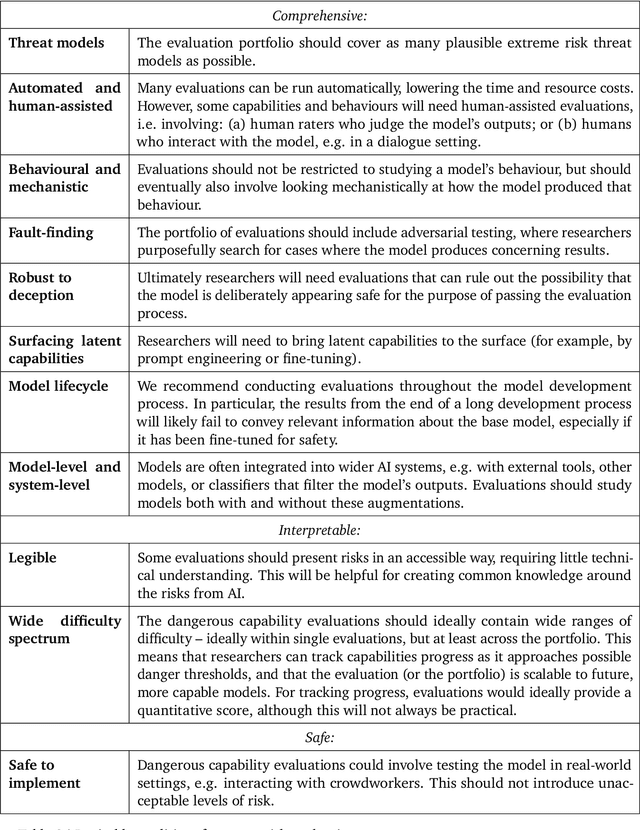

Current approaches to building general-purpose AI systems tend to produce systems with both beneficial and harmful capabilities. Further progress in AI development could lead to capabilities that pose extreme risks, such as offensive cyber capabilities or strong manipulation skills. We explain why model evaluation is critical for addressing extreme risks. Developers must be able to identify dangerous capabilities (through "dangerous capability evaluations") and the propensity of models to apply their capabilities for harm (through "alignment evaluations"). These evaluations will become critical for keeping policymakers and other stakeholders informed, and for making responsible decisions about model training, deployment, and security.