 Add to Chrome
 Add to Firefox
 Add to Edge
A Holistic Assessment of the Reliability of Machine Learning Systems
Jul 29, 2023
As machine learning (ML) systems increasingly permeate high-stakes settings such as healthcare, transportation, military, and national security, concerns regarding their reliability have emerged. Despite notable progress, the performance of these systems can significantly diminish due to adversarial attacks or environmental changes, leading to overconfident predictions, failures to detect input faults, and an inability to generalize in unexpected scenarios. This paper proposes a holistic assessment methodology for the reliability of ML systems. Our framework evaluates five key properties: in-distribution accuracy, distribution-shift robustness, adversarial robustness, calibration, and out-of-distribution detection. A reliability score is also introduced and used to assess the overall system reliability. To provide insights into the performance of different algorithmic approaches, we identify and categorize state-of-the-art techniques, then evaluate a selection on real-world tasks using our proposed reliability metrics and reliability score. Our analysis of over 500 models reveals that designing for one metric does not necessarily constrain others but certain algorithmic techniques can improve reliability across multiple metrics simultaneously. This study contributes to a more comprehensive understanding of ML reliability and provides a roadmap for future research and development.

Robust Driving Policy Learning with Guided Meta Reinforcement Learning
Jul 19, 2023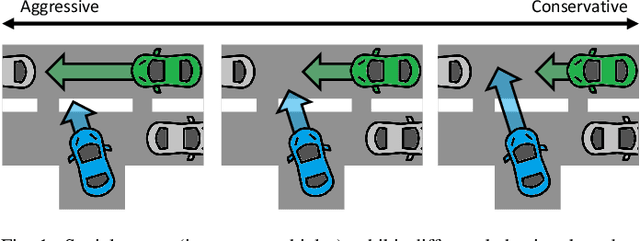
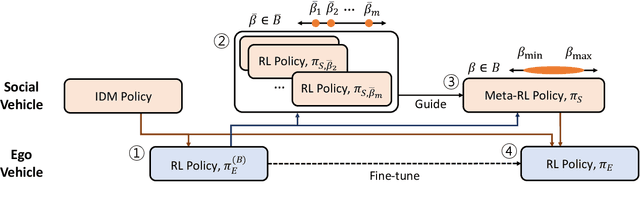
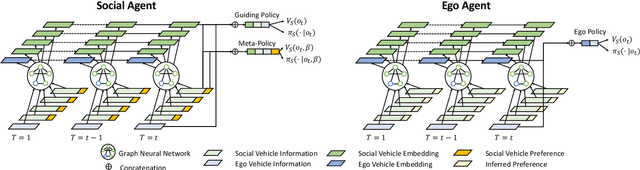
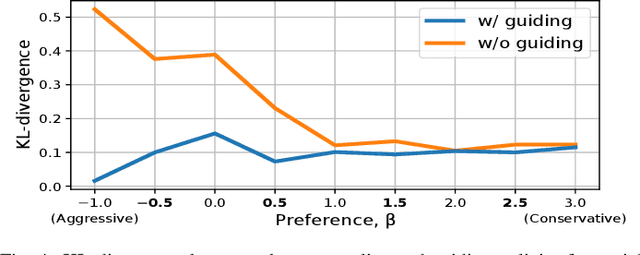
Although deep reinforcement learning (DRL) has shown promising results for autonomous navigation in interactive traffic scenarios, existing work typically adopts a fixed behavior policy to control social vehicles in the training environment. This may cause the learned driving policy to overfit the environment, making it difficult to interact well with vehicles with different, unseen behaviors. In this work, we introduce an efficient method to train diverse driving policies for social vehicles as a single meta-policy. By randomizing the interaction-based reward functions of social vehicles, we can generate diverse objectives and efficiently train the meta-policy through guiding policies that achieve specific objectives. We further propose a training strategy to enhance the robustness of the ego vehicle's driving policy using the environment where social vehicles are controlled by the learned meta-policy. Our method successfully learns an ego driving policy that generalizes well to unseen situations with out-of-distribution (OOD) social agents' behaviors in a challenging uncontrolled T-intersection scenario.
Efficient Determination of Safety Requirements for Perception Systems
Jul 03, 2023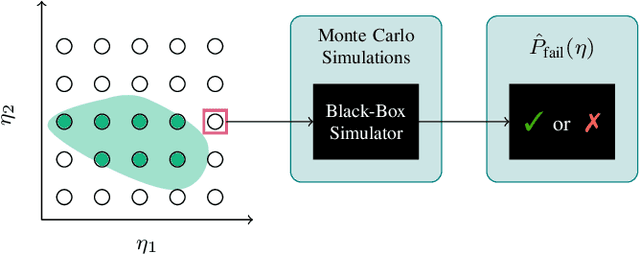
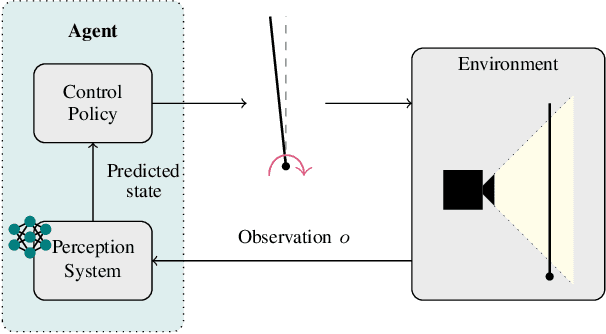
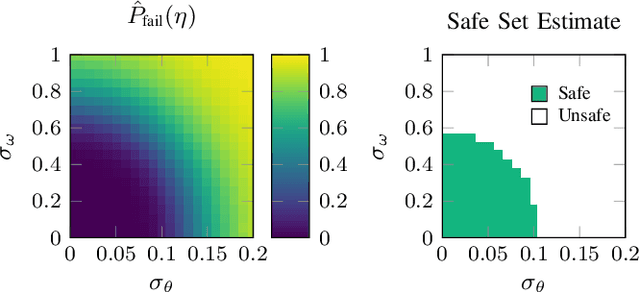
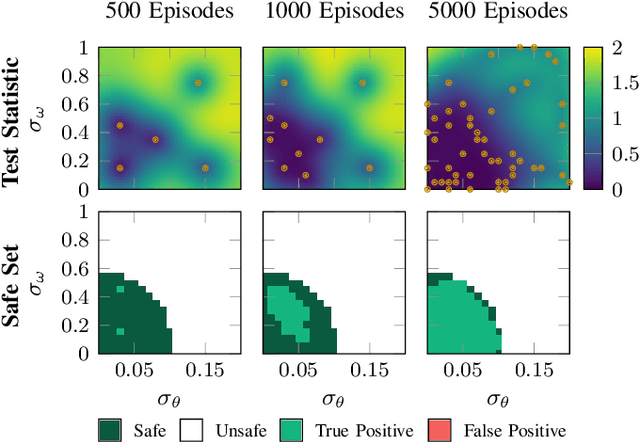
Perception systems operate as a subcomponent of the general autonomy stack, and perception system designers often need to optimize performance characteristics while maintaining safety with respect to the overall closed-loop system. For this reason, it is useful to distill high-level safety requirements into component-level requirements on the perception system. In this work, we focus on efficiently determining sets of safe perception system performance characteristics given a black-box simulator of the fully-integrated, closed-loop system. We combine the advantages of common black-box estimation techniques such as Gaussian processes and threshold bandits to develop a new estimation method, which we call smoothing bandits. We demonstrate our method on a vision-based aircraft collision avoidance problem and show improvements in terms of both accuracy and efficiency over the Gaussian process and threshold bandit baselines.
Deep Normalizing Flows for State Estimation
Jun 27, 2023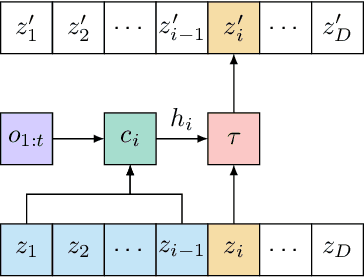
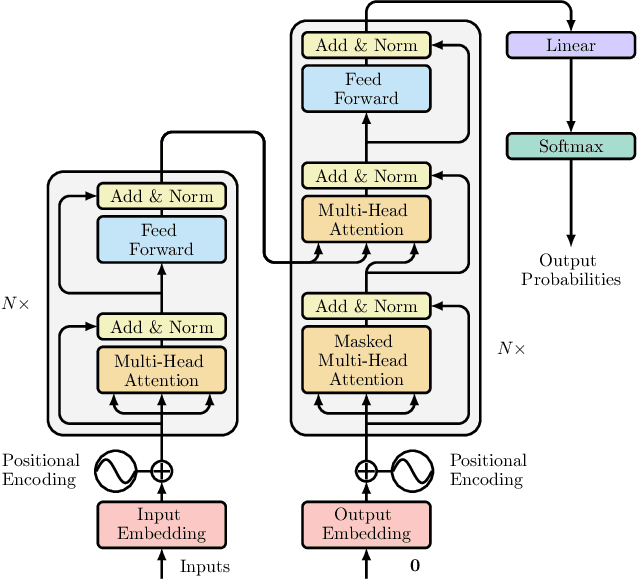
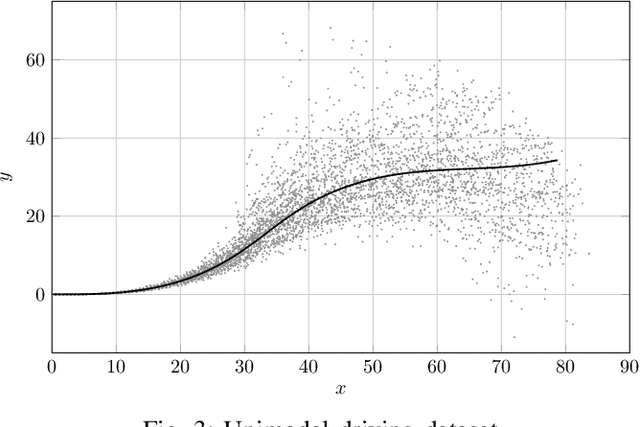
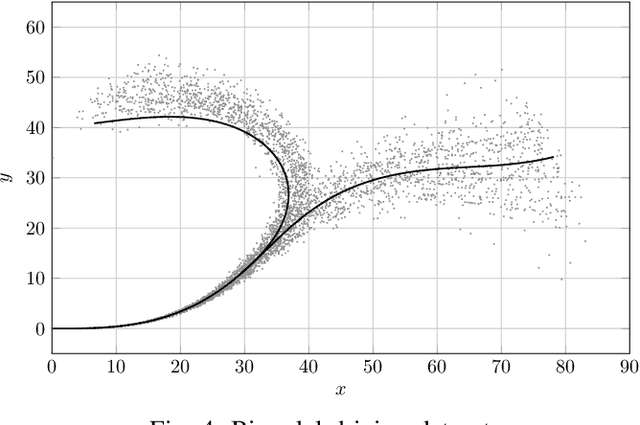
Safe and reliable state estimation techniques are a critical component of next-generation robotic systems. Agents in such systems must be able to reason about the intentions and trajectories of other agents for safe and efficient motion planning. However, classical state estimation techniques such as Gaussian filters often lack the expressive power to represent complex underlying distributions, especially if the system dynamics are highly nonlinear or if the interaction outcomes are multi-modal. In this work, we use normalizing flows to learn an expressive representation of the belief over an agent's true state. Furthermore, we improve upon existing architectures for normalizing flows by using more expressive deep neural network architectures to parameterize the flow. We evaluate our method on two robotic state estimation tasks and show that our approach outperforms both classical and modern deep learning-based state estimation baselines.
AVOIDDS: Aircraft Vision-based Intruder Detection Dataset and Simulator
Jun 19, 2023Designing robust machine learning systems remains an open problem, and there is a need for benchmark problems that cover both environmental changes and evaluation on a downstream task. In this work, we introduce AVOIDDS, a realistic object detection benchmark for the vision-based aircraft detect-and-avoid problem. We provide a labeled dataset consisting of 72,000 photorealistic images of intruder aircraft with various lighting conditions, weather conditions, relative geometries, and geographic locations. We also provide an interface that evaluates trained models on slices of this dataset to identify changes in performance with respect to changing environmental conditions. Finally, we implement a fully-integrated, closed-loop simulator of the vision-based detect-and-avoid problem to evaluate trained models with respect to the downstream collision avoidance task. This benchmark will enable further research in the design of robust machine learning systems for use in safety-critical applications. The AVOIDDS dataset and code are publicly available at $\href{https://purl.stanford.edu/hj293cv5980}{purl.stanford.edu/hj293cv5980}$ and $\href{https://github.com/sisl/VisionBasedAircraftDAA}{github.com/sisl/VisionBasedAircraftDAA}$, respectively.
BetaZero: Belief-State Planning for Long-Horizon POMDPs using Learned Approximations
Jun 02, 2023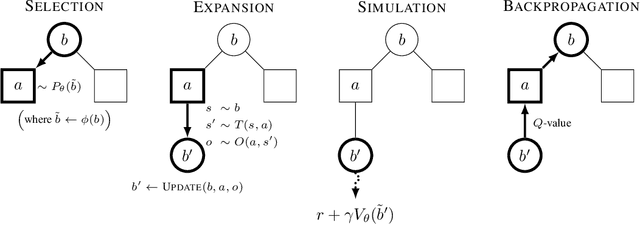
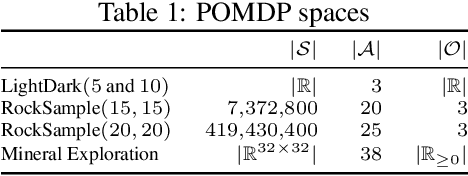
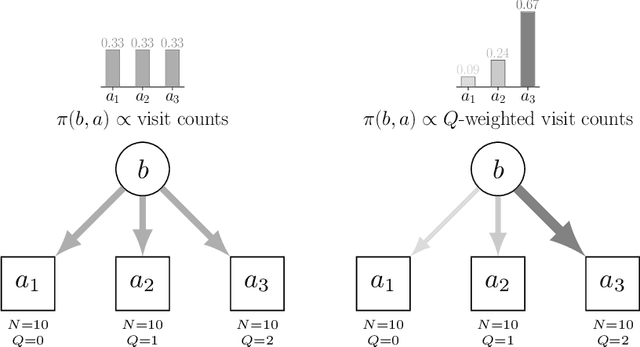
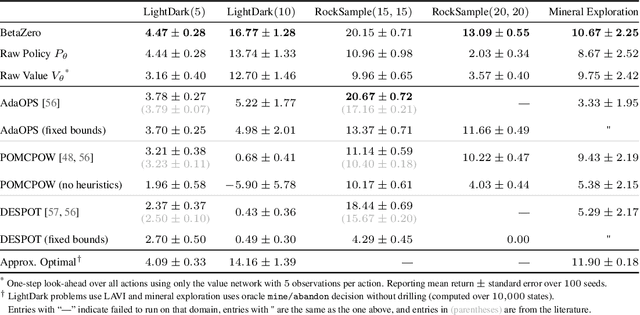
Real-world planning problems$\unicode{x2014}$including autonomous driving and sustainable energy applications like carbon storage and resource exploration$\unicode{x2014}$have recently been modeled as partially observable Markov decision processes (POMDPs) and solved using approximate methods. To solve high-dimensional POMDPs in practice, state-of-the-art methods use online planning with problem-specific heuristics to reduce planning horizons and make the problems tractable. Algorithms that learn approximations to replace heuristics have recently found success in large-scale problems in the fully observable domain. The key insight is the combination of online Monte Carlo tree search with offline neural network approximations of the optimal policy and value function. In this work, we bring this insight to partially observed domains and propose BetaZero, a belief-state planning algorithm for POMDPs. BetaZero learns offline approximations based on accurate belief models to enable online decision making in long-horizon problems. We address several challenges inherent in large-scale partially observable domains; namely challenges of transitioning in stochastic environments, prioritizing action branching with limited search budget, and representing beliefs as input to the network. We apply BetaZero to various well-established benchmark POMDPs found in the literature. As a real-world case study, we test BetaZero on the high-dimensional geological problem of critical mineral exploration. Experiments show that BetaZero outperforms state-of-the-art POMDP solvers on a variety of tasks.
Experience Filter: Using Past Experiences on Unseen Tasks or Environments
May 29, 2023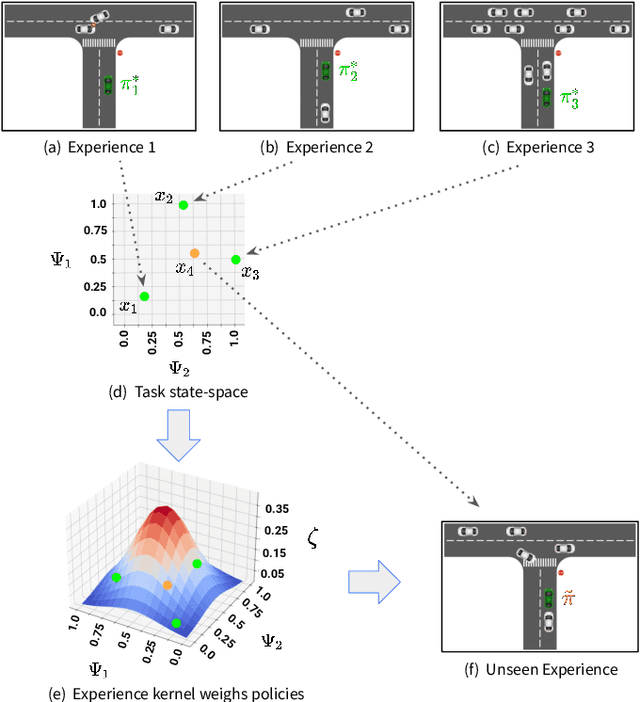
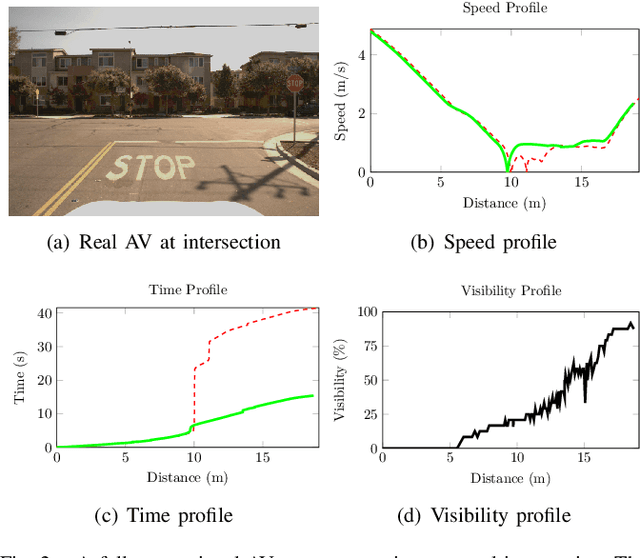
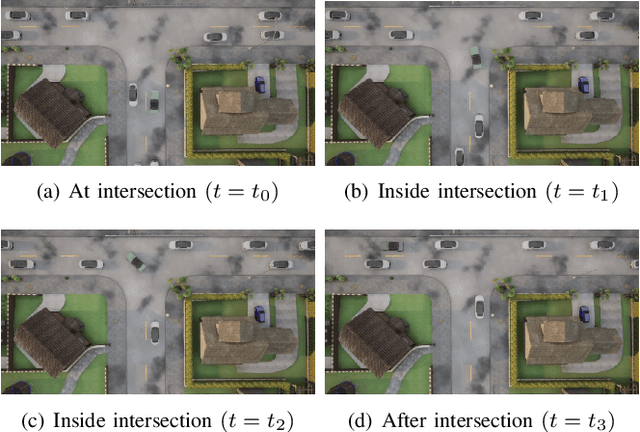
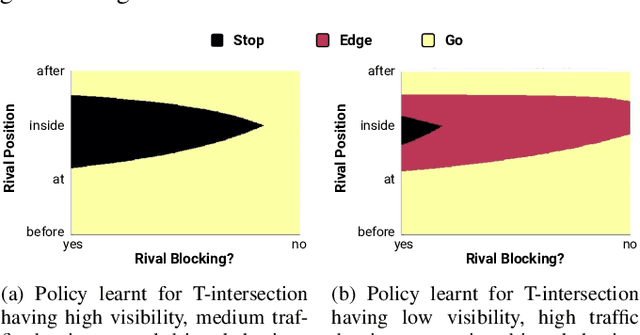
One of the bottlenecks of training autonomous vehicle (AV) agents is the variability of training environments. Since learning optimal policies for unseen environments is often very costly and requires substantial data collection, it becomes computationally intractable to train the agent on every possible environment or task the AV may encounter. This paper introduces a zero-shot filtering approach to interpolate learned policies of past experiences to generalize to unseen ones. We use an experience kernel to correlate environments. These correlations are then exploited to produce policies for new tasks or environments from learned policies. We demonstrate our methods on an autonomous vehicle driving through T-intersections with different characteristics, where its behavior is modeled as a partially observable Markov decision process (POMDP). We first construct compact representations of learned policies for POMDPs with unknown transition functions given a dataset of sequential actions and observations. Then, we filter parameterized policies of previously visited environments to generate policies to new, unseen environments. We demonstrate our approaches on both an actual AV and a high-fidelity simulator. Results indicate that our experience filter offers a fast, low-effort, and near-optimal solution to create policies for tasks or environments never seen before. Furthermore, the generated new policies outperform the policy learned using the entire data collected from past environments, suggesting that the correlation among different environments can be exploited and irrelevant ones can be filtered out.
Model-based Validation as Probabilistic Inference
May 17, 2023Estimating the distribution over failures is a key step in validating autonomous systems. Existing approaches focus on finding failures for a small range of initial conditions or make restrictive assumptions about the properties of the system under test. We frame estimating the distribution over failure trajectories for sequential systems as Bayesian inference. Our model-based approach represents the distribution over failure trajectories using rollouts of system dynamics and computes trajectory gradients using automatic differentiation. Our approach is demonstrated in an inverted pendulum control system, an autonomous vehicle driving scenario, and a partially observable lunar lander. Sampling is performed using an off-the-shelf implementation of Hamiltonian Monte Carlo with multiple chains to capture multimodality and gradient smoothing for safe trajectories. In all experiments, we observed improvements in sample efficiency and parameter space coverage compared to black-box baseline approaches. This work is open sourced.
Bayesian Safety Validation for Black-Box Systems
May 03, 2023Accurately estimating the probability of failure for safety-critical systems is important for certification. Estimation is often challenging due to high-dimensional input spaces, dangerous test scenarios, and computationally expensive simulators; thus, efficient estimation techniques are important to study. This work reframes the problem of black-box safety validation as a Bayesian optimization problem and introduces an algorithm, Bayesian safety validation, that iteratively fits a probabilistic surrogate model to efficiently predict failures. The algorithm is designed to search for failures, compute the most-likely failure, and estimate the failure probability over an operating domain using importance sampling. We introduce a set of three acquisition functions that focus on reducing uncertainty by covering the design space, optimizing the analytically derived failure boundaries, and sampling the predicted failure regions. Mainly concerned with systems that only output a binary indication of failure, we show that our method also works well in cases where more output information is available. Results show that Bayesian safety validation achieves a better estimate of the probability of failure using orders of magnitude fewer samples and performs well across various safety validation metrics. We demonstrate the algorithm on three test problems with access to ground truth and on a real-world safety-critical subsystem common in autonomous flight: a neural network-based runway detection system. This work is open sourced and currently being used to supplement the FAA certification process of the machine learning components for an autonomous cargo aircraft.
Optimizing Carbon Storage Operations for Long-Term Safety
Apr 19, 2023To combat global warming and mitigate the risks associated with climate change, carbon capture and storage (CCS) has emerged as a crucial technology. However, safely sequestering CO2 in geological formations for long-term storage presents several challenges. In this study, we address these issues by modeling the decision-making process for carbon storage operations as a partially observable Markov decision process (POMDP). We solve the POMDP using belief state planning to optimize injector and monitoring well locations, with the goal of maximizing stored CO2 while maintaining safety. Empirical results in simulation demonstrate that our approach is effective in ensuring safe long-term carbon storage operations. We showcase the flexibility of our approach by introducing three different monitoring strategies and examining their impact on decision quality. Additionally, we introduce a neural network surrogate model for the POMDP decision-making process to handle the complex dynamics of the multi-phase flow. We also investigate the effects of different fidelity levels of the surrogate model on decision qualities.