 Add to Chrome
 Add to Firefox
 Add to Edge
Target-Weighted Neyman Allocation: Experimental Design for Heterogeneous Treatment Effects under Population Shift
Aug 06, 2026
Randomized experiments are often run in one population to guide decisions in another. Allocating by experimental proportions wastes budget on groups that rarely appear in deployment, whereas allocating by deployment proportions under-samples groups that are hard to measure precisely. We propose \textbf{TWNA} (Target-Weighted Neyman Allocation), a two-stage stratified design that uses pilot estimates of group--arm outcome variances to allocate final-stage sample sizes and treatment probabilities for target-weighted group average treatment effect (GATE) precision. The oracle rule has a closed form and balances deployment importance with statistical difficulty; the plug-in rule recovers it as pilot variance estimates stabilize. We also extend TWNA to handle uncertainty about deployment composition, remaining robust whether the target mix is roughly known or entirely unknown. Finally, we distinguish this weight robustness from a pilot-robust variant for skewed, rare-event, or contaminated outcomes. Simulations and real-covariate benchmarks show the largest gains when groups are both deployment-important and difficult to measure.

ShapKO: Shapley-Adaptive Modality Knockout for Robust Multimodal Learning
Jul 10, 2026Multimodal medical models often degrade when inputs are missing, a common scenario in real-world clinical workflows. Separately, even when all modalities are present, modality dominance is observed during training, where optimization over-relies on a highly predictive modality and undertrains complementary sources, resulting in poor robustness under partial availability. While training-time modality knockout improves missing-modality robustness, existing approaches use static masking rates that cannot adapt to evolving modality utility during training. We introduce ShapKO (Shapley-Adaptive Modality Knockout), a dynamic training strategy that learns modality-specific knockout probabilities based on validation utility. ShapKO periodically evaluates performance across modality subsets, estimates modality importance via Shapley values, and updates masking probabilities to suppress dominant modalities more frequently. This adaptive process promotes complementary representations, while requiring no architectural modifications. We evaluate ShapKO on three datasets covering multitask clinical classification, survival prediction, and cancer detection. ShapKO consistently improves performance under modality absence and yields interpretable trajectories of learned masking behavior. Code is available at: https://github.com/sumona00/ShapKO
PPEDCRF: Privacy-Preserving Enhanced Dynamic CRF for Location-Privacy Protection for Sequence Videos with Minimal Detection Degradation
Mar 02, 2026Dashcam videos collected by autonomous or assisted-driving systems are increasingly shared for safety auditing and model improvement. Even when explicit GPS metadata are removed, an attacker can still infer the recording location by matching background visual cues (e.g., buildings and road layouts) against large-scale street-view imagery. This paper studies location-privacy leakage under a background-based retrieval attacker, and proposes PPEDCRF, a privacy-preserving enhanced dynamic conditional random field framework that injects calibrated perturbations only into inferred location-sensitive background regions while preserving foreground detection utility. PPEDCRF consists of three components: (i) a dynamic CRF that enforces temporal consistency to discover and track location sensitive regions across frames, (ii) a normalized control penalty (NCP) that allocates perturbation strength according to a hierarchical sensitivity model, and (iii) a utility-preserving noise injection module that minimizes interference to object detection and segmentation. Experiments on public driving datasets demonstrate that PPEDCRF significantly reduces location-retrieval attack success (e.g., Top-k retrieval accuracy) while maintaining competitive detection performance (e.g., mAP and segmentation metrics) compared with common baselines such as global noise, white-noise masking, and feature-based anonymization. The source code is in https://github.com/mabo1215/PPEDCRF.git
Decoupled Continuous-Time Reinforcement Learning via Hamiltonian Flow
Feb 16, 2026Many real-world control problems, ranging from finance to robotics, evolve in continuous time with non-uniform, event-driven decisions. Standard discrete-time reinforcement learning (RL), based on fixed-step Bellman updates, struggles in this setting: as time gaps shrink, the $Q$-function collapses to the value function $V$, eliminating action ranking. Existing continuous-time methods reintroduce action information via an advantage-rate function $q$. However, they enforce optimality through complicated martingale losses or orthogonality constraints, which are sensitive to the choice of test processes. These approaches entangle $V$ and $q$ into a large, complex optimization problem that is difficult to train reliably. To address these limitations, we propose a novel decoupled continuous-time actor-critic algorithm with alternating updates: $q$ is learned from diffusion generators on $V$, and $V$ is updated via a Hamiltonian-based value flow that remains informative under infinitesimal time steps, where standard max/softmax backups fail. Theoretically, we prove rigorous convergence via new probabilistic arguments, sidestepping the challenge that generator-based Hamiltonians lack Bellman-style contraction under the sup-norm. Empirically, our method outperforms prior continuous-time and leading discrete-time baselines across challenging continuous-control benchmarks and a real-world trading task, achieving 21% profit over a single quarter$-$nearly doubling the second-best method.
Effect-Level Validation for Causal Discovery
Feb 09, 2026Causal discovery is increasingly applied to large-scale telemetry data to estimate the effects of user-facing interventions, yet its reliability for decision-making in feedback-driven systems with strong self-selection remains unclear. In this paper, we propose an effect-centric, admissibility-first framework that treats discovered graphs as structural hypotheses and evaluates them by identifiability, stability, and falsification rather than by graph recovery accuracy alone. Empirically, we study the effect of early exposure to competitive gameplay on short-term retention using real-world game telemetry. We find that many statistically plausible discovery outputs do not admit point-identified causal queries once minimal temporal and semantic constraints are enforced, highlighting identifiability as a critical bottleneck for decision support. When identification is possible, several algorithm families converge to similar, decision-consistent effect estimates despite producing substantially different graph structures, including cases where the direct treatment-outcome edge is absent and the effect is preserved through indirect causal pathways. These converging estimates survive placebo, subsampling, and sensitivity refutation. In contrast, other methods exhibit sporadic admissibility and threshold-sensitive or attenuated effects due to endpoint ambiguity. These results suggest that graph-level metrics alone are inadequate proxies for causal reliability for a given target query. Therefore, trustworthy causal conclusions in telemetry-driven systems require prioritizing admissibility and effect-level validation over causal structural recovery alone.
GRL-SNAM: Geometric Reinforcement Learning with Path Differential Hamiltonians for Simultaneous Navigation and Mapping in Unknown Environments
Dec 31, 2025We present GRL-SNAM, a geometric reinforcement learning framework for Simultaneous Navigation and Mapping(SNAM) in unknown environments. A SNAM problem is challenging as it needs to design hierarchical or joint policies of multiple agents that control the movement of a real-life robot towards the goal in mapless environment, i.e. an environment where the map of the environment is not available apriori, and needs to be acquired through sensors. The sensors are invoked from the path learner, i.e. navigator, through active query responses to sensory agents, and along the motion path. GRL-SNAM differs from preemptive navigation algorithms and other reinforcement learning methods by relying exclusively on local sensory observations without constructing a global map. Our approach formulates path navigation and mapping as a dynamic shortest path search and discovery process using controlled Hamiltonian optimization: sensory inputs are translated into local energy landscapes that encode reachability, obstacle barriers, and deformation constraints, while policies for sensing, planning, and reconfiguration evolve stagewise via updating Hamiltonians. A reduced Hamiltonian serves as an adaptive score function, updating kinetic/potential terms, embedding barrier constraints, and continuously refining trajectories as new local information arrives. We evaluate GRL-SNAM on two different 2D navigation tasks. Comparing against local reactive baselines and global policy learning references under identical stagewise sensing constraints, it preserves clearance, generalizes to unseen layouts, and demonstrates that Geometric RL learning via updating Hamiltonians enables high-quality navigation through minimal exploration via local energy refinement rather than extensive global mapping. The code is publicly available on \href{https://github.com/CVC-Lab/GRL-SNAM}{Github}.
Finetuning LLMs for Automatic Form Interaction on Web-Browser in Selenium Testing Framework
Nov 19, 2025Automated web application testing is a critical component of modern software development, with frameworks like Selenium widely adopted for validating functionality through browser automation. Among the essential aspects of such testing is the ability to interact with and validate web forms, a task that requires syntactically correct, executable scripts with high coverage of input fields. Despite its importance, this task remains underexplored in the context of large language models (LLMs), and no public benchmark or dataset exists to evaluate LLMs on form interaction generation systematically. This paper introduces a novel method for training LLMs to generate high-quality test cases in Selenium, specifically targeting form interaction testing. We curate both synthetic and human-annotated datasets for training and evaluation, covering diverse real-world forms and testing scenarios. We define clear metrics for syntax correctness, script executability, and input field coverage. Our empirical study demonstrates that our approach significantly outperforms strong baselines, including GPT-4o and other popular LLMs, across all evaluation metrics. Our work lays the groundwork for future research on LLM-based web testing and provides resources to support ongoing progress in this area.
Fusionista2.0: Efficiency Retrieval System for Large-Scale Datasets
Nov 15, 2025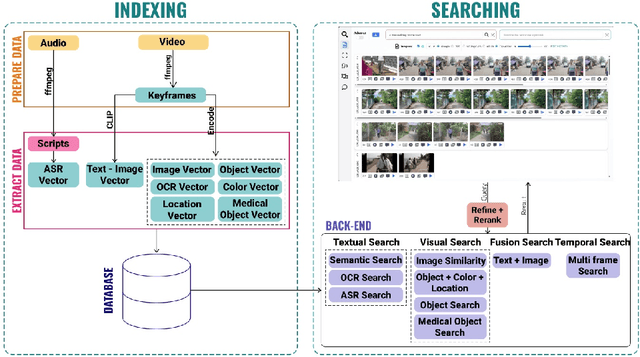

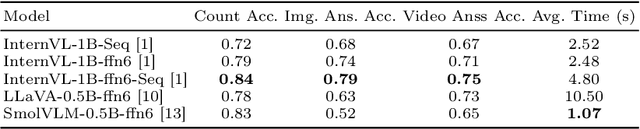
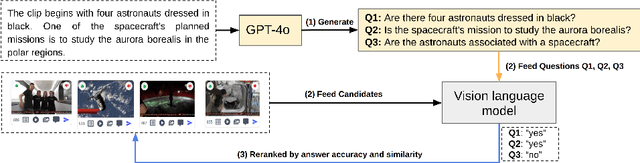
The Video Browser Showdown (VBS) challenges systems to deliver accurate results under strict time constraints. To meet this demand, we present Fusionista2.0, a streamlined video retrieval system optimized for speed and usability. All core modules were re-engineered for efficiency: preprocessing now relies on ffmpeg for fast keyframe extraction, optical character recognition uses Vintern-1B-v3.5 for robust multilingual text recognition, and automatic speech recognition employs faster-whisper for real-time transcription. For question answering, lightweight vision-language models provide quick responses without the heavy cost of large models. Beyond these technical upgrades, Fusionista2.0 introduces a redesigned user interface with improved responsiveness, accessibility, and workflow efficiency, enabling even non-expert users to retrieve relevant content rapidly. Evaluations demonstrate that retrieval time was reduced by up to 75% while accuracy and user satisfaction both increased, confirming Fusionista2.0 as a competitive and user-friendly system for large-scale video search.
Learning Generalized Hamiltonian Dynamics with Stability from Noisy Trajectory Data
Sep 08, 2025We introduce a robust framework for learning various generalized Hamiltonian dynamics from noisy, sparse phase-space data and in an unsupervised manner based on variational Bayesian inference. Although conservative, dissipative, and port-Hamiltonian systems might share the same initial total energy of a closed system, it is challenging for a single Hamiltonian network model to capture the distinctive and varying motion dynamics and physics of a phase space, from sampled observational phase space trajectories. To address this complicated Hamiltonian manifold learning challenge, we extend sparse symplectic, random Fourier Gaussian processes learning with predictive successive numerical estimations of the Hamiltonian landscape, using a generalized form of state and conjugate momentum Hamiltonian dynamics, appropriate to different classes of conservative, dissipative and port-Hamiltonian physical systems. In addition to the kernelized evidence lower bound (ELBO) loss for data fidelity, we incorporate stability and conservation constraints as additional hyper-parameter balanced loss terms to regularize the model's multi-gradients, enforcing physics correctness for improved prediction accuracy with bounded uncertainty.
One STEP at a time: Language Agents are Stepwise Planners
Nov 13, 2024Language agents have shown promising adaptability in dynamic environments to perform complex tasks. However, despite the versatile knowledge embedded in large language models, these agents still fall short when it comes to tasks that require planning. We introduce STEP, a novel framework designed to efficiently learn from previous experiences to enhance the planning capabilities of language agents in future steps. Concretely, STEP functions through four interconnected components. First, the Planner takes on the task, breaks it down into subtasks and provides relevant insights. Then the Executor generates action candidates, while the Evaluator ensures the actions align with learned rules from previous experiences. Lastly, Memory stores experiences to inform future decisions. In the ScienceWorld benchmark, our results show that STEP consistently outperforms state-of-the-art models, achieving an overall score of 67.4 and successfully completing 12 out of 18 tasks. These findings highlight STEP's potential as a framework for enhancing planning capabilities in language agents, paving the way for more sophisticated task-solving in dynamic environments.