 Add to Chrome
 Add to Firefox
 Add to Edge
Semi-Markov Reinforcement Learning for City-Scale EV Ride-Hailing with Feasibility-Guaranteed Actions
Apr 28, 2026
We study city-scale control of electric-vehicle (EV) ride-hailing fleets where dispatch, repositioning, and charging decisions must respect charger and feeder limits under uncertain, spatially correlated demand and travel times. We formulate the problem as a hex-grid semi-Markov decision process (semi-MDP) with mixed actions -- discrete actions for serving, repositioning, and charging, together with continuous charging power -- and variable action durations. To guarantee physical feasibility during both training and deployment, the policy learns over high-level intentions produced by a masked, temperature-annealed actor. These intentions are projected at every decision step through a time-limited rolling mixed-integer linear program (MILP) that strictly enforces state-of-charge, port, and feeder constraints. To mitigate distributional shifts, we optimize a Soft Actor--Critic (SAC) agent against a Wasserstein-1 ambiguity set with a graph-aligned Mahalanobis ground metric that captures spatial correlations. The robust backup uses the Kantorovich--Rubinstein dual, a projected subgradient inner loop, and a primal--dual risk-budget update. Our architecture combines a two-layer Graph Convolutional Network (GCN) encoder, twin critics, and a value network that drives the adversary. Experiments on a large-scale EV fleet simulator built from NYC taxi data show that PD--RSAC achieves the highest net profit, reaching \$1.22M, compared with \$0.58M--\$0.70M for strong heuristic, single-agent RL, and multi-agent RL baselines, including Greedy, SAC, MAPPO, and MADDPG, while maintaining zero feeder-limit violations.

Generalized knowledge-enhanced framework for biomedical entity and relation extraction
Aug 13, 2024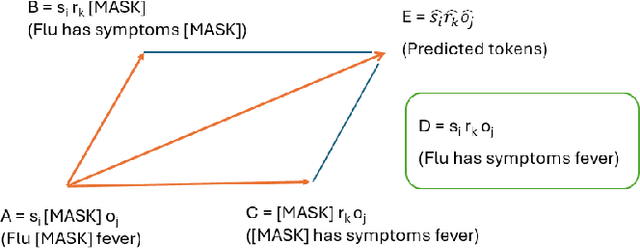
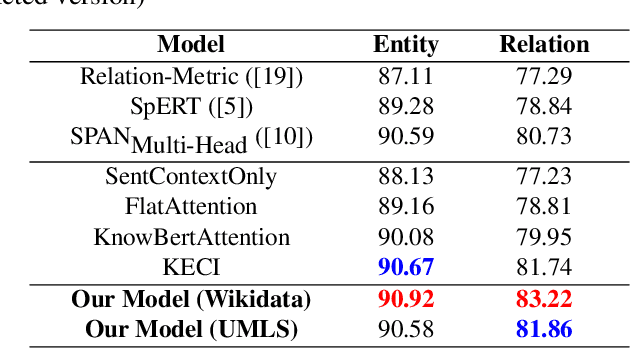
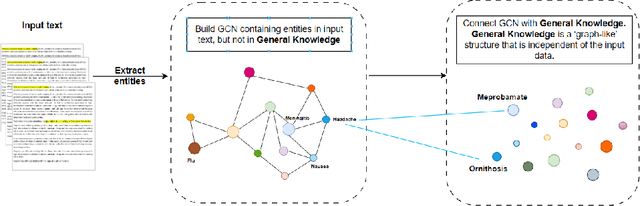

In recent years, there has been an increasing number of frameworks developed for biomedical entity and relation extraction. This research effort aims to address the accelerating growth in biomedical publications and the intricate nature of biomedical texts, which are written for mainly domain experts. To handle these challenges, we develop a novel framework that utilizes external knowledge to construct a task-independent and reusable background knowledge graph for biomedical entity and relation extraction. The design of our model is inspired by how humans learn domain-specific topics. In particular, humans often first acquire the most basic and common knowledge regarding a field to build the foundational knowledge and then use that as a basis for extending to various specialized topics. Our framework employs such common-knowledge-sharing mechanism to build a general neural-network knowledge graph that is learning transferable to different domain-specific biomedical texts effectively. Experimental evaluations demonstrate that our model, equipped with this generalized and cross-transferable knowledge base, achieves competitive performance benchmarks, including BioRelEx for binding interaction detection and ADE for Adverse Drug Effect identification.
Unveiling Comparative Sentiments in Vietnamese Product Reviews: A Sequential Classification Framework
Jan 02, 2024Comparative opinion mining is a specialized field of sentiment analysis that aims to identify and extract sentiments expressed comparatively. To address this task, we propose an approach that consists of solving three sequential sub-tasks: (i) identifying comparative sentence, i.e., if a sentence has a comparative meaning, (ii) extracting comparative elements, i.e., what are comparison subjects, objects, aspects, predicates, and (iii) classifying comparison types which contribute to a deeper comprehension of user sentiments in Vietnamese product reviews. Our method is ranked fifth at the Vietnamese Language and Speech Processing (VLSP) 2023 challenge on Comparative Opinion Mining (ComOM) from Vietnamese Product Reviews.