 Add to Chrome
 Add to Firefox
 Add to Edge
Measuring the Wrong Thing: Internal Harmfulness Scores Anti-Rank Successful Jailbreaks
Aug 10, 2026
Internal safety scores judge a prompt before any text is generated, and they are validated by how well they separate harmful prompts from benign ones. That separation is then read as evidence that the score will also catch the attacks that succeed. Harmful intent is a property of the prompt. Jailbreak success is an outcome produced later by a particular target model, decoding policy, and judge. A filter tuned on a score that measures the wrong quantity spends its false positive budget on attacks that would have failed anyway. In this paper we audit that inference. Attention based measurements are usually read from prompt dependent locations, so a wrapper changes both the content being judged and the place the signal is taken from. We therefore introduce Active Attention Probing, which supplies a fixed content independent measurement coordinate. We pair every base goal with a plain and a wrapped version and generate real completions from the target models. On Llama, wrapping raises harmful generation from 0.05 to 0.27 while harmful intent AUROC falls from 0.936 to 0.803, so the attacks grow more dangerous while the prompts look safer to the score. Among wrapped harmful prompts the outcome AUROC is 0.220, which places the attacks that succeeded below the attacks that failed. Rare token, passive, and detector derived channels reproduce the reversal on the same matched design, and the reversal itself persists across three target models, seven attack families, and two independent judges. Distribution shift then degrades calibration and threshold transfer before it degrades ranking.

CobSeg: Coherence Boundary Modeling for Dialogue Topic Segmentation
May 29, 2026Dialogue topic segmentation is critical in many human-AI collaborative applications which requires identifying heterogeneous boundary cues, including lexical transitions near utterance edges and semantic discontinuities across utterances. Existing utterance models often dilute these local lexical signals. We propose CobSeg, a novel multi-branch architecture that separates coherence-level semantic continuity from lexical boundary transitions and recovers both through directional boundary prediction. CobSeg further uses boundary informativeness weighting to emphasize high-utility utterance positions, and incorporates a corpus-derived topic coherence cue with learned combination weights. While CobSeg is evaluated as a compact trainable segmenter under supervised gold-boundary training and a pseudo-label setting with automatically induced boundaries, it performs enhanced boundary prediction without LLM calls during inference. Across five benchmarks, it improves $P_k$ and $W_d$ particularly when local lexical cues are prominent: under gold supervision, it reduces $P_k$ by 0.7 points and $W_d$ by 0.6 points on VHF, and reaches $P_k$ of 1.0 on DialSeg711; with induced boundaries, it reduces $P_k$ by 14.8 points on VHF, by 1.5 points on DialSeg711, and by 1.1 points on TIAGE, outperforming prior non-LLM approaches.
When Alignment Isn't Enough: Response-Path Attacks on LLM Agents
May 04, 2026Bring-Your-Own-Key (BYOK) agent architectures let users route LLM traffic through third-party relays, creating a critical integrity gap: a malicious relay can modify an aligned LLM response after generation but before agent execution. We formalize this post-alignment tampering threat and show that, without end-to-end integrity, the relay can observe, suppress, or replace downstream messages, making even perfectly aligned LLMs ineffective against such attacks. We instantiate this threat as the Relay Tampering Attack (RTA), which performs multi-round strategic rewriting, minimal security-critical edits, and stealth restoration by resubmitting tampered outputs to the upstream LLM. Across AgentDojo and ASB with six LLMs, RTA achieves up to 99.1% attack success, outperforming prompt-injection baselines with modest overhead. Case studies on OpenClaw and Claude Code demonstrate real-world feasibility, and evaluations of four defenses show that none fully prevent RTA. Finally, we propose a time-based detection defense that mitigates RTA while preserving agent utility.
Abdominal Undulation with Compliant Mechanism Improves Flight Performance of Biomimetic Robotic Butterfly
Mar 09, 2025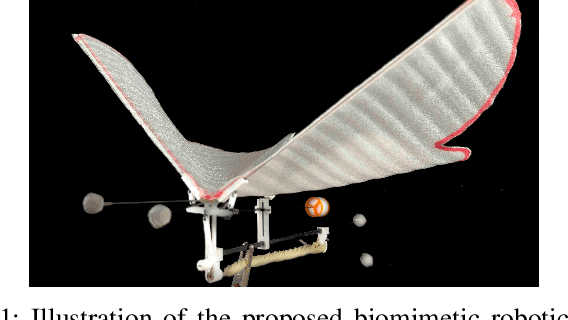
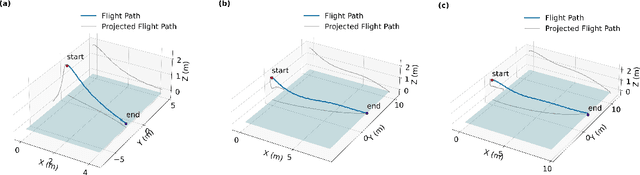
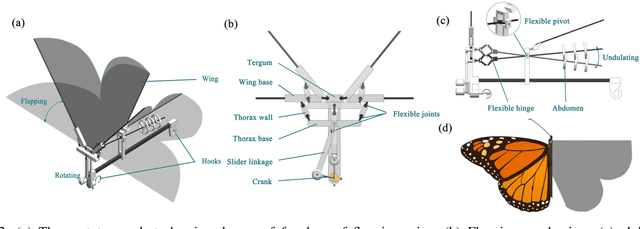
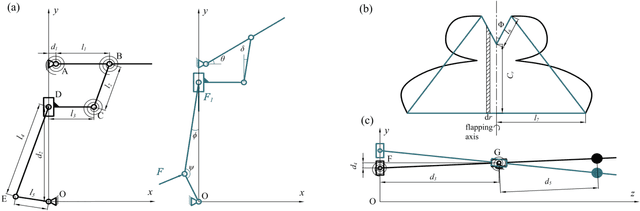
Abdominal Undulation with Compliant Mechanism Improves Flight Performance of Biomimetic Robotic ButterflThis paper presents the design, modeling, and experimental validation of a biomimetic robotic butterfly (BRB) that integrates a compliant mechanism to achieve coupled wing-abdomen motion. Drawing inspiration from the natural f light dynamics of butterflies, a theoretical model is developed to investigate the impact of abdominal undulation on flight performance. To validate the model, motion capture experi ments are conducted on three configurations: a BRB without an abdomen, with a fixed abdomen, and with an undulating abdomen. The results demonstrate that abdominal undulation enhances lift generation, extends flight duration, and stabilizes pitch oscillations, thereby improving overall flight performance. These findings underscore the significance of wing-abdomen interaction in flapping-wing aerial vehicles (FWAVs) and lay the groundwork for future advancements in energy-efficient biomimetic flight designs.
Knowledge Database or Poison Base? Detecting RAG Poisoning Attack through LLM Activations
Nov 28, 2024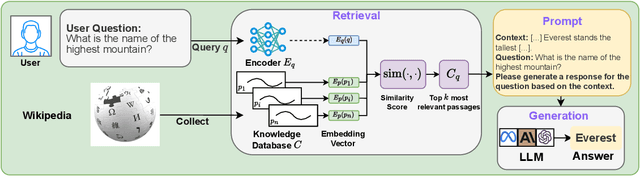
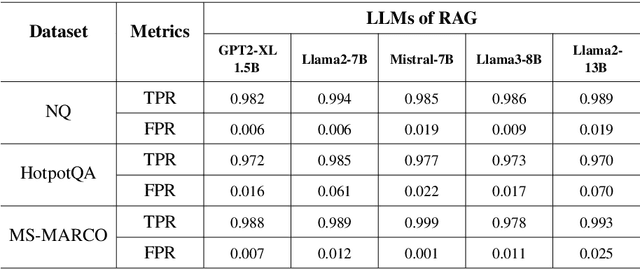
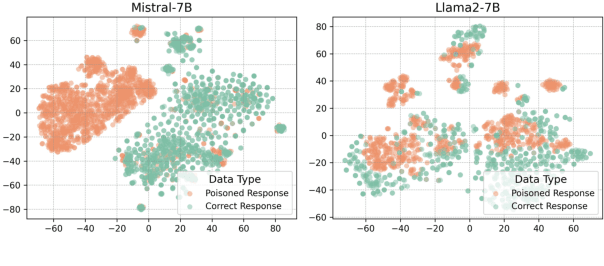

As Large Language Models (LLMs) are progressively deployed across diverse fields and real-world applications, ensuring the security and robustness of LLMs has become ever more critical. Retrieval-Augmented Generation (RAG) is a cutting-edge approach designed to address the limitations of large language models (LLMs). By retrieving information from the relevant knowledge database, RAG enriches the input to LLMs, enabling them to produce responses that are more accurate and contextually appropriate. It is worth noting that the knowledge database, being sourced from publicly available channels such as Wikipedia, inevitably introduces a new attack surface. RAG poisoning involves injecting malicious texts into the knowledge database, ultimately leading to the generation of the attacker's target response (also called poisoned response). However, there are currently limited methods available for detecting such poisoning attacks. We aim to bridge the gap in this work. Particularly, we introduce RevPRAG, a flexible and automated detection pipeline that leverages the activations of LLMs for poisoned response detection. Our investigation uncovers distinct patterns in LLMs' activations when generating correct responses versus poisoned responses. Our results on multiple benchmark datasets and RAG architectures show our approach could achieve 98% true positive rate, while maintaining false positive rates close to 1%. We also evaluate recent backdoor detection methods specifically designed for LLMs and applicable for identifying poisoned responses in RAG. The results demonstrate that our approach significantly surpasses them.