 Add to Chrome
 Add to Firefox
 Add to Edge
Privacy Preserving Topic-wise Sentiment Analysis of the Iran Israel USA Conflict Using Federated Transformer Models
Mar 13, 2026
The recent escalation of the Iran Israel USA conflict in 2026 has triggered widespread global discussions across social media platforms. As people increasingly use these platforms for expressing opinions, analyzing public sentiment from these discussions can provide valuable insights into global public perception. This study aims to analyze global public sentiment regarding the Iran Israel USA conflict by mining user-generated comments from YouTube news channels. The work contributes to public opinion analysis by introducing a privacy preserving framework that combines topic wise sentiment analysis with modern deep learning techniques and Federated Learning. To achieve this, approximately 19,000 YouTube comments were collected from major international news channels and preprocessed to remove noise and normalize text. Sentiment labels were initially generated using the VADER sentiment analyzer and later validated through manual inspection to improve reliability. Latent Dirichlet Allocation (LDA) was applied to identify key discussion topics related to the conflict. Several transformer-based models, including BERT, RoBERTa, XLNet, DistilBERT, ModernBERT, and ELECTRA, were fine tuned for sentiment classification. The best-performing model was further integrated into a federated learning environment to enable distributed training by preserving user data privacy. Additionally, Explainable Artificial Intelligence (XAI) techniques using SHAP were applied to interpret model predictions and identify influential words affecting sentiment classification. Experimental results demonstrate that transformer models perform effectively, and among them, ELECTRA achieved the best performance with 91.32% accuracy. The federated learning also maintained strong performance while preserving privacy, achieving 89.59% accuracy in a two client configuration.

Benchmarking Video Foundation Models for Remote Parkinson's Disease Screening
Feb 13, 2026Remote, video-based assessments offer a scalable pathway for Parkinson's disease (PD) screening. While traditional approaches rely on handcrafted features mimicking clinical scales, recent advances in video foundation models (VFMs) enable representation learning without task-specific customization. However, the comparative effectiveness of different VFM architectures across diverse clinical tasks remains poorly understood. We present a large-scale systematic study using a novel video dataset from 1,888 participants (727 with PD), comprising 32,847 videos across 16 standardized clinical tasks. We evaluate seven state-of-the-art VFMs -- including VideoPrism, V-JEPA, ViViT, and VideoMAE -- to determine their robustness in clinical screening. By evaluating frozen embeddings with a linear classification head, we demonstrate that task saliency is highly model-dependent: VideoPrism excels in capturing visual speech kinematics (no audio) and facial expressivity, while V-JEPA proves superior for upper-limb motor tasks. Notably, TimeSformer remains highly competitive for rhythmic tasks like finger tapping. Our experiments yield AUCs of 76.4-85.3% and accuracies of 71.5-80.6%. While high specificity (up to 90.3%) suggests strong potential for ruling out healthy individuals, the lower sensitivity (43.2-57.3%) highlights the need for task-aware calibration and integration of multiple tasks and modalities. Overall, this work establishes a rigorous baseline for VFM-based PD screening and provides a roadmap for selecting suitable tasks and architectures in remote neurological monitoring. Code and anonymized structured data are publicly available: https://anonymous.4open.science/r/parkinson\_video\_benchmarking-A2C5
When Words Don't Mean What They Say: Figurative Understanding in Bengali Idioms
Feb 13, 2026Figurative language understanding remains a significant challenge for Large Language Models (LLMs), especially for low-resource languages. To address this, we introduce a new idiom dataset, a large-scale, culturally-grounded corpus of 10,361 Bengali idioms. Each idiom is annotated under a comprehensive 19-field schema, established and refined through a deliberative expert consensus process, that captures its semantic, syntactic, cultural, and religious dimensions, providing a rich, structured resource for computational linguistics. To establish a robust benchmark for Bangla figurative language understanding, we evaluate 30 state-of-the-art multilingual and instruction-tuned LLMs on the task of inferring figurative meaning. Our results reveal a critical performance gap, with no model surpassing 50% accuracy, a stark contrast to significantly higher human performance (83.4%). This underscores the limitations of existing models in cross-linguistic and cultural reasoning. By releasing the new idiom dataset and benchmark, we provide foundational infrastructure for advancing figurative language understanding and cultural grounding in LLMs for Bengali and other low-resource languages.
BanglaIPA: Towards Robust Text-to-IPA Transcription with Contextual Rewriting in Bengali
Jan 05, 2026Despite its widespread use, Bengali lacks a robust automated International Phonetic Alphabet (IPA) transcription system that effectively supports both standard language and regional dialectal texts. Existing approaches struggle to handle regional variations, numerical expressions, and generalize poorly to previously unseen words. To address these limitations, we propose BanglaIPA, a novel IPA generation system that integrates a character-based vocabulary with word-level alignment. The proposed system accurately handles Bengali numerals and demonstrates strong performance across regional dialects. BanglaIPA improves inference efficiency by leveraging a precomputed word-to-IPA mapping dictionary for previously observed words. The system is evaluated on the standard Bengali and six regional variations of the DUAL-IPA dataset. Experimental results show that BanglaIPA outperforms baseline IPA transcription models by 58.4-78.7% and achieves an overall mean word error rate of 11.4%, highlighting its robustness in phonetic transcription generation for the Bengali language.
Cardioformer: Advancing AI in ECG Analysis with Multi-Granularity Patching and ResNet
May 08, 2025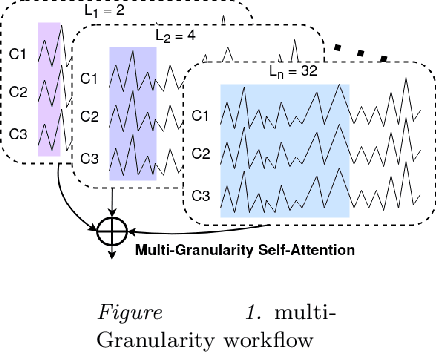
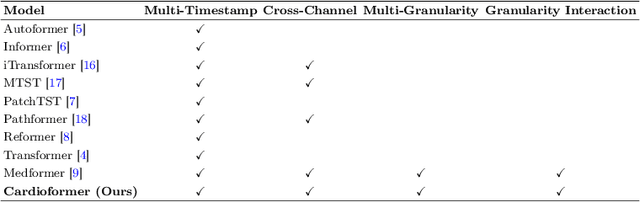
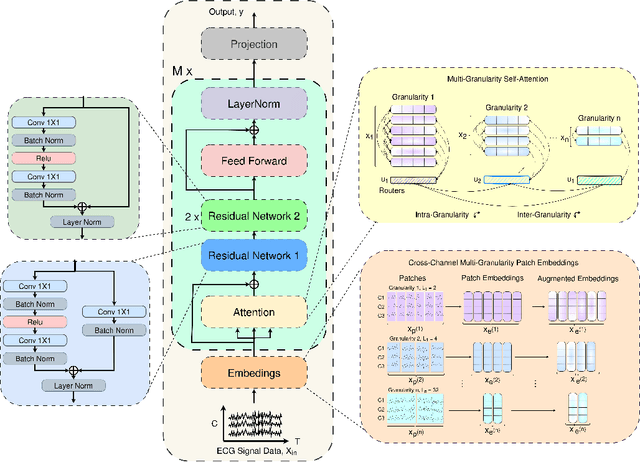

Electrocardiogram (ECG) classification is crucial for automated cardiac disease diagnosis, yet existing methods often struggle to capture local morphological details and long-range temporal dependencies simultaneously. To address these challenges, we propose Cardioformer, a novel multi-granularity hybrid model that integrates cross-channel patching, hierarchical residual learning, and a two-stage self-attention mechanism. Cardioformer first encodes multi-scale token embeddings to capture fine-grained local features and global contextual information and then selectively fuses these representations through intra- and inter-granularity self-attention. Extensive evaluations on three benchmark ECG datasets under subject-independent settings demonstrate that model consistently outperforms four state-of-the-art baselines. Our Cardioformer model achieves the AUROC of 96.34$\pm$0.11, 89.99$\pm$0.12, and 95.59$\pm$1.66 in MIMIC-IV, PTB-XL and PTB dataset respectively outperforming PatchTST, Reformer, Transformer, and Medformer models. It also demonstrates strong cross-dataset generalization, achieving 49.18% AUROC on PTB and 68.41% on PTB-XL when trained on MIMIC-IV. These findings underscore the potential of Cardioformer to advance automated ECG analysis, paving the way for more accurate and robust cardiovascular disease diagnosis. We release the source code at https://github.com/KMobin555/Cardioformer.
Guardians of the Web: The Evolution and Future of Website Information Security
May 07, 2025Website information security has become a critical concern in the digital age. This article explores the evolution of website information security, examining its historical development, current practices, and future directions. The early beginnings from the 1960s to the 1980s laid the groundwork for modern cybersecurity, with the development of ARPANET, TCP/IP, public-key cryptography, and the first antivirus programs. The 1990s marked a transformative era, driven by the commercialization of the Internet and the emergence of web-based services. As the Internet grew, so did the range and sophistication of cyber threats, leading to advancements in security technologies such as the Secure Sockets Layer (SSL) protocol, password protection, and firewalls. Current practices in website information security involve a multi-layered approach, including encryption, secure coding practices, regular security audits, and user education. The future of website information security is expected to be shaped by emerging technologies such as artificial intelligence, blockchain, and quantum computing, as well as the increasing importance of international cooperation and standardization efforts. As cyber threats continue to evolve, ongoing research and innovation in website information security will be essential to protect sensitive information and maintain trust in the digital world.
BnTTS: Few-Shot Speaker Adaptation in Low-Resource Setting
Feb 09, 2025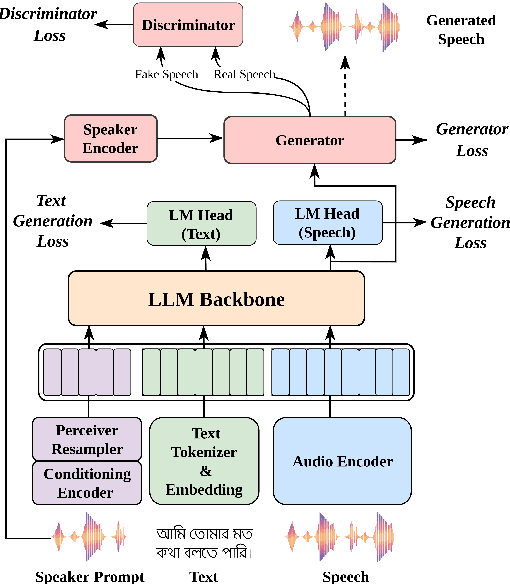
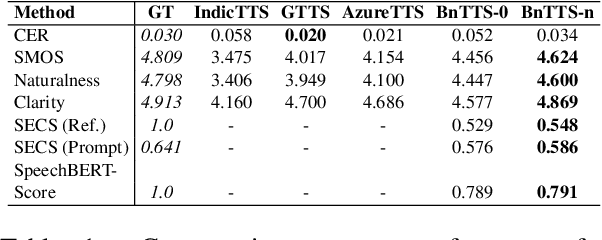
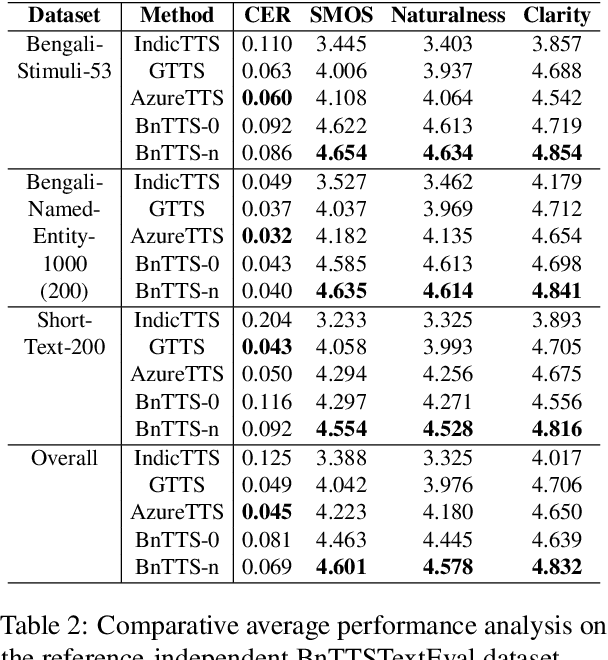
This paper introduces BnTTS (Bangla Text-To-Speech), the first framework for Bangla speaker adaptation-based TTS, designed to bridge the gap in Bangla speech synthesis using minimal training data. Building upon the XTTS architecture, our approach integrates Bangla into a multilingual TTS pipeline, with modifications to account for the phonetic and linguistic characteristics of the language. We pre-train BnTTS on 3.85k hours of Bangla speech dataset with corresponding text labels and evaluate performance in both zero-shot and few-shot settings on our proposed test dataset. Empirical evaluations in few-shot settings show that BnTTS significantly improves the naturalness, intelligibility, and speaker fidelity of synthesized Bangla speech. Compared to state-of-the-art Bangla TTS systems, BnTTS exhibits superior performance in Subjective Mean Opinion Score (SMOS), Naturalness, and Clarity metrics.
LuxVeri at GenAI Detection Task 1: Inverse Perplexity Weighted Ensemble for Robust Detection of AI-Generated Text across English and Multilingual Contexts
Jan 21, 2025This paper presents a system developed for Task 1 of the COLING 2025 Workshop on Detecting AI-Generated Content, focusing on the binary classification of machine-generated versus human-written text. Our approach utilizes an ensemble of models, with weights assigned according to each model's inverse perplexity, to enhance classification accuracy. For the English text detection task, we combined RoBERTa-base, RoBERTa-base with the OpenAI detector, and BERT-base-cased, achieving a Macro F1-score of 0.7458, which ranked us 12th out of 35 teams. We ensembled RemBERT, XLM-RoBERTa-base, and BERT-base-multilingual-case for the multilingual text detection task, employing the same inverse perplexity weighting technique. This resulted in a Macro F1-score of 0.7513, positioning us 4th out of 25 teams. Our results demonstrate the effectiveness of inverse perplexity weighting in improving the robustness of machine-generated text detection across both monolingual and multilingual settings, highlighting the potential of ensemble methods for this challenging task.
LuxVeri at GenAI Detection Task 3: Cross-Domain Detection of AI-Generated Text Using Inverse Perplexity-Weighted Ensemble of Fine-Tuned Transformer Models
Jan 21, 2025This paper presents our approach for Task 3 of the GenAI content detection workshop at COLING-2025, focusing on Cross-Domain Machine-Generated Text (MGT) Detection. We propose an ensemble of fine-tuned transformer models, enhanced by inverse perplexity weighting, to improve classification accuracy across diverse text domains. For Subtask A (Non-Adversarial MGT Detection), we combined a fine-tuned RoBERTa-base model with an OpenAI detector-integrated RoBERTa-base model, achieving an aggregate TPR score of 0.826, ranking 10th out of 23 detectors. In Subtask B (Adversarial MGT Detection), our fine-tuned RoBERTa-base model achieved a TPR score of 0.801, securing 8th out of 22 detectors. Our results demonstrate the effectiveness of inverse perplexity-based weighting for enhancing generalization and performance in both non-adversarial and adversarial MGT detection, highlighting the potential for transformer models in cross-domain AI-generated content detection.
A Comprehensive Survey on Visual Question Answering Datasets and Algorithms
Nov 17, 2024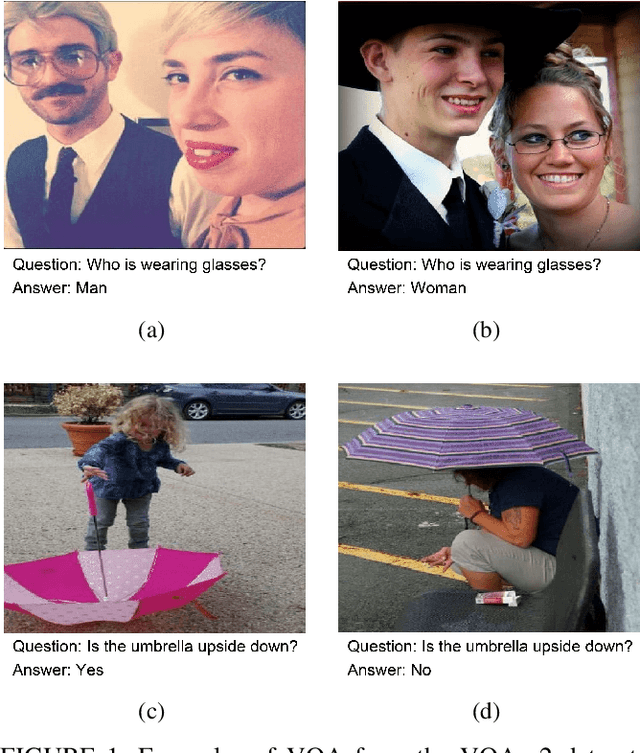
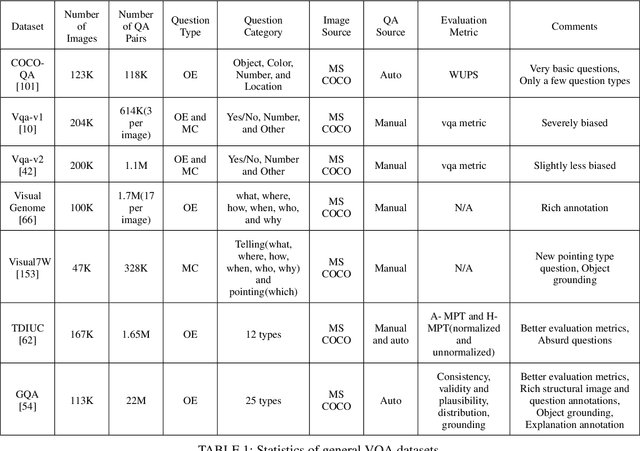
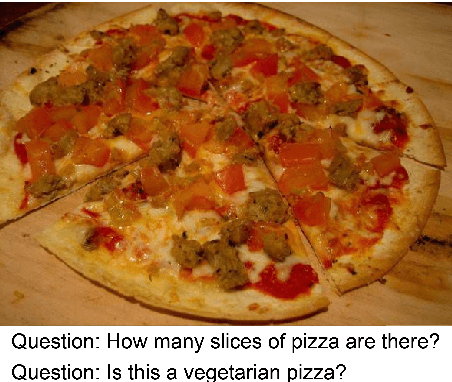

Visual question answering (VQA) refers to the problem where, given an image and a natural language question about the image, a correct natural language answer has to be generated. A VQA model has to demonstrate both the visual understanding of the image and the semantic understanding of the question, demonstrating reasoning capability. Since the inception of this field, a plethora of VQA datasets and models have been published. In this article, we meticulously analyze the current state of VQA datasets and models, while cleanly dividing them into distinct categories and then summarizing the methodologies and characteristics of each category. We divide VQA datasets into four categories: (1) available datasets that contain a rich collection of authentic images, (2) synthetic datasets that contain only synthetic images produced through artificial means, (3) diagnostic datasets that are specially designed to test model performance in a particular area, e.g., understanding the scene text, and (4) KB (Knowledge-Based) datasets that are designed to measure a model's ability to utilize outside knowledge. Concurrently, we explore six main paradigms of VQA models: fusion, where we discuss different methods of fusing information between visual and textual modalities; attention, the technique of using information from one modality to filter information from another; external knowledge base, where we discuss different models utilizing outside information; composition or reasoning, where we analyze techniques to answer advanced questions that require complex reasoning steps; explanation, which is the process of generating visual and textual descriptions to verify sound reasoning; and graph models, which encode and manipulate relationships through nodes in a graph. We also discuss some miscellaneous topics, such as scene text understanding, counting, and bias reduction.