 Add to Chrome
 Add to Firefox
 Add to Edge
Fashion-3DLR: A Controllable 3D Garment Generation Using Pairwise Fashion Elements for Intelligent Design
Jul 25, 2026
AI-generated content (AIGC) has made significant progress, with 2D generative models becoming ready-to-use tools for the digital fashion industry. However, 3D garment generation remains in its nascent stage, where in the realm of fashion, the semantic information of diverse design elements exhibits intricate coupling relationships in 3D representations, posing substantial challenges for generating diverse 3D garments. In this work, to handle the above problem, We introduce Fashion-3DLR, a novel 3D garment generation framework that utilizes diverse design elements to create high-quality, versatile 3D garment assets. Specifically, to bridge the semantic gaps between different fashion elements, we propose a Garment Feature Fusion Diffusion Transformer (GFF-DiT) module to integrate 2D fashion design elements, e.g., sketch and texture, into latent space. Within the latent space, we then employ a rectified flow transformer to generate geometry latents, which can be decoded into various 3D garment representations, including 3D Gaussians and meshes. Furthermore, we integrate Fashion-3DLR into downstream tasks, achieving the 3D Gaussian Splatting (3DGS)-driven cloth physical simulation and mesh-based virtual try-on. Experimental results indicate that Fashion-3DLR surpass the previous state-of-the-art methods, which verify that the proposed work can generate well-structured, non-watertight garments capable of physical simulation and virtual try-on, underscoring its potential as a versatile 3D garment design tool.

LaCache: Exact Caching and Precision-Adaptive Inference for Diffusion Large Language Models
Jul 22, 2026Diffusion-based Large Language Models(DLLMs) enable parallel generation via Semi-Autoregressive (SAR) decoding in text generation. However, current methods suffer from severe operator-level redundancy: they recompute the entire sequence during denoising steps, ignoring that the prefix and masked suffix remain invariant within a block. We propose LaCache, a training-free acceleration framework that alleviates this redundancy through lossless caching and mixed precision. Specifically, LaCache employs Lossless State Memoization (LSM) by caching three types of intermediate results: (i) EmbedCache for embedding outputs, (ii) RoPECache for token-wise pre-attention states, and (iii) FACache for the online softmax statistics within FlashAttention. These caches allow the model to skip redundant computation on unchanged tokens without altering the output. To further alleviate memory-bandwidth bottlenecks, LaCache inegrates a per-group FP8 quantization strategy for FFN layers, tailored to step-dependent activation distributions across the diffusion process. Experiments demonstrate that LaCache alone achieves approximately 1.3X end-to-end speedup over vanilla DLLM. When combined with existing acceleration methods, LaCache reaches up to 40.2X end-to-end speedup while maintaining comparable task accuracy.
CIWI-CKT: Chaos-Informed Wave Interference Feature Fusion and Cross-City Knowledge Transfer for Traffic Flow Forecasting
Jun 14, 2026Accurate traffic flow prediction remains challenging in cross-city, data-scarce scenarios where limited historical data hinders model generalisation. The chaotic nature of traffic dynamics, complex spatio-temporal dependencies, and heterogeneous urban networks complicate few-shot learning across cities. Existing deep learning approaches either treat traffic as purely deterministic or lack mechanisms to model wave-like interference patterns essential for cross-regime traffic dynamics. To address these limitations, this paper proposes CIWI-CKT, a novel Chaos-Informed Wave Interference Feature Fusion framework with Cross-City Knowledge Transfer. Our framework introduces three core innovations: chaos-informed wave generation that extracts measurable chaos invariants and models traffic as adaptive wave components; meta-interference processing that captures wave interactions between support and query regimes while producing a predictability score for confidence estimation; and chaos-aware meta-learning that enables efficient cross-city knowledge transfer while preserving chaotic characteristics. We establish theoretical guarantees including chaos-to-wave stability, wave-induced dimension reduction, and meta-learning generalisation bounds. Extensive experiments on four real-world traffic datasets demonstrate that CIWI-CKT significantly outperforms state-of-the-art spatio-temporal graph learning, transfer learning, prompt-based, and few-shot methods, improving prediction accuracy while substantially reducing required training data.
GRAFNet: Multiscale Retinal Processing via Guided Cortical Attention Feedback for Enhancing Medical Image Polyp Segmentation
Feb 15, 2026Accurate polyp segmentation in colonoscopy is essential for cancer prevention but remains challenging due to: (1) high morphological variability (from flat to protruding lesions), (2) strong visual similarity to normal structures such as folds and vessels, and (3) the need for robust multi-scale detection. Existing deep learning approaches suffer from unidirectional processing, weak multi-scale fusion, and the absence of anatomical constraints, often leading to false positives (over-segmentation of normal structures) and false negatives (missed subtle flat lesions). We propose GRAFNet, a biologically inspired architecture that emulates the hierarchical organisation of the human visual system. GRAFNet integrates three key modules: (1) a Guided Asymmetric Attention Module (GAAM) that mimics orientation-tuned cortical neurones to emphasise polyp boundaries, (2) a MultiScale Retinal Module (MSRM) that replicates retinal ganglion cell pathways for parallel multi-feature analysis, and (3) a Guided Cortical Attention Feedback Module (GCAFM) that applies predictive coding for iterative refinement. These are unified in a Polyp Encoder-Decoder Module (PEDM) that enforces spatial-semantic consistency via resolution-adaptive feedback. Extensive experiments on five public benchmarks (Kvasir-SEG, CVC-300, CVC-ColonDB, CVC-Clinic, and PolypGen) demonstrate consistent state-of-the-art performance, with 3-8% Dice improvements and 10-20% higher generalisation over leading methods, while offering interpretable decision pathways. This work establishes a paradigm in which neural computation principles bridge the gap between AI accuracy and clinically trustworthy reasoning. Code is available at https://github.com/afofanah/GRAFNet.
CAST-CKT: Chaos-Aware Spatio-Temporal and Cross-City Knowledge Transfer for Traffic Flow Prediction
Feb 04, 2026Traffic prediction in data-scarce, cross-city settings is challenging due to complex nonlinear dynamics and domain shifts. Existing methods often fail to capture traffic's inherent chaotic nature for effective few-shot learning. We propose CAST-CKT, a novel Chaos-Aware Spatio-Temporal and Cross-City Knowledge Transfer framework. It employs an efficient chaotic analyser to quantify traffic predictability regimes, driving several key innovations: chaos-aware attention for regime-adaptive temporal modelling; adaptive topology learning for dynamic spatial dependencies; and chaotic consistency-based cross-city alignment for knowledge transfer. The framework also provides horizon-specific predictions with uncertainty quantification. Theoretical analysis shows improved generalisation bounds. Extensive experiments on four benchmarks in cross-city few-shot settings show CAST-CKT outperforms state-of-the-art methods by significant margins in MAE and RMSE, while offering interpretable regime analysis. Code is available at https://github.com/afofanah/CAST-CKT.
Enhancing Imbalanced Node Classification via Curriculum-Guided Feature Learning and Three-Stage Attention Network
Feb 03, 2026Imbalanced node classification in graph neural networks (GNNs) happens when some labels are much more common than others, which causes the model to learn unfairly and perform badly on the less common classes. To solve this problem, we propose a Curriculum-Guided Feature Learning and Three-Stage Attention Network (CL3AN-GNN), a learning network that uses a three-step attention system (Engage, Enact, Embed) similar to how humans learn. The model begins by engaging with structurally simpler features, defined as (1) local neighbourhood patterns (1-hop), (2) low-degree node attributes, and (3) class-separable node pairs identified via initial graph convolutional networks and graph attention networks (GCN and GAT) embeddings. This foundation enables stable early learning despite label skew. The Enact stage then addresses complicated aspects: (1) connections that require multiple steps, (2) edges that connect different types of nodes, and (3) nodes at the edges of minority classes by using adjustable attention weights. Finally, Embed consolidates these features via iterative message passing and curriculum-aligned loss weighting. We evaluate CL3AN-GNN on eight Open Graph Benchmark datasets spanning social, biological, and citation networks. Experiments show consistent improvements across all datasets in accuracy, F1-score, and AUC over recent state-of-the-art methods. The model's step-by-step method works well with different types of graph datasets, showing quicker results than training everything at once, better performance on new, imbalanced graphs, and clear explanations of each step using gradient stability and attention correlation learning curves. This work provides both a theoretically grounded framework for curriculum learning in GNNs and practical evidence of its effectiveness against imbalances, validated through metrics, convergence speeds, and generalisation tests.
PIMPC-GNN: Physics-Informed Multi-Phase Consensus Learning for Enhancing Imbalanced Node Classification in Graph Neural Networks
Feb 02, 2026Graph neural networks (GNNs) often struggle in class-imbalanced settings, where minority classes are under-represented and predictions are biased toward majorities. We propose \textbf{PIMPC-GNN}, a physics-informed multi-phase consensus framework for imbalanced node classification. Our method integrates three complementary dynamics: (i) thermodynamic diffusion, which spreads minority labels to capture long-range dependencies, (ii) Kuramoto synchronisation, which aligns minority nodes through oscillatory consensus, and (iii) spectral embedding, which separates classes via structural regularisation. These perspectives are combined through class-adaptive ensemble weighting and trained with an imbalance-aware loss that couples balanced cross-entropy with physics-based constraints. Across five benchmark datasets and imbalance ratios from 5-100, PIMPC-GNN outperforms 16 state-of-the-art baselines, achieving notable gains in minority-class recall (up to +12.7\%) and balanced accuracy (up to +8.3\%). Beyond empirical improvements, the framework also provides interpretable insights into consensus dynamics in graph learning. The code is available at \texttt{https://github.com/afofanah/PIMPC-GNN}.
PIMCST: Physics-Informed Multi-Phase Consensus and Spatio-Temporal Few-Shot Learning for Traffic Flow Forecasting
Feb 02, 2026Accurate traffic flow prediction remains a fundamental challenge in intelligent transportation systems, particularly in cross-domain, data-scarce scenarios where limited historical data hinders model training and generalisation. The complex spatio-temporal dependencies and nonlinear dynamics of urban mobility networks further complicate few-shot learning across different cities. This paper proposes MCPST, a novel Multi-phase Consensus Spatio-Temporal framework for few-shot traffic forecasting that reconceptualises traffic prediction as a multi-phase consensus learning problem. Our framework introduces three core innovations: (1) a multi-phase engine that models traffic dynamics through diffusion, synchronisation, and spectral embeddings for comprehensive dynamic characterisation; (2) an adaptive consensus mechanism that dynamically fuses phase-specific predictions while enforcing consistency; and (3) a structured meta-learning strategy for rapid adaptation to new cities with minimal data. We establish extensive theoretical guarantees, including representation theorems with bounded approximation errors and generalisation bounds for few-shot adaptation. Through experiments on four real-world datasets, MCPST outperforms fourteen state-of-the-art methods in spatio-temporal graph learning methods, dynamic graph transfer learning methods, prompt-based spatio-temporal prediction methods and cross-domain few-shot settings, improving prediction accuracy while reducing required training data and providing interpretable insights. The implementation code is available at https://github.com/afofanah/MCPST.
MindWatcher: Toward Smarter Multimodal Tool-Integrated Reasoning
Dec 29, 2025Traditional workflow-based agents exhibit limited intelligence when addressing real-world problems requiring tool invocation. Tool-integrated reasoning (TIR) agents capable of autonomous reasoning and tool invocation are rapidly emerging as a powerful approach for complex decision-making tasks involving multi-step interactions with external environments. In this work, we introduce MindWatcher, a TIR agent integrating interleaved thinking and multimodal chain-of-thought (CoT) reasoning. MindWatcher can autonomously decide whether and how to invoke diverse tools and coordinate their use, without relying on human prompts or workflows. The interleaved thinking paradigm enables the model to switch between thinking and tool calling at any intermediate stage, while its multimodal CoT capability allows manipulation of images during reasoning to yield more precise search results. We implement automated data auditing and evaluation pipelines, complemented by manually curated high-quality datasets for training, and we construct a benchmark, called MindWatcher-Evaluate Bench (MWE-Bench), to evaluate its performance. MindWatcher is equipped with a comprehensive suite of auxiliary reasoning tools, enabling it to address broad-domain multimodal problems. A large-scale, high-quality local image retrieval database, covering eight categories including cars, animals, and plants, endows model with robust object recognition despite its small size. Finally, we design a more efficient training infrastructure for MindWatcher, enhancing training speed and hardware utilization. Experiments not only demonstrate that MindWatcher matches or exceeds the performance of larger or more recent models through superior tool invocation, but also uncover critical insights for agent training, such as the genetic inheritance phenomenon in agentic RL.
Evaluating GPT's Programming Capability through CodeWars' Katas
May 31, 2023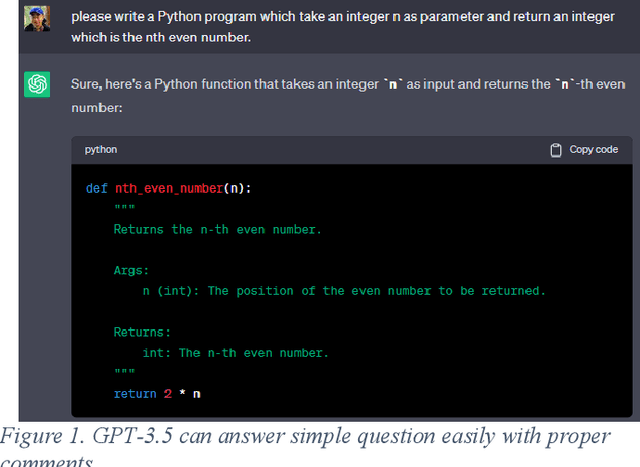

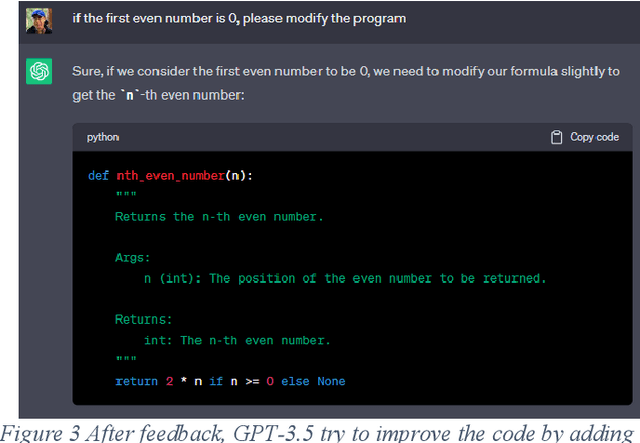
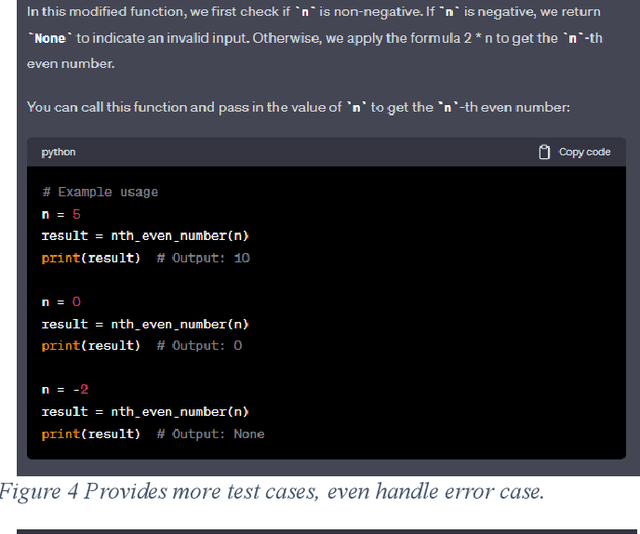
In the burgeoning field of artificial intelligence (AI), understanding the capabilities and limitations of programming-oriented models is crucial. This paper presents a novel evaluation of the programming proficiency of Generative Pretrained Transformer (GPT) models, specifically GPT-3.5 and GPT-4, against coding problems of varying difficulty levels drawn from Codewars. The experiments reveal a distinct boundary at the 3kyu level, beyond which these GPT models struggle to provide solutions. These findings led to the proposal of a measure for coding problem complexity that incorporates both problem difficulty and the time required for solution. The research emphasizes the need for validation and creative thinking capabilities in AI models to better emulate human problem-solving techniques. Future work aims to refine this proposed complexity measure, enhance AI models with these suggested capabilities, and develop an objective measure for programming problem difficulty. The results of this research offer invaluable insights for improving AI programming capabilities and advancing the frontier of AI problem-solving abilities.