 Add to Chrome
 Add to Firefox
 Add to Edge
TimeRoute: Time-Aware Modality Routing and Diffusion for Multi-Modal Recommendation
Aug 11, 2026
Multi-modal recommenders fuse collaborative signals with item modalities such as text, images, and audio, but the usefulness of each drifts over time and at different rates. For example, chocolate purchases typically guided by textual ingredient cues can shift toward visual packaging and ambient audio around Valentine's Day. This modality time-scale mismatch gives rise to two coupled challenges: (1) users require different modality proportions across temporal contexts, and (2) less relevant modalities are more likely to introduce outdated or misleading signals into the recommender. We address both challenges within a unified diffusion-based recommender, TimeRoute. A temporal-aware modal router maps each user's aggregated behavioral features to a personalized modality distribution, replacing the globally shared fusion weights used in prior work. The diffusion-based graph reconstructor is then conditioned on the same temporal profile through Feature-wise Linear Modulation (FiLM) with dual-stream long- and short-term denoising heads, suppressing outdated modality edges before they enter the propagation graph. Experiments on TikTok, Amazon-Baby, and Amazon-Sports demonstrate consistent improvements of up to 9.8\% in Recall@K, Precision@K, and NDCG@K over strong baselines across 10-seed paired tests. Code is available at https://anonymous.4open.science/r/TimeRoute.

Time Imprint: Learning Time-Aware Representations in Multi-Modal Knowledge Graphs
Jul 08, 2026Multi-Modal Knowledge Graphs (MMKGs) enrich entities with multiple modalities such as text and images, yet entities with highly similar multi-modal features remain difficult to distinguish. Temporal information of an entity can serve as an additional modality to disambiguate such entities, but existing approaches rarely treat time as a separate modality alongside text and images due to two major challenges: (1) sparse temporal semantics, which hinder alignment with richer modalities, and (2) multiple timestamps, which introduce noise or reduce robustness in representation learning. To address these challenges, we propose Time Imprint, a framework that treats time as an entity-level modality and jointly aligns temporal, textual, and visual representations via a three-view contrastive objective. Additionally, to mitigate multi-timestamp ambiguity, Time Imprint studies a compact timestamp subset selection design space and aggregates the selected timestamps into a discriminative temporal embedding with attention pooling, balancing temporal specificity and robustness. Experiments on three MMKG benchmarks demonstrate that Time Imprint achieves state-of-the-art link prediction performance, improving Hits@1 by up to 6.07\% overall and yielding up to 58\% gains on the subset of the top-1\% ambiguity samples. We further examine different fusion strategies and the sensitivity to timestamp availability and quality, clarifying when and why time-as-modality is most beneficial, while adding only modest training overhead. We release our code at https://anonymous.4open.science/r/Time-Imprint.
Are a Thousand Words Better Than a Single Picture? Beyond Images -- A Framework for Multi-Modal Knowledge Graph Dataset Enrichment
Mar 17, 2026Multi-Modal Knowledge Graphs (MMKGs) benefit from visual information, yet large-scale image collection is hard to curate and often excludes ambiguous but relevant visuals (e.g., logos, symbols, abstract scenes). We present Beyond Images, an automatic data-centric enrichment pipeline with optional human auditing. This pipeline operates in three stages: (1) large-scale retrieval of additional entity-related images, (2) conversion of all visual inputs into textual descriptions to ensure that ambiguous images contribute usable semantics rather than noise, and (3) fusion of multi-source descriptions using a large language model (LLM) to generate concise, entity-aligned summaries. These summaries replace or augment the text modality in standard MMKG models without changing their architectures or loss functions. Across three public MMKG datasets and multiple baseline models, we observe consistent gains (up to 7% Hits@1 overall). Furthermore, on a challenging subset of entities with visually ambiguous logos and symbols, converting images into text yields large improvements (201.35% MRR and 333.33% Hits@1). Additionally, we release a lightweight Text-Image Consistency Check Interface for optional targeted audits, improving description quality and dataset reliability. Our results show that scaling image coverage and converting ambiguous visuals into text is a practical path to stronger MMKG completion. Code, datasets, and supplementary materials are available at https://github.com/pengyu-zhang/Beyond-Images.
Using Large Language Models to Tackle Fundamental Challenges in Graph Learning: A Comprehensive Survey
May 24, 2025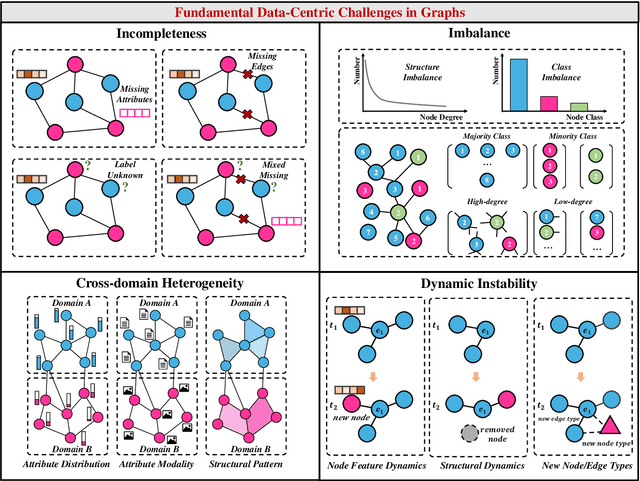
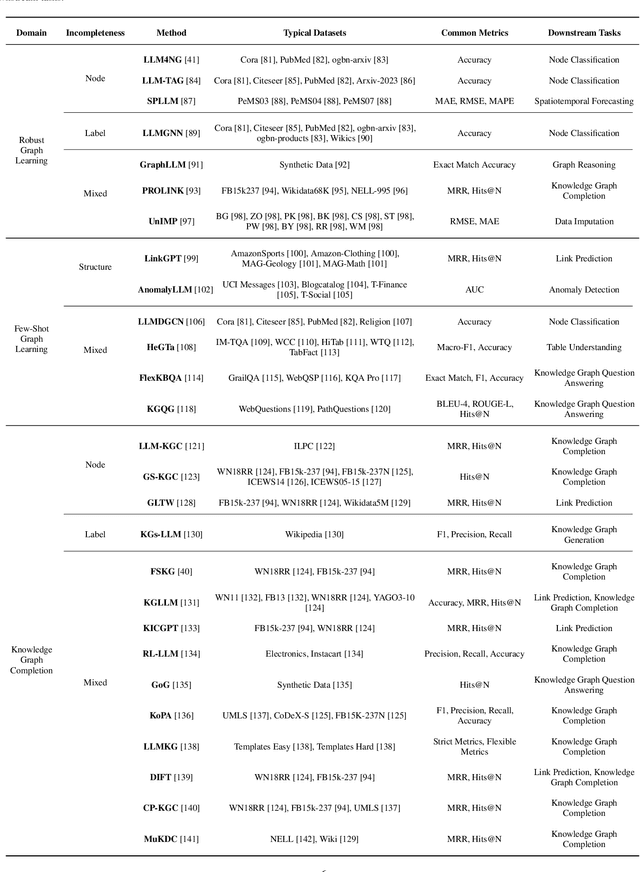
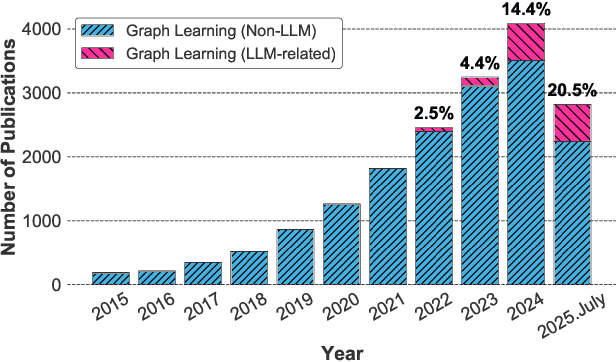
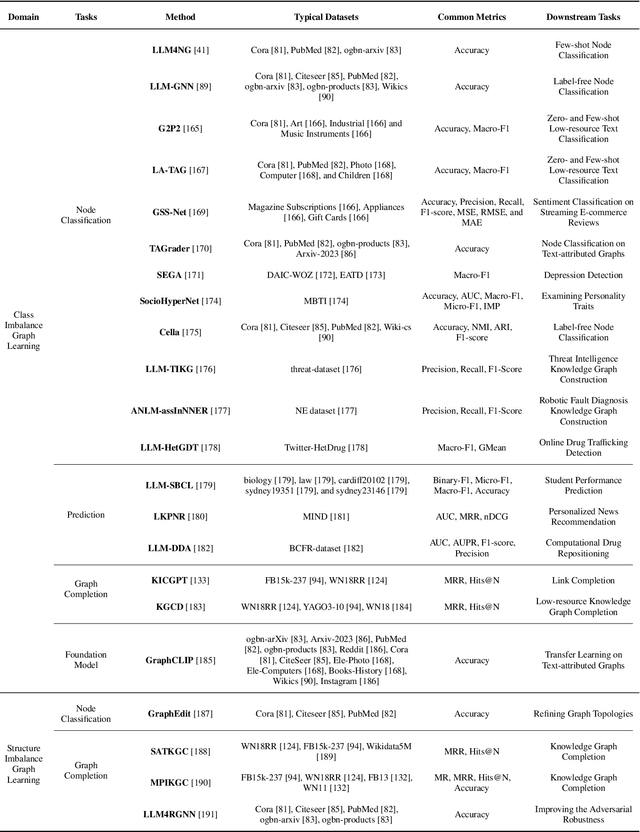
Graphs are a widely used paradigm for representing non-Euclidean data, with applications ranging from social network analysis to biomolecular prediction. Conventional graph learning approaches typically rely on fixed structural assumptions or fully observed data, limiting their effectiveness in more complex, noisy, or evolving settings. Consequently, real-world graph data often violates the assumptions of traditional graph learning methods, in particular, it leads to four fundamental challenges: (1) Incompleteness, real-world graphs have missing nodes, edges, or attributes; (2) Imbalance, the distribution of the labels of nodes or edges and their structures for real-world graphs are highly skewed; (3) Cross-domain Heterogeneity, graphs from different domains exhibit incompatible feature spaces or structural patterns; and (4) Dynamic Instability, graphs evolve over time in unpredictable ways. Recent advances in Large Language Models (LLMs) offer the potential to tackle these challenges by leveraging rich semantic reasoning and external knowledge. This survey provides a comprehensive review of how LLMs can be integrated with graph learning to address the aforementioned challenges. For each challenge, we review both traditional solutions and modern LLM-driven approaches, highlighting how LLMs contribute unique advantages. Finally, we discuss open research questions and promising future directions in this emerging interdisciplinary field. To support further exploration, we have curated a repository of recent advances on graph learning challenges: https://github.com/limengran98/Awesome-Literature-Graph-Learning-Challenges.
Influences on LLM Calibration: A Study of Response Agreement, Loss Functions, and Prompt Styles
Jan 07, 2025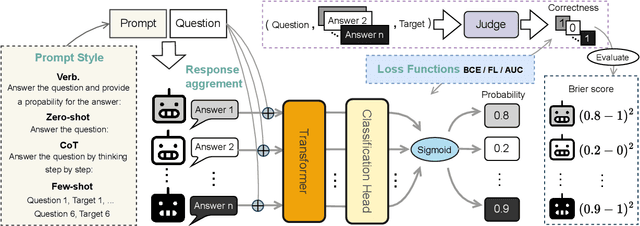
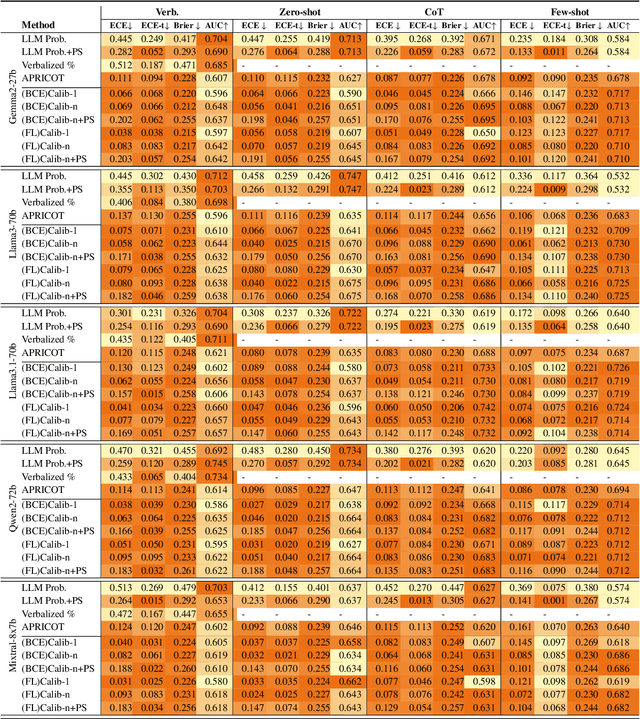
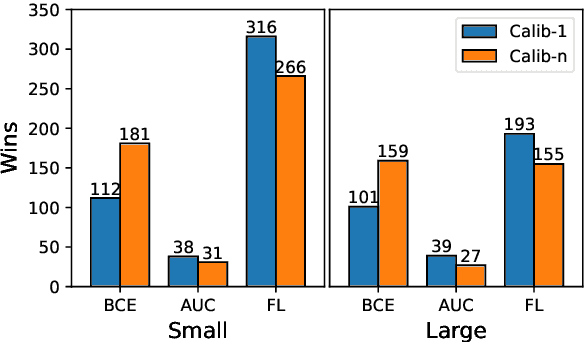
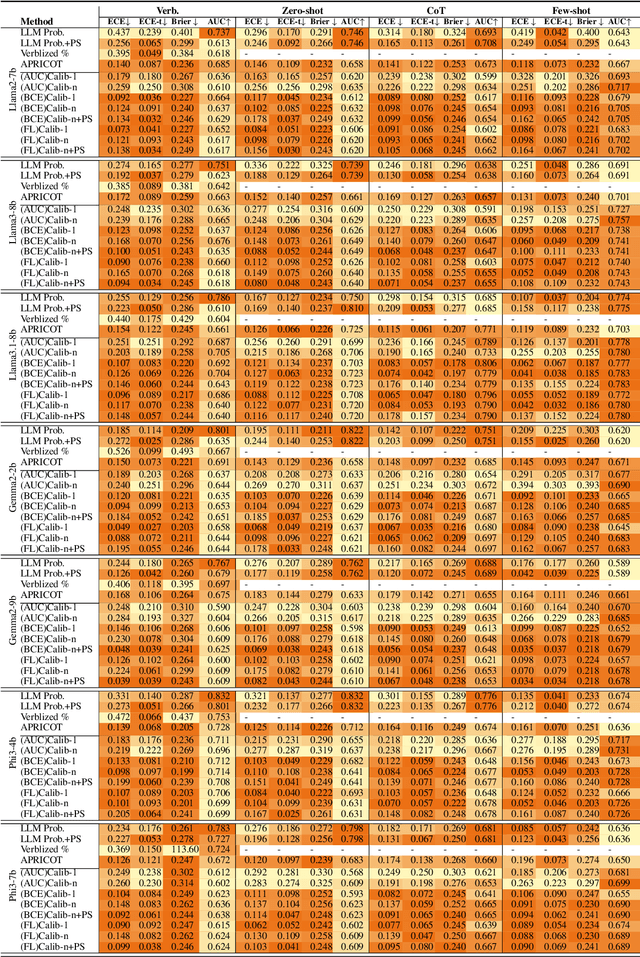
Calibration, the alignment between model confidence and prediction accuracy, is critical for the reliable deployment of large language models (LLMs). Existing works neglect to measure the generalization of their methods to other prompt styles and different sizes of LLMs. To address this, we define a controlled experimental setting covering 12 LLMs and four prompt styles. We additionally investigate if incorporating the response agreement of multiple LLMs and an appropriate loss function can improve calibration performance. Concretely, we build Calib-n, a novel framework that trains an auxiliary model for confidence estimation that aggregates responses from multiple LLMs to capture inter-model agreement. To optimize calibration, we integrate focal and AUC surrogate losses alongside binary cross-entropy. Experiments across four datasets demonstrate that both response agreement and focal loss improve calibration from baselines. We find that few-shot prompts are the most effective for auxiliary model-based methods, and auxiliary models demonstrate robust calibration performance across accuracy variations, outperforming LLMs' internal probabilities and verbalized confidences. These insights deepen the understanding of influence factors in LLM calibration, supporting their reliable deployment in diverse applications.
CYCLE: Cross-Year Contrastive Learning in Entity-Linking
Oct 11, 2024
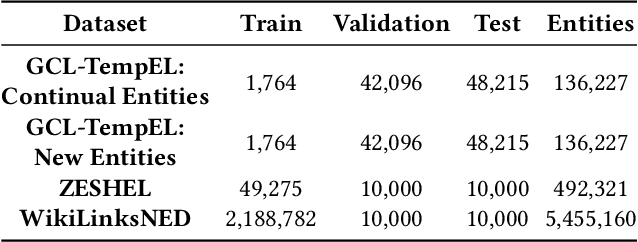
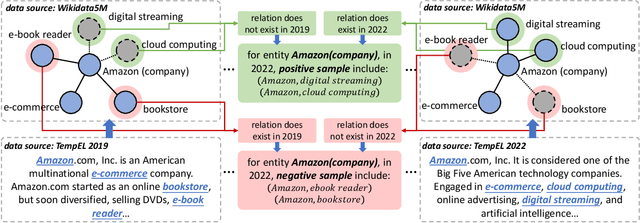
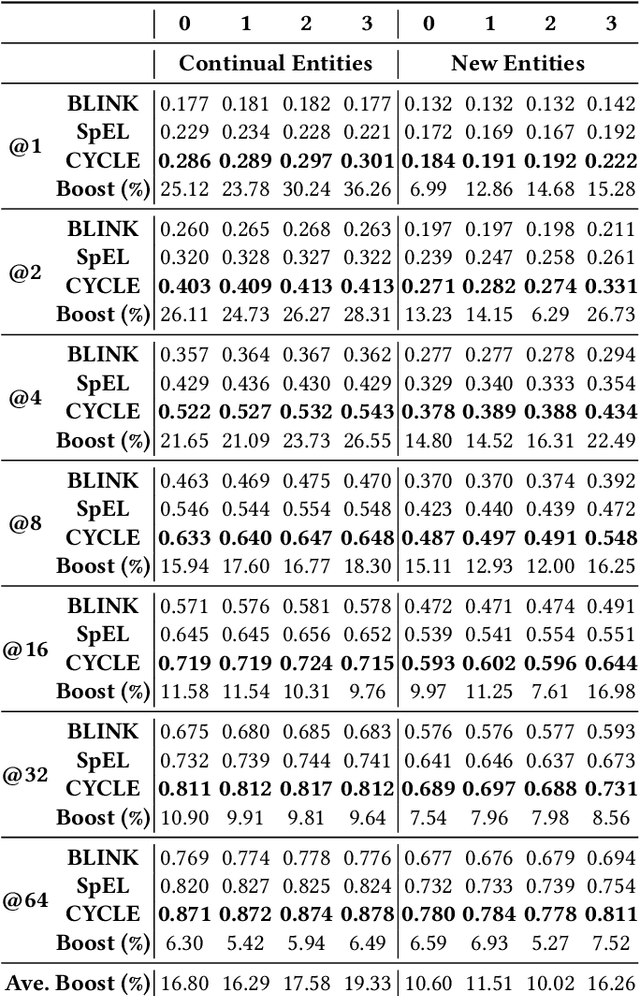
Knowledge graphs constantly evolve with new entities emerging, existing definitions being revised, and entity relationships changing. These changes lead to temporal degradation in entity linking models, characterized as a decline in model performance over time. To address this issue, we propose leveraging graph relationships to aggregate information from neighboring entities across different time periods. This approach enhances the ability to distinguish similar entities over time, thereby minimizing the impact of temporal degradation. We introduce \textbf{CYCLE}: \textbf{C}ross-\textbf{Y}ear \textbf{C}ontrastive \textbf{L}earning for \textbf{E}ntity-Linking. This model employs a novel graph contrastive learning method to tackle temporal performance degradation in entity linking tasks. Our contrastive learning method treats newly added graph relationships as \textit{positive} samples and newly removed ones as \textit{negative} samples. This approach helps our model effectively prevent temporal degradation, achieving a 13.90\% performance improvement over the state-of-the-art from 2023 when the time gap is one year, and a 17.79\% improvement as the gap expands to three years. Further analysis shows that CYCLE is particularly robust for low-degree entities, which are less resistant to temporal degradation due to their sparse connectivity, making them particularly suitable for our method. The code and data are made available at \url{https://github.com/pengyu-zhang/CYCLE-Cross-Year-Contrastive-Learning-in-Entity-Linking}.
Analysing zero-shot temporal relation extraction on clinical notes using temporal consistency
Jun 17, 2024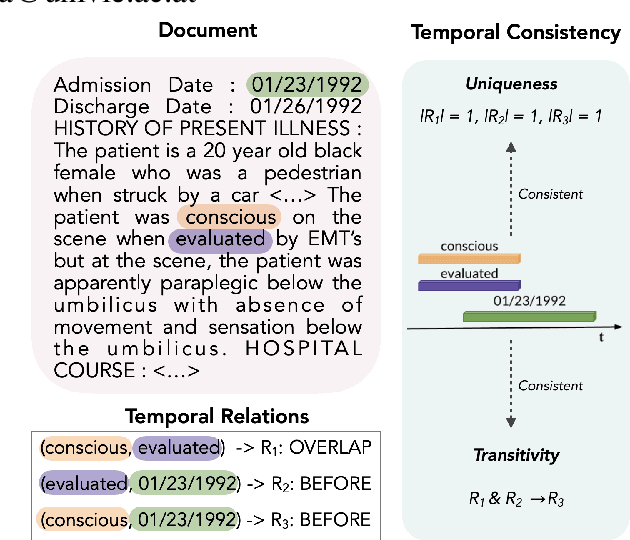
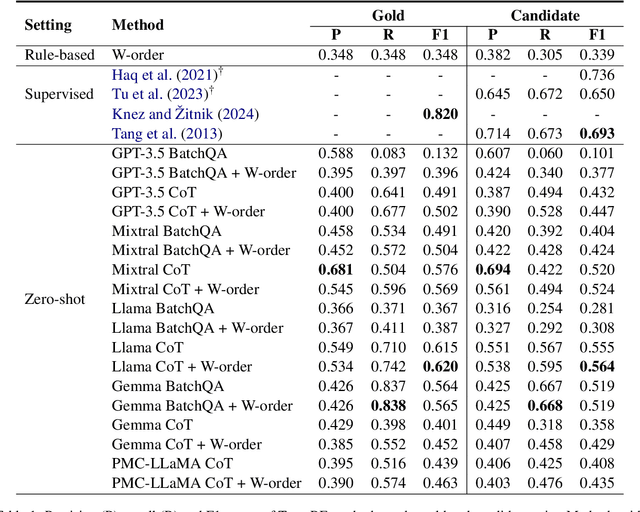
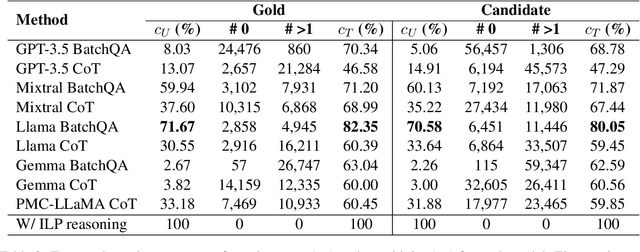
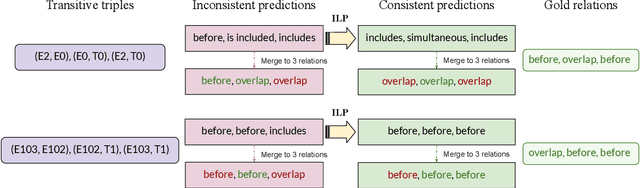
This paper presents the first study for temporal relation extraction in a zero-shot setting focusing on biomedical text. We employ two types of prompts and five LLMs (GPT-3.5, Mixtral, Llama 2, Gemma, and PMC-LLaMA) to obtain responses about the temporal relations between two events. Our experiments demonstrate that LLMs struggle in the zero-shot setting performing worse than fine-tuned specialized models in terms of F1 score, showing that this is a challenging task for LLMs. We further contribute a novel comprehensive temporal analysis by calculating consistency scores for each LLM. Our findings reveal that LLMs face challenges in providing responses consistent to the temporal properties of uniqueness and transitivity. Moreover, we study the relation between the temporal consistency of an LLM and its accuracy and whether the latter can be improved by solving temporal inconsistencies. Our analysis shows that even when temporal consistency is achieved, the predictions can remain inaccurate.
Wiki Entity Summarization Benchmark
Jun 12, 2024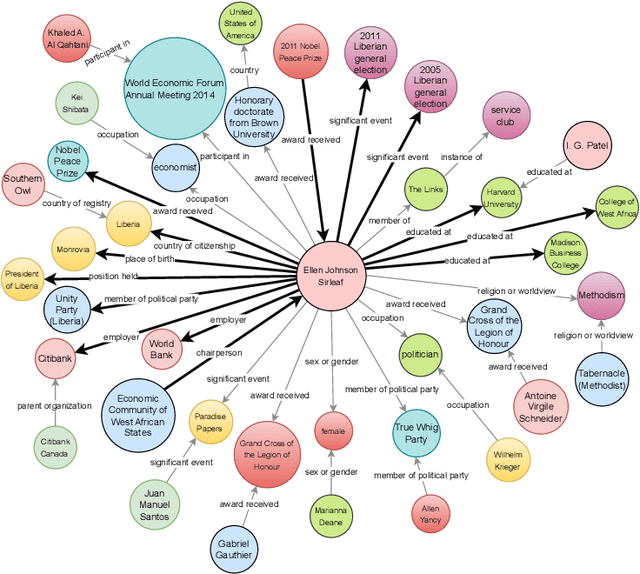
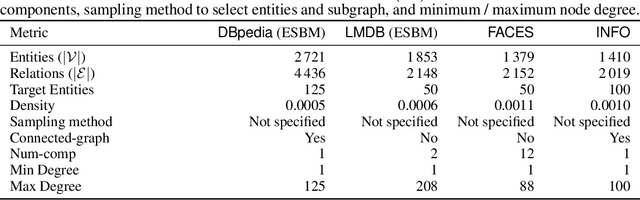
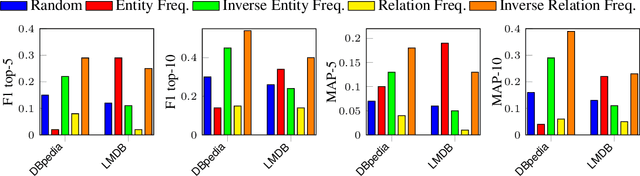
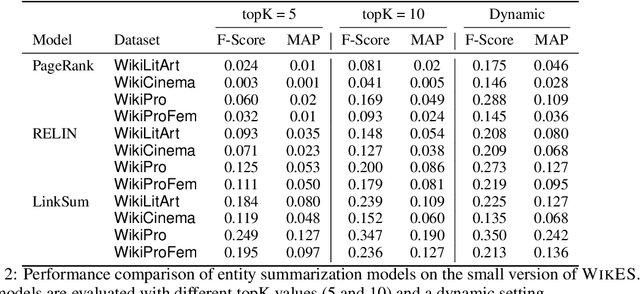
Entity summarization aims to compute concise summaries for entities in knowledge graphs. Existing datasets and benchmarks are often limited to a few hundred entities and discard graph structure in source knowledge graphs. This limitation is particularly pronounced when it comes to ground-truth summaries, where there exist only a few labeled summaries for evaluation and training. We propose WikES, a comprehensive benchmark comprising of entities, their summaries, and their connections. Additionally, WikES features a dataset generator to test entity summarization algorithms in different areas of the knowledge graph. Importantly, our approach combines graph algorithms and NLP models as well as different data sources such that WikES does not require human annotation, rendering the approach cost-effective and generalizable to multiple domains. Finally, WikES is scalable and capable of capturing the complexities of knowledge graphs in terms of topology and semantics. WikES features existing datasets for comparison. Empirical studies of entity summarization methods confirm the usefulness of our benchmark. Data, code, and models are available at: https://github.com/msorkhpar/wiki-entity-summarization.
Personality Style Recognition via Machine Learning: Identifying Anaclitic and Introjective Personality Styles from Patients' Speech
Nov 07, 2023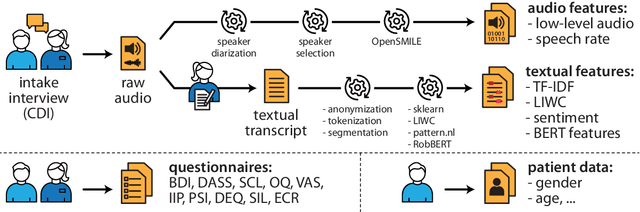
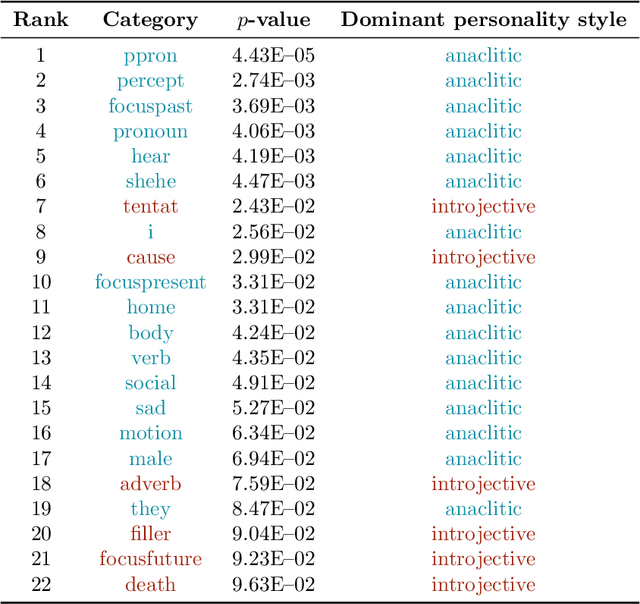
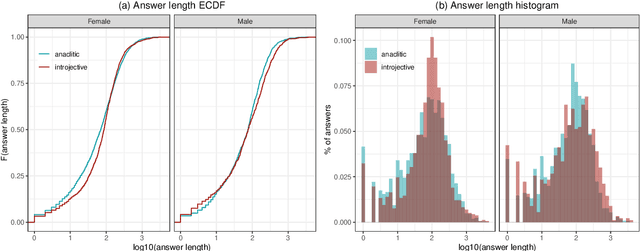
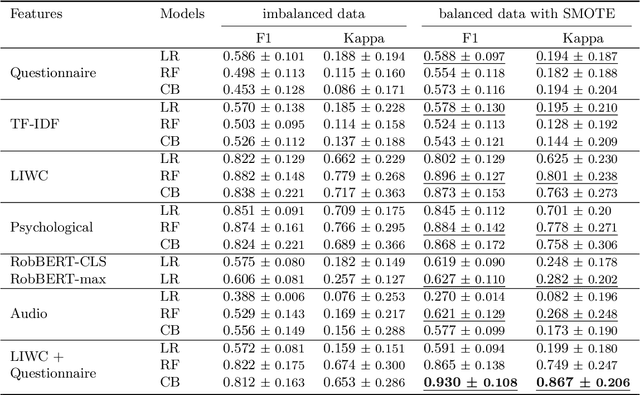
In disentangling the heterogeneity observed in psychopathology, personality of the patients is considered crucial. While it has been demonstrated that personality traits are reflected in the language used by a patient, we hypothesize that this enables automatic inference of the personality type directly from speech utterances, potentially more accurately than through a traditional questionnaire-based approach explicitly designed for personality classification. To validate this hypothesis, we adopt natural language processing (NLP) and standard machine learning tools for classification. We test this on a dataset of recorded clinical diagnostic interviews (CDI) on a sample of 79 patients diagnosed with major depressive disorder (MDD) -- a condition for which differentiated treatment based on personality styles has been advocated -- and classified into anaclitic and introjective personality styles. We start by analyzing the interviews to see which linguistic features are associated with each style, in order to gain a better understanding of the styles. Then, we develop automatic classifiers based on (a) standardized questionnaire responses; (b) basic text features, i.e., TF-IDF scores of words and word sequences; (c) more advanced text features, using LIWC (linguistic inquiry and word count) and context-aware features using BERT (bidirectional encoder representations from transformers); (d) audio features. We find that automated classification with language-derived features (i.e., based on LIWC) significantly outperforms questionnaire-based classification models. Furthermore, the best performance is achieved by combining LIWC with the questionnaire features. This suggests that more work should be put into developing linguistically based automated techniques for characterizing personality, however questionnaires still to some extent complement such methods.
BioDEX: Large-Scale Biomedical Adverse Drug Event Extraction for Real-World Pharmacovigilance
May 22, 2023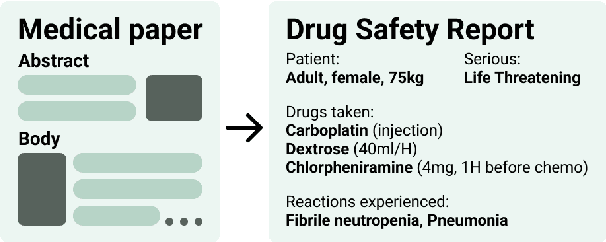


Timely and accurate extraction of Adverse Drug Events (ADE) from biomedical literature is paramount for public safety, but involves slow and costly manual labor. We set out to improve drug safety monitoring (pharmacovigilance, PV) through the use of Natural Language Processing (NLP). We introduce BioDEX, a large-scale resource for Biomedical adverse Drug Event Extraction, rooted in the historical output of drug safety reporting in the U.S. BioDEX consists of 65k abstracts and 19k full-text biomedical papers with 256k associated document-level safety reports created by medical experts. The core features of these reports include the reported weight, age, and biological sex of a patient, a set of drugs taken by the patient, the drug dosages, the reactions experienced, and whether the reaction was life threatening. In this work, we consider the task of predicting the core information of the report given its originating paper. We estimate human performance to be 72.0% F1, whereas our best model achieves 62.3% F1, indicating significant headroom on this task. We also begin to explore ways in which these models could help professional PV reviewers. Our code and data are available: https://github.com/KarelDO/BioDEX.