 Add to Chrome
 Add to Firefox
 Add to Edge
UPAM: Unified Prompt Attack in Text-to-Image Generation Models Against Both Textual Filters and Visual Checkers
May 18, 2024
Text-to-Image (T2I) models have raised security concerns due to their potential to generate inappropriate or harmful images. In this paper, we propose UPAM, a novel framework that investigates the robustness of T2I models from the attack perspective. Unlike most existing attack methods that focus on deceiving textual defenses, UPAM aims to deceive both textual and visual defenses in T2I models. UPAM enables gradient-based optimization, offering greater effectiveness and efficiency than previous methods. Given that T2I models might not return results due to defense mechanisms, we introduce a Sphere-Probing Learning (SPL) scheme to support gradient optimization even when no results are returned. Additionally, we devise a Semantic-Enhancing Learning (SEL) scheme to finetune UPAM for generating target-aligned images. Our framework also ensures attack stealthiness. Extensive experiments demonstrate UPAM's effectiveness and efficiency.

Nyonic Technical Report
Apr 24, 2024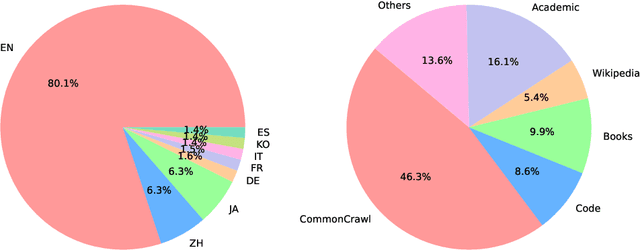
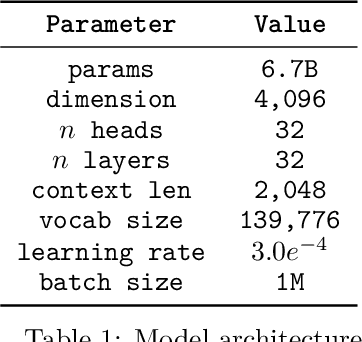
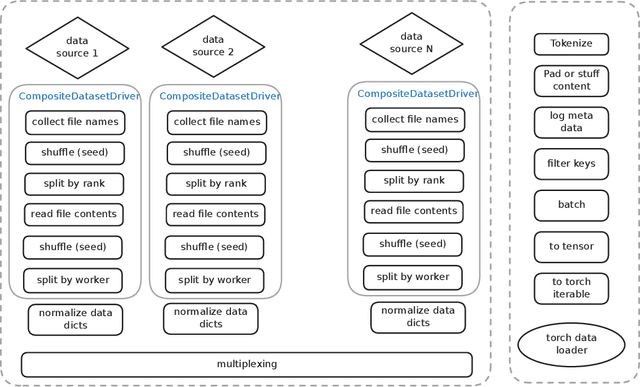
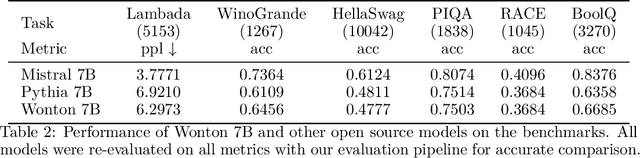
This report details the development and key achievements of our latest language model designed for custom large language models. The advancements introduced include a novel Online Data Scheduler that supports flexible training data adjustments and curriculum learning. The model's architecture is fortified with state-of-the-art techniques such as Rotary Positional Embeddings, QK-LayerNorm, and a specially crafted multilingual tokenizer to enhance stability and performance. Moreover, our robust training framework incorporates advanced monitoring and rapid recovery features to ensure optimal efficiency. Our Wonton 7B model has demonstrated competitive performance on a range of multilingual and English benchmarks. Future developments will prioritize narrowing the performance gap with more extensively trained models, thereby enhancing the model's real-world efficacy and adaptability.GitHub: \url{https://github.com/nyonicai/nyonic-public}
Look, Listen, and Answer: Overcoming Biases for Audio-Visual Question Answering
Apr 18, 2024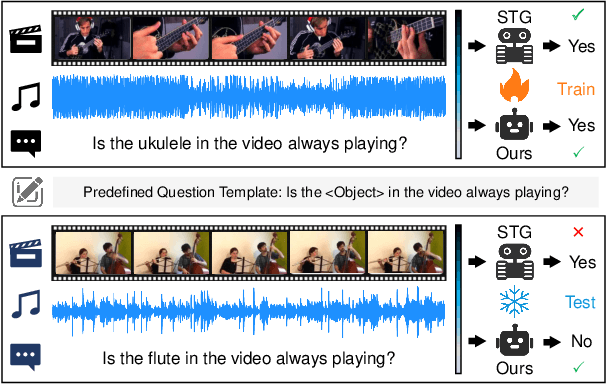
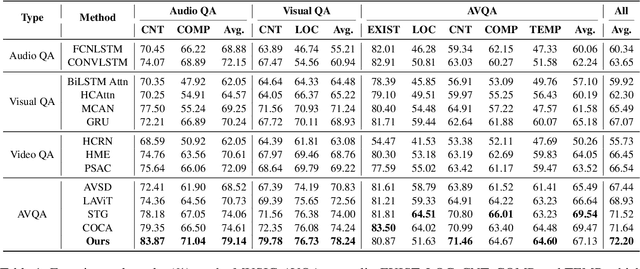
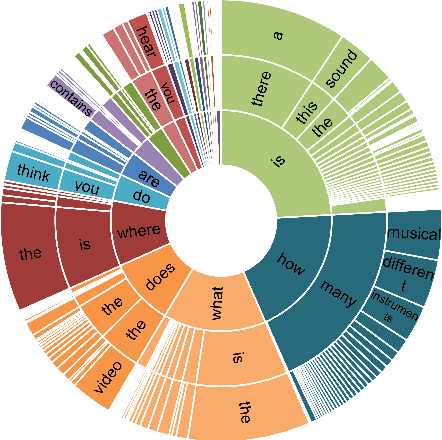
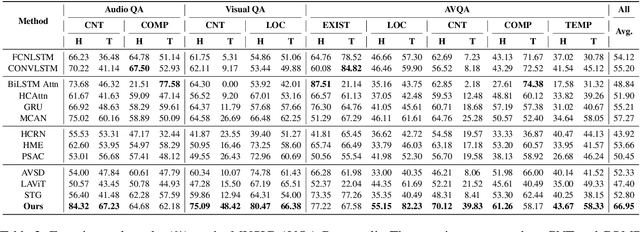
Audio-Visual Question Answering (AVQA) is a complex multi-modal reasoning task, demanding intelligent systems to accurately respond to natural language queries based on audio-video input pairs. Nevertheless, prevalent AVQA approaches are prone to overlearning dataset biases, resulting in poor robustness. Furthermore, current datasets may not provide a precise diagnostic for these methods. To tackle these challenges, firstly, we propose a novel dataset, \textit{MUSIC-AVQA-R}, crafted in two steps: rephrasing questions within the test split of a public dataset (\textit{MUSIC-AVQA}) and subsequently introducing distribution shifts to split questions. The former leads to a large, diverse test space, while the latter results in a comprehensive robustness evaluation on rare, frequent, and overall questions. Secondly, we propose a robust architecture that utilizes a multifaceted cycle collaborative debiasing strategy to overcome bias learning. Experimental results show that this architecture achieves state-of-the-art performance on both datasets, especially obtaining a significant improvement of 9.68\% on the proposed dataset. Extensive ablation experiments are conducted on these two datasets to validate the effectiveness of the debiasing strategy. Additionally, we highlight the limited robustness of existing multi-modal QA methods through the evaluation on our dataset.
An Interpretable Power System Transient Stability Assessment Method with Expert Guiding Neural-Regression-Tree
Apr 03, 2024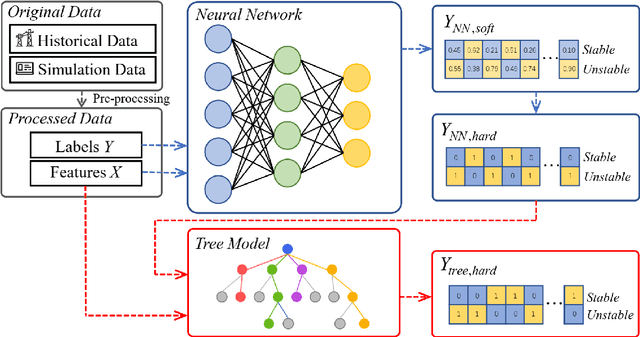

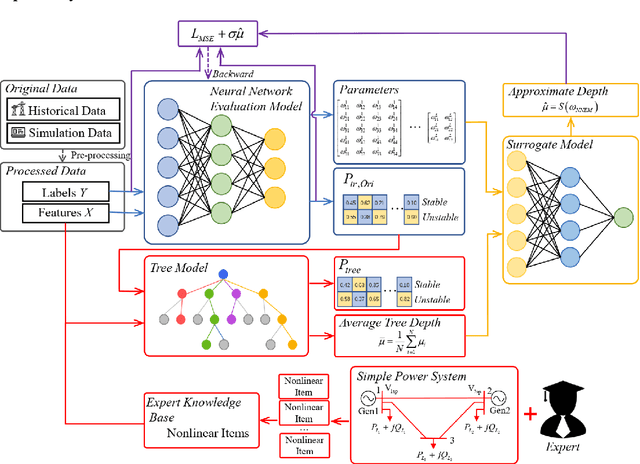

Deep learning based transient stability assessment (TSA) has achieved great success, yet the lack of interpretability hinders its industrial application. Although a great number of studies have tried to explore the interpretability of network solutions, many problems still remain unsolved: (1) the difference between the widely accepted power system knowledge and the generated interpretive rules is large, (2) the probability characteristics of the neural network have not been fully considered during generating the interpretive rules, (3) the cost of the trade-off between accuracy and interpretability is too heavy to take. To address these issues, an interpretable power system Transient Stability Assessment method with Expert guiding Neural-Regression-Tree (TSA-ENRT) is proposed. TSA-ENRT utilizes an expert guiding nonlinear regression tree to approximate the neural network prediction and the neural network can be explained by the interpretive rules generated by the tree model. The nonlinearity of the expert guiding nonlinear regression tree is endowed with the extracted knowledge from a simple two-machine three-bus power system, which forms an expert knowledge base and thus the generated interpretive rules are more consistent with human cognition. Besides, the expert guiding tree model can build a bridge between the interpretive rules and the probability prediction of neural network in a regression way. By regularizing the neural network with the average decision length of ENRT, the association of the neural network and tree model is constructed in the model training level which provides a better trade-off between accuracy and interpretability. Extensive experiments indicate the interpretive rules generated by the proposed TSA-ENRT are highly consistent with the neural network prediction and more agreed with human expert cognition.
LLMs are Good Sign Language Translators
Apr 01, 2024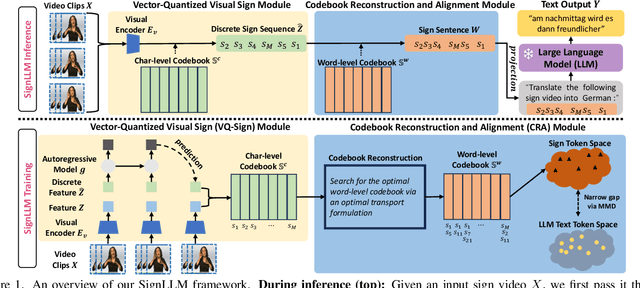
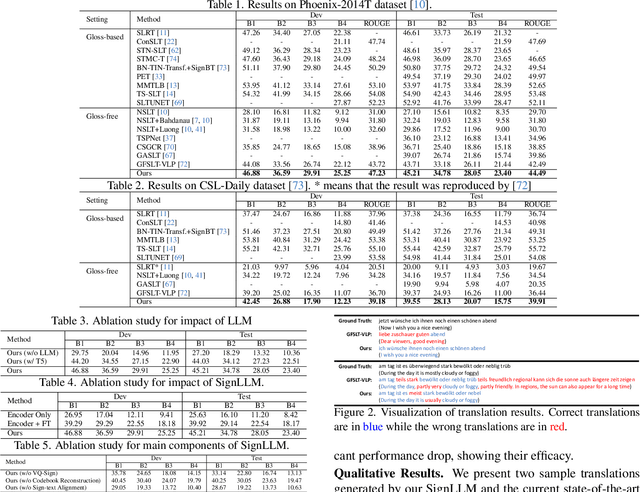
Sign Language Translation (SLT) is a challenging task that aims to translate sign videos into spoken language. Inspired by the strong translation capabilities of large language models (LLMs) that are trained on extensive multilingual text corpora, we aim to harness off-the-shelf LLMs to handle SLT. In this paper, we regularize the sign videos to embody linguistic characteristics of spoken language, and propose a novel SignLLM framework to transform sign videos into a language-like representation for improved readability by off-the-shelf LLMs. SignLLM comprises two key modules: (1) The Vector-Quantized Visual Sign module converts sign videos into a sequence of discrete character-level sign tokens, and (2) the Codebook Reconstruction and Alignment module converts these character-level tokens into word-level sign representations using an optimal transport formulation. A sign-text alignment loss further bridges the gap between sign and text tokens, enhancing semantic compatibility. We achieve state-of-the-art gloss-free results on two widely-used SLT benchmarks.
Action Detection via an Image Diffusion Process
Apr 01, 2024Action detection aims to localize the starting and ending points of action instances in untrimmed videos, and predict the classes of those instances. In this paper, we make the observation that the outputs of the action detection task can be formulated as images. Thus, from a novel perspective, we tackle action detection via a three-image generation process to generate starting point, ending point and action-class predictions as images via our proposed Action Detection Image Diffusion (ADI-Diff) framework. Furthermore, since our images differ from natural images and exhibit special properties, we further explore a Discrete Action-Detection Diffusion Process and a Row-Column Transformer design to better handle their processing. Our ADI-Diff framework achieves state-of-the-art results on two widely-used datasets.
LLMs are Good Action Recognizers
Mar 31, 2024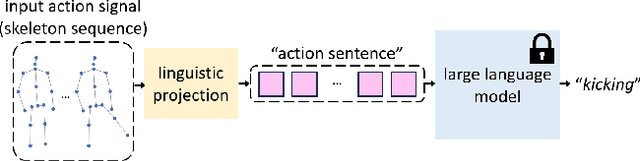
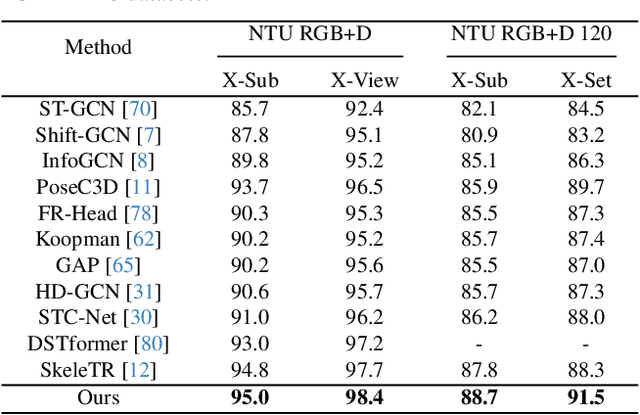
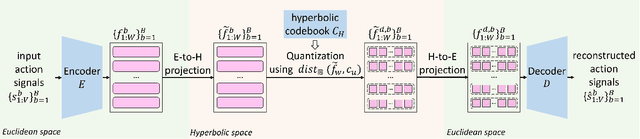
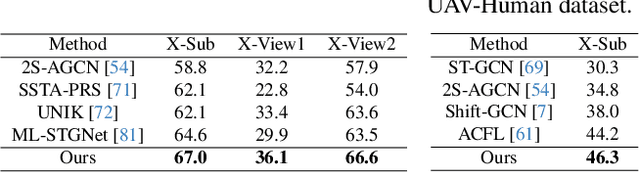
Skeleton-based action recognition has attracted lots of research attention. Recently, to build an accurate skeleton-based action recognizer, a variety of works have been proposed. Among them, some works use large model architectures as backbones of their recognizers to boost the skeleton data representation capability, while some other works pre-train their recognizers on external data to enrich the knowledge. In this work, we observe that large language models which have been extensively used in various natural language processing tasks generally hold both large model architectures and rich implicit knowledge. Motivated by this, we propose a novel LLM-AR framework, in which we investigate treating the Large Language Model as an Action Recognizer. In our framework, we propose a linguistic projection process to project each input action signal (i.e., each skeleton sequence) into its ``sentence format'' (i.e., an ``action sentence''). Moreover, we also incorporate our framework with several designs to further facilitate this linguistic projection process. Extensive experiments demonstrate the efficacy of our proposed framework.
Manifold-Guided Lyapunov Control with Diffusion Models
Mar 26, 2024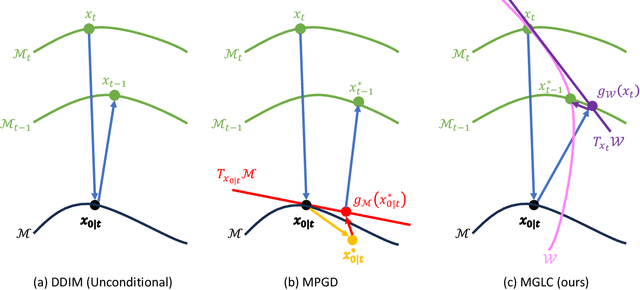
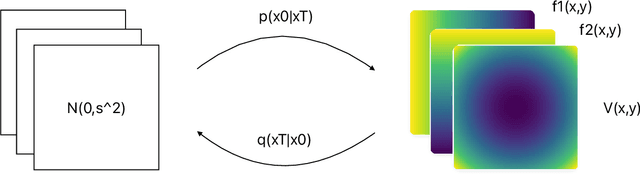
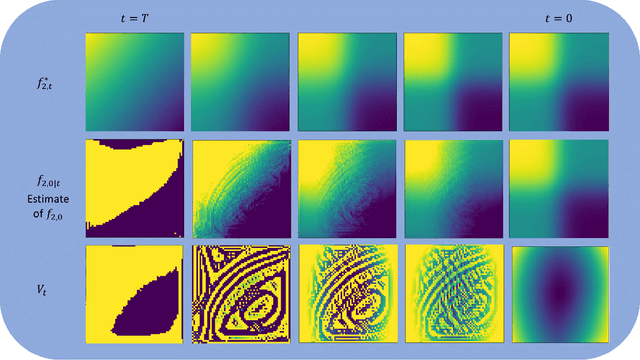
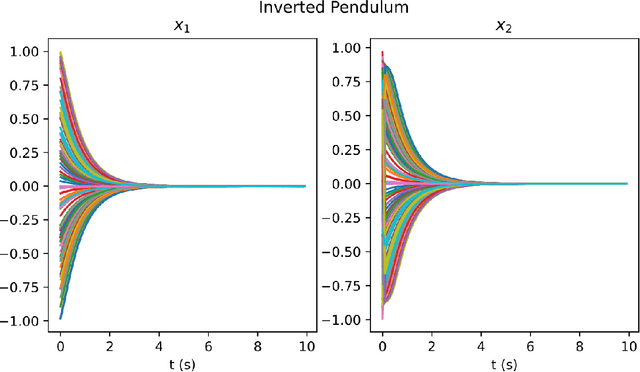
This paper presents a novel approach to generating stabilizing controllers for a large class of dynamical systems using diffusion models. The core objective is to develop stabilizing control functions by identifying the closest asymptotically stable vector field relative to a predetermined manifold and adjusting the control function based on this finding. To achieve this, we employ a diffusion model trained on pairs consisting of asymptotically stable vector fields and their corresponding Lyapunov functions. Our numerical results demonstrate that this pre-trained model can achieve stabilization over previously unseen systems efficiently and rapidly, showcasing the potential of our approach in fast zero-shot control and generalizability.
Learning Piecewise Residuals of Control Barrier Functions for Safety of Switching Systems using Multi-Output Gaussian Processes
Mar 26, 2024Control barrier functions (CBFs) have recently been introduced as a systematic tool to ensure safety by establishing set invariance. When combined with a control Lyapunov function (CLF), they form a safety-critical control mechanism. However, the effectiveness of CBFs and CLFs is closely tied to the system model. In practice, model uncertainty can jeopardize safety and stability guarantees and may lead to undesirable performance. In this paper, we develop a safe learning-based control strategy for switching systems in the face of uncertainty. We focus on the case that a nominal model is available for a true underlying switching system. This uncertainty results in piecewise residuals for each switching surface, impacting the CLF and CBF constraints. We introduce a batch multi-output Gaussian process (MOGP) framework to approximate these piecewise residuals, thereby mitigating the adverse effects of uncertainty. A particular structure of the covariance function enables us to convert the MOGP-based chance constraints CLF and CBF into second-order cone constraints, which leads to a convex optimization. We analyze the feasibility of the resulting optimization and provide the necessary and sufficient conditions for feasibility. The effectiveness of the proposed strategy is validated through a simulation of a switching adaptive cruise control system.
GPT-Connect: Interaction between Text-Driven Human Motion Generator and 3D Scenes in a Training-free Manner
Mar 22, 2024
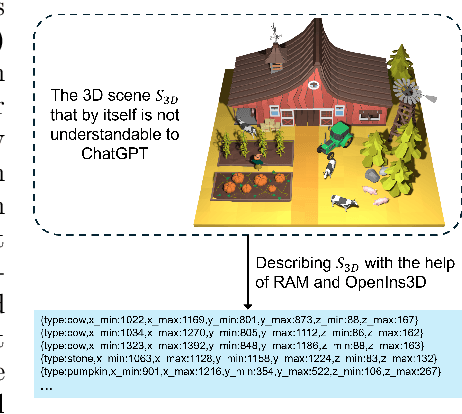
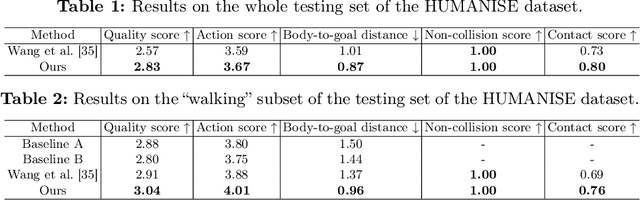
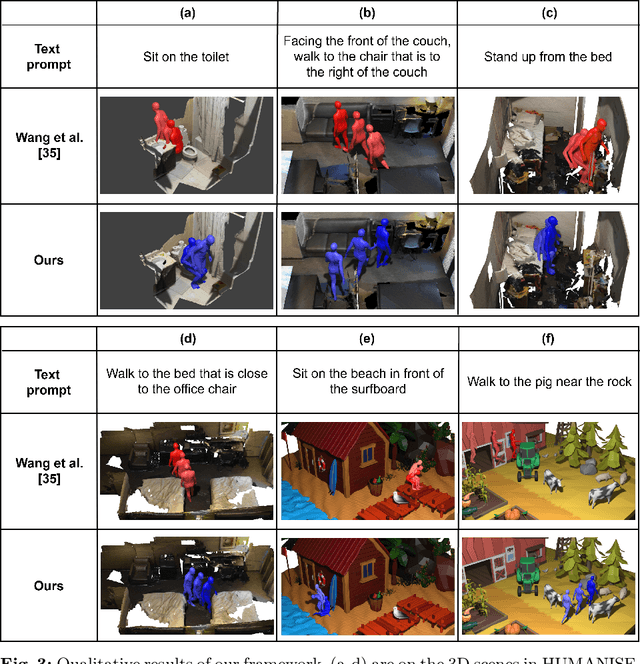
Recently, while text-driven human motion generation has received massive research attention, most existing text-driven motion generators are generally only designed to generate motion sequences in a blank background. While this is the case, in practice, human beings naturally perform their motions in 3D scenes, rather than in a blank background. Considering this, we here aim to perform scene-aware text-drive motion generation instead. Yet, intuitively training a separate scene-aware motion generator in a supervised way can require a large amount of motion samples to be troublesomely collected and annotated in a large scale of different 3D scenes. To handle this task rather in a relatively convenient manner, in this paper, we propose a novel GPT-connect framework. In GPT-connect, we enable scene-aware motion sequences to be generated directly utilizing the existing blank-background human motion generator, via leveraging ChatGPT to connect the existing motion generator with the 3D scene in a totally training-free manner. Extensive experiments demonstrate the efficacy and generalizability of our proposed framework.