 Add to Chrome
 Add to Firefox
 Add to Edge
A Technical Typology of AI Systems in Public Administration
Jun 30, 2026
Research on artificial intelligence (AI) in the public sector often treats "AI" as a single category, neglecting technical distinctions between different AI systems. But these distinctions affect how different systems impact core public values like accountability, procedural justice, and non-discrimination. This paper argues that public administration research would benefit from more technical precision on "AI" and makes three contributions to this end. First, we introduce a typology of five categories of AI systems: hand-coded, glass-box, black-box, general-purpose, and agentic systems. We calibrate the typology to public administration by grouping system types by their distinct implications for public values. Second, we evaluate technical precision in recent public administration research about AI by coding 91 highly-cited papers (2019-2025) using our typology. We find widespread imprecision: most papers (55\%) leave the studied system underspecified, 31\% motivate their work with a different system than they study, and 41\% make more general conclusions than the studied system supports. Finally, we give practical recommendations for future research. We highlight common pitfalls to avoid, and suggest that researchers should, at a minimum, provide enough technical detail to locate the studied system in our typology. To this end, we provide a practical guide -- a short set of diagnostic questions answerable from public information and without specialist technical knowledge.

The Heterogeneous Safety Impacts of Benign Multilingual Fine-Tuning
Jun 27, 2026Fine-tuning a large language model is a ubiquitous method for enhancing its capability on a specific downstream task. However, prior work has shown that this increase in capability comes with a cost: it can increase a model's tendency to respond to unsafe adversarial prompts, even when fine-tuning with non-adversarial data. We present the first comprehensive empirical study of this phenomenon in multilingual settings by fine-tuning Llama-3.2, Qwen3, and Gemma-3 models using benign data translated across nine languages. We find that safety outcomes are highly sensitive to both the choice of fine-tuning language and the evaluation language, with adversarial compliance rates increasing four-fold in some settings. Multilingual safety drift is decoupled from general capability metrics, and occurs heterogeneously across languages and models. Fine-tuning in non-English languages often induces smaller internal representational drifts than English, but these shifts lead models to default to either exaggerated compliance or refusal. As such, assessing fine-tuning impacts solely in English provides inadequate assurance for deployment. To facilitate further research into these cross-lingual safety blind spots, we release the Multilingual-Benign-Tune dataset and the SORRY-Bench-Multilingual evaluation suite.
* 9 pages
Grounding Text Embeddings in Stakeholder Associations
May 26, 2026Text embeddings are widely used to analyse large corpora of complex texts. However, it is unclear whether the embeddings capture the same semantic distances as the human experts using them. Ensuring alignment between embedding representations and human intentions is essential for valid analyses. We present the Stakeholder Grounding Exercise, a method for making expert associations explicit and grounding embedding model results in human understanding. In our primary case study on Danish policy issues, we find that neural text embeddings are substantially less reliable than human experts (19-26 pp gap), and that this misalignment propagates to downstream clustering performance (Spearman $ρ=0.9$ between exercise ranking and cluster quality). A secondary study on US Federal AI use cases replicates the gap (16pp) in English, using a digital protocol and a different community of experts -- demonstrating that the gap is not an artefact of a single instrument or domain. The Stakeholder Grounding Exercise offers a practical method for assessing whether embedding models capture the semantic distinctions that matter most to domain experts.
Agent Benchmarks Fail Public Sector Requirements
Jan 28, 2026Deploying Large Language Model-based agents (LLM agents) in the public sector requires assuring that they meet the stringent legal, procedural, and structural requirements of public-sector institutions. Practitioners and researchers often turn to benchmarks for such assessments. However, it remains unclear what criteria benchmarks must meet to ensure they adequately reflect public-sector requirements, or how many existing benchmarks do so. In this paper, we first define such criteria based on a first-principles survey of public administration literature: benchmarks must be \emph{process-based}, \emph{realistic}, \emph{public-sector-specific} and report \emph{metrics} that reflect the unique requirements of the public sector. We analyse more than 1,300 benchmark papers for these criteria using an expert-validated LLM-assisted pipeline. Our results show that no single benchmark meets all of the criteria. Our findings provide a call to action for both researchers to develop public sector-relevant benchmarks and for public-sector officials to apply these criteria when evaluating their own agentic use cases.
OxEnsemble: Fair Ensembles for Low-Data Classification
Dec 10, 2025We address the problem of fair classification in settings where data is scarce and unbalanced across demographic groups. Such low-data regimes are common in domains like medical imaging, where false negatives can have fatal consequences. We propose a novel approach \emph{OxEnsemble} for efficiently training ensembles and enforcing fairness in these low-data regimes. Unlike other approaches, we aggregate predictions across ensemble members, each trained to satisfy fairness constraints. By construction, \emph{OxEnsemble} is both data-efficient, carefully reusing held-out data to enforce fairness reliably, and compute-efficient, requiring little more compute than used to fine-tune or evaluate an existing model. We validate this approach with new theoretical guarantees. Experimentally, our approach yields more consistent outcomes and stronger fairness-accuracy trade-offs than existing methods across multiple challenging medical imaging classification datasets.
Oversight Structures for Agentic AI in Public-Sector Organizations
Jun 05, 2025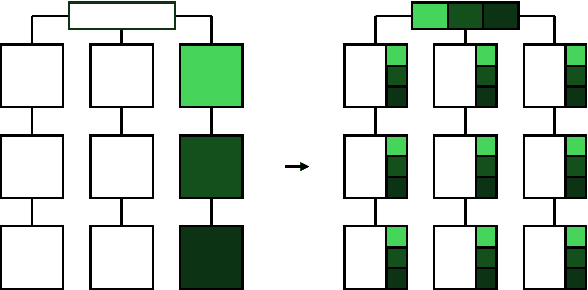
This paper finds that the introduction of agentic AI systems intensifies existing challenges to traditional public sector oversight mechanisms -- which rely on siloed compliance units and episodic approvals rather than continuous, integrated supervision. We identify five governance dimensions essential for responsible agent deployment: cross-departmental implementation, comprehensive evaluation, enhanced security protocols, operational visibility, and systematic auditing. We evaluate the capacity of existing oversight structures to meet these challenges, via a mixed-methods approach consisting of a literature review and interviews with civil servants in AI-related roles. We find that agent oversight poses intensified versions of three existing governance challenges: continuous oversight, deeper integration of governance and operational capabilities, and interdepartmental coordination. We propose approaches that both adapt institutional structures and design agent oversight compatible with public sector constraints.
Multilingual != Multicultural: Evaluating Gaps Between Multilingual Capabilities and Cultural Alignment in LLMs
Feb 23, 2025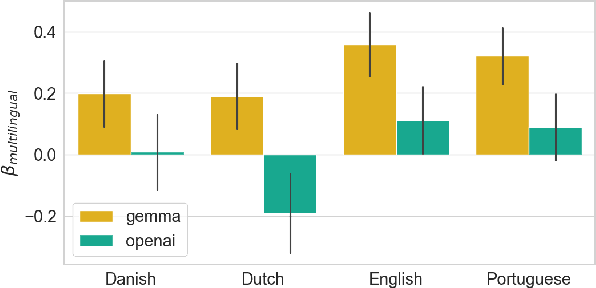
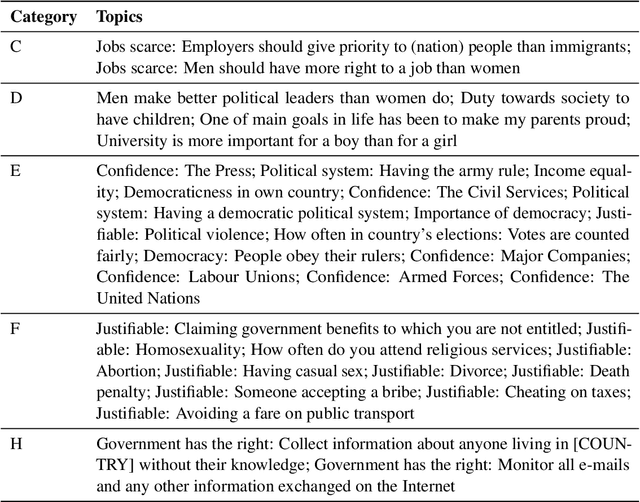
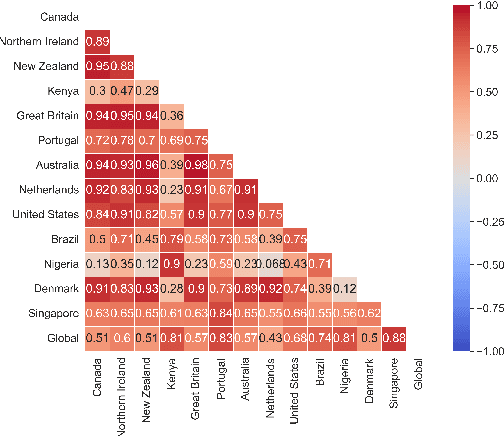
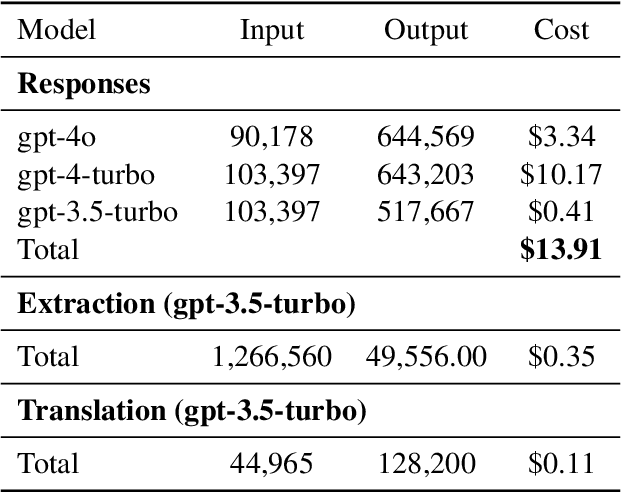
Large Language Models (LLMs) are becoming increasingly capable across global languages. However, the ability to communicate across languages does not necessarily translate to appropriate cultural representations. A key concern is US-centric bias, where LLMs reflect US rather than local cultural values. We propose a novel methodology that compares LLM-generated response distributions against population-level opinion data from the World Value Survey across four languages (Danish, Dutch, English, and Portuguese). Using a rigorous linear mixed-effects regression framework, we compare two families of models: Google's Gemma models (2B--27B parameters) and successive iterations of OpenAI's turbo-series. Across the families of models, we find no consistent relationships between language capabilities and cultural alignment. While the Gemma models have a positive correlation between language capability and cultural alignment across languages, the OpenAI models do not. Importantly, we find that self-consistency is a stronger predictor of multicultural alignment than multilingual capabilities. Our results demonstrate that achieving meaningful cultural alignment requires dedicated effort beyond improving general language capabilities.
MMTEB: Massive Multilingual Text Embedding Benchmark
Feb 19, 2025Text embeddings are typically evaluated on a limited set of tasks, which are constrained by language, domain, and task diversity. To address these limitations and provide a more comprehensive evaluation, we introduce the Massive Multilingual Text Embedding Benchmark (MMTEB) - a large-scale, community-driven expansion of MTEB, covering over 500 quality-controlled evaluation tasks across 250+ languages. MMTEB includes a diverse set of challenging, novel tasks such as instruction following, long-document retrieval, and code retrieval, representing the largest multilingual collection of evaluation tasks for embedding models to date. Using this collection, we develop several highly multilingual benchmarks, which we use to evaluate a representative set of models. We find that while large language models (LLMs) with billions of parameters can achieve state-of-the-art performance on certain language subsets and task categories, the best-performing publicly available model is multilingual-e5-large-instruct with only 560 million parameters. To facilitate accessibility and reduce computational cost, we introduce a novel downsampling method based on inter-task correlation, ensuring a diverse selection while preserving relative model rankings. Furthermore, we optimize tasks such as retrieval by sampling hard negatives, creating smaller but effective splits. These optimizations allow us to introduce benchmarks that drastically reduce computational demands. For instance, our newly introduced zero-shot English benchmark maintains a ranking order similar to the full-scale version but at a fraction of the computational cost.