 Add to Chrome
 Add to Firefox
 Add to Edge
CausalForge: A Formally Grounded, Self-Improving Agentic Framework for Automated Research in Causal Inference
Jul 24, 2026
Automating theoretical research is constrained not only by the generation of candidate results, but also by their reliable evaluation. A common approach is to close the research loop with a large language model (LLM) reviewer. However, such reviewers remain empirically unreliable: they may accept fabricated papers and detect them at rates close to chance (Bad Scientist, 2025). We present CausalForge, a framework for automated theoretical research in causal inference grounded in the Lean proof assistant. CausalForge combines Causalean, a foundational Lean library for causal inference containing 7,035 machine-checked declarations developed with language-model assistance under human design and review, with CausalSmith, a self-improving agentic pipeline that selects research topics, proposes results, formalizes statements, constructs proofs, and presents the resulting artifacts for human inspection. Because a machine-checked proof establishes only that a formal statement follows from its assumptions, not that the statement faithfully captures the intended scientific claim, the pipeline augments kernel verification with a statement audit that compares each formal theorem against the informal claim it is intended to express. We evaluate the system using artifacts produced by completed autonomous research runs. The source code, formal library, and run records are available at https://github.com/Jiyuan-Tan/CausalForge.

Bucketing the Good Apples: A Method for Diagnosing and Improving Causal Abstraction
May 04, 2026We present a method for diagnosing interpretation in neural networks by identifying an input subspace where a proposed interpretation is highly faithful. Our method is particularly useful for causal-abstraction-style interpretability, where a high-level causal hypothesis is evaluated by interchange interventions. Rather than treating interchange intervention accuracy as a single global summary, we refine this framework by partitioning the input space into well-interpreted and under-interpreted regions according to pairwise interchange-intervention behavior. This turns causal abstraction from a purely global evaluation into a more diagnostic tool: it not only measures whether an interpretation works, but also reveals where it works, where it fails, and what distinguishes the two cases. This diagnostic view also provides practical heuristics for improving interpretations. By analyzing the structure of the well-interpreted and under-interpreted regions, we can identify missing distinctions in a high-level hypothesis, discover previously unmodeled intermediate variables, and combine complementary partial interpretations into a stronger one. We instantiate this idea as a simple four-step recipe and show that it yields informative error analyses across multiple causal abstraction settings. In a toy logic task, recursively applying the recipe recovers a high-level hypothesis from scratch. More broadly, our results suggest that partitioning the input space is a useful step toward more precise, constructive, and scalable mechanistic interpretability.
Mirror Descent on Riemannian Manifolds
Mar 18, 2026Mirror Descent (MD) is a scalable first-order method widely used in large-scale optimization, with applications in image processing, policy optimization, and neural network training. This paper generalizes MD to optimization on Riemannian manifolds. In particular, we develop a Riemannian Mirror Descent (RMD) framework via reparameterization and further propose a stochastic variant of RMD. We also establish non-asymptotic convergence guarantees for both RMD and stochastic RMD. As an application to the Stiefel manifold, our RMD framework reduces to the Curvilinear Gradient Descent (CGD) method proposed in [26]. Moreover, when specializing the stochastic RMD framework to the Stiefel setting, we obtain a stochastic extension of CGD, which effectively addresses large-scale manifold optimization problems.
Adaptive Estimation and Inference in Conditional Moment Models via the Discrepancy Principle
Mar 02, 2026We study adaptive estimation and inference in ill-posed linear inverse problems defined by conditional moment restrictions. Existing regularized estimators such as Regularized DeepIV (RDIV) require prior knowledge of the smoothness of the nuisance function, typically encoded by a beta source condition to tune their regularization parameters. In practice, this smoothness is unknown, and misspecified hyperparameters can lead to suboptimal convergence or instability. We introduce a discrepancy-principle-based framework for adaptive hyperparameter selection that automatically balances bias and variance without relying on the unknown smoothness parameter. Our framework applies to both RDIV (Li et al. [2024]) and the Tikhonov Regularized Adversarial Estimator (TRAE) (Bennett et al. [2023a]) and achieves the same rates in both weak and strong metrics. Building on this, we construct a fully adaptive doubly robust estimator for linear functionals that attains the optimal rate of the better-conditioned primal or dual problem, providing a practical, theoretically grounded approach for adaptive inference in ill-posed econometric models.
CausalReasoningBenchmark: A Real-World Benchmark for Disentangled Evaluation of Causal Identification and Estimation
Feb 24, 2026Many benchmarks for automated causal inference evaluate a system's performance based on a single numerical output, such as an Average Treatment Effect (ATE). This approach conflates two distinct steps in causal analysis: identification-formulating a valid research design under stated assumptions-and estimation-implementing that design numerically on finite data. We introduce CausalReasoningBenchmark, a benchmark of 173 queries across 138 real-world datasets, curated from 85 peer-reviewed research papers and four widely-used causal-inference textbooks. For each query a system must produce (i) a structured identification specification that names the strategy, the treatment, outcome, and control variables, and all design-specific elements, and (ii) a point estimate with a standard error. By scoring these two components separately, our benchmark enables granular diagnosis: it distinguishes failures in causal reasoning from errors in numerical execution. Baseline results with a state-of-the-art LLM show that, while the model correctly identifies the high-level strategy in 84 % of cases, full identification-specification correctness drops to only 30 %, revealing that the bottleneck lies in the nuanced details of research design rather than in computation. CausalReasoningBenchmark is publicly available on Hugging Face and is designed to foster the development of more robust automated causal-inference systems.
Consistency of Neural Causal Partial Identification
May 24, 2024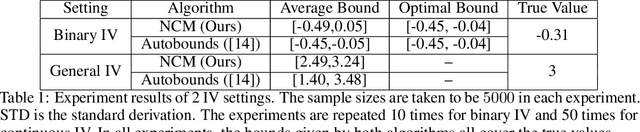

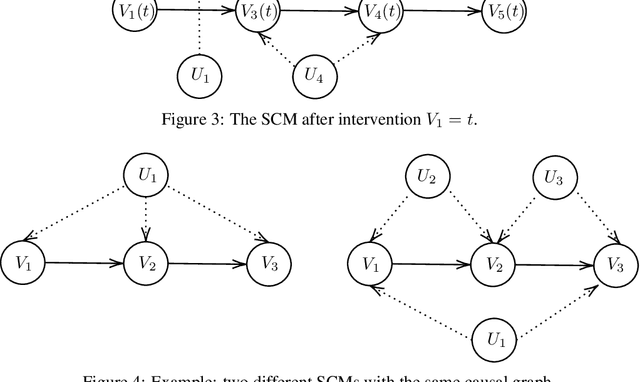

Recent progress in Neural Causal Models (NCMs) showcased how identification and partial identification of causal effects can be automatically carried out via training of neural generative models that respect the constraints encoded in a given causal graph [Xia et al. 2022, Balazadeh et al. 2022]. However, formal consistency of these methods has only been proven for the case of discrete variables or only for linear causal models. In this work, we prove consistency of partial identification via NCMs in a general setting with both continuous and categorical variables. Further, our results highlight the impact of the design of the underlying neural network architecture in terms of depth and connectivity as well as the importance of applying Lipschitz regularization in the training phase. In particular, we provide a counterexample showing that without Lipschitz regularization the NCM may not be asymptotically consistent. Our results are enabled by new results on the approximability of structural causal models via neural generative models, together with an analysis of the sample complexity of the resulting architectures and how that translates into an error in the constrained optimization problem that defines the partial identification bounds.
A Homogenization Approach for Gradient-Dominated Stochastic Optimization
Aug 21, 2023
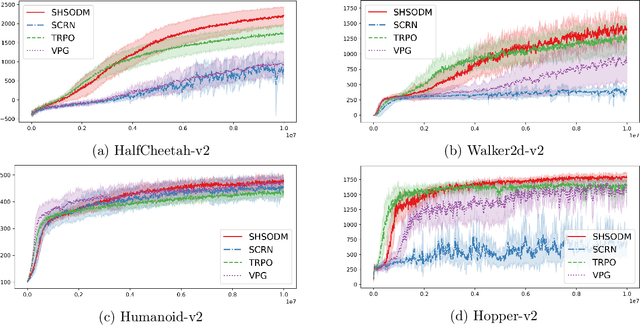


Gradient dominance property is a condition weaker than strong convexity, yet it sufficiently ensures global convergence for first-order methods even in non-convex optimization. This property finds application in various machine learning domains, including matrix decomposition, linear neural networks, and policy-based reinforcement learning (RL). In this paper, we study the stochastic homogeneous second-order descent method (SHSODM) for gradient-dominated optimization with $\alpha \in [1, 2]$ based on a recently proposed homogenization approach. Theoretically, we show that SHSODM achieves a sample complexity of $O(\epsilon^{-7/(2 \alpha) +1})$ for $\alpha \in [1, 3/2)$ and $\tilde{O}(\epsilon^{-2/\alpha})$ for $\alpha \in [3/2, 2]$. We further provide a SHSODM with a variance reduction technique enjoying an improved sample complexity of $O( \epsilon ^{-( 7-3\alpha ) /( 2\alpha )})$ for $\alpha \in [1,3/2)$. Our results match the state-of-the-art sample complexity bounds for stochastic gradient-dominated optimization without \emph{cubic regularization}. Since the homogenization approach only relies on solving extremal eigenvector problems instead of Newton-type systems, our methods gain the advantage of cheaper iterations and robustness in ill-conditioned problems. Numerical experiments on several RL tasks demonstrate the efficiency of SHSODM compared to other off-the-shelf methods.
Pessimistic Minimax Value Iteration: Provably Efficient Equilibrium Learning from Offline Datasets
Feb 15, 2022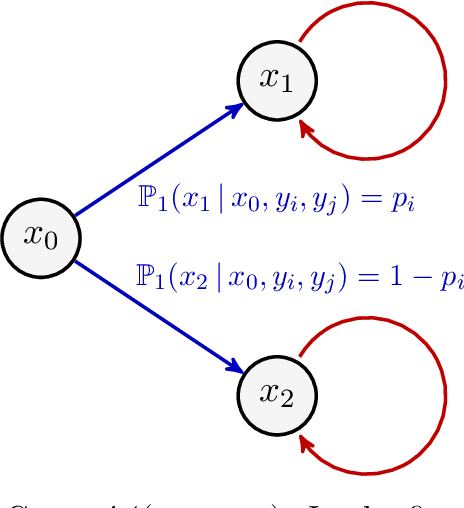
We study episodic two-player zero-sum Markov games (MGs) in the offline setting, where the goal is to find an approximate Nash equilibrium (NE) policy pair based on a dataset collected a priori. When the dataset does not have uniform coverage over all policy pairs, finding an approximate NE involves challenges in three aspects: (i) distributional shift between the behavior policy and the optimal policy, (ii) function approximation to handle large state space, and (iii) minimax optimization for equilibrium solving. We propose a pessimism-based algorithm, dubbed as pessimistic minimax value iteration (PMVI), which overcomes the distributional shift by constructing pessimistic estimates of the value functions for both players and outputs a policy pair by solving NEs based on the two value functions. Furthermore, we establish a data-dependent upper bound on the suboptimality which recovers a sublinear rate without the assumption on uniform coverage of the dataset. We also prove an information-theoretical lower bound, which suggests that the data-dependent term in the upper bound is intrinsic. Our theoretical results also highlight a notion of "relative uncertainty", which characterizes the necessary and sufficient condition for achieving sample efficiency in offline MGs. To the best of our knowledge, we provide the first nearly minimax optimal result for offline MGs with function approximation.