 Add to Chrome
 Add to Firefox
 Add to Edge
Enabling High Error Tolerance in Satellite Video Transmissions by Generative Semantic Communication
Apr 28, 2026
Low Earth orbit (LEO) satellite relays will significantly extend the coverage of mobile networks, enabling users in remote areas to transmit data of real-time events. Nevertheless, the limited power of user devices and the long distance to satellites lead to low signal-to-noise ratio (SNR), which results in high error rates and frequent retransmissions, severely hindering the transmissions of high-dimensional data such as videos. In this paper, we propose a novel method to achieve high error tolerance in satellite-relay video transmissions using generative semantic communications (GSC). For the transmitter, we design and optimize a semantic encoder integrating a pre-trained video encoder with a low-density parity-check (LDPC) encoder, efficiently achieving generalizability and enabling forward error correction. For the receiver, we fine-tune a generative video model using an efficient in-context adaptation algorithm, enabling it to reconstruct videos from error-corrupted semantic information. Simulation results show that our method achieves 2.5 dB higher video peak SNR than conventional semantic communications at an error rate of 45%, and remains robust when the error rate exceeds 80%.

Token Encoding for Semantic Recovery
Apr 14, 2026Token-based semantic communication is promising for future wireless networks, as it can compact semantic tokens under very limited channel capacity. However, harsh wireless channels often cause missing tokens, leading to severe distortion that prevents reliable semantic recovery at the receiver. In this article, we propose a token encoding framework for robust semantic recovery (TokCode), which incurs no additional transmission overhead and supports plug-and-play deployment. For efficient token encoder optimization, we develop a sentence-semantic-guided foundation model adaptation algorithm (SFMA) that avoids costly end-to-end training. Based on simulation results on prompt-based generative image transmission, TokCode mitigates semantic distortion and can approach the performance upper-bound, even under harsh channels where 40% to 60% of tokens are randomly lost.
Cross-Domain Continual Learning for Edge Intelligence in Wireless ISAC Networks
Feb 18, 2025In wireless networks with integrated sensing and communications (ISAC), edge intelligence (EI) is expected to be developed at edge devices (ED) for sensing user activities based on channel state information (CSI). However, due to the CSI being highly specific to users' characteristics, the CSI-activity relationship is notoriously domain dependent, essentially demanding EI to learn sufficient datasets from various domains in order to gain cross-domain sensing capability. This poses a crucial challenge owing to the EDs' limited resources, for which storing datasets across all domains will be a significant burden. In this paper, we propose the EdgeCL framework, enabling the EI to continually learn-then-discard each incoming dataset, while remaining resilient to catastrophic forgetting. We design a transformer-based discriminator for handling sequences of noisy and nonequispaced CSI samples. Besides, we propose a distilled core-set based knowledge retention method with robustness-enhanced optimization to train the discriminator, preserving its performance for previous domains while preventing future forgetting. Experimental evaluations show that EdgeCL achieves 89% of performance compared to cumulative training while consuming only 3% of its memory, mitigating forgetting by 79%.
Zero-Forget Preservation of Semantic Communication Alignment in Distributed AI Networks
Nov 28, 2024Future communication networks are expected to connect massive distributed artificial intelligence (AI). Exploiting aligned priori knowledge of AI pairs, it is promising to convert high-dimensional data transmission into highly-compressed semantic communications (SC). However, to accommodate the local data distribution and user preferences, AIs generally adapt to different domains, which fundamentally distorts the SC alignment. In this paper, we propose a zero-forget domain adaptation (ZFDA) framework to preserve SC alignment. To prevent the DA from changing substantial neural parameters of AI, we design sparse additive modifications (SAM) to the parameters, which can be efficiently stored and switched-off to restore the SC alignment. To optimize the SAM, we decouple it into tractable continuous variables and a binary mask, and then handle the binary mask by a score-based optimization. Experimental evaluations on a SC system for image transmissions validate that the proposed framework perfectly preserves the SC alignment with almost no loss of DA performance, even improved in some cases, at a cost of less than 1% of additional memory.
Efficient Beamforming Feedback Information-Based Wi-Fi Sensing by Feature Selection
Jun 09, 2024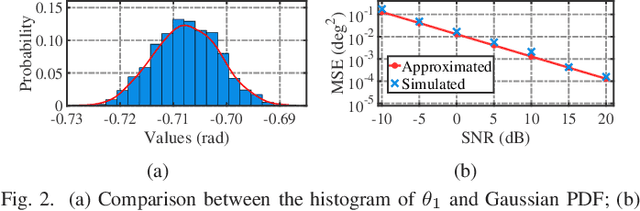
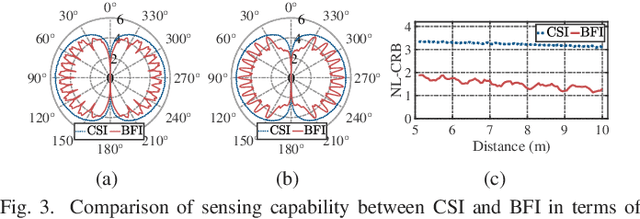
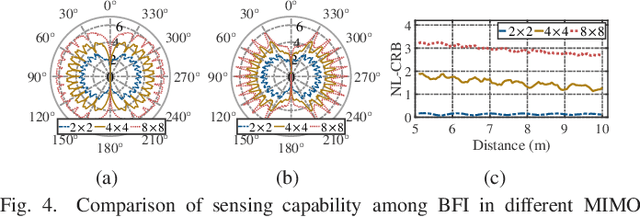
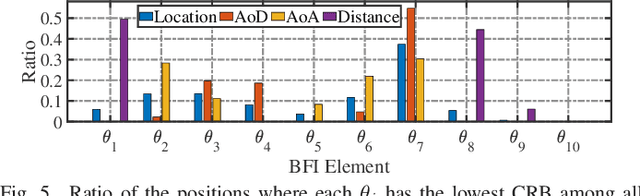
Wi-Fi sensing leveraging plain-text beamforming feedback information (BFI) in multiple-input-multiple-output (MIMO) systems attracts increasing attention. However, due to the implicit relationship between BFI and the channel state information (CSI), quantifying the sensing capability of BFI poses a challenge in building efficient BFI-based sensing algorithms. In this letter, we first derive a mathematical model of BFI, characterizing its relationship with CSI explicitly, and then develop a closed-form expression of BFI for 2x2 MIMO systems. To enhance the efficiency of BFI-based sensing by selecting only the most informative features, we quantify the sensing capacity of BFI using the Cramer-Rao bound (CRB) and then propose an efficient CRB-based BFI feature selection algorithm. Simulation results verify that BFI and CSI exhibit comparable sensing capabilities and that the proposed algorithm halves the number of features, reducing 20% more parameters than baseline methods, at the cost of only slightly increasing positioning errors.
Cross-domain Learning Framework for Tracking Users in RIS-aided Multi-band ISAC Systems with Sparse Labeled Data
May 10, 2024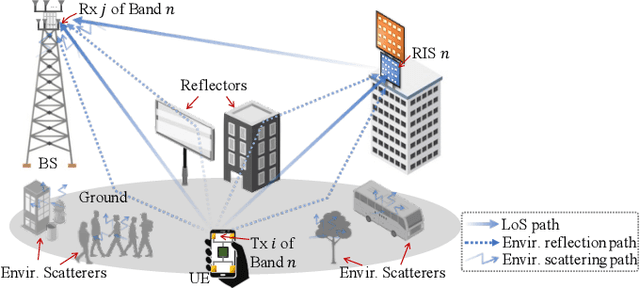
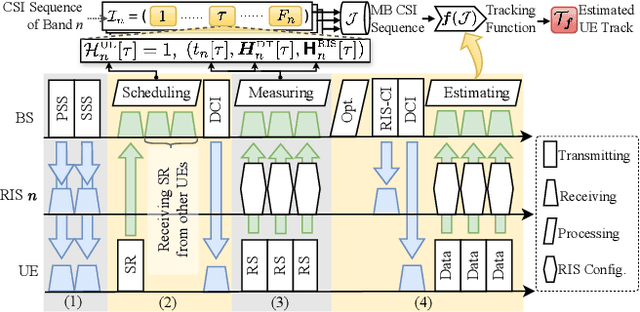
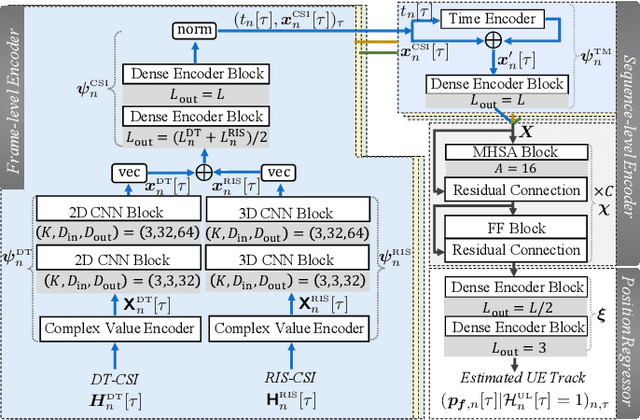
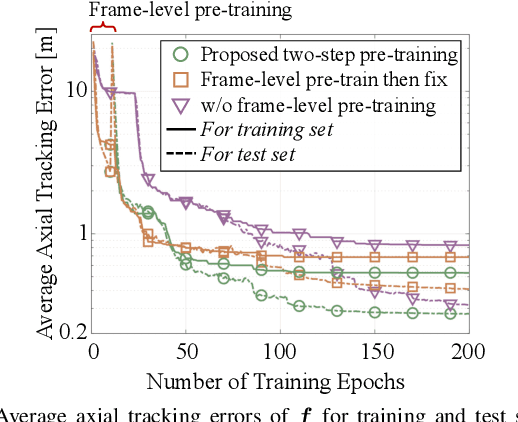
Integrated sensing and communications (ISAC) is pivotal for 6G communications and is boosted by the rapid development of reconfigurable intelligent surfaces (RISs). Using the channel state information (CSI) across multiple frequency bands, RIS-aided multi-band ISAC systems can potentially track users' positions with high precision. Though tracking with CSI is desirable as no communication overheads are incurred, it faces challenges due to the multi-modalities of CSI samples, irregular and asynchronous data traffic, and sparse labeled data for learning the tracking function. This paper proposes the X2Track framework, where we model the tracking function by a hierarchical architecture, jointly utilizing multi-modal CSI indicators across multiple bands, and optimize it in a cross-domain manner, tackling the sparsity of labeled data for the target deployment environment (namely, target domain) by adapting the knowledge learned from another environment (namely, source domain). Under X2Track, we design an efficient deep learning algorithm to minimize tracking errors, based on transformer neural networks and adversarial learning techniques. Simulation results verify that X2Track achieves decimeter-level axial tracking errors even under scarce UL data traffic and strong interference conditions and can adapt to diverse deployment environments with fewer than 5% training data, or equivalently, 5 minutes of UE tracks, being labeled.
HoloFed: Environment-Adaptive Positioning via Multi-band Reconfigurable Holographic Surfaces and Federated Learning
Oct 10, 2023Positioning is an essential service for various applications and is expected to be integrated with existing communication infrastructures in 5G and 6G. Though current Wi-Fi and cellular base stations (BSs) can be used to support this integration, the resulting precision is unsatisfactory due to the lack of precise control of the wireless signals. Recently, BSs adopting reconfigurable holographic surfaces (RHSs) have been advocated for positioning as RHSs' large number of antenna elements enable generation of arbitrary and highly-focused signal beam patterns. However, existing designs face two major challenges: i) RHSs only have limited operating bandwidth, and ii) the positioning methods cannot adapt to the diverse environments encountered in practice. To overcome these challenges, we present HoloFed, a system providing high-precision environment-adaptive user positioning services by exploiting multi-band(MB)-RHS and federated learning (FL). For improving the positioning performance, a lower bound on the error variance is obtained and utilized for guiding MB-RHS's digital and analog beamforming design. For better adaptability while preserving privacy, an FL framework is proposed for users to collaboratively train a position estimator, where we exploit the transfer learning technique to handle the lack of position labels of the users. Moreover, a scheduling algorithm for the BS to select which users train the position estimator is designed, jointly considering the convergence and efficiency of FL. Our simulation results confirm that HoloFed achieves a 57% lower positioning error variance compared to a beam-scanning baseline and can effectively adapt to diverse environments.
OCHID-Fi: Occlusion-Robust Hand Pose Estimation in 3D via RF-Vision
Aug 20, 2023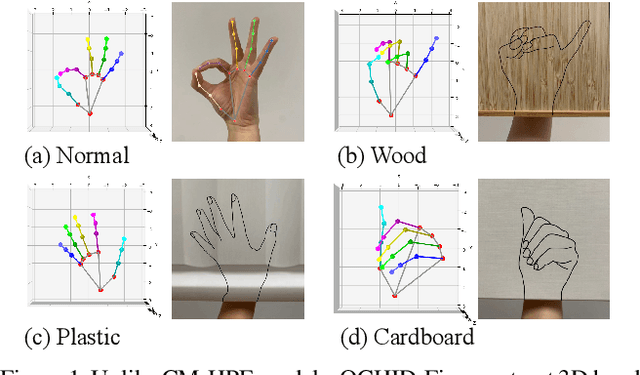
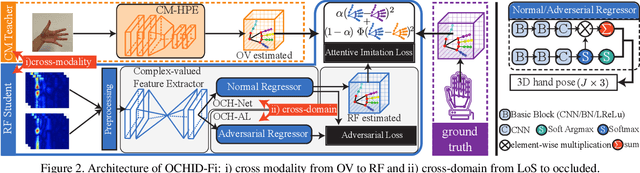
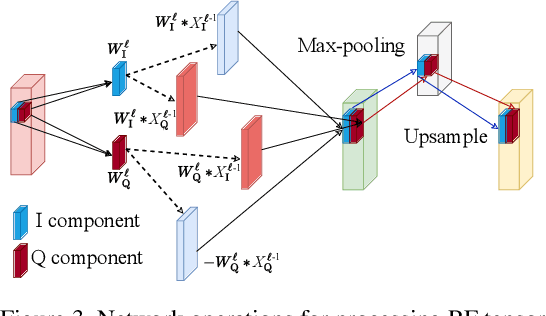
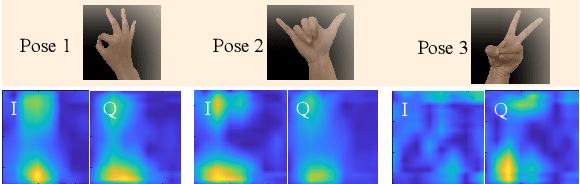
Hand Pose Estimation (HPE) is crucial to many applications, but conventional cameras-based CM-HPE methods are completely subject to Line-of-Sight (LoS), as cameras cannot capture occluded objects. In this paper, we propose to exploit Radio-Frequency-Vision (RF-vision) capable of bypassing obstacles for achieving occluded HPE, and we introduce OCHID-Fi as the first RF-HPE method with 3D pose estimation capability. OCHID-Fi employs wideband RF sensors widely available on smart devices (e.g., iPhones) to probe 3D human hand pose and extract their skeletons behind obstacles. To overcome the challenge in labeling RF imaging given its human incomprehensible nature, OCHID-Fi employs a cross-modality and cross-domain training process. It uses a pre-trained CM-HPE network and a synchronized CM/RF dataset, to guide the training of its complex-valued RF-HPE network under LoS conditions. It further transfers knowledge learned from labeled LoS domain to unlabeled occluded domain via adversarial learning, enabling OCHID-Fi to generalize to unseen occluded scenarios. Experimental results demonstrate the superiority of OCHID-Fi: it achieves comparable accuracy to CM-HPE under normal conditions while maintaining such accuracy even in occluded scenarios, with empirical evidence for its generalizability to new domains.
Multi-band Reconfigurable Holographic Surface Based ISAC Systems: Design and Optimization
Mar 28, 2023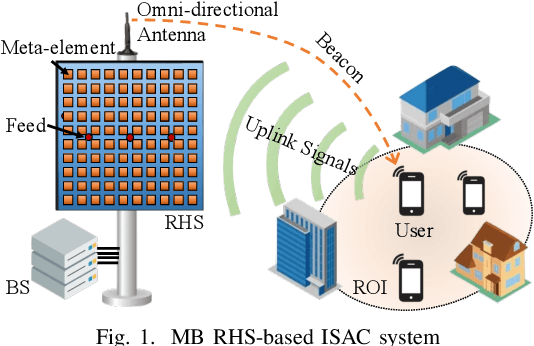
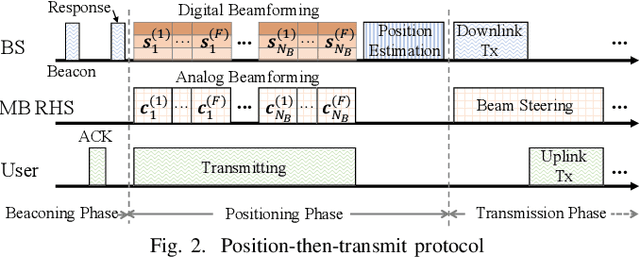
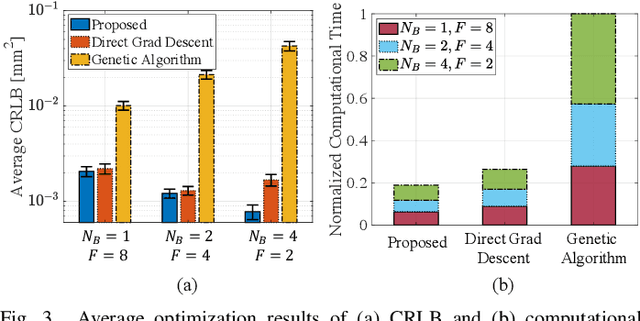
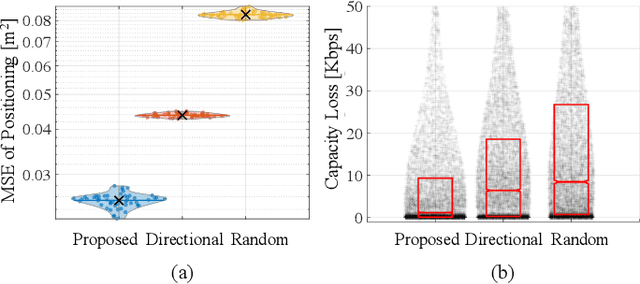
Metamaterial-based reconfigurable holographic surfaces (RHSs) have been proposed as novel cost-efficient antenna arrays, which are promising for improving the positioning and communication performance of integrated sensing and communications (ISAC) systems. However, due to the high frequency selectivity of the metamaterial elements, RHSs face challenges in supporting ultra-wide bandwidth (UWB), which significantly limits the positioning precision. In this paper, to avoid the physical limitations of UWB RHS while enhancing the performance of RHS-based ISAC systems, we propose a multi-band (MB) based ISAC system. We analyze its positioning precision and propose an efficient algorithm to optimize the large number of variables in analog and digital beamforming. Through comparison with benchmark results, simulation results verify the efficiency of our proposed system and algorithm, and show that the system achieves $42\%$ less positioning error, which reduces $82\%$ communication capacity loss.
Meta-material Sensor Based Internet of Things: Design, Optimization, and Implementation
Jun 26, 2022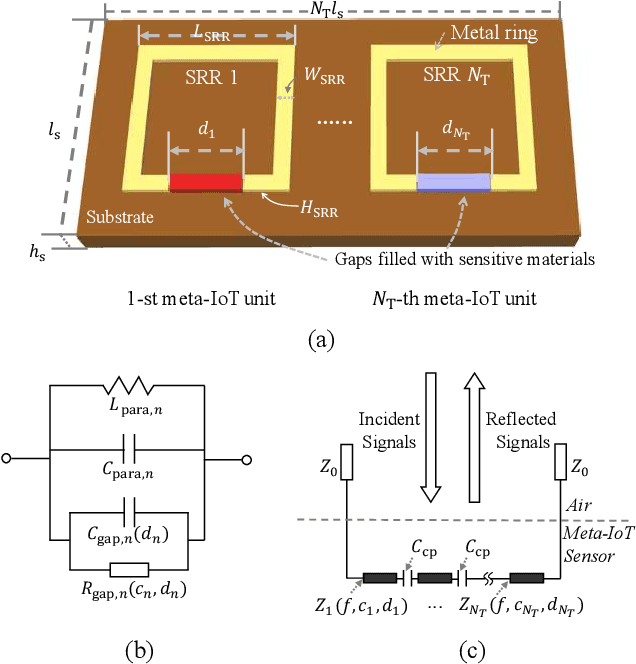
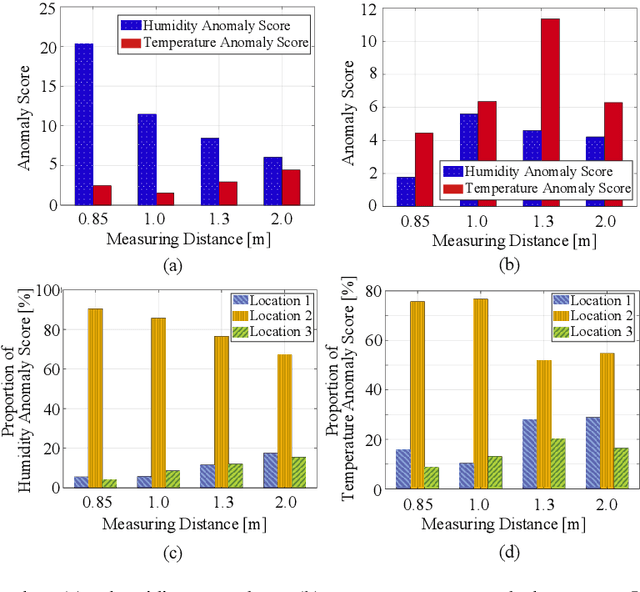
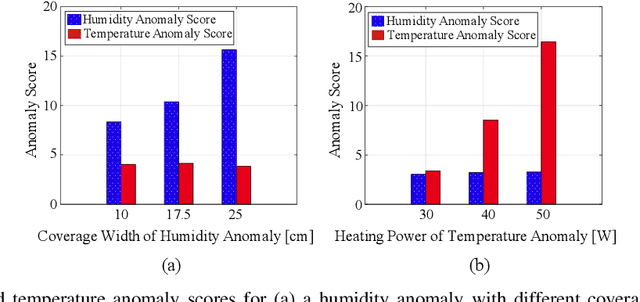
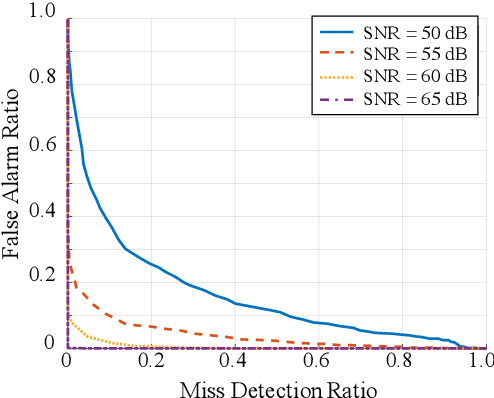
For many applications envisioned for the Internet of Things (IoT), it is expected that the sensors will have very low costs and zero power, which can be satisfied by meta-material sensor based IoT, i.e., meta-IoT. As their constituent meta-materials can reflect wireless signals with environment-sensitive reflection coefficients, meta-IoT sensors can achieve simultaneous sensing and transmission without any active modulation. However, to maximize the sensing accuracy, the structures of meta-IoT sensors need to be optimized considering their joint influence on sensing and transmission, which is challenging due to the high computational complexity in evaluating the influence, especially given a large number of sensors. In this paper, we propose a joint sensing and transmission design method for meta-IoT systems with a large number of meta-IoT sensors, which can efficiently optimize the sensing accuracy of the system. Specifically, a computationally efficient received signal model is established to evaluate the joint influence of meta-material structure on sensing and transmission. Then, a sensing algorithm based on deep unsupervised learning is designed to obtain accurate sensing results in a robust manner. Experiments with a prototype verify that the system has a higher sensitivity and a longer transmission range compared to existing designs, and can sense environmental anomalies correctly within 2 meters.