 Add to Chrome
 Add to Firefox
 Add to Edge
An FPGA Implementation of Displacement Vector Search for Intra Pattern Copy in JPEG XS
Mar 11, 2026
Recently, progress has been made on the Intra Pattern Copy (IPC) tool for JPEG XS, an image compression standard designed for low-latency and low-complexity coding. IPC performs wavelet-domain intra compensation predictions to reduce spatial redundancy in screen content. A key module of IPC is the displacement vector (DV) search, which aims to solve the optimal prediction reference offset. However, the DV search process is computationally intensive, posing challenges for practical hardware deployment. In this paper, we propose an efficient pipelined FPGA architecture design for the DV search module to promote the practical deployment of IPC. Optimized memory organization, which leverages the IPC computational characteristics and data inherent reuse patterns, is further introduced to enhance the performance. Experimental results show that our proposed architecture achieves a throughput of 38.3 Mpixels/s with a power consumption of 277 mW, demonstrating its feasibility for practical hardware implementation in IPC and other predictive coding tools, and providing a promising foundation for ASIC deployment.

OrchANN: A Unified I/O Orchestration Framework for Skewed Out-of-Core Vector Search
Dec 28, 2025Approximate nearest neighbor search (ANNS) at billion scale is fundamentally an out-of-core problem: vectors and indexes live on SSD, so performance is dominated by I/O rather than compute. Under skewed semantic embeddings, existing out-of-core systems break down: a uniform local index mismatches cluster scales, static routing misguides queries and inflates the number of probed partitions, and pruning is incomplete at the cluster level and lossy at the vector level, triggering "fetch-to-discard" reranking on raw vectors. We present OrchANN, an out-of-core ANNS engine that uses an I/O orchestration model for unified I/O governance along the route-access-verify pipeline. OrchANN selects a heterogeneous local index per cluster via offline auto-profiling, maintains a query-aware in-memory navigation graph that adapts to skewed workloads, and applies multi-level pruning with geometric bounds to filter both clusters and vectors before issuing SSD reads. Across five standard datasets under strict out-of-core constraints, OrchANN outperforms four baselines including DiskANN, Starling, SPANN, and PipeANN in both QPS and latency while reducing SSD accesses. Furthermore, OrchANN delivers up to 17.2x higher QPS and 25.0x lower latency than competing systems without sacrificing accuracy.
Enhanced Cascade Prostate Cancer Classifier in mp-MRI Utilizing Recall Feedback Adaptive Loss and Prior Knowledge-Based Feature Extraction
Aug 19, 2024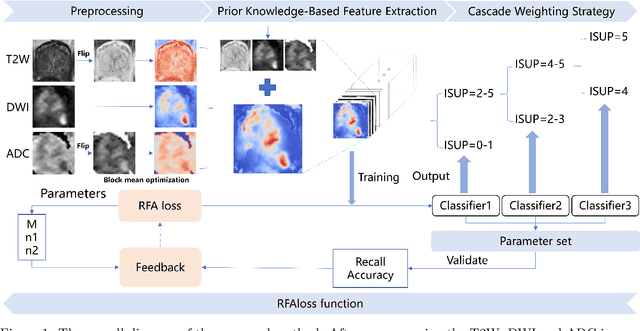
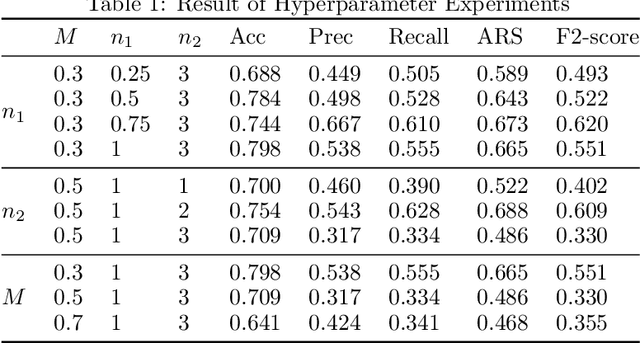
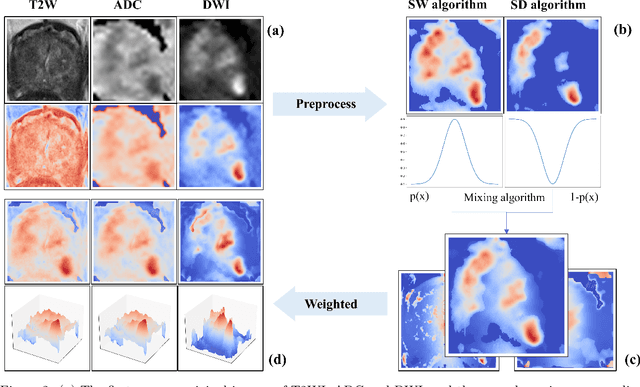
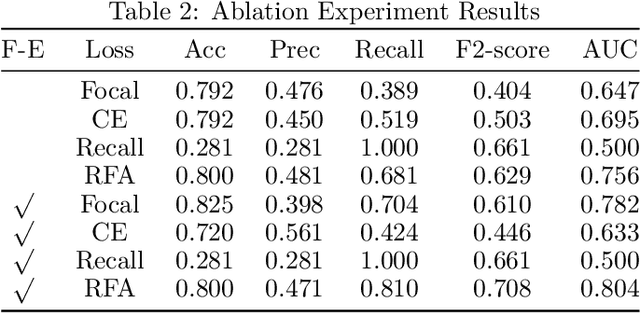
Prostate cancer is the second most common cancer in males worldwide, and mpMRI is commonly used for diagnosis. However, interpreting mpMRI is challenging and requires expertise from radiologists. This highlights the urgent need for automated grading in mpMRI. Existing studies lack integration of clinical prior information and suffer from uneven training sample distribution due to prevalence. Therefore, we propose a solution that incorporates prior knowledge, addresses the issue of uneven medical sample distribution, and maintains high interpretability in mpMRI. Firstly, we introduce Prior Knowledge-Based Feature Extraction, which mathematically models the PI-RADS criteria for prostate cancer as diagnostic information into model training. Secondly, we propose Adaptive Recall Feedback Loss to address the extremely imbalanced data problem. This method adjusts the training dynamically based on accuracy and recall in the validation set, resulting in high accuracy and recall simultaneously in the testing set.Thirdly, we design an Enhanced Cascade Prostate Cancer Classifier that classifies prostate cancer into different levels in an interpretable way, which refines the classification results and helps with clinical intervention. Our method is validated through experiments on the PI-CAI dataset and outperforms other methods with a more balanced result in both accuracy and recall rate.