 Add to Chrome
 Add to Firefox
 Add to Edge
Open-AoE: An Open Egocentric Manipulation Dataset and Toolchain for Embodied Learning
Jul 15, 2026
Egocentric videos of human manipulation provide scalable supervision for embodied intelligence, yet existing resources rarely combine low-cost continuous capture, manipulation-level structured annotations, and reusable tools for robot learning. We present Open-AoE, an open, community-oriented egocentric manipulation dataset and toolchain spanning the full pipeline from smartphone capture to model training. Its first release contains approximately 2,000 hours of manipulation video collected in natural environments by 500+ contributors using 400+ smartphones. The dataset provides text annotations, MANO-based hand poses, camera trajectories, and temporally localized atomic actions. Open-AoE further includes a data processing pipeline that transforms raw recordings into structured samples through temporal action segmentation, semantic annotation, hand reconstruction, and camera trajectory reconstruction. Meanwhile, we provide a separate downstream toolchain supports visualization, cross-embodiment retargeting, model-specific data conversion, and training recipes for VLA policies, WAMs, and World Models. By integrating scalable capture, structured processing, and downstream adaptation, Open-AoE reduces the barriers to both data contribution and reuse, providing practical open infrastructure for embodied model training, human-to-robot transfer, and world modeling.

DT-Guard: Intent-Driven Reasoning-Active Training for Reasoning-Free LLM Safety Guardrail
Jul 07, 2026Large language models deployed in open-world applications require safety guardrails that are both robust to complex risks and efficient enough for low-latency runtime moderation. Existing guardrails face a practical trade-off between lightweight classification-based models, which are efficient but often struggle with concealed intent, ambiguous semantics, and borderline safety decisions, and reasoning-based guards, which improve judgment quality but introduce additional token generation and inference latency. We present DT-Guard, a content safety guardrail model based on a Reasoning-Active Training, Reasoning-Free Inference paradigm. The key idea is to use reasoning supervision during training while emitting only structured safety labels at inference time. DT-Guard formulates safety judgment as a progressive decision process, Intent - Category - Safety, and constructs an intent-driven dataset with intent labels, risk categories, safety labels, and structured reasoning trajectories. To further improve hard-case robustness, we propose Rollout-Guided Progressive Hard-Case Optimization (RG-PHO), which uses multi-rollout consistency to identify stably mastered, persistently failed, and preference-unstable samples, and applies targeted supervised and preference optimization accordingly. At inference time, DT-Guard directly generates structured labels without explicit reasoning traces, preserving deployment efficiency. Experiments on prompt-side and response-side safety benchmarks show that DT-Guard achieves average F1 scores of 0.886 and 0.870, respectively. With only a 4B backbone, it reaches a dual-side average F1 of 0.878, outperforming strong 8B guardrail baselines. These results demonstrate that reasoning supervision can be effectively internalized into low-latency safety discrimination.
Visual-Seeker: Towards Visual-Native Multimodal Agentic Search via Active Visual Reasoning
Jun 13, 2026Multimodal large language models (MLLMs) have demonstrated impressive capabilities in many visual tasks, but they often struggle with factual grounding when confronted with complex, open-world scenarios. While recent multimodal deep search agents attempt to address this issue by utilizing external tools, the visual-native search paradigm remains underexplored. Existing methods primarily rely on simple images with explicit semantics and text-only evidence trajectories, limiting the agent's ability to perform multi-hop, cross-modal reasoning and search. To address these limitations, we propose Visual-Seeker, a visual-native multimodal deep search agent via active visual reasoning. Rather than treating vision as a static input, our agent actively attends to fine-grained visual details, dynamically harvests visual evidence throughout the search process. To unlock its visual-native potential, we design an active visual reasoning data pipeline and synthesize 5K high-quality multimodal trajectories for model training. Extensive experiments demonstrate the state-of-the-art performance across five challenging multimodal search benchmarks, even surpassing several proprietary models, validating robust visual-native reasoning and search in real-world web environments. The code and data can be accessed at: https://github.com/ZhengboZhang/Visual-Seeker.
Supervised and Semi-Supervised Deep Neural Networks for CSI-Based Authentication
Jul 25, 2018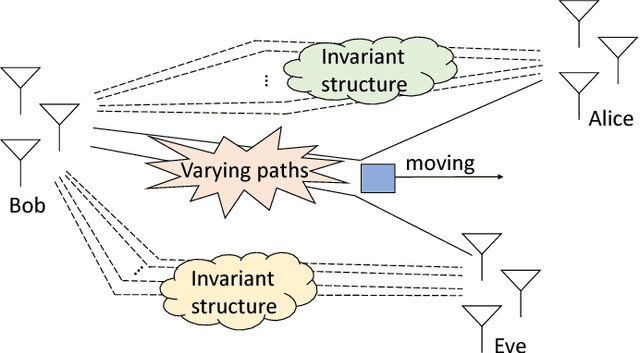
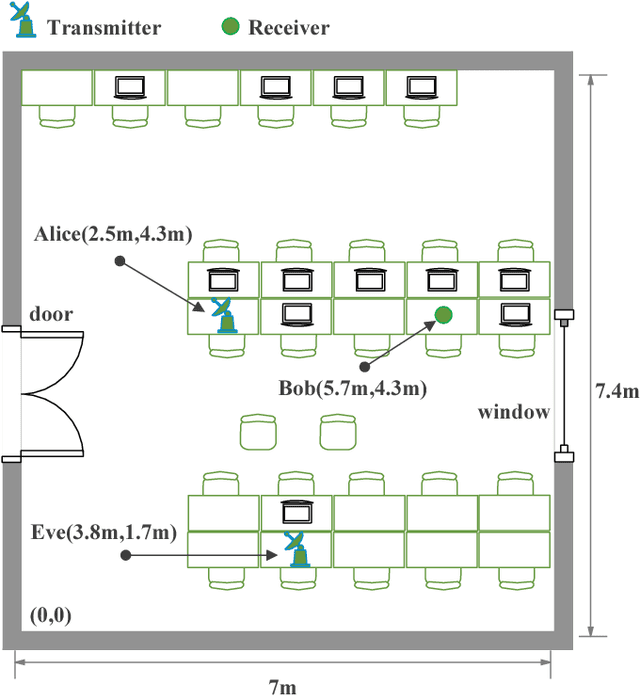
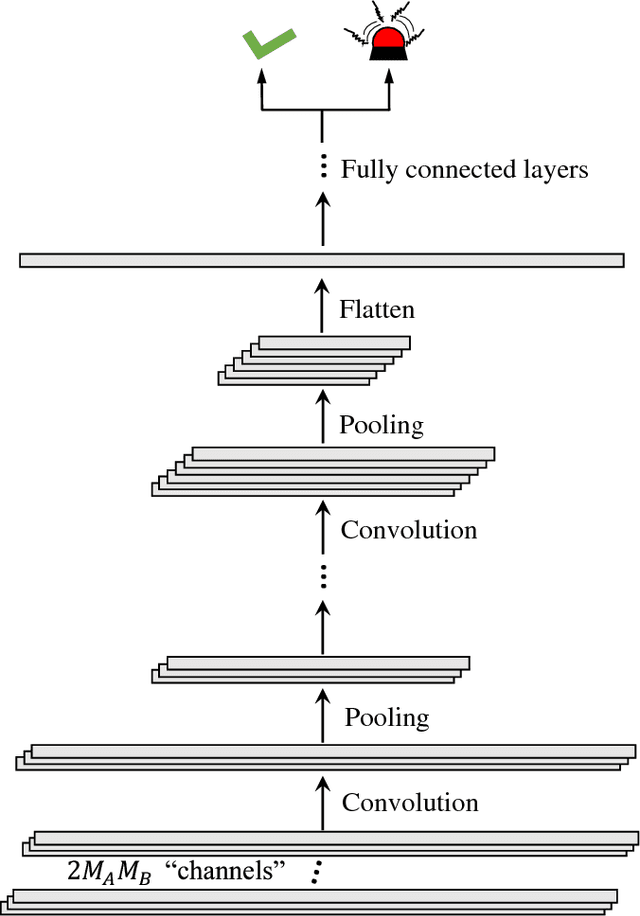
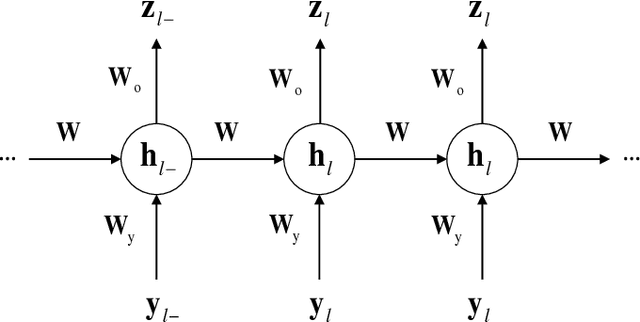
From the viewpoint of physical-layer authentication, spoofing attacks can be foiled by checking channel state information (CSI). Existing CSI-based authentication algorithms mostly require a deep knowledge of the channel to deliver decent performance. In this paper, we investigate CSI-based authenticators that can spare the effort to predetermine channel properties by utilizing deep neural networks (DNNs). We first propose a convolutional neural network (CNN)-enabled authenticator that is able to extract the local features in CSI. Next, we employ the recurrent neural network (RNN) to capture the dependencies between different frequencies in CSI. In addition, we propose to use the convolutional recurrent neural network (CRNN)---a combination of the CNN and the RNN---to learn local and contextual information in CSI for user authentication. To effectively train these DNNs, one needs a large amount of labeled channel records. However, it is often expensive to label large channel observations in the presence of a spoofer. In view of this, we further study a case in which only a small part of the the channel observations are labeled. To handle it, we extend these DNNs-enabled approaches into semi-supervised ones. This extension is based on a semi-supervised learning technique that employs both the labeled and unlabeled data to train a DNN. To be specific, our semi-supervised method begins by generating pseudo labels for the unlabeled channel samples through implementing the K-means algorithm in a semi-supervised manner. Subsequently, both the labeled and pseudo labeled data are exploited to pre-train a DNN, which is then fine-tuned based on the labeled channel records.