 Add to Chrome
 Add to Firefox
 Add to Edge
Mind the Context: Continual Learning of Socially Appropriate Robot Actions via Environmental-Social Disentanglement
Aug 13, 2026
Social robots are expected to operate across diverse environments, where similar arrangements can imply different socially appropriate actions, e.g., starting a conversation may be acceptable in a crowded home but disruptive in an office meeting. Because such norms and environments cannot all be anticipated in advance, robots require continual learning (CL) to adapt from sequential experience while retaining previously acquired knowledge. Prior work has studied CL for generating socially appropriate robot actions, but it has not addressed domain-incremental settings in which the robot incrementally encounters diverse contexts (e.g., living room, meeting room, office, hallway), where both environmental (e.g., whether the space is open or cluttered with furniture) and social cues (e.g., how people or other agents are positioned around the robot) jointly shape the appropriateness of robot actions. We address this gap with the Explicit Disentanglement Dual-Branch (EDD) framework. EDD explicitly separates environmental and social-agent related knowledge and uses replay-based rehearsal to mitigate forgetting while learning the appropriateness of robot actions (e.g., cleaning, serving, starting a conversation) across several indoor domains. Experiments show that EDD outperforms several state-of-the-art baselines, and ablation studies further evaluate different disentanglement strategies and the sensitivity to domain ordering. Our code is publicly available at https://github.com/Cambridge-AFAR/Mind-the-Context.git.

Designing Social Robots for Inclusive Child Wellbeing Assessment: Insights from Communities Supporting Developmental Language Disorder and Forced Migration
Aug 04, 2026Assessing children's wellbeing and mental health can be particularly challenging for children experiencing communication barriers, such as children with Developmental Language Disorder (DLD) and children with forced migration backgrounds. During the assessment process, traditional self-report questionnaires place substantial demands on language comprehension and verbal expression. In this context, social robots have emerged as a promising tool for supporting wellbeing assessment without solely relying on self-report questionnaires, yet limited research has examined how such interactions can be designed to be inclusive, appropriate, and ethically acceptable for children with diverse communication needs. To address this gap, we created candidate child--robot interaction activities as design probes and conducted focus groups with parents and professionals supporting children with DLD and children with forced migration backgrounds. Through thematic analysis, we identified considerations relating to robot role and capabilities, interactional dynamics, individual differences, and child agency, alongside population-specific considerations shaped by children's communication needs and lived experiences. Based on these findings, we derive a set of ethical and inclusive design recommendations for robot-mediated wellbeing assessment. By foregrounding these considerations and recommendations, this work contributes design guidance for inclusive robot-mediated wellbeing assessments for children with diverse communication needs.
StARS: Socially Appropriate Robot Actions via a Recommender System-Driven Approach
Jul 23, 2026Social appropriateness in human-robot interaction (HRI) is not universal: different people can judge the same robot action differently in the same situation. To capture this inter-subject variability, we reformulate socially appropriate action generation as a preference modelling problem inspired by recommender systems, treating annotators as users, contexts/scenes as items, and appropriateness scores over a set of candidate robot actions as targets. We propose StARS, a novel model-agnostic framework that integrates collaborative filtering with learnable scene representations to generate user-specific appropriateness scores over candidate robot actions. StARS is model-agnostic: it can be integrated with various scene encoders and backbones, enabling personalisation without redesigning the underlying model. We evaluate StARS on two socially aware robotics datasets, MannersDB+ and SocNav1, and analyse robustness under sparse preference feedback. Across datasets and backbones, StARS consistently improves performance and agreement with annotators, supporting personalised action selection aligned with user norms. Our code is publicly available at https://github.com/Cambridge-AFAR/StARS.git.
Toward Personalized Social Robots for Child Well-being: Data Requirement Principles from a Recommender-System Perspective
Jul 06, 2026Social robots are increasingly deployed in clinical settings to support the well-being of children, where effective support must be personalized to each child. Personalization, choosing the robot action best suited to each child, can be framed as a recommendation problem, and a recently proposed recommender-system framework for social robots offers a principled approach through user profiling, ranking, and responsible computing. Instantiating it, however, is blocked not by the model but by the data, which is hard to gather. A child's state shifts within and across visits, so no fixed description of the user holds. Within a session, the few signals of whether the robot's actions helped are weak and indirect. Across sessions, children are rarely seen more than once, and anonymization breaks the identity needed to link visits. Because care cannot be randomized, existing data is observational, biased toward whatever was already done. Each is a familiar recommender-system problem, and we propose four data principles in response: an integrated profile, effectiveness signals, linkable coverage, and an exposure record logged at collection time. We identify which of these principles each capability requires, and frame them as concrete guidelines for data collection.
MM-Conv: A Multimodal Dataset and Benchmark for Context-Aware Grounding in 3D Dialogue
May 20, 2026Grounding language in the physical world requires AI systems to interpret references that emerge dynamically during conversation. While current vision-language models (VLMs) excel at static image tasks, they struggle to resolve ambiguous expressions in spontaneous, multi-turn dialogue. We address this gap by introducing (1) a benchmark for referential communication in dynamic 3D environments, built from 6.7 hours of egocentric VR interaction with synchronized speech, motion, gaze, and 3D scene geometry, and (2) a two-stage grounding pipeline that explicitly resolves conversational ambiguity before visual localization. The benchmark includes over 4,200 manually verified referring expressions spanning full, partitive, and pronominal types. Our contextual rewriting approach improves grounding performance by 11-22 percentage points on average, with a pure detector (GroundingDINO) reaching 56.7% on pronominals after rewriting, nearly double the best end-to-end baseline. Results demonstrate that decoupling linguistic reasoning from visual perception is more effective than end-to-end approaches for conversational grounding.
* Extended version of the paper published at LREC 2026 (Palma de Mallorca, Spain), with expanded VLM baselines and inter-annotator agreement analysis
FAIR_XAI: Improving Multimodal Foundation Model Fairness via Explainability for Wellbeing Assessment
Apr 26, 2026In recent years, the integration of multimodal machine learning in wellbeing assessment has offered transformative potential for monitoring mental health. However, with the rapid advancement of Vision-Language Models (VLMs), their deployment in clinical settings has raised concerns due to their lack of transparency and potential for bias. While previous research has explored the intersection of fairness and Explainable AI (XAI), its application to VLMs for wellbeing assessment and depression prediction remains under-explored. This work investigates VLM performance across laboratory (AFAR-BSFT) and naturalistic (E-DAIC) datasets, focusing on diagnostic reliability and demographic fairness. Performance varied substantially across environments and architectures; Phi3.5-Vision achieved 80.4% accuracy on E-DAIC, while Qwen2-VL struggled at 33.9%. Additionally, both models demonstrated a tendency to over-predict depression on AFAR-BSFT. Although bias existed across both architectures, Qwen2-VL showed higher gender disparities, while Phi-3.5-Vision exhibited more racial bias. Our XAI intervention framework yielded mixed results; fairness prompting achieved perfect equal opportunity for Qwen2-VL at a severe accuracy cost on E-DAIC. On AFAR-BSFT, explainability-based interventions improved procedural consistency but did not guarantee outcome fairness, sometimes amplifying racial bias. These results highlight a persistent gap between procedural transparency and equitable outcomes. We analyse these findings and consolidate concrete recommendations for addressing them, emphasising that future fairness interventions must jointly optimise predictive accuracy, demographic parity, and cross-domain generalisation.
Investigating Associational Biases in Inter-Model Communication of Large Generative Models
Jan 29, 2026Social bias in generative AI can manifest not only as performance disparities but also as associational bias, whereby models learn and reproduce stereotypical associations between concepts and demographic groups, even in the absence of explicit demographic information (e.g., associating doctors with men). These associations can persist, propagate, and potentially amplify across repeated exchanges in inter-model communication pipelines, where one generative model's output becomes another's input. This is especially salient for human-centred perception tasks, such as human activity recognition and affect prediction, where inferences about behaviour and internal states can lead to errors or stereotypical associations that propagate into unequal treatment. In this work, focusing on human activity and affective expression, we study how such associations evolve within an inter-model communication pipeline that alternates between image generation and image description. Using the RAF-DB and PHASE datasets, we quantify demographic distribution drift induced by model-to-model information exchange and assess whether these drifts are systematic using an explainability pipeline. Our results reveal demographic drifts toward younger representations for both actions and emotions, as well as toward more female-presenting representations, primarily for emotions. We further find evidence that some predictions are supported by spurious visual regions (e.g., background or hair) rather than concept-relevant cues (e.g., body or face). We also examine whether these demographic drifts translate into measurable differences in downstream behaviour, i.e., while predicting activity and emotion labels. Finally, we outline mitigation strategies spanning data-centric, training and deployment interventions, and emphasise the need for careful safeguards when deploying interconnected models in human-centred AI systems.
Expectations, Explanations, and Embodiment: Attempts at Robot Failure Recovery
Apr 09, 2025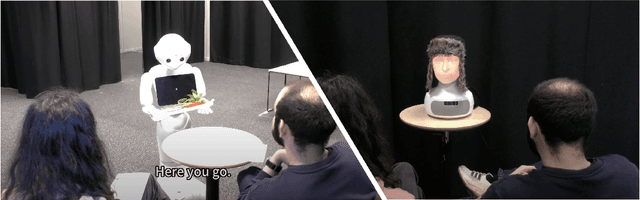
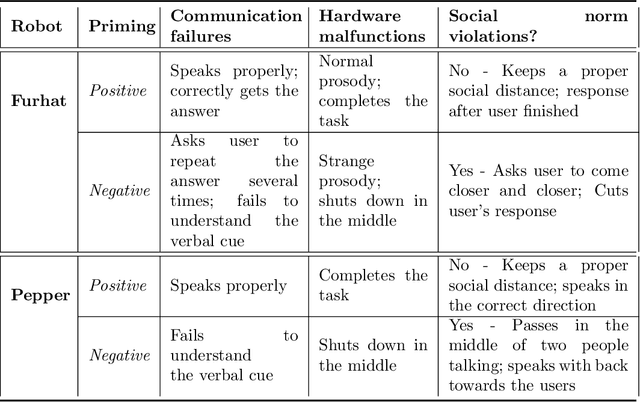
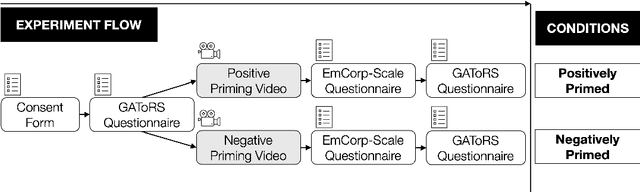
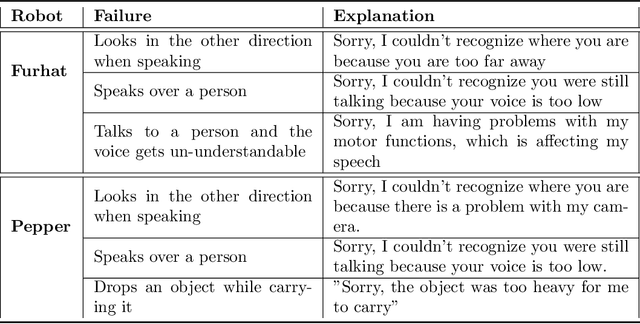
Expectations critically shape how people form judgments about robots, influencing whether they view failures as minor technical glitches or deal-breaking flaws. This work explores how high and low expectations, induced through brief video priming, affect user perceptions of robot failures and the utility of explanations in HRI. We conducted two online studies ($N=600$ total participants); each replicated two robots with different embodiments, Furhat and Pepper. In our first study, grounded in expectation theory, participants were divided into two groups, one primed with positive and the other with negative expectations regarding the robot's performance, establishing distinct expectation frameworks. This validation study aimed to verify whether the videos could reliably establish low and high-expectation profiles. In the second study, participants were primed using the validated videos and then viewed a new scenario in which the robot failed at a task. Half viewed a version where the robot explained its failure, while the other half received no explanation. We found that explanations significantly improved user perceptions of Furhat, especially when participants were primed to have lower expectations. Explanations boosted satisfaction and enhanced the robot's perceived expressiveness, indicating that effectively communicating the cause of errors can help repair user trust. By contrast, Pepper's explanations produced minimal impact on user attitudes, suggesting that a robot's embodiment and style of interaction could determine whether explanations can successfully offset negative impressions. Together, these findings underscore the need to consider users' expectations when tailoring explanation strategies in HRI. When expectations are initially low, a cogent explanation can make the difference between dismissing a failure and appreciating the robot's transparency and effort to communicate.
AsyReC: A Multimodal Graph-based Framework for Spatio-Temporal Asymmetric Dyadic Relationship Classification
Apr 07, 2025Dyadic social relationships, which refer to relationships between two individuals who know each other through repeated interactions (or not), are shaped by shared spatial and temporal experiences. Current computational methods for modeling these relationships face three major challenges: (1) the failure to model asymmetric relationships, e.g., one individual may perceive the other as a friend while the other perceives them as an acquaintance, (2) the disruption of continuous interactions by discrete frame sampling, which segments the temporal continuity of interaction in real-world scenarios, and (3) the limitation to consider periodic behavioral cues, such as rhythmic vocalizations or recurrent gestures, which are crucial for inferring the evolution of dyadic relationships. To address these challenges, we propose AsyReC, a multimodal graph-based framework for asymmetric dyadic relationship classification, with three core innovations: (i) a triplet graph neural network with node-edge dual attention that dynamically weights multimodal cues to capture interaction asymmetries (addressing challenge 1); (ii) a clip-level relationship learning architecture that preserves temporal continuity, enabling fine-grained modeling of real-world interaction dynamics (addressing challenge 2); and (iii) a periodic temporal encoder that projects time indices onto sine/cosine waveforms to model recurrent behavioral patterns (addressing challenge 3). Extensive experiments on two public datasets demonstrate state-of-the-art performance, while ablation studies validate the critical role of asymmetric interaction modeling and periodic temporal encoding in improving the robustness of dyadic relationship classification in real-world scenarios. Our code is publicly available at: https://github.com/tw-repository/AsyReC.
Robot-Led Vision Language Model Wellbeing Assessment of Children
Apr 03, 2025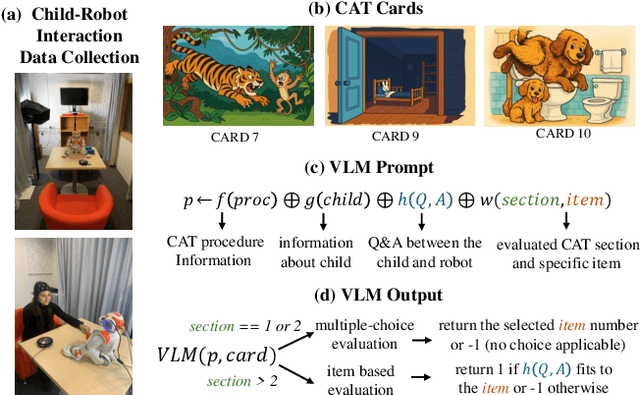
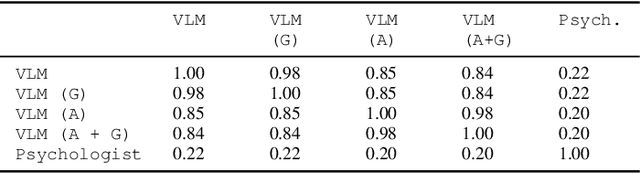
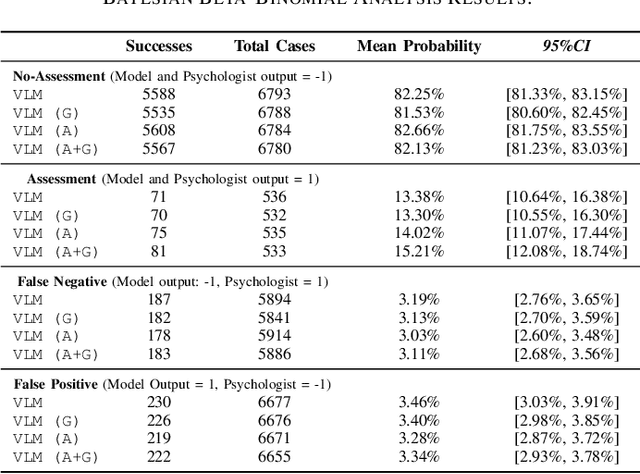
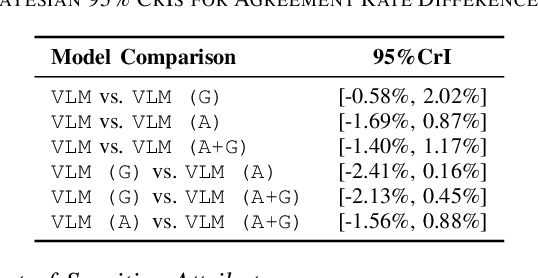
This study presents a novel robot-led approach to assessing children's mental wellbeing using a Vision Language Model (VLM). Inspired by the Child Apperception Test (CAT), the social robot NAO presented children with pictorial stimuli to elicit their verbal narratives of the images, which were then evaluated by a VLM in accordance with CAT assessment guidelines. The VLM's assessments were systematically compared to those provided by a trained psychologist. The results reveal that while the VLM demonstrates moderate reliability in identifying cases with no wellbeing concerns, its ability to accurately classify assessments with clinical concern remains limited. Moreover, although the model's performance was generally consistent when prompted with varying demographic factors such as age and gender, a significantly higher false positive rate was observed for girls, indicating potential sensitivity to gender attribute. These findings highlight both the promise and the challenges of integrating VLMs into robot-led assessments of children's wellbeing.