 Add to Chrome
 Add to Firefox
 Add to Edge
Investigating Associational Biases in Inter-Model Communication of Large Generative Models
Jan 29, 2026
Social bias in generative AI can manifest not only as performance disparities but also as associational bias, whereby models learn and reproduce stereotypical associations between concepts and demographic groups, even in the absence of explicit demographic information (e.g., associating doctors with men). These associations can persist, propagate, and potentially amplify across repeated exchanges in inter-model communication pipelines, where one generative model's output becomes another's input. This is especially salient for human-centred perception tasks, such as human activity recognition and affect prediction, where inferences about behaviour and internal states can lead to errors or stereotypical associations that propagate into unequal treatment. In this work, focusing on human activity and affective expression, we study how such associations evolve within an inter-model communication pipeline that alternates between image generation and image description. Using the RAF-DB and PHASE datasets, we quantify demographic distribution drift induced by model-to-model information exchange and assess whether these drifts are systematic using an explainability pipeline. Our results reveal demographic drifts toward younger representations for both actions and emotions, as well as toward more female-presenting representations, primarily for emotions. We further find evidence that some predictions are supported by spurious visual regions (e.g., background or hair) rather than concept-relevant cues (e.g., body or face). We also examine whether these demographic drifts translate into measurable differences in downstream behaviour, i.e., while predicting activity and emotion labels. Finally, we outline mitigation strategies spanning data-centric, training and deployment interventions, and emphasise the need for careful safeguards when deploying interconnected models in human-centred AI systems.

Investigating ReLoRA: Effects on the Learning Dynamics of Small Language Models
Sep 16, 2025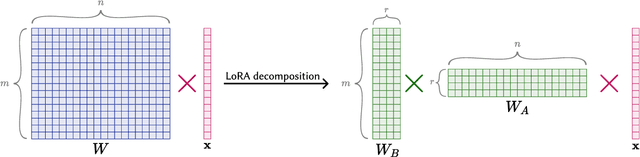
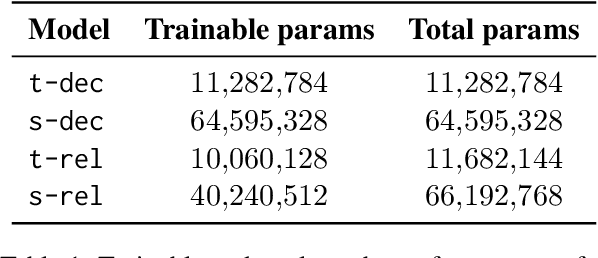
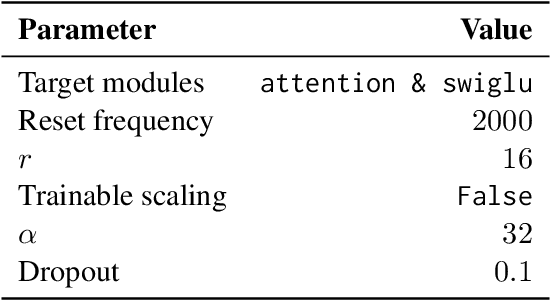
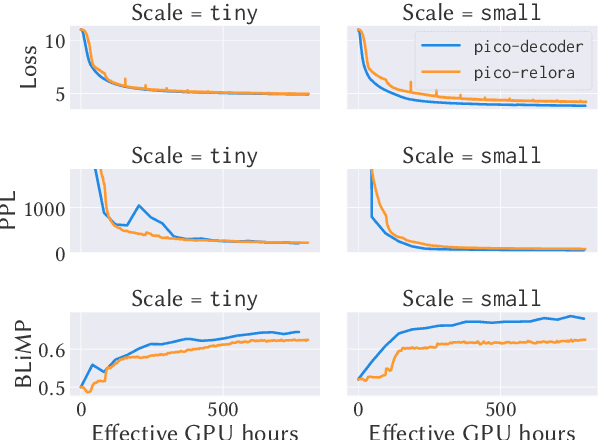
Parameter-efficient methods such as LoRA have revolutionised the fine-tuning of LLMs. Still, their extension to pretraining via ReLoRA is less well understood, especially for small language models (SLMs), which offer lower computational and environmental costs. This work is the first systematic study of ReLoRA in SLMs (11M-66M parameters), evaluating both performance and learning dynamics. Through ablation experiments, we find that ReLoRA generally performs worse than standard training on loss, Paloma perplexity and BLiMP, with the gap widening for the larger models. Further analysis of the learning dynamics of the models indicates that ReLoRA reinforces the rank deficiencies found in smaller models. These results indicate that low-rank update strategies may not transfer easily to SLM pretraining, highlighting the need for more research in the low-compute regime.