 Add to Chrome
 Add to Firefox
 Add to Edge
FAIR_XAI: Improving Multimodal Foundation Model Fairness via Explainability for Wellbeing Assessment
Apr 26, 2026
In recent years, the integration of multimodal machine learning in wellbeing assessment has offered transformative potential for monitoring mental health. However, with the rapid advancement of Vision-Language Models (VLMs), their deployment in clinical settings has raised concerns due to their lack of transparency and potential for bias. While previous research has explored the intersection of fairness and Explainable AI (XAI), its application to VLMs for wellbeing assessment and depression prediction remains under-explored. This work investigates VLM performance across laboratory (AFAR-BSFT) and naturalistic (E-DAIC) datasets, focusing on diagnostic reliability and demographic fairness. Performance varied substantially across environments and architectures; Phi3.5-Vision achieved 80.4% accuracy on E-DAIC, while Qwen2-VL struggled at 33.9%. Additionally, both models demonstrated a tendency to over-predict depression on AFAR-BSFT. Although bias existed across both architectures, Qwen2-VL showed higher gender disparities, while Phi-3.5-Vision exhibited more racial bias. Our XAI intervention framework yielded mixed results; fairness prompting achieved perfect equal opportunity for Qwen2-VL at a severe accuracy cost on E-DAIC. On AFAR-BSFT, explainability-based interventions improved procedural consistency but did not guarantee outcome fairness, sometimes amplifying racial bias. These results highlight a persistent gap between procedural transparency and equitable outcomes. We analyse these findings and consolidate concrete recommendations for addressing them, emphasising that future fairness interventions must jointly optimise predictive accuracy, demographic parity, and cross-domain generalisation.

Comparing Self-Disclosure Themes and Semantics to a Human, a Robot, and a Disembodied Agent
Apr 08, 2025
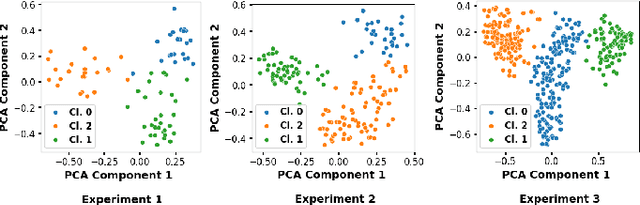
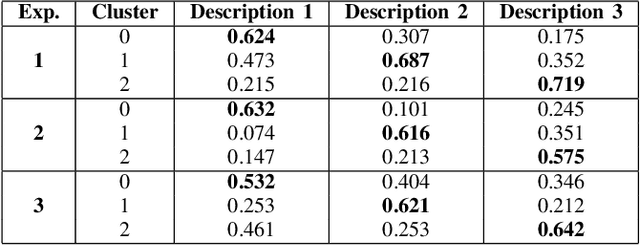
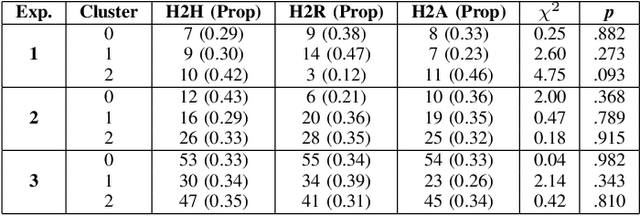
As social robots and other artificial agents become more conversationally capable, it is important to understand whether the content and meaning of self-disclosure towards these agents changes depending on the agent's embodiment. In this study, we analysed conversational data from three controlled experiments in which participants self-disclosed to a human, a humanoid social robot, and a disembodied conversational agent. Using sentence embeddings and clustering, we identified themes in participants' disclosures, which were then labelled and explained by a large language model. We subsequently assessed whether these themes and the underlying semantic structure of the disclosures varied by agent embodiment. Our findings reveal strong consistency: thematic distributions did not significantly differ across embodiments, and semantic similarity analyses showed that disclosures were expressed in highly comparable ways. These results suggest that while embodiment may influence human behaviour in human-robot and human-agent interactions, people tend to maintain a consistent thematic focus and semantic structure in their disclosures, whether speaking to humans or artificial interlocutors.
Supervised Learning for Table Tennis Match Prediction
Mar 28, 2023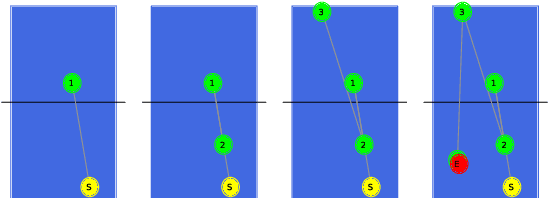
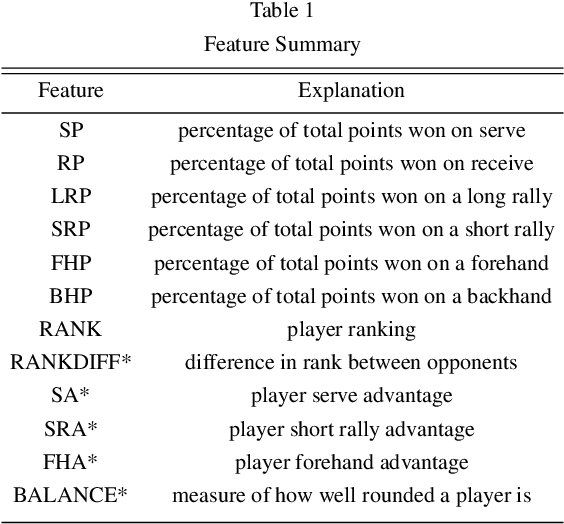
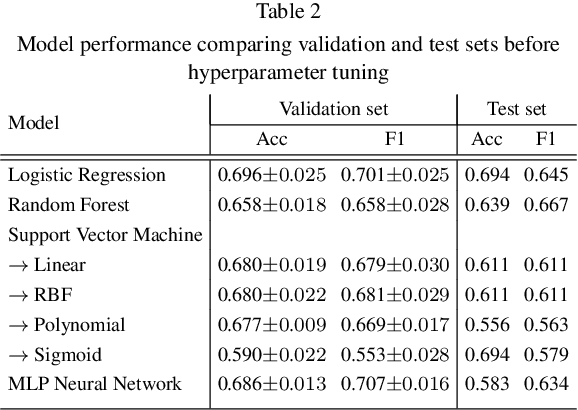
Machine learning, classification and prediction models have applications across a range of fields. Sport analytics is an increasingly popular application, but most existing work is focused on automated refereeing in mainstream sports and injury prevention. Research on other sports, such as table tennis, has only recently started gaining more traction. This paper proposes the use of machine learning to predict the outcome of table tennis single matches. We use player and match statistics as features and evaluate their relative importance in an ablation study. In terms of models, a number of popular models were explored. We found that 5-fold cross-validation and hyperparameter tuning was crucial to improve model performance. We investigated different feature aggregation strategies in our ablation study to demonstrate the robustness of the models. Different models performed comparably, with the accuracy of the results (61-70%) matching state-of-the-art models in comparable sports, such as tennis. The results can serve as a baseline for future table tennis prediction models, and can feed back to prediction research in similar ball sports.