 Add to Chrome
 Add to Firefox
 Add to Edge
DGFN: Double Generative Flow Networks
Nov 06, 2023
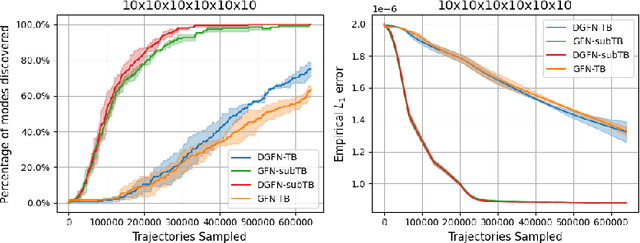

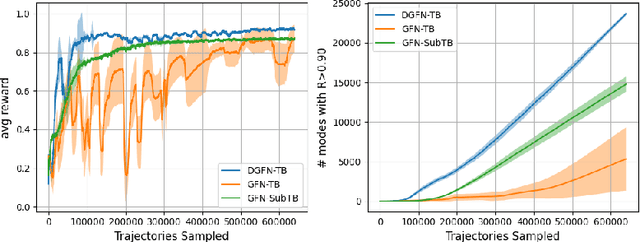
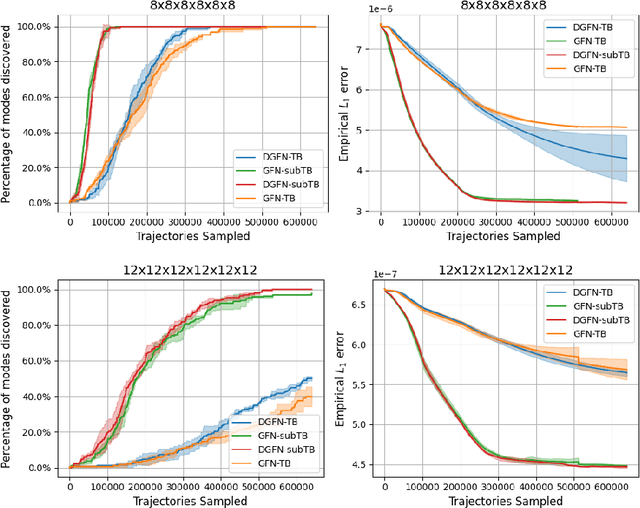
Deep learning is emerging as an effective tool in drug discovery, with potential applications in both predictive and generative models. Generative Flow Networks (GFlowNets/GFNs) are a recently introduced method recognized for the ability to generate diverse candidates, in particular in small molecule generation tasks. In this work, we introduce double GFlowNets (DGFNs). Drawing inspiration from reinforcement learning and Double Deep Q-Learning, we introduce a target network used to sample trajectories, while updating the main network with these sampled trajectories. Empirical results confirm that DGFNs effectively enhance exploration in sparse reward domains and high-dimensional state spaces, both challenging aspects of de-novo design in drug discovery.

Conditions on Preference Relations that Guarantee the Existence of Optimal Policies
Nov 03, 2023Learning from Preferential Feedback (LfPF) plays an essential role in training Large Language Models, as well as certain types of interactive learning agents. However, a substantial gap exists between the theory and application of LfPF algorithms. Current results guaranteeing the existence of optimal policies in LfPF problems assume that both the preferences and transition dynamics are determined by a Markov Decision Process. We introduce the Direct Preference Process, a new framework for analyzing LfPF problems in partially-observable, non-Markovian environments. Within this framework, we establish conditions that guarantee the existence of optimal policies by considering the ordinal structure of the preferences. Using the von Neumann-Morgenstern Expected Utility Theorem, we show that the Direct Preference Process generalizes the standard reinforcement learning problem. Our findings narrow the gap between the empirical success and theoretical understanding of LfPF algorithms and provide future practitioners with the tools necessary for a more principled design of LfPF agents.
Forecaster: Towards Temporally Abstract Tree-Search Planning from Pixels
Oct 16, 2023The ability to plan at many different levels of abstraction enables agents to envision the long-term repercussions of their decisions and thus enables sample-efficient learning. This becomes particularly beneficial in complex environments from high-dimensional state space such as pixels, where the goal is distant and the reward sparse. We introduce Forecaster, a deep hierarchical reinforcement learning approach which plans over high-level goals leveraging a temporally abstract world model. Forecaster learns an abstract model of its environment by modelling the transitions dynamics at an abstract level and training a world model on such transition. It then uses this world model to choose optimal high-level goals through a tree-search planning procedure. It additionally trains a low-level policy that learns to reach those goals. Our method not only captures building world models with longer horizons, but also, planning with such models in downstream tasks. We empirically demonstrate Forecaster's potential in both single-task learning and generalization to new tasks in the AntMaze domain.
A cry for help: Early detection of brain injury in newborns
Oct 13, 2023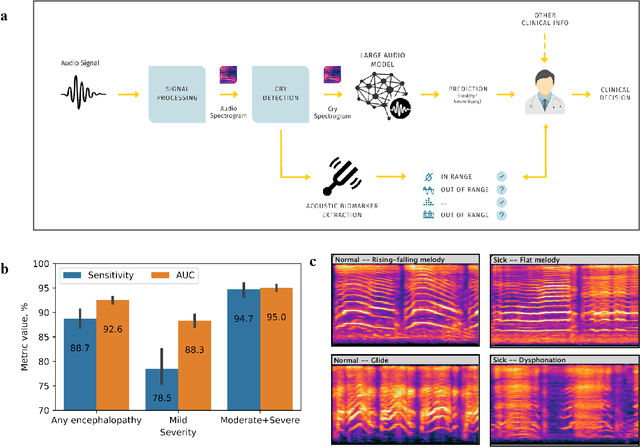
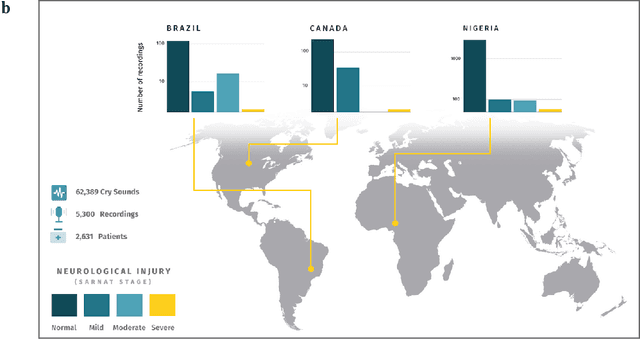
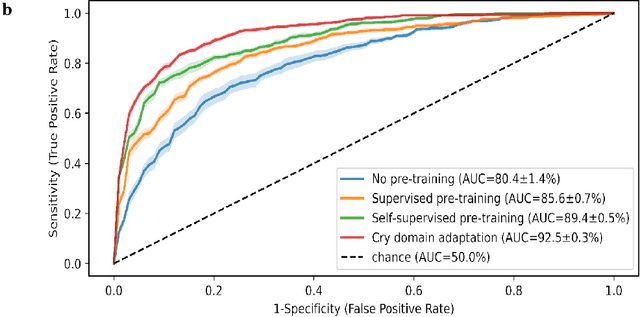
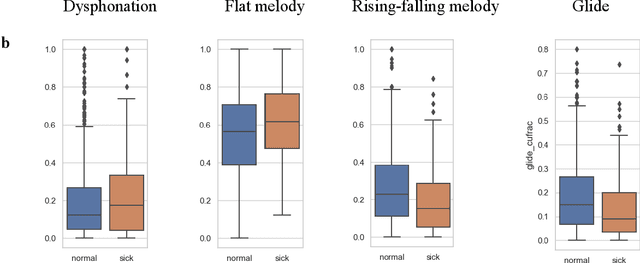
Since the 1960s, neonatal clinicians have known that newborns suffering from certain neurological conditions exhibit altered crying patterns such as the high-pitched cry in birth asphyxia. Despite an annual burden of over 1.5 million infant deaths and disabilities, early detection of neonatal brain injuries due to asphyxia remains a challenge, particularly in developing countries where the majority of births are not attended by a trained physician. Here we report on the first inter-continental clinical study to demonstrate that neonatal brain injury can be reliably determined from recorded infant cries using an AI algorithm we call Roseline. Previous and recent work has been limited by the lack of a large, high-quality clinical database of cry recordings, constraining the application of state-of-the-art machine learning. We develop a new training methodology for audio-based pathology detection models and evaluate this system on a large database of newborn cry sounds acquired from geographically diverse settings -- 5 hospitals across 3 continents. Our system extracts interpretable acoustic biomarkers that support clinical decisions and is able to accurately detect neurological injury from newborns' cries with an AUC of 92.5% (88.7% sensitivity at 80% specificity). Cry-based neurological monitoring opens the door for low-cost, easy-to-use, non-invasive and contact-free screening of at-risk babies, especially when integrated into simple devices like smartphones or neonatal ICU monitors. This would provide a reliable tool where there are no alternatives, but also curtail the need to regularly exert newborns to physically-exhausting or radiation-exposing assessments such as brain CT scans. This work sets the stage for embracing the infant cry as a vital sign and indicates the potential of AI-driven sound monitoring for the future of affordable healthcare.
Combining Spatial and Temporal Abstraction in Planning for Better Generalization
Sep 30, 2023
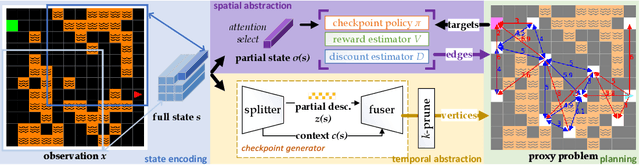
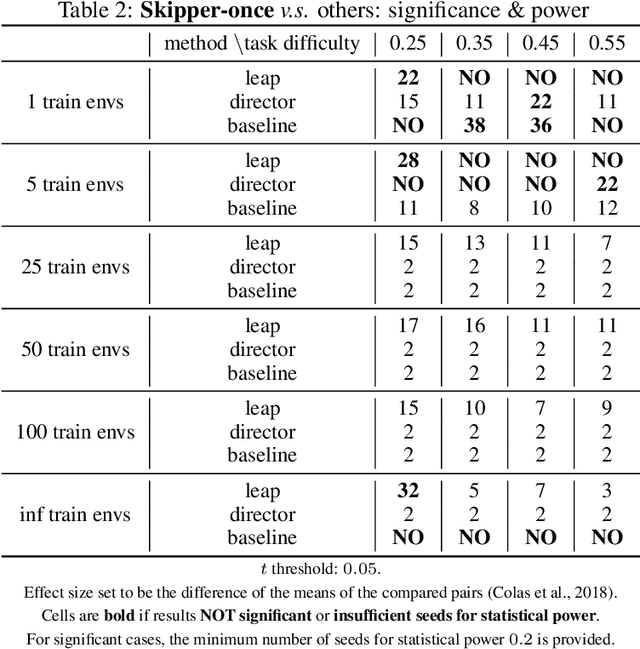

Inspired by human conscious planning, we propose Skipper, a model-based reinforcement learning agent that utilizes spatial and temporal abstractions to generalize learned skills in novel situations. It automatically decomposes the task at hand into smaller-scale, more manageable subtasks and hence enables sparse decision-making and focuses its computation on the relevant parts of the environment. This relies on the definition of a high-level proxy problem represented as a directed graph, in which vertices and edges are learned end-to-end using hindsight. Our theoretical analyses provide performance guarantees under appropriate assumptions and establish where our approach is expected to be helpful. Generalization-focused experiments validate Skipper's significant advantage in zero-shot generalization, compared to existing state-of-the-art hierarchical planning methods.
Policy composition in reinforcement learning via multi-objective policy optimization
Aug 30, 2023We enable reinforcement learning agents to learn successful behavior policies by utilizing relevant pre-existing teacher policies. The teacher policies are introduced as objectives, in addition to the task objective, in a multi-objective policy optimization setting. Using the Multi-Objective Maximum a Posteriori Policy Optimization algorithm (Abdolmaleki et al. 2020), we show that teacher policies can help speed up learning, particularly in the absence of shaping rewards. In two domains with continuous observation and action spaces, our agents successfully compose teacher policies in sequence and in parallel, and are also able to further extend the policies of the teachers in order to solve the task. Depending on the specified combination of task and teacher(s), teacher(s) may naturally act to limit the final performance of an agent. The extent to which agents are required to adhere to teacher policies are determined by hyperparameters which determine both the effect of teachers on learning speed and the eventual performance of the agent on the task. In the humanoid domain (Tassa et al. 2018), we also equip agents with the ability to control the selection of teachers. With this ability, agents are able to meaningfully compose from the teacher policies to achieve a superior task reward on the walk task than in cases without access to the teacher policies. We show the resemblance of composed task policies with the corresponding teacher policies through videos.
A Definition of Continual Reinforcement Learning
Jul 20, 2023In this paper we develop a foundation for continual reinforcement learning.
On the Convergence of Bounded Agents
Jul 20, 2023When has an agent converged? Standard models of the reinforcement learning problem give rise to a straightforward definition of convergence: An agent converges when its behavior or performance in each environment state stops changing. However, as we shift the focus of our learning problem from the environment's state to the agent's state, the concept of an agent's convergence becomes significantly less clear. In this paper, we propose two complementary accounts of agent convergence in a framing of the reinforcement learning problem that centers around bounded agents. The first view says that a bounded agent has converged when the minimal number of states needed to describe the agent's future behavior cannot decrease. The second view says that a bounded agent has converged just when the agent's performance only changes if the agent's internal state changes. We establish basic properties of these two definitions, show that they accommodate typical views of convergence in standard settings, and prove several facts about their nature and relationship. We take these perspectives, definitions, and analysis to bring clarity to a central idea of the field.
An Empirical Study of the Effectiveness of Using a Replay Buffer on Mode Discovery in GFlowNets
Jul 18, 2023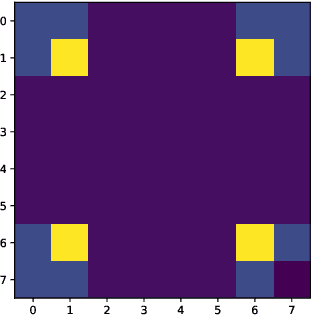
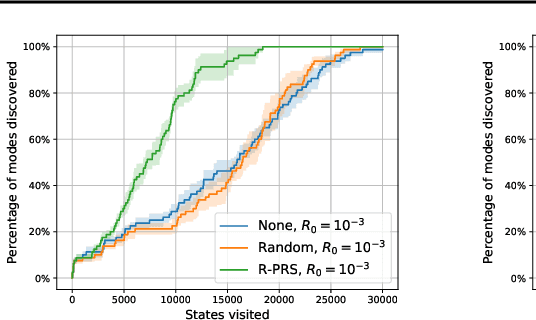
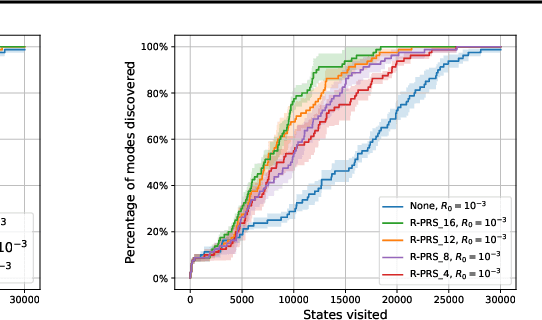
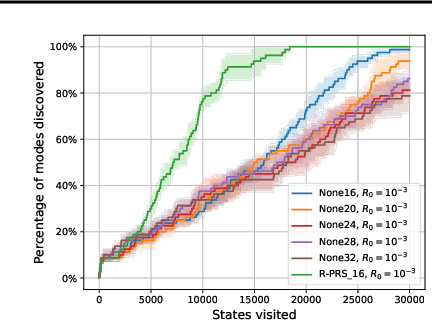
Reinforcement Learning (RL) algorithms aim to learn an optimal policy by iteratively sampling actions to learn how to maximize the total expected return, $R(x)$. GFlowNets are a special class of algorithms designed to generate diverse candidates, $x$, from a discrete set, by learning a policy that approximates the proportional sampling of $R(x)$. GFlowNets exhibit improved mode discovery compared to conventional RL algorithms, which is very useful for applications such as drug discovery and combinatorial search. However, since GFlowNets are a relatively recent class of algorithms, many techniques which are useful in RL have not yet been associated with them. In this paper, we study the utilization of a replay buffer for GFlowNets. We explore empirically various replay buffer sampling techniques and assess the impact on the speed of mode discovery and the quality of the modes discovered. Our experimental results in the Hypergrid toy domain and a molecule synthesis environment demonstrate significant improvements in mode discovery when training with a replay buffer, compared to training only with trajectories generated on-policy.
Optimism and Adaptivity in Policy Optimization
Jun 18, 2023We work towards a unifying paradigm for accelerating policy optimization methods in reinforcement learning (RL) through \emph{optimism} \& \emph{adaptivity}. Leveraging the deep connection between policy iteration and policy gradient methods, we recast seemingly unrelated policy optimization algorithms as the repeated application of two interleaving steps (i) an \emph{optimistic policy improvement operator} maps a prior policy $\pi_t$ to a hypothesis $\pi_{t+1}$ using a \emph{gradient ascent prediction}, followed by (ii) a \emph{hindsight adaptation} of the optimistic prediction based on a partial evaluation of the performance of $\pi_{t+1}$. We use this shared lens to jointly express other well-known algorithms, including soft and optimistic policy iteration, natural actor-critic methods, model-based policy improvement based on forward search, and meta-learning algorithms. By doing so, we shed light on collective theoretical properties related to acceleration via optimism \& adaptivity. Building on these insights, we design an \emph{adaptive \& optimistic policy gradient} algorithm via meta-gradient learning, and empirically highlight several design choices pertaining to optimism, in an illustrative task.