 Add to Chrome
 Add to Firefox
 Add to Edge
Learning to Learn from Language Feedback with Social Meta-Learning
Feb 18, 2026
Large language models (LLMs) often struggle to learn from corrective feedback within a conversational context. They are rarely proactive in soliciting this feedback, even when faced with ambiguity, which can make their dialogues feel static, one-sided, and lacking the adaptive qualities of human conversation. To address these limitations, we draw inspiration from social meta-learning (SML) in humans - the process of learning how to learn from others. We formulate SML as a finetuning methodology, training LLMs to solicit and learn from language feedback in simulated pedagogical dialogues, where static tasks are converted into interactive social learning problems. SML effectively teaches models to use conversation to solve problems they are unable to solve in a single turn. This capability generalises across domains; SML on math problems produces models that better use feedback to solve coding problems and vice versa. Furthermore, despite being trained only on fully-specified problems, these models are better able to solve underspecified tasks where critical information is revealed over multiple turns. When faced with this ambiguity, SML-trained models make fewer premature answer attempts and are more likely to ask for the information they need. This work presents a scalable approach to developing AI systems that effectively learn from language feedback.

Improving Interactive In-Context Learning from Natural Language Feedback
Feb 17, 2026Adapting one's thought process based on corrective feedback is an essential ability in human learning, particularly in collaborative settings. In contrast, the current large language model training paradigm relies heavily on modeling vast, static corpora. While effective for knowledge acquisition, it overlooks the interactive feedback loops essential for models to adapt dynamically to their context. In this work, we propose a framework that treats this interactive in-context learning ability not as an emergent property, but as a distinct, trainable skill. We introduce a scalable method that transforms single-turn verifiable tasks into multi-turn didactic interactions driven by information asymmetry. We first show that current flagship models struggle to integrate corrective feedback on hard reasoning tasks. We then demonstrate that models trained with our approach dramatically improve the ability to interactively learn from language feedback. More specifically, the multi-turn performance of a smaller model nearly reaches that of a model an order of magnitude larger. We also observe robust out-of-distribution generalization: interactive training on math problems transfers to diverse domains like coding, puzzles and maze navigation. Our qualitative analysis suggests that this improvement is due to an enhanced in-context plasticity. Finally, we show that this paradigm offers a unified path to self-improvement. By training the model to predict the teacher's critiques, effectively modeling the feedback environment, we convert this external signal into an internal capability, allowing the model to self-correct even without a teacher.
Position: Introspective Experience from Conversational Environments as a Path to Better Learning
Feb 16, 2026Current approaches to AI training treat reasoning as an emergent property of scale. We argue instead that robust reasoning emerges from linguistic self-reflection, itself internalized from high-quality social interaction. Drawing on Vygotskian developmental psychology, we advance three core positions centered on Introspection. First, we argue for the Social Genesis of the Private Mind: learning from conversational environments rises to prominence as a new way to make sense of the world; the friction of aligning with another agent, internal or not, refines and crystallizes the reasoning process. Second, we argue that dialogically scaffolded introspective experiences allow agents to engage in sense-making that decouples learning from immediate data streams, transforming raw environmental data into rich, learnable narratives. Finally, we contend that Dialogue Quality is the New Data Quality: the depth of an agent's private reasoning, and its efficiency regarding test-time compute, is determined by the diversity and rigor of the dialogues it has mastered. We conclude that optimizing these conversational scaffolds is the primary lever for the next generation of general intelligence.
InkFM: A Foundational Model for Full-Page Online Handwritten Note Understanding
Mar 29, 2025
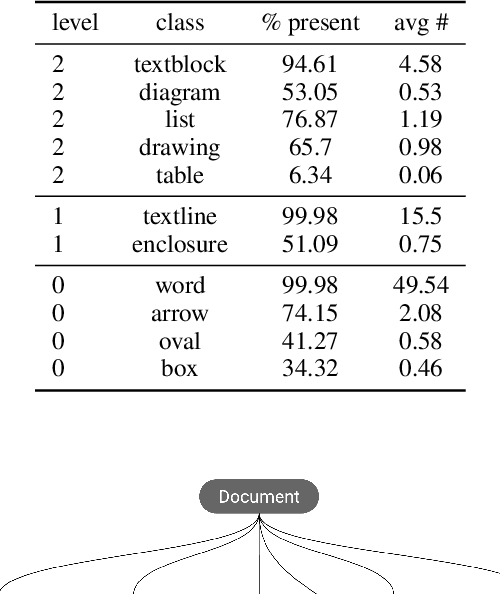
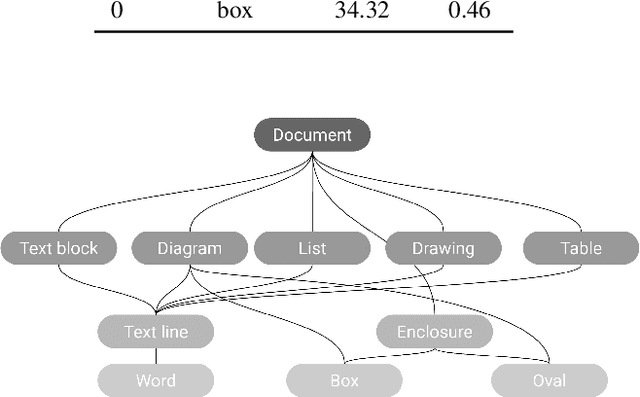
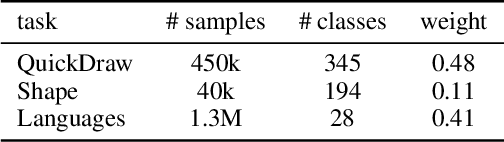
Tablets and styluses are increasingly popular for taking notes. To optimize this experience and ensure a smooth and efficient workflow, it's important to develop methods for accurately interpreting and understanding the content of handwritten digital notes. We introduce a foundational model called InkFM for analyzing full pages of handwritten content. Trained on a diverse mixture of tasks, this model offers a unique combination of capabilities: recognizing text in 28 different scripts, mathematical expressions recognition, and segmenting pages into distinct elements like text and drawings. Our results demonstrate that these tasks can be effectively unified within a single model, achieving SoTA text line segmentation out-of-the-box quality surpassing public baselines like docTR. Fine- or LoRA-tuning our base model on public datasets further improves the quality of page segmentation, achieves state-of the art text recognition (DeepWriting, CASIA, SCUT, and Mathwriting datasets) and sketch classification (QuickDraw). This adaptability of InkFM provides a powerful starting point for developing applications with handwritten input.
$\textit{Trans-LoRA}$: towards data-free Transferable Parameter Efficient Finetuning
May 27, 2024

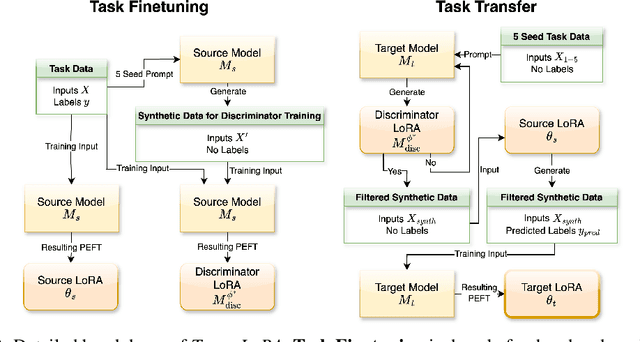

Low-rank adapters (LoRA) and their variants are popular parameter-efficient fine-tuning (PEFT) techniques that closely match full model fine-tune performance while requiring only a small number of additional parameters. These additional LoRA parameters are specific to the base model being adapted. When the base model needs to be deprecated and replaced with a new one, all the associated LoRA modules need to be re-trained. Such re-training requires access to the data used to train the LoRA for the original base model. This is especially problematic for commercial cloud applications where the LoRA modules and the base models are hosted by service providers who may not be allowed to host proprietary client task data. To address this challenge, we propose $\textit{Trans-LoRA}$ -- a novel method for lossless, nearly data-free transfer of LoRAs across base models. Our approach relies on synthetic data to transfer LoRA modules. Using large language models, we design a synthetic data generator to approximate the data-generating process of the $\textit{observed}$ task data subset. Training on the resulting synthetic dataset transfers LoRA modules to new models. We show the effectiveness of our approach using both LLama and Gemma model families. Our approach achieves lossless (mostly improved) LoRA transfer between models within and across different base model families, and even between different PEFT methods, on a wide variety of tasks.
Paraphrase and Solve: Exploring and Exploiting the Impact of Surface Form on Mathematical Reasoning in Large Language Models
Apr 17, 2024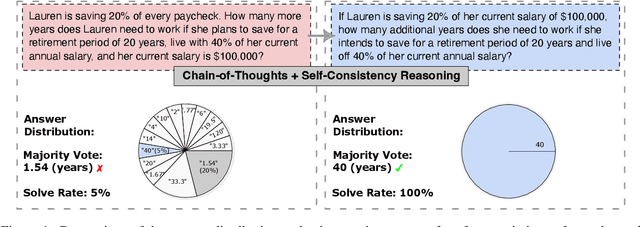
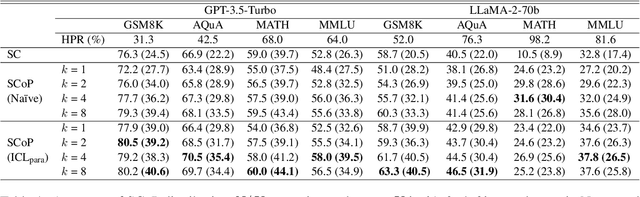
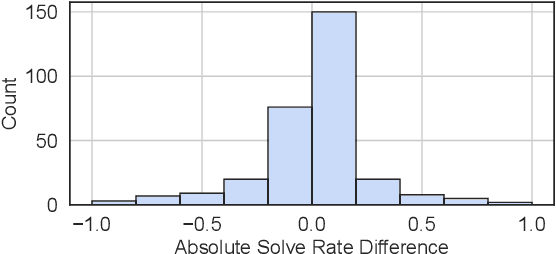
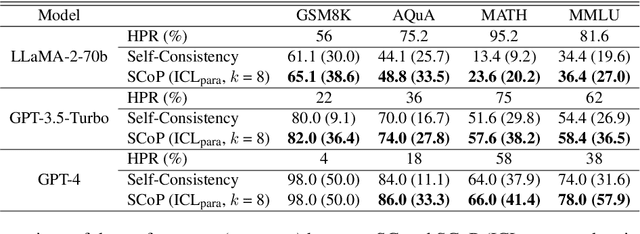
This paper studies the relationship between the surface form of a mathematical problem and its solvability by large language models. We find that subtle alterations in the surface form can significantly impact the answer distribution and the solve rate, exposing the language model's lack of robustness and sensitivity to the surface form in reasoning through complex problems. To improve mathematical reasoning performance, we propose Self-Consistency-over-Paraphrases (SCoP), which diversifies reasoning paths from specific surface forms of the problem. We evaluate our approach on four mathematics reasoning benchmarks over three large language models and show that SCoP improves mathematical reasoning performance over vanilla self-consistency, particularly for problems initially deemed unsolvable. Finally, we provide additional experiments and discussion regarding problem difficulty and surface forms, including cross-model difficulty agreement and paraphrasing transferability, and Variance of Variations (VOV) for language model evaluation.
ESG Accountability Made Easy: DocQA at Your Service
Nov 30, 2023

We present Deep Search DocQA. This application enables information extraction from documents via a question-answering conversational assistant. The system integrates several technologies from different AI disciplines consisting of document conversion to machine-readable format (via computer vision), finding relevant data (via natural language processing), and formulating an eloquent response (via large language models). Users can explore over 10,000 Environmental, Social, and Governance (ESG) disclosure reports from over 2000 corporations. The Deep Search platform can be accessed at: https://ds4sd.github.io.
Extracting Text Representations for Terms and Phrases in Technical Domains
May 25, 2023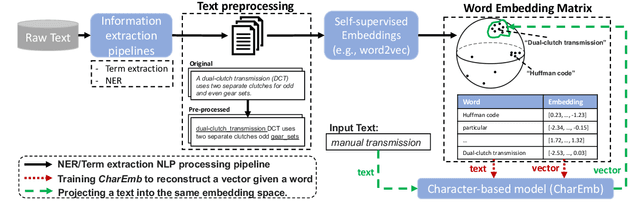
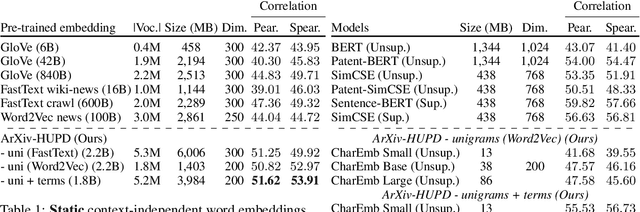
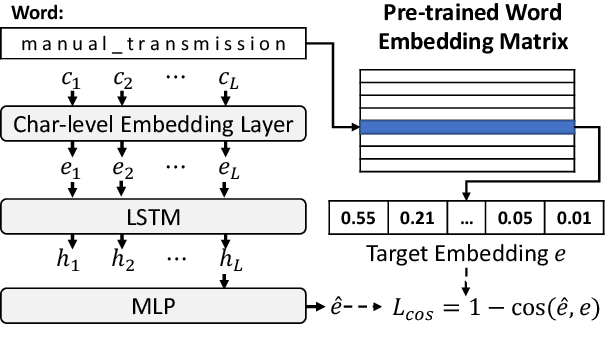
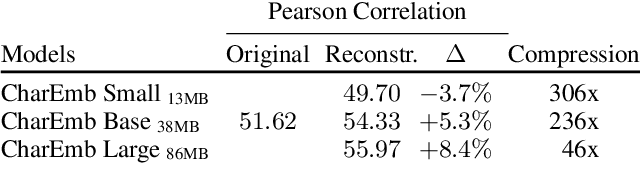
Extracting dense representations for terms and phrases is a task of great importance for knowledge discovery platforms targeting highly-technical fields. Dense representations are used as features for downstream components and have multiple applications ranging from ranking results in search to summarization. Common approaches to create dense representations include training domain-specific embeddings with self-supervised setups or using sentence encoder models trained over similarity tasks. In contrast to static embeddings, sentence encoders do not suffer from the out-of-vocabulary (OOV) problem, but impose significant computational costs. In this paper, we propose a fully unsupervised approach to text encoding that consists of training small character-based models with the objective of reconstructing large pre-trained embedding matrices. Models trained with this approach can not only match the quality of sentence encoders in technical domains, but are 5 times smaller and up to 10 times faster, even on high-end GPUs.
Unsupervised Term Extraction for Highly Technical Domains
Oct 24, 2022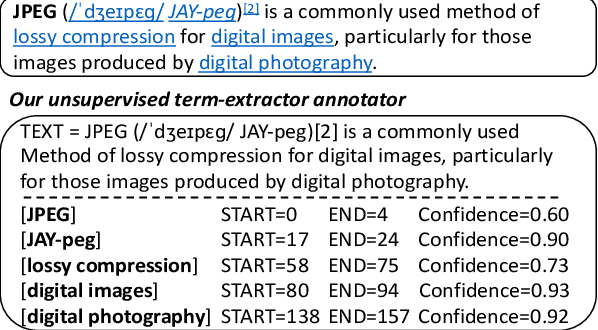
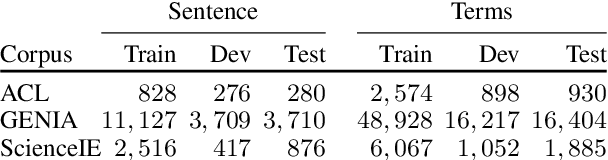
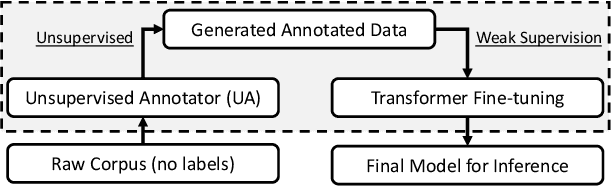

Term extraction is an information extraction task at the root of knowledge discovery platforms. Developing term extractors that are able to generalize across very diverse and potentially highly technical domains is challenging, as annotations for domains requiring in-depth expertise are scarce and expensive to obtain. In this paper, we describe the term extraction subsystem of a commercial knowledge discovery platform that targets highly technical fields such as pharma, medical, and material science. To be able to generalize across domains, we introduce a fully unsupervised annotator (UA). It extracts terms by combining novel morphological signals from sub-word tokenization with term-to-topic and intra-term similarity metrics, computed using general-domain pre-trained sentence-encoders. The annotator is used to implement a weakly-supervised setup, where transformer-models are fine-tuned (or pre-trained) over the training data generated by running the UA over large unlabeled corpora. Our experiments demonstrate that our setup can improve the predictive performance while decreasing the inference latency on both CPUs and GPUs. Our annotators provide a very competitive baseline for all the cases where annotations are not available.
Active Learning for Imbalanced Civil Infrastructure Data
Oct 19, 2022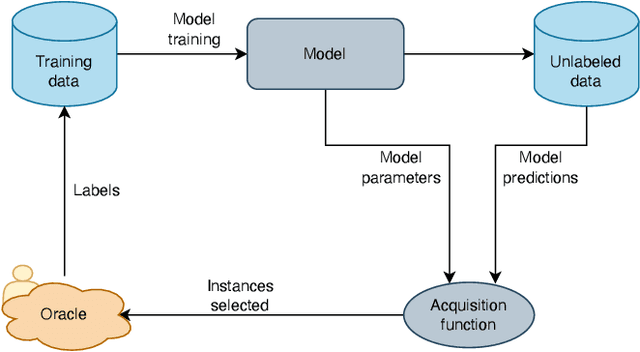
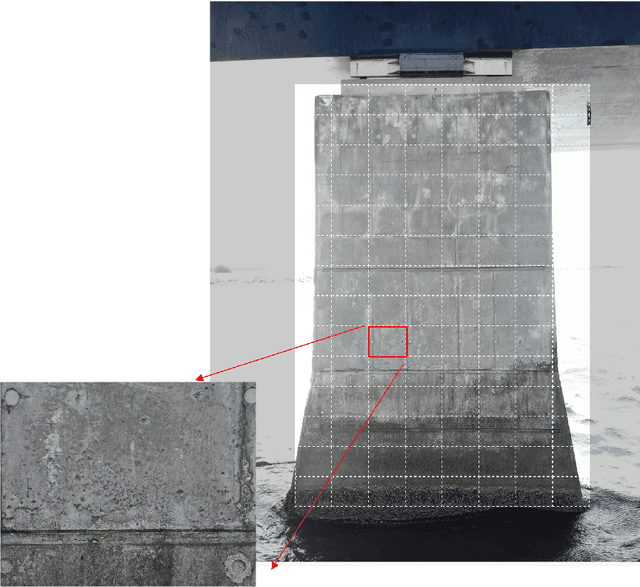
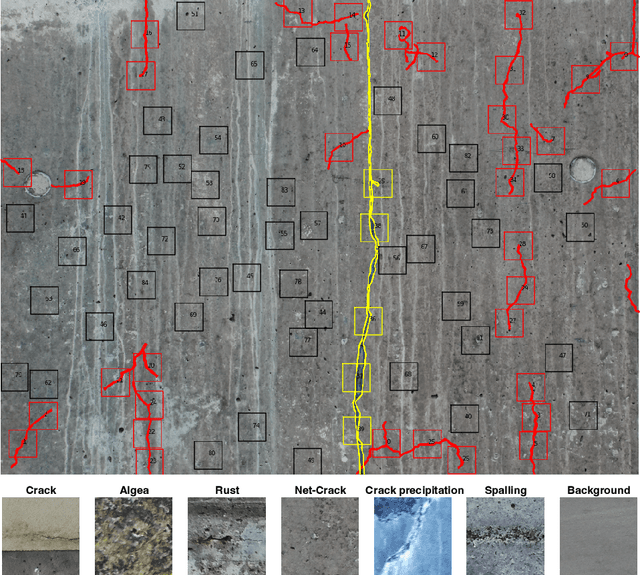
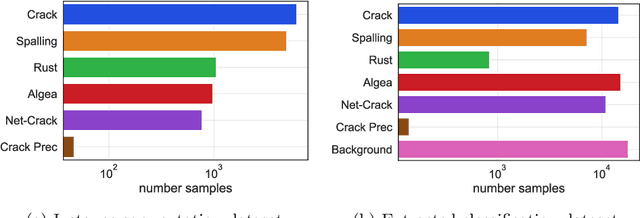
Aging civil infrastructures are closely monitored by engineers for damage and critical defects. As the manual inspection of such large structures is costly and time-consuming, we are working towards fully automating the visual inspections to support the prioritization of maintenance activities. To that end we combine recent advances in drone technology and deep learning. Unfortunately, annotation costs are incredibly high as our proprietary civil engineering dataset must be annotated by highly trained engineers. Active learning is, therefore, a valuable tool to optimize the trade-off between model performance and annotation costs. Our use-case differs from the classical active learning setting as our dataset suffers from heavy class imbalance and consists of a much larger already labeled data pool than other active learning research. We present a novel method capable of operating in this challenging setting by replacing the traditional active learning acquisition function with an auxiliary binary discriminator. We experimentally show that our novel method outperforms the best-performing traditional active learning method (BALD) by 5% and 38% accuracy on CIFAR-10 and our proprietary dataset respectively.