 Add to Chrome
 Add to Firefox
 Add to Edge
Probing Scientific General Intelligence of LLMs with Scientist-Aligned Workflows
Dec 18, 2025
Despite advances in scientific AI, a coherent framework for Scientific General Intelligence (SGI)-the ability to autonomously conceive, investigate, and reason across scientific domains-remains lacking. We present an operational SGI definition grounded in the Practical Inquiry Model (PIM: Deliberation, Conception, Action, Perception) and operationalize it via four scientist-aligned tasks: deep research, idea generation, dry/wet experiments, and experimental reasoning. SGI-Bench comprises over 1,000 expert-curated, cross-disciplinary samples inspired by Science's 125 Big Questions, enabling systematic evaluation of state-of-the-art LLMs. Results reveal gaps: low exact match (10--20%) in deep research despite step-level alignment; ideas lacking feasibility and detail; high code executability but low execution result accuracy in dry experiments; low sequence fidelity in wet protocols; and persistent multimodal comparative-reasoning challenges. We further introduce Test-Time Reinforcement Learning (TTRL), which optimizes retrieval-augmented novelty rewards at inference, enhancing hypothesis novelty without reference answer. Together, our PIM-grounded definition, workflow-centric benchmark, and empirical insights establish a foundation for AI systems that genuinely participate in scientific discovery.

A new compressive video sensing framework for mobile broadcast
Feb 08, 2013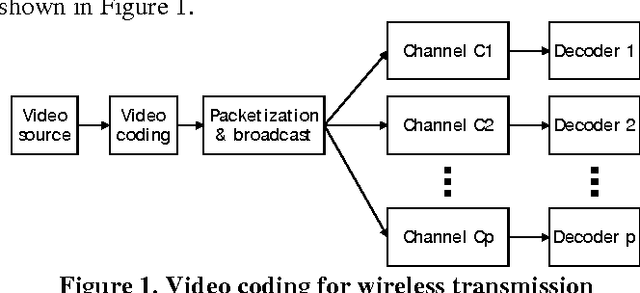
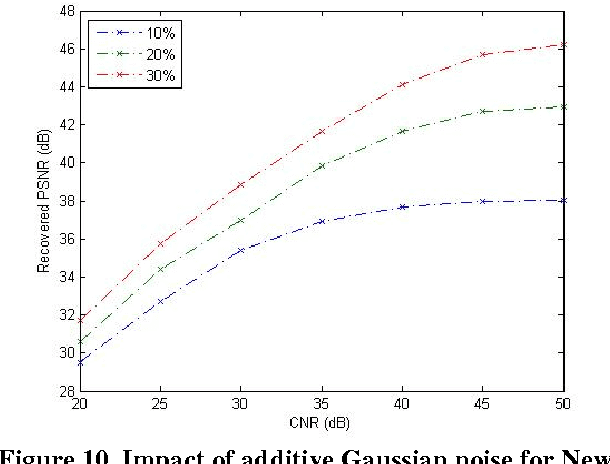
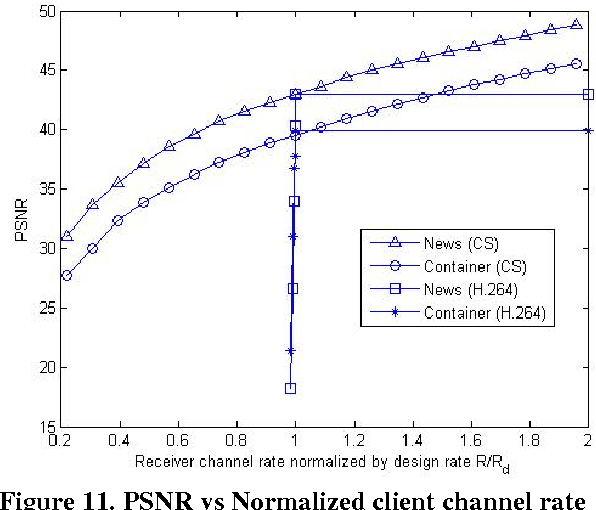
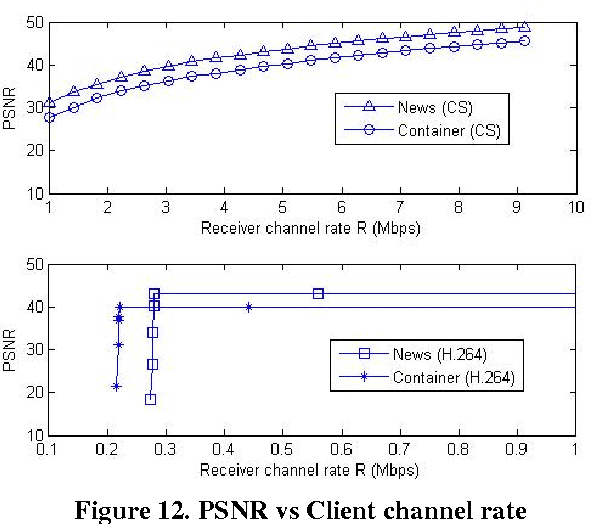
A new video coding method based on compressive sampling is proposed. In this method, a video is coded using compressive measurements on video cubes. Video reconstruction is performed by minimization of total variation (TV) of the pixelwise DCT coefficients along the temporal direction. A new reconstruction algorithm is developed from TVAL3, an efficient TV minimization algorithm based on the alternating minimization and augmented Lagrangian methods. Video coding with this method is inherently scalable, and has applications in mobile broadcast.
* 9 pages, 12 figures