 Add to Chrome
 Add to Firefox
 Add to Edge
Contrastive Prompts Improve Disentanglement in Text-to-Image Diffusion Models
Feb 21, 2024
Text-to-image diffusion models have achieved remarkable performance in image synthesis, while the text interface does not always provide fine-grained control over certain image factors. For instance, changing a single token in the text can have unintended effects on the image. This paper shows a simple modification of classifier-free guidance can help disentangle image factors in text-to-image models. The key idea of our method, Contrastive Guidance, is to characterize an intended factor with two prompts that differ in minimal tokens: the positive prompt describes the image to be synthesized, and the baseline prompt serves as a "baseline" that disentangles other factors. Contrastive Guidance is a general method we illustrate whose benefits in three scenarios: (1) to guide domain-specific diffusion models trained on an object class, (2) to gain continuous, rig-like controls for text-to-image generation, and (3) to improve the performance of zero-shot image editors.

U-shaped Vision Mamba for Single Image Dehazing
Feb 16, 2024
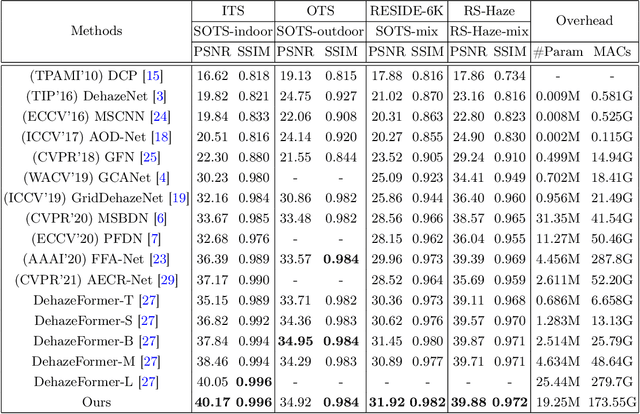
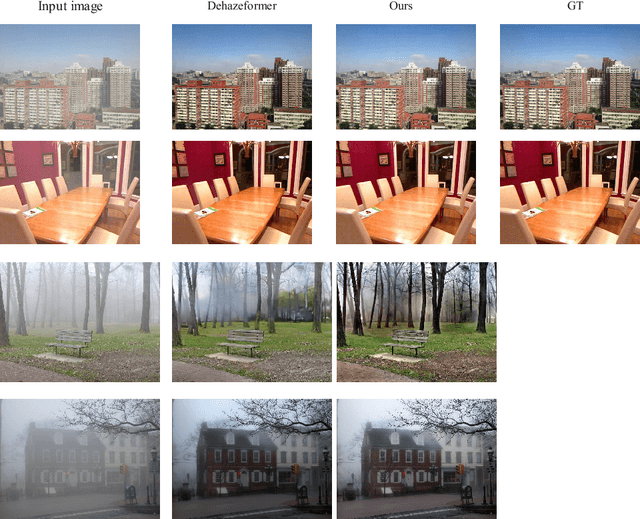
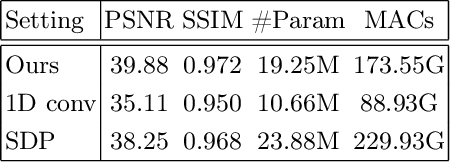
Currently, Transformer is the most popular architecture for image dehazing, but due to its large computational complexity, its ability to handle long-range dependency is limited on resource-constrained devices. To tackle this challenge, we introduce the U-shaped Vision Mamba (UVM-Net), an efficient single-image dehazing network. Inspired by the State Space Sequence Models (SSMs), a new deep sequence model known for its power to handle long sequences, we design a Bi-SSM block that integrates the local feature extraction ability of the convolutional layer with the ability of the SSM to capture long-range dependencies. Extensive experimental results demonstrate the effectiveness of our method. Our method provides a more highly efficient idea of long-range dependency modeling for image dehazing as well as other image restoration tasks. The URL of the code is \url{https://github.com/zzr-idam/UVM-Net}. Our method takes only \textbf{0.009} seconds to infer a $325 \times 325$ resolution image (100FPS) without I/O handling time.
Polyp-DAM: Polyp segmentation via depth anything model
Feb 03, 2024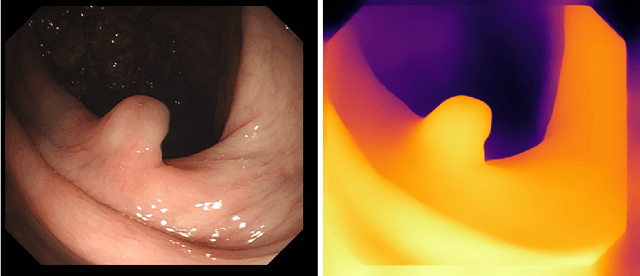
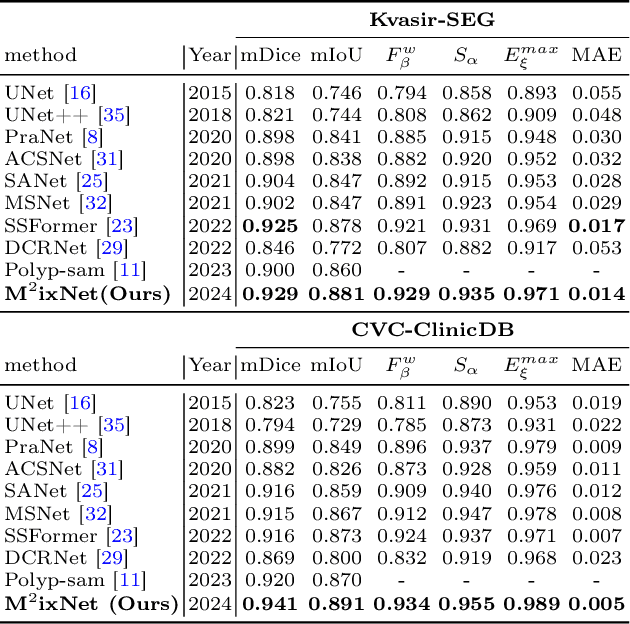

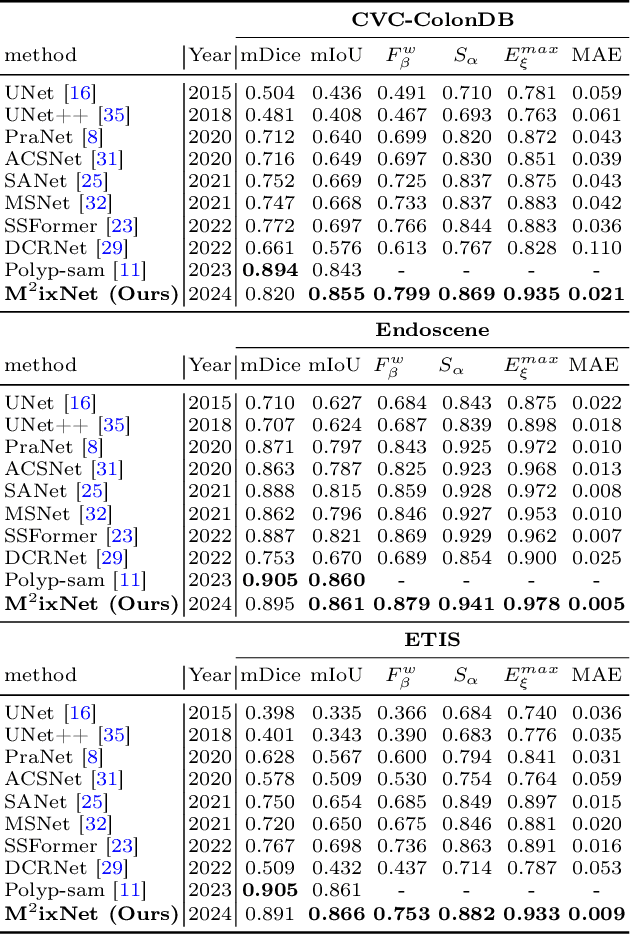
Recently, large models (Segment Anything model) came on the scene to provide a new baseline for polyp segmentation tasks. This demonstrates that large models with a sufficient image level prior can achieve promising performance on a given task. In this paper, we unfold a new perspective on polyp segmentation modeling by leveraging the Depth Anything Model (DAM) to provide depth prior to polyp segmentation models. Specifically, the input polyp image is first passed through a frozen DAM to generate a depth map. The depth map and the input polyp images are then concatenated and fed into a convolutional neural network with multiscale to generate segmented images. Extensive experimental results demonstrate the effectiveness of our method, and in addition, we observe that our method still performs well on images of polyps with noise. The URL of our code is \url{https://github.com/zzr-idam/Polyp-DAM}.
MixNet: Towards Effective and Efficient UHD Low-Light Image Enhancement
Jan 19, 2024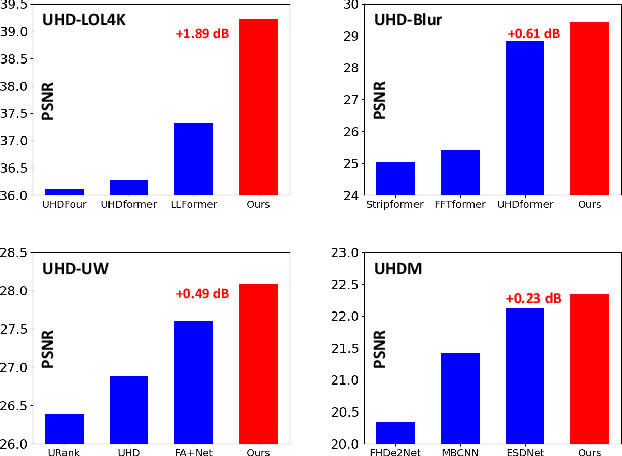
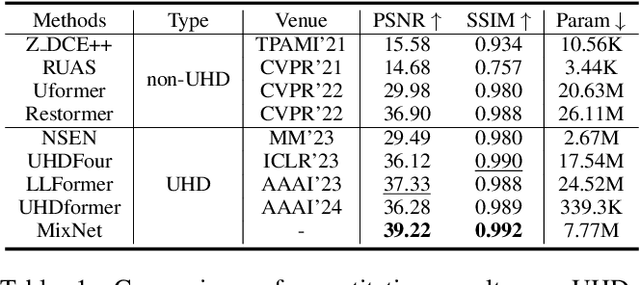
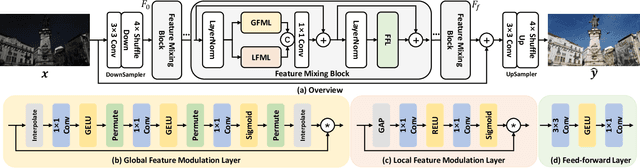
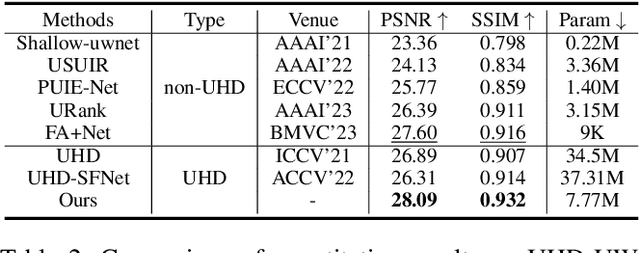
With the continuous advancement of imaging devices, the prevalence of Ultra-High-Definition (UHD) images is rising. Although many image restoration methods have achieved promising results, they are not directly applicable to UHD images on devices with limited computational resources due to the inherently high computational complexity of UHD images. In this paper, we focus on the task of low-light image enhancement (LLIE) and propose a novel LLIE method called MixNet, which is designed explicitly for UHD images. To capture the long-range dependency of features without introducing excessive computational complexity, we present the Global Feature Modulation Layer (GFML). GFML associates features from different views by permuting the feature maps, enabling efficient modeling of long-range dependency. In addition, we also design the Local Feature Modulation Layer (LFML) and Feed-forward Layer (FFL) to capture local features and transform features into a compact representation. This way, our MixNet achieves effective LLIE with few model parameters and low computational complexity. We conducted extensive experiments on both synthetic and real-world datasets, and the comprehensive results demonstrate that our proposed method surpasses the performance of current state-of-the-art methods. The code will be available at \url{https://github.com/zzr-idam/MixNet}.
Vulnerabilities of Foundation Model Integrated Federated Learning Under Adversarial Threats
Jan 18, 2024Federated Learning (FL) addresses critical issues in machine learning related to data privacy and security, yet suffering from data insufficiency and imbalance under certain circumstances. The emergence of foundation models (FMs) offers potential solutions to the limitations of existing FL frameworks, e.g., by generating synthetic data for model initialization. However, due to the inherent safety concerns of FMs, integrating FMs into FL could introduce new risks, which remains largely unexplored. To address this gap, we conduct the first investigation on the vulnerability of FM integrated FL (FM-FL) under adversarial threats. Based on a unified framework of FM-FL, we introduce a novel attack strategy that exploits safety issues of FM to compromise FL client models. Through extensive experiments with well-known models and benchmark datasets in both image and text domains, we reveal the high susceptibility of the FM-FL to this new threat under various FL configurations. Furthermore, we find that existing FL defense strategies offer limited protection against this novel attack approach. This research highlights the critical need for enhanced security measures in FL in the era of FMs.
Remote Sensing ChatGPT: Solving Remote Sensing Tasks with ChatGPT and Visual Models
Jan 17, 2024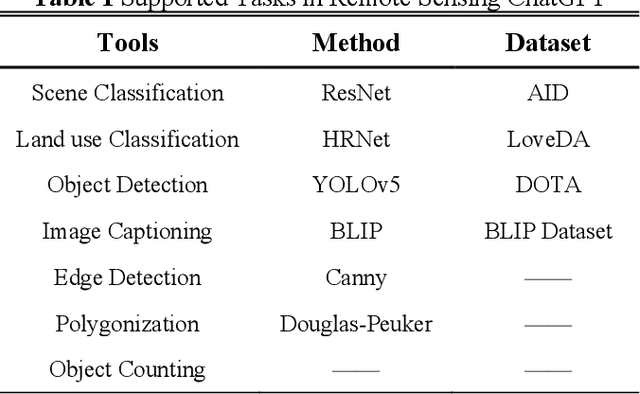

Recently, the flourishing large language models(LLM), especially ChatGPT, have shown exceptional performance in language understanding, reasoning, and interaction, attracting users and researchers from multiple fields and domains. Although LLMs have shown great capacity to perform human-like task accomplishment in natural language and natural image, their potential in handling remote sensing interpretation tasks has not yet been fully explored. Moreover, the lack of automation in remote sensing task planning hinders the accessibility of remote sensing interpretation techniques, especially to non-remote sensing experts from multiple research fields. To this end, we present Remote Sensing ChatGPT, an LLM-powered agent that utilizes ChatGPT to connect various AI-based remote sensing models to solve complicated interpretation tasks. More specifically, given a user request and a remote sensing image, we utilized ChatGPT to understand user requests, perform task planning according to the tasks' functions, execute each subtask iteratively, and generate the final response according to the output of each subtask. Considering that LLM is trained with natural language and is not capable of directly perceiving visual concepts as contained in remote sensing images, we designed visual cues that inject visual information into ChatGPT. With Remote Sensing ChatGPT, users can simply send a remote sensing image with the corresponding request, and get the interpretation results as well as language feedback from Remote Sensing ChatGPT. Experiments and examples show that Remote Sensing ChatGPT can tackle a wide range of remote sensing tasks and can be extended to more tasks with more sophisticated models such as the remote sensing foundation model. The code and demo of Remote Sensing ChatGPT is publicly available at https://github.com/HaonanGuo/Remote-Sensing-ChatGPT .
Exchange means change: an unsupervised single-temporal change detection framework based on intra- and inter-image patch exchange
Oct 01, 2023Change detection (CD) is a critical task in studying the dynamics of ecosystems and human activities using multi-temporal remote sensing images. While deep learning has shown promising results in CD tasks, it requires a large number of labeled and paired multi-temporal images to achieve high performance. Pairing and annotating large-scale multi-temporal remote sensing images is both expensive and time-consuming. To make deep learning-based CD techniques more practical and cost-effective, we propose an unsupervised single-temporal CD framework based on intra- and inter-image patch exchange (I3PE). The I3PE framework allows for training deep change detectors on unpaired and unlabeled single-temporal remote sensing images that are readily available in real-world applications. The I3PE framework comprises four steps: 1) intra-image patch exchange method is based on an object-based image analysis method and adaptive clustering algorithm, which generates pseudo-bi-temporal image pairs and corresponding change labels from single-temporal images by exchanging patches within the image; 2) inter-image patch exchange method can generate more types of land-cover changes by exchanging patches between images; 3) a simulation pipeline consisting of several image enhancement methods is proposed to simulate the radiometric difference between pre- and post-event images caused by different imaging conditions in real situations; 4) self-supervised learning based on pseudo-labels is applied to further improve the performance of the change detectors in both unsupervised and semi-supervised cases. Extensive experiments on two large-scale datasets demonstrate that I3PE outperforms representative unsupervised approaches and achieves F1 value improvements of 10.65% and 6.99% to the SOTA method. Moreover, I3PE can improve the performance of the ... (see the original article for full abstract)
SAAN: Similarity-aware attention flow network for change detection with VHR remote sensing images
Aug 28, 2023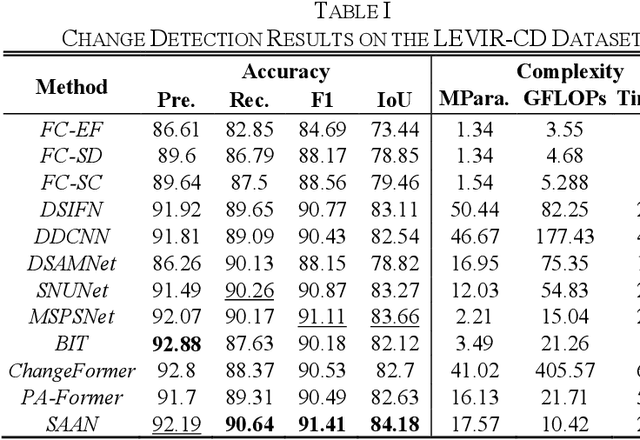
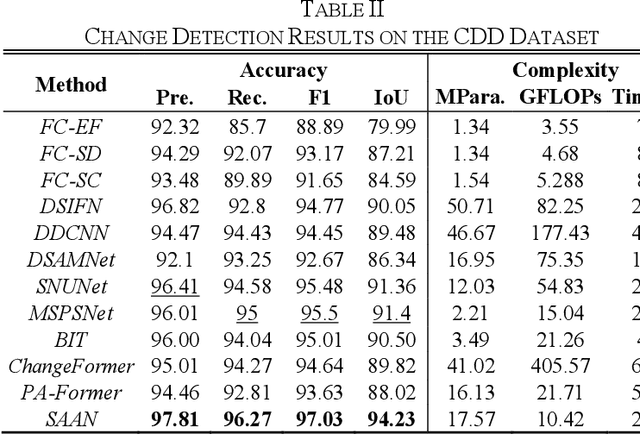
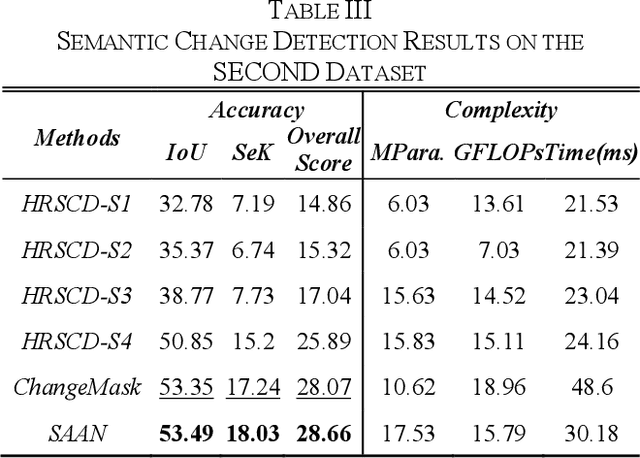
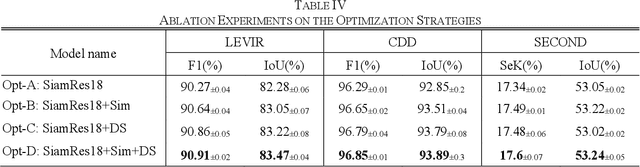
Change detection (CD) is a fundamental and important task for monitoring the land surface dynamics in the earth observation field. Existing deep learning-based CD methods typically extract bi-temporal image features using a weight-sharing Siamese encoder network and identify change regions using a decoder network. These CD methods, however, still perform far from satisfactorily as we observe that 1) deep encoder layers focus on irrelevant background regions and 2) the models' confidence in the change regions is inconsistent at different decoder stages. The first problem is because deep encoder layers cannot effectively learn from imbalanced change categories using the sole output supervision, while the second problem is attributed to the lack of explicit semantic consistency preservation. To address these issues, we design a novel similarity-aware attention flow network (SAAN). SAAN incorporates a similarity-guided attention flow module with deeply supervised similarity optimization to achieve effective change detection. Specifically, we counter the first issue by explicitly guiding deep encoder layers to discover semantic relations from bi-temporal input images using deeply supervised similarity optimization. The extracted features are optimized to be semantically similar in the unchanged regions and dissimilar in the changing regions. The second drawback can be alleviated by the proposed similarity-guided attention flow module, which incorporates similarity-guided attention modules and attention flow mechanisms to guide the model to focus on discriminative channels and regions. We evaluated the effectiveness and generalization ability of the proposed method by conducting experiments on a wide range of CD tasks. The experimental results demonstrate that our method achieves excellent performance on several CD tasks, with discriminative features and semantic consistency preserved.
T-UNet: Triplet UNet for Change Detection in High-Resolution Remote Sensing Images
Aug 04, 2023Remote sensing image change detection aims to identify the differences between images acquired at different times in the same area. It is widely used in land management, environmental monitoring, disaster assessment and other fields. Currently, most change detection methods are based on Siamese network structure or early fusion structure. Siamese structure focuses on extracting object features at different times but lacks attention to change information, which leads to false alarms and missed detections. Early fusion (EF) structure focuses on extracting features after the fusion of images of different phases but ignores the significance of object features at different times for detecting change details, making it difficult to accurately discern the edges of changed objects. To address these issues and obtain more accurate results, we propose a novel network, Triplet UNet(T-UNet), based on a three-branch encoder, which is capable to simultaneously extract the object features and the change features between the pre- and post-time-phase images through triplet encoder. To effectively interact and fuse the features extracted from the three branches of triplet encoder, we propose a multi-branch spatial-spectral cross-attention module (MBSSCA). In the decoder stage, we introduce the channel attention mechanism (CAM) and spatial attention mechanism (SAM) to fully mine and integrate detailed textures information at the shallow layer and semantic localization information at the deep layer.
Exploring Effective Priors and Efficient Models for Weakly-Supervised Change Detection
Jul 27, 2023Weakly-supervised change detection (WSCD) aims to detect pixel-level changes with only image-level annotations. Owing to its label efficiency, WSCD is drawing increasing attention recently. However, current WSCD methods often encounter the challenge of change missing and fabricating, i.e., the inconsistency between image-level annotations and pixel-level predictions. Specifically, change missing refer to the situation that the WSCD model fails to predict any changed pixels, even though the image-level label indicates changed, and vice versa for change fabricating. To address this challenge, in this work, we leverage global-scale and local-scale priors in WSCD and propose two components: a Dilated Prior (DP) decoder and a Label Gated (LG) constraint. The DP decoder decodes samples with the changed image-level label, skips samples with the unchanged label, and replaces them with an all-unchanged pixel-level label. The LG constraint is derived from the correspondence between changed representations and image-level labels, penalizing the model when it mispredicts the change status. Additionally, we develop TransWCD, a simple yet powerful transformer-based model, showcasing the potential of weakly-supervised learning in change detection. By integrating the DP decoder and LG constraint into TransWCD, we form TransWCD-DL. Our proposed TransWCD and TransWCD-DL achieve significant +6.33% and +9.55% F1 score improvements over the state-of-the-art methods on the WHU-CD dataset, respectively. Some performance metrics even exceed several fully-supervised change detection (FSCD) competitors. Code will be available at https://github.com/zhenghuizhao/TransWCD.