 Add to Chrome
 Add to Firefox
 Add to Edge
Shape Your Feed: An LLM-based Agentic System for Conversational Recommendation
Aug 06, 2026
Industrial recommendation systems predominantly adopt a passive ranking paradigm that infers user preferences from implicit behavioral signals (e.g., clicks, dwell time) rather than explicit, natural language inputs. As a result, users experience a persistent discrepancy between their explicit interests and what passive behavioral algorithms deliver, limiting their ability to express nuanced preferences or steer their feed in real time. To address this growing gap between how recommendations are optimized and how users wish to articulate their interests, we present Shape Your Feed (SYF), an LLM-based agentic recommendation framework that enables real-time, multimodal co-curation of content. SYF employs a three-tier architecture: (i) a Perception Flow that captures fine-grained user intent from text prompts, voice commands, and UI interactions; (ii) a Serving Flow that performs real-time agentic re-ranking and pruning of candidate items, grounded in a persistent Semantic Profile encoding evolving user preferences; and (iii) a Self-Evolution Flow that aligns system behavior with human judgments via Direct Preference Optimization (DPO) and an LLM-as-a-Judge ensemble. Offline evaluations show that SYF's alignment scoring module achieves 98.85% accuracy, substantially improving over strong few-shot baselines. Large-scale online A/B experiments on production traffic further demonstrate that SYF improves feed relevance and user sentiment, indicating a practical and scalable path toward interactive, user-steerable recommendation in industrial settings.

Self-supervised Deep Reinforcement Learning with Generalized Computation Graphs for Robot Navigation
May 17, 2018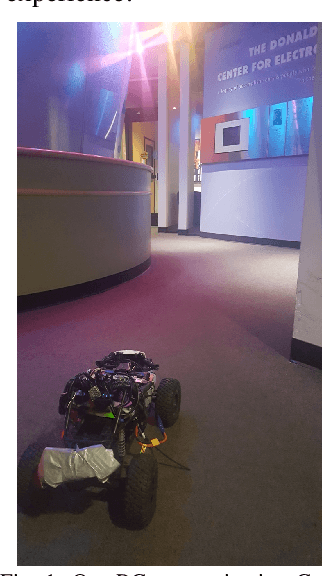
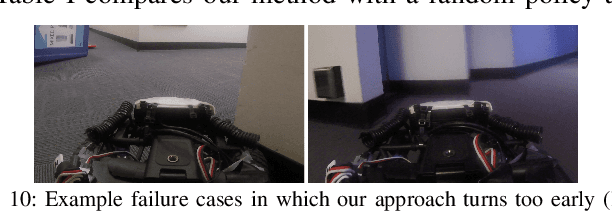
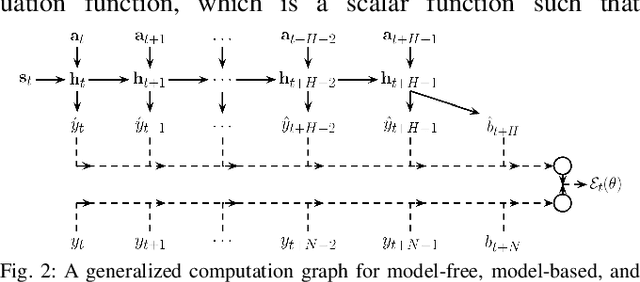
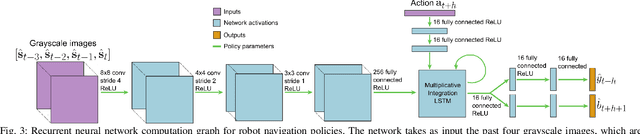
Enabling robots to autonomously navigate complex environments is essential for real-world deployment. Prior methods approach this problem by having the robot maintain an internal map of the world, and then use a localization and planning method to navigate through the internal map. However, these approaches often include a variety of assumptions, are computationally intensive, and do not learn from failures. In contrast, learning-based methods improve as the robot acts in the environment, but are difficult to deploy in the real-world due to their high sample complexity. To address the need to learn complex policies with few samples, we propose a generalized computation graph that subsumes value-based model-free methods and model-based methods, with specific instantiations interpolating between model-free and model-based. We then instantiate this graph to form a navigation model that learns from raw images and is sample efficient. Our simulated car experiments explore the design decisions of our navigation model, and show our approach outperforms single-step and $N$-step double Q-learning. We also evaluate our approach on a real-world RC car and show it can learn to navigate through a complex indoor environment with a few hours of fully autonomous, self-supervised training. Videos of the experiments and code can be found at github.com/gkahn13/gcg