 Add to Chrome
 Add to Firefox
 Add to Edge
P-K-GCN: Physics-augmented Koopman-enhanced Graph Convolutional Network for Deep Spatiotemporal Super-resolution
Jun 17, 2026
High-fidelity simulation of spatiotemporal dynamics is computationally prohibitive, necessitating efficient super-resolution techniques to reconstruct high-resolution data from coarse-grained inputs. Traditional data-driven methods often lack physical constraints, and simple physics-informed learning struggles with irregular spatial geometries and intricately evolving temporal dynamics. To tackle these challenges, we propose a Physics-augmented Koopman-enhanced Graph Convolutional Network (P-K-GCN) for spatiotemporal super-resolution on irregular geometries. Specifically, a continuous spline-based GCN is first designed to extract spatial dependencies directly from coarse graph, and Koopman operator theory is incorporated to project the nonlinear dynamics into a compact latent space where temporal progression is linearized. Second, we augment the optimization objective with a physics-based loss to force the data-driven reconstructions to adhere to physical laws for improving predictive fidelity and robustness. Finally, we provide a rigorous theoretical analysis, establishing that the physics augmentation and Koopman regularization mathematically guarantees a reduction in super-resolution error by diminishing Rademacher complexity and tightening generalization bounds. We evaluate our framework on reconstructing spatially high-resolution cardiac electrodynamics across a 3D heart geometry from sparse low-resolution measurements. Numerical experiments demonstrate that our method achieves superior accuracy compared to baseline models.

Multi-Modal Machine Learning for Breast Cancer Recurrence Prediction
Jun 01, 2026Breast cancer recurrence, a leading cause of long-term mortality among survivors, requires timely and accurate risk assessment to guide follow-up care and treatment planning. Traditional predictive models, often limited to either structured or unstructured data alone, struggle to capture the full clinical context. This study examines the impact of integrating multi-modal clinical data, including treatment records, pathology reports, and clinician notes, on recurrence prediction. By integrating a rule-based regular expression extraction mechanism with a rigorous precedence-based conflict reconciliation strategy, our approach effectively recovers definitive tumor characteristics from free-text pathology narratives to augment structured records. We also benchmark performance against commonly used feature sets from prior breast cancer studies to assess the added value of multi-modal integration. Single-source and multi-modal inputs are evaluated across a range of machine learning models. Results show that multi-modal integration consistently improves predictive accuracy compared to single-modal methods.
Multi-Task LLM with LoRA Fine-Tuning for Automated Cancer Staging and Biomarker Extraction
Apr 14, 2026Pathology reports serve as the definitive record for breast cancer staging, yet their unstructured format impedes large-scale data curation. While Large Language Models (LLMs) offer semantic reasoning, their deployment is often limited by high computational costs and hallucination risks. This study introduces a parameter-efficient, multi-task framework for automating the extraction of Tumor-Node-Metastasis (TNM) staging, histologic grade, and biomarkers. We fine-tune a Llama-3-8B-Instruct encoder using Low-Rank Adaptation (LoRA) on a curated, expert-verified dataset of 10,677 reports. Unlike generative approaches, our architecture utilizes parallel classification heads to enforce consistent schema adherence. Experimental results demonstrate that the model achieves a Macro F1 score of 0.976, successfully resolving complex contextual ambiguities and heterogeneous reporting formats that challenge traditional extraction methods including rule-based natural language processing (NLP) pipelines, zero-shot LLMs, and single-task LLM baselines. The proposed adapter-efficient, multi-task architecture enables reliable, scalable pathology-derived cancer staging and biomarker profiling, with the potential to enhance clinical decision support and accelerate data-driven oncology research.
Geometry-aware Active Learning of Spatiotemporal Dynamic Systems
May 01, 2025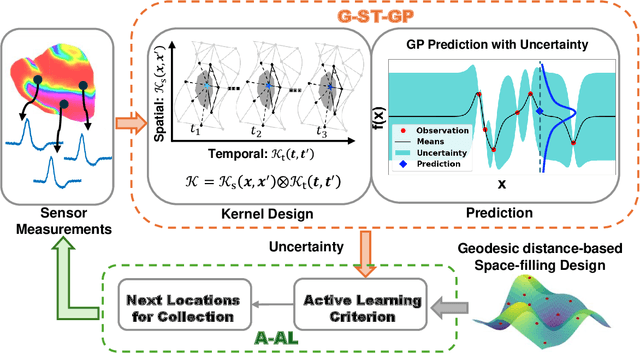
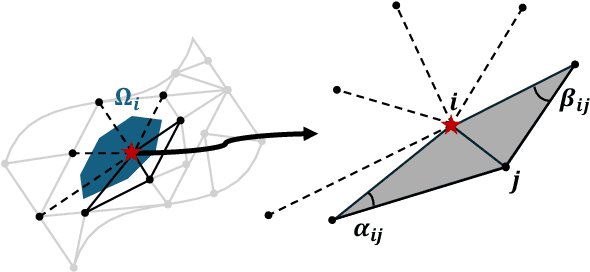
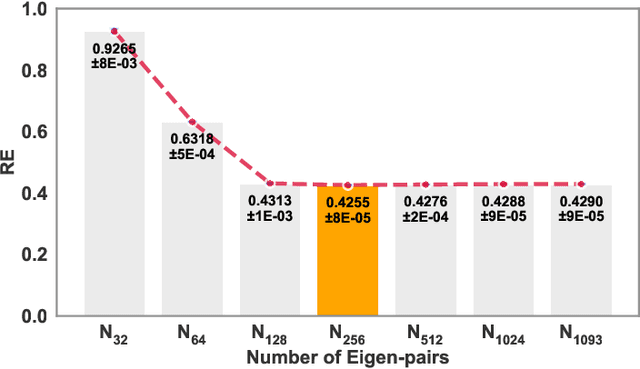
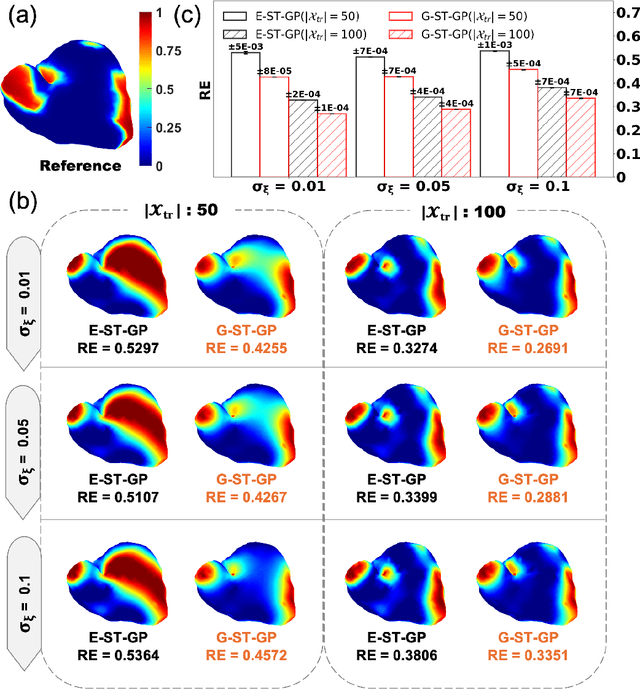
Rapid developments in advanced sensing and imaging have significantly enhanced information visibility, opening opportunities for predictive modeling of complex dynamic systems. However, sensing signals acquired from such complex systems are often distributed across 3D geometries and rapidly evolving over time, posing significant challenges in spatiotemporal predictive modeling. This paper proposes a geometry-aware active learning framework for modeling spatiotemporal dynamic systems. Specifically, we propose a geometry-aware spatiotemporal Gaussian Process (G-ST-GP) to effectively integrate the temporal correlations and geometric manifold features for reliable prediction of high-dimensional dynamic behaviors. In addition, we develop an adaptive active learning strategy to strategically identify informative spatial locations for data collection and further maximize the prediction accuracy. This strategy achieves the adaptive trade-off between the prediction uncertainty in the G-ST-GP model and the space-filling design guided by the geodesic distance across the 3D geometry. We implement the proposed framework to model the spatiotemporal electrodynamics in a 3D heart geometry. Numerical experiments show that our framework outperforms traditional methods lacking the mechanism of geometric information incorporation or effective data collection.
SpeHeatal: A Cluster-Enhanced Segmentation Method for Sperm Morphology Analysis
Feb 18, 2025The accurate assessment of sperm morphology is crucial in andrological diagnostics, where the segmentation of sperm images presents significant challenges. Existing approaches frequently rely on large annotated datasets and often struggle with the segmentation of overlapping sperm and the presence of dye impurities. To address these challenges, this paper first analyzes the issue of overlapping sperm tails from a geometric perspective and introduces a novel clustering algorithm, Con2Dis, which effectively segments overlapping tails by considering three essential factors: CONnectivity, CONformity, and DIStance. Building on this foundation, we propose an unsupervised method, SpeHeatal, designed for the comprehensive segmentation of the SPErm HEAd and TAiL. SpeHeatal employs the Segment Anything Model(SAM) to generate masks for sperm heads while filtering out dye impurities, utilizes Con2Dis to segment tails, and then applies a tailored mask splicing technique to produce complete sperm masks. Experimental results underscore the superior performance of SpeHeatal, particularly in handling images with overlapping sperm.
Physics-augmented Deep Learning with Adversarial Domain Adaptation: Applications to STM Image Denoising
Sep 08, 2024Image denoising is a critical task in various scientific fields such as medical imaging and material characterization, where the accurate recovery of underlying structures from noisy data is essential. Although supervised denoising techniques have achieved significant advancements, they typically require large datasets of paired clean-noisy images for training. Unsupervised methods, while not reliant on paired data, typically necessitate a set of unpaired clean images for training, which are not always accessible. In this paper, we propose a physics-augmented deep learning with adversarial domain adaption (PDA-Net) framework for unsupervised image denoising, with applications to denoise real-world scanning tunneling microscopy (STM) images. Our PDA-Net leverages the underlying physics to simulate and envision the ground truth for denoised STM images. Additionally, built upon Generative Adversarial Networks (GANs), we incorporate a cycle-consistency module and a domain adversarial module into our PDA-Net to address the challenge of lacking paired training data and achieve information transfer between the simulated and real experimental domains. Finally, we propose to implement feature alignment and weight-sharing techniques to fully exploit the similarity between simulated and real experimental images, thereby enhancing the denoising performance in both the simulation and experimental domains. Experimental results demonstrate that the proposed PDA-Net successfully enhances the quality of STM images, offering promising applications to enhance scientific discovery and accelerate experimental quantum material research.
MUSE-Net: Missingness-aware mUlti-branching Self-attention Encoder for Irregular Longitudinal Electronic Health Records
Jun 30, 2024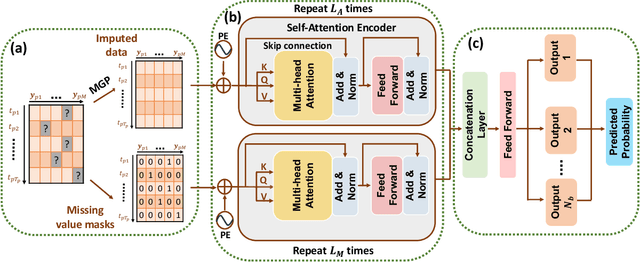
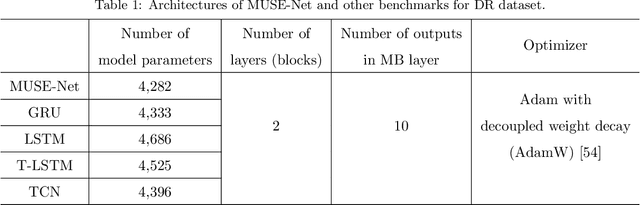
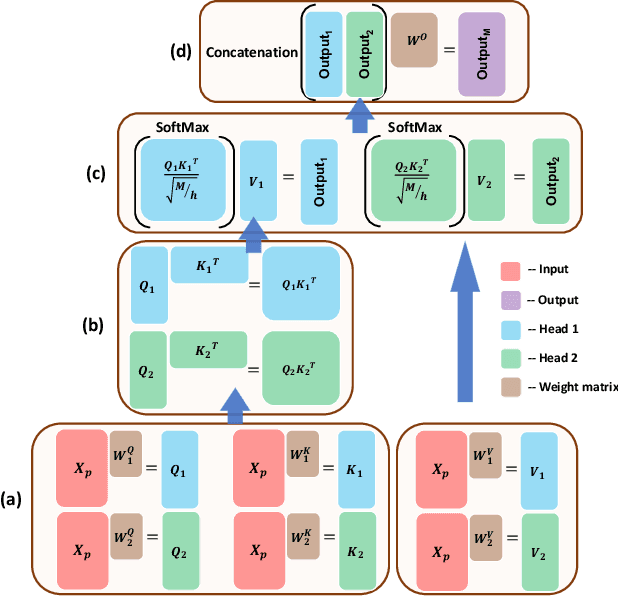
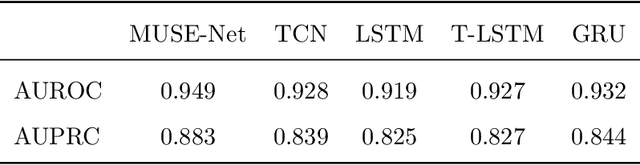
The era of big data has made vast amounts of clinical data readily available, particularly in the form of electronic health records (EHRs), which provides unprecedented opportunities for developing data-driven diagnostic tools to enhance clinical decision making. However, the application of EHRs in data-driven modeling faces challenges such as irregularly spaced multi-variate time series, issues of incompleteness, and data imbalance. Realizing the full data potential of EHRs hinges on the development of advanced analytical models. In this paper, we propose a novel Missingness-aware mUlti-branching Self-attention Encoder (MUSE-Net) to cope with the challenges in modeling longitudinal EHRs for data-driven disease prediction. The MUSE-Net leverages a multi-task Gaussian process (MGP) with missing value masks for data imputation, a multi-branching architecture to address the data imbalance problem, and a time-aware self-attention encoder to account for the irregularly spaced time interval in longitudinal EHRs. We evaluate the proposed MUSE-Net using both synthetic and real-world datasets. Experimental results show that our MUSE-Net outperforms existing methods that are widely used to investigate longitudinal signals.
The Effect of Different Optimization Strategies to Physics-Constrained Deep Learning for Soil Moisture Estimation
Mar 13, 2024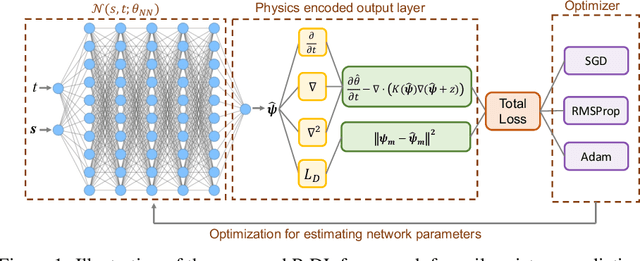
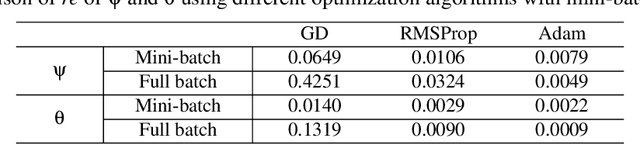

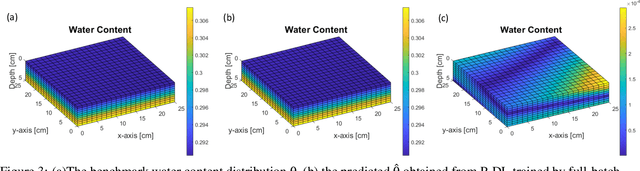
Soil moisture is a key hydrological parameter that has significant importance to human society and the environment. Accurate modeling and monitoring of soil moisture in crop fields, especially in the root zone (top 100 cm of soil), is essential for improving agricultural production and crop yield with the help of precision irrigation and farming tools. Realizing the full sensor data potential depends greatly on advanced analytical and predictive domain-aware models. In this work, we propose a physics-constrained deep learning (P-DL) framework to integrate physics-based principles on water transport and water sensing signals for effective reconstruction of the soil moisture dynamics. We adopt three different optimizers, namely Adam, RMSprop, and GD, to minimize the loss function of P-DL during the training process. In the illustrative case study, we demonstrate the empirical convergence of Adam optimizers outperforms the other optimization methods in both mini-batch and full-batch training.
Physics-constrained Active Learning for Soil Moisture Estimation and Optimal Sensor Placement
Mar 12, 2024Soil moisture is a crucial hydrological state variable that has significant importance to the global environment and agriculture. Precise monitoring of soil moisture in crop fields is critical to reducing agricultural drought and improving crop yield. In-situ soil moisture sensors, which are buried at pre-determined depths and distributed across the field, are promising solutions for monitoring soil moisture. However, high-density sensor deployment is neither economically feasible nor practical. Thus, to achieve a higher spatial resolution of soil moisture dynamics using a limited number of sensors, we integrate a physics-based agro-hydrological model based on Richards' equation in a physics-constrained deep learning framework to accurately predict soil moisture dynamics in the soil's root zone. This approach ensures that soil moisture estimates align well with sensor observations while obeying physical laws at the same time. Furthermore, to strategically identify the locations for sensor placement, we introduce a novel active learning framework that combines space-filling design and physics residual-based sampling to maximize data acquisition potential with limited sensors. Our numerical results demonstrate that integrating Physics-constrained Deep Learning (P-DL) with an active learning strategy within a unified framework--named the Physics-constrained Active Learning (P-DAL) framework--significantly improves the predictive accuracy and effectiveness of field-scale soil moisture monitoring using in-situ sensors.
Automated Identication of Atrial Fibrillation from Single-lead ECGs Using Multi-branching ResNet
Jun 26, 2023
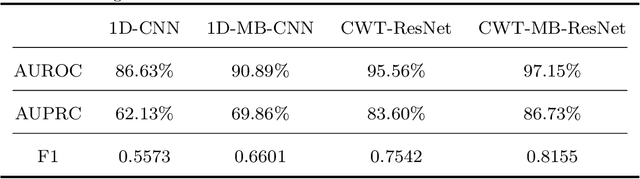
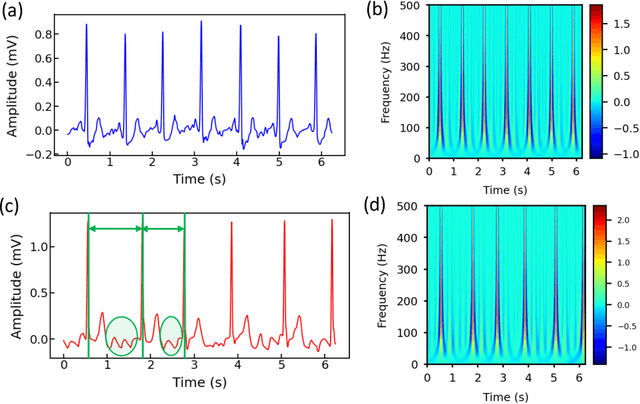
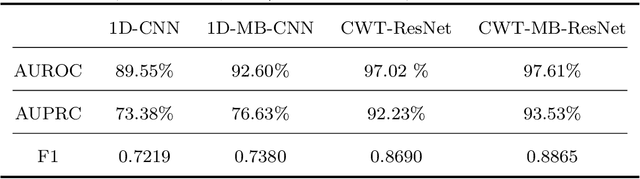
Atrial fibrillation (AF) is the most common cardiac arrhythmia, which is clinically identified with irregular and rapid heartbeat rhythm. AF puts a patient at risk of forming blood clots, which can eventually lead to heart failure, stroke, or even sudden death. It is of critical importance to develop an advanced analytical model that can effectively interpret the electrocardiography (ECG) signals and provide decision support for accurate AF diagnostics. In this paper, we propose an innovative deep-learning method for automated AF identification from single-lead ECGs. We first engage the continuous wavelet transform (CWT) to extract time-frequency features from ECG signals. Then, we develop a convolutional neural network (CNN) structure that incorporates ResNet for effective network training and multi-branching architectures for addressing the imbalanced data issue to process the 2D time-frequency features for AF classification. We evaluate the proposed methodology using two real-world ECG databases. The experimental results show a superior performance of our method compared with traditional deep learning models.