 Add to Chrome
 Add to Firefox
 Add to Edge
MSAIC-Net: A Multi-Scale Attention and Imbalance-Aware Contrastive Network for ECG-Based Myocardial Substrate Abnormality Detection
Jun 04, 2026
Myocardial substrate abnormalities, such as myocardial scar and myocardial infarction (MI), are associated with adverse cardiovascular outcomes. Electrocardiography (ECG) provides a low-cost and widely available tool for detecting these abnormalities, but ECG-based detection remains challenging due to heterogeneous lead-dependent manifestations, high-dimensional multi-lead signals, class imbalance, and the limited interpretability of deep learning models. We propose a multi-scale attention-enhanced convolutional network (MSAIC-Net) for ECG-based myocardial substrate abnormality detection. MSAIC-Net employs parallel atrous convolutional branches to extract ECG features across multiple temporal receptive fields. %, enabling the model to capture both local and longer-range temporal patterns. Channel attention is then used to adaptively reweight informative lead-wise and feature-channel representations. To address class imbalance and improve feature separability, we introduce a novel imbalance-aware supervised contrastive learning strategy that encourages samples from the same class to form compact representations while increasing separation between abnormal and normal samples. Lead-wise permutation importance is further incorporated to quantify the contribution of each ECG lead and improve model interpretability. The proposed method was evaluated on two complementary datasets: a low-data institutional cohort from the University of Virginia (UVA) Health System for myocardial scar classification and the large-scale public PTB-XL dataset from PhysioNet for MI identification. Experimental results show that MSAIC-Net outperforms baseline models, with particularly pronounced improvements in the low-data UVA cohort. Overall, the proposed framework provides an effective and interpretable approach for ECG-based detection of myocardial substrate abnormalities.

Motion-Guided Causal Disentanglement for Robust Multi-View Cine Cardiac MRI Diagnosis
Jun 03, 2026Multi-view cardiac magnetic resonance (CMR) imaging provides complementary anatomical information and is widely used for noninvasive disease assessment. Recent transformer-based models have demonstrated strong representation learning capabilities for CMR analysis; however, they typically learn unified latent embeddings that entangle view-specific anatomical variations with disease-related features. Such entanglement biases classifiers toward structural attributes rather than view-invariant pathological patterns. This issue is exacerbated in low-data regimes, particularly for underrepresented cardiac conditions, where limited samples increase the susceptibility to shortcut learning and view-dependent decision boundaries. To address this, we propose a Motion-Guided View--Disease Disentanglement framework MoViD built upon a ViT-MAE backbone. The model explicitly factorizes latent representations into view-specific and disease-discriminative components using dual-branch supervised contrastive objectives and a gradient-reversal adversarial constraint that minimizes disease leakage into the view embedding. Additionally, an annotation-free temporal motion feature, derived from inter-frame difference maps, is introduced to localize the beating heart region and suppress background artifacts. A focal reweighting mechanism is incorporated into the contrastive loss to mitigate class imbalance. We evaluate the framework on a private clinical venous thrombosis dataset and two public benchmarks (M&Ms, M&Ms2). Across disease classification and cardiac segmentation tasks, our approach consistently outperforms standard transformer baselines and demonstrates competitive performance against large-scale pretrained foundation models, validating the efficacy of structural disentanglement in medical image analysis.
PACD-Net: Pseudo-Augmented Contrastive Distillation for Glycemic Control Estimation from SMBG
May 20, 2026Effective diabetes management requires continuous monitoring of glycemic levels. Clinically, glycemic control is assessed using metrics such as Time in Range (TIR), Time Below Range (TBR), and Time Above Range (TAR), typically derived from continuous glucose monitoring (CGM). However, many patients rely on self-monitoring of blood glucose (SMBG) due to the high cost and limited accessibility of CGM. Unlike CGM, SMBG provides sparse and irregular measurements, making accurate estimation of these metrics challenging. Conventional supervised learning approaches struggle under such sparsity, leading to poor generalization and unstable performance. To address this, we propose PACD-Net, a self-supervised contrastive knowledge distillation framework for estimating glycemic control from SMBG. Pseudo-SMBG samples with richer temporal coverage are used as teacher signals to guide learning from sparse observations. In addition, multi-view contrastive learning enforces representation consistency across diverse sampling patterns. The model adopts a hybrid Swin Transformer-CNN backbone to capture temporal dependencies in sparse SMBG sequences. Experimental results demonstrate that PACD-Net consistently outperforms existing methods in estimating TAR, TIR, and TBR from real-world SMBG data, achieving improved accuracy as well as enhanced stability and generalization under extremely sparse observation settings. The proposed framework provides a practical tool for clinical SMBG interpretation and offers a generalizable approach for learning from sparse and irregularly sampled sensor data in broader applications.
FOSSA: First-Order Optimality-Based Sensor Selection for PINN Inverse Problems, with Application to Electrocardiographic Imaging
Apr 08, 2026Physics-informed neural networks (PINNs) have emerged as a powerful framework for modeling physical systems and solving inverse problems. In such settings, sensors are deployed to capture observable system responses; however, the quality of reconstruction critically depends on how these sensors are selected. Existing sensor selection strategies for PINNs are closely related to active learning and experimental design, typically relying on iterative refinement schemes that sequentially add sensors and retrain the model. While effective under limited data regimes, these approaches incur substantial computational cost due to repeated retraining and primarily focus on selecting subsets of sensors, without providing a global characterization of sensor importance. In this work, we propose FOSSA, a first-order optimality-based sensor selection algorithm for inverse PINNs. Unlike existing methods, FOSSA evaluates sensor importance in a post-training manner, requiring only a single trained PINN. FOSSA assigns importance scores to all candidate sensing locations based on the first-order optimality condition at convergence. To improve robustness, a refinement scheme is further proposed to handle instability in the inverse solver. FOSSA facilitates a global assessment of the contribution of each sensor to reconstruction. We validate the proposed approach on the inverse electrocardiography (ECG) modeling and show that not all sensors contribute positively to predictive performance. Incorporating low-importance sensors can, in fact, degrade reconstruction accuracy. These findings highlight the need for principled sensor importance evaluation and provide a scalable pathway for guiding sensor deployment in physics-informed inverse modeling.
Numerical Differentiation-based Electrophysiology-Aware Adaptive ResNet for Inverse ECG Modeling
Feb 17, 2025
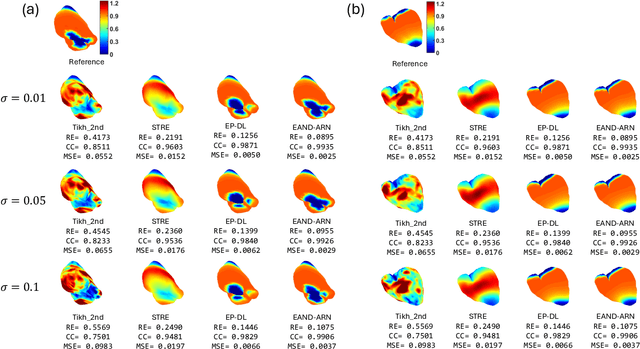
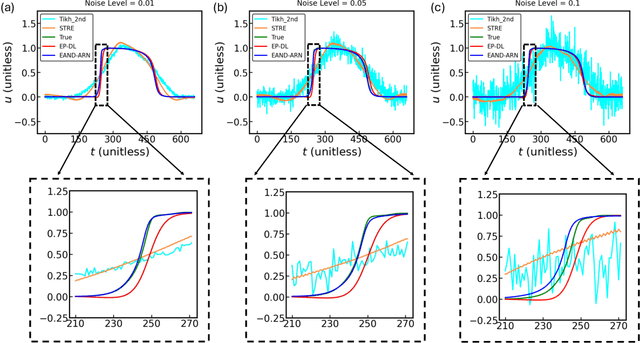
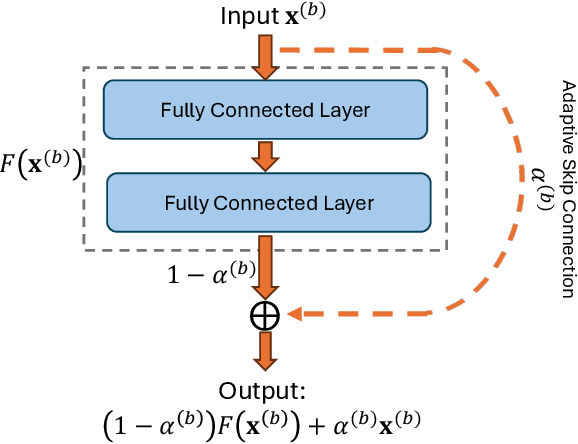
Electrocardiographic imaging aims to noninvasively reconstruct the electrical dynamic patterns on the heart surface from body-surface ECG measurements, aiding the mechanistic study of cardiac function. At the core of ECGI lies the inverse ECG problem, a mathematically ill-conditioned challenge where small body measurement errors or noise can lead to significant inaccuracies in the reconstructed heart-surface potentials. %Leveraging a well-developed electrophysiological (EP) model, our previous study developed an EP-informed deep learning framework, demonstrating promising effectiveness in improving cardiac map predictions. To improve the accuracy of ECGI and ensure that cardiac predictions adhere to established physical principles, recent advances have incorporated well-established electrophysiology (EP) laws into their model formulations. However, traditional EP-informed models encounter significant challenges, including overfitting to EP constraints, limitations in network scalability, and suboptimal initialization. These issues compromise prediction accuracy and stability, hindering their effectiveness in practical applications. This highlights the need for an advanced data analytic and predictive tool to achieve reliable cardiac electrodynamic restoration. Here, we present a Numerical Differentiation-based Electrophysiology-Aware Adaptive Residual neural Network (EAND-ARN) for robust inverse ECG modeling. Our method employs numerical differentiation to compute the spatiotemporal derivative, enabling EP constraints to be applied across a local spatiotemporal region, thereby strengthening the overall EP enforcement. Additionally, we design an adaptive residual network to improve gradient flow, enhancing predictive accuracy and mitigating issues with poor initialization. Experimental results show that EAND-ARN significantly outperforms existing methods in current practice.
Physics-augmented Deep Learning with Adversarial Domain Adaptation: Applications to STM Image Denoising
Sep 08, 2024Image denoising is a critical task in various scientific fields such as medical imaging and material characterization, where the accurate recovery of underlying structures from noisy data is essential. Although supervised denoising techniques have achieved significant advancements, they typically require large datasets of paired clean-noisy images for training. Unsupervised methods, while not reliant on paired data, typically necessitate a set of unpaired clean images for training, which are not always accessible. In this paper, we propose a physics-augmented deep learning with adversarial domain adaption (PDA-Net) framework for unsupervised image denoising, with applications to denoise real-world scanning tunneling microscopy (STM) images. Our PDA-Net leverages the underlying physics to simulate and envision the ground truth for denoised STM images. Additionally, built upon Generative Adversarial Networks (GANs), we incorporate a cycle-consistency module and a domain adversarial module into our PDA-Net to address the challenge of lacking paired training data and achieve information transfer between the simulated and real experimental domains. Finally, we propose to implement feature alignment and weight-sharing techniques to fully exploit the similarity between simulated and real experimental images, thereby enhancing the denoising performance in both the simulation and experimental domains. Experimental results demonstrate that the proposed PDA-Net successfully enhances the quality of STM images, offering promising applications to enhance scientific discovery and accelerate experimental quantum material research.
The Effect of Different Optimization Strategies to Physics-Constrained Deep Learning for Soil Moisture Estimation
Mar 13, 2024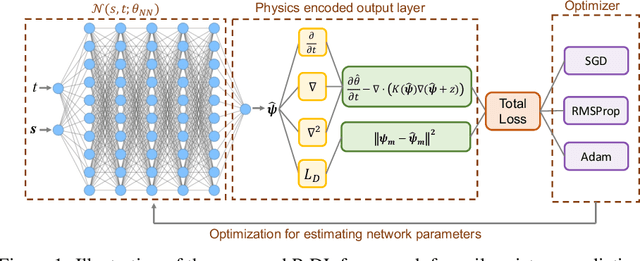
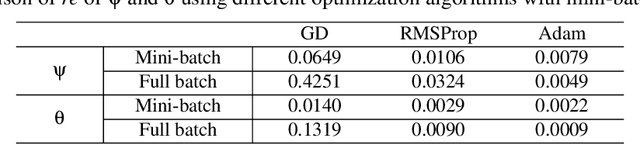

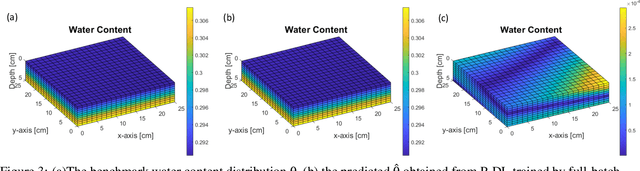
Soil moisture is a key hydrological parameter that has significant importance to human society and the environment. Accurate modeling and monitoring of soil moisture in crop fields, especially in the root zone (top 100 cm of soil), is essential for improving agricultural production and crop yield with the help of precision irrigation and farming tools. Realizing the full sensor data potential depends greatly on advanced analytical and predictive domain-aware models. In this work, we propose a physics-constrained deep learning (P-DL) framework to integrate physics-based principles on water transport and water sensing signals for effective reconstruction of the soil moisture dynamics. We adopt three different optimizers, namely Adam, RMSprop, and GD, to minimize the loss function of P-DL during the training process. In the illustrative case study, we demonstrate the empirical convergence of Adam optimizers outperforms the other optimization methods in both mini-batch and full-batch training.
Physics-constrained Active Learning for Soil Moisture Estimation and Optimal Sensor Placement
Mar 12, 2024Soil moisture is a crucial hydrological state variable that has significant importance to the global environment and agriculture. Precise monitoring of soil moisture in crop fields is critical to reducing agricultural drought and improving crop yield. In-situ soil moisture sensors, which are buried at pre-determined depths and distributed across the field, are promising solutions for monitoring soil moisture. However, high-density sensor deployment is neither economically feasible nor practical. Thus, to achieve a higher spatial resolution of soil moisture dynamics using a limited number of sensors, we integrate a physics-based agro-hydrological model based on Richards' equation in a physics-constrained deep learning framework to accurately predict soil moisture dynamics in the soil's root zone. This approach ensures that soil moisture estimates align well with sensor observations while obeying physical laws at the same time. Furthermore, to strategically identify the locations for sensor placement, we introduce a novel active learning framework that combines space-filling design and physics residual-based sampling to maximize data acquisition potential with limited sensors. Our numerical results demonstrate that integrating Physics-constrained Deep Learning (P-DL) with an active learning strategy within a unified framework--named the Physics-constrained Active Learning (P-DAL) framework--significantly improves the predictive accuracy and effectiveness of field-scale soil moisture monitoring using in-situ sensors.
Automated Identication of Atrial Fibrillation from Single-lead ECGs Using Multi-branching ResNet
Jun 26, 2023
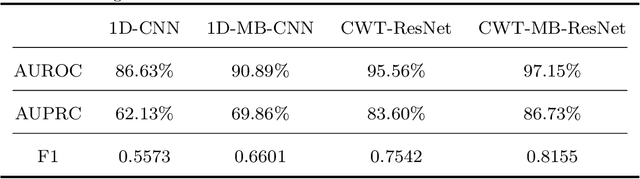
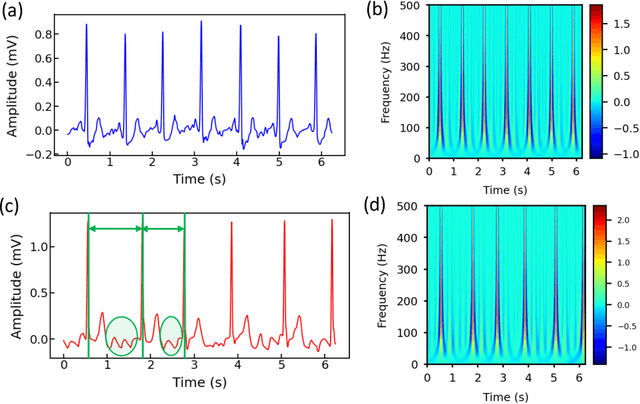
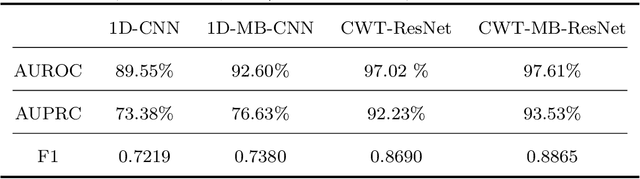
Atrial fibrillation (AF) is the most common cardiac arrhythmia, which is clinically identified with irregular and rapid heartbeat rhythm. AF puts a patient at risk of forming blood clots, which can eventually lead to heart failure, stroke, or even sudden death. It is of critical importance to develop an advanced analytical model that can effectively interpret the electrocardiography (ECG) signals and provide decision support for accurate AF diagnostics. In this paper, we propose an innovative deep-learning method for automated AF identification from single-lead ECGs. We first engage the continuous wavelet transform (CWT) to extract time-frequency features from ECG signals. Then, we develop a convolutional neural network (CNN) structure that incorporates ResNet for effective network training and multi-branching architectures for addressing the imbalanced data issue to process the 2D time-frequency features for AF classification. We evaluate the proposed methodology using two real-world ECG databases. The experimental results show a superior performance of our method compared with traditional deep learning models.
Physics-constrained Deep Learning for Robust Inverse ECG Modeling
Jul 26, 2021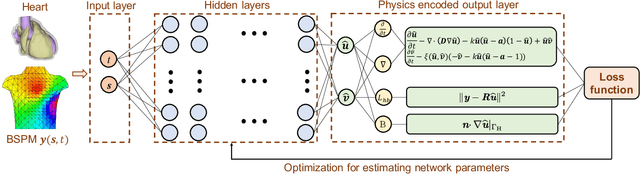
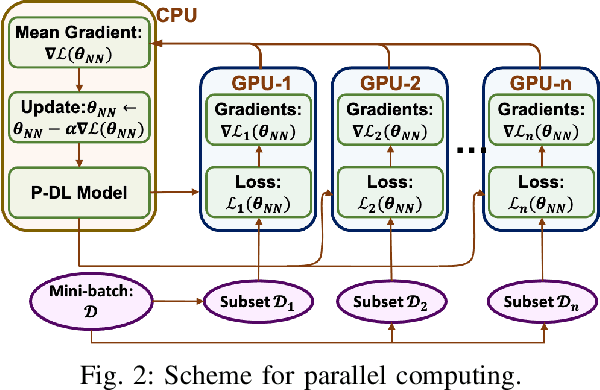
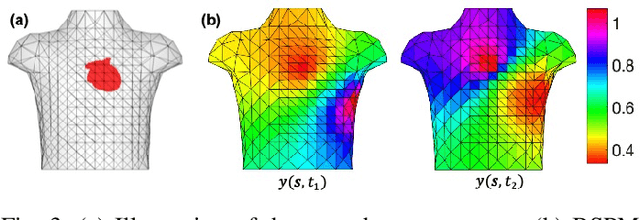
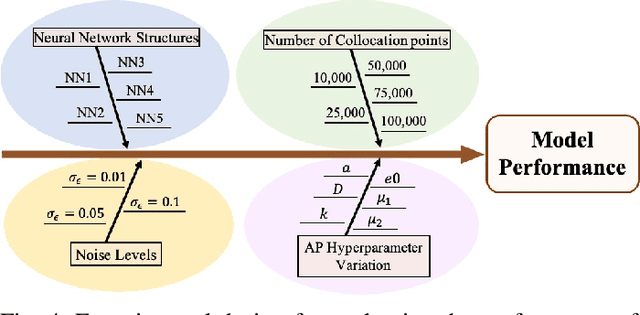
The rapid developments in advanced sensing and imaging bring about a data-rich environment, facilitating the effective modeling, monitoring, and control of complex systems. For example, the body-sensor network captures multi-channel information pertinent to the electrical activity of the heart (i.e., electrocardiograms (ECG)), which enables medical scientists to monitor and detect abnormal cardiac conditions. However, the high-dimensional sensing data are generally complexly structured and realizing the full data potential depends to a great extent on advanced analytical and predictive methods. This paper presents a physics-constrained deep learning (P-DL) framework for high-dimensional inverse ECG modeling. This method integrates the physical laws of the complex system with the advanced deep learning infrastructure for effective prediction of the system dynamics. The proposed P-DL approach is implemented to solve the inverse ECG model and predict the time-varying distribution of electric potentials in the heart from the ECG data measured by the body-surface sensor network. Experimental results show that the proposed P-DL method significantly outperforms existing methods that are commonly used in current practice.