 Add to Chrome
 Add to Firefox
 Add to Edge
CodeTeam: An LLM-Powered Multi-Agent Framework for Repository-Level Code Generation
Jun 20, 2026
Natural language to repository generation (NL2Repo) requires a system to construct an entire software repository from a natural-language requirements document. Compared with function-level code generation, this task demands longer planning horizons, stable interfaces across files, and iterative debugging of cross-file inconsistencies. To address these challenges, we propose CodeTeam, an LLM-based multi-agent framework that separates planning, decision making, and implementation into distinct, coordinated stages. In the planning stage, multiple Architect agents draft competing software design sketches (SDS), optionally grounded by retrieved design references. A CTO agent then evaluates, selects, and normalizes the most promising SDS into a machine-checkable contract that specifies file ownership, public interfaces, and dependency constraints. In the implementation stage, Developer agents generate code under a dependency-aware scheduler with bounded context and lightweight Git-based coordination, while a QA agent runs tests and drives iterative repairs. On the synthesis-based SketchEval benchmark, we explicitly compare CodeTeam's prompt-engineering (PE) and supervised fine-tuning (SFT) variants with the corresponding CodeS variants, where CodeTeam improves the overall SketchBLEU by 4.1 and 2.9 absolute points, respectively. On the execution-based NL2Repo-Bench benchmark, used as an external validation protocol, CodeTeam achieves the highest average test pass rate in both settings (34.6% PE, 42.3% SFT), confirming that the sketch-improvements extend to functional correctness under upstream test suites. Ablation results show that project-specific developer allocation and retrieval-augmented planning each contribute substantially to the SketchBLEU improvement (9.9% and 8.1% relative, respectively). CodeTeam and the experimental results are available at https://github.com/WhitenWhiten/CodeTeam

Extended multi-stream temporal-attention module for skeleton-based human action recognition (HAR)
Nov 10, 2024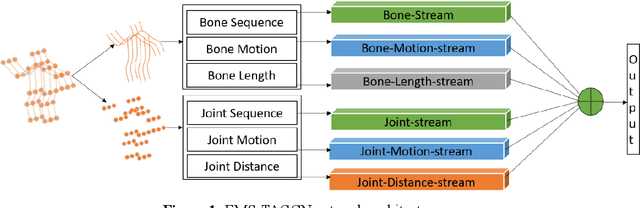
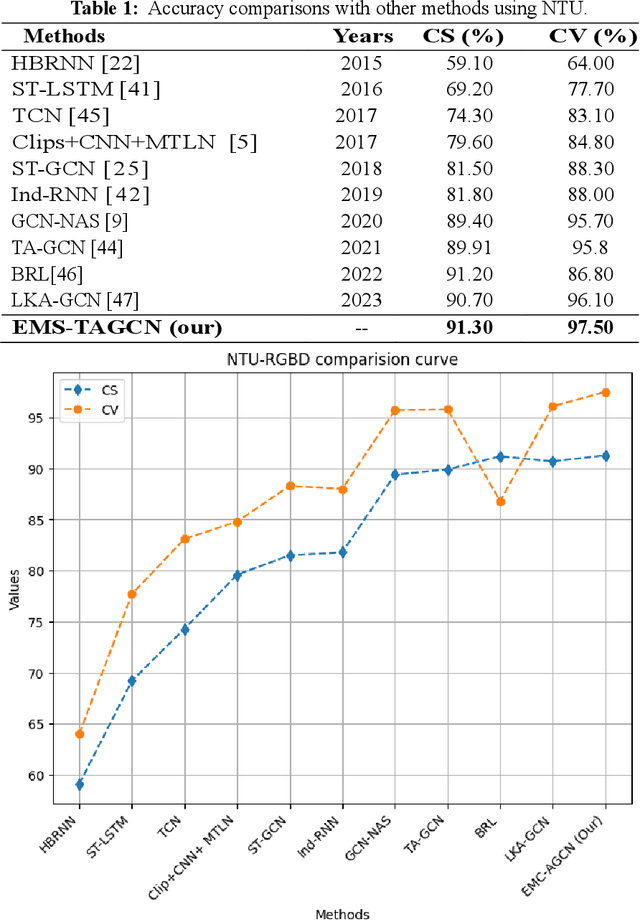
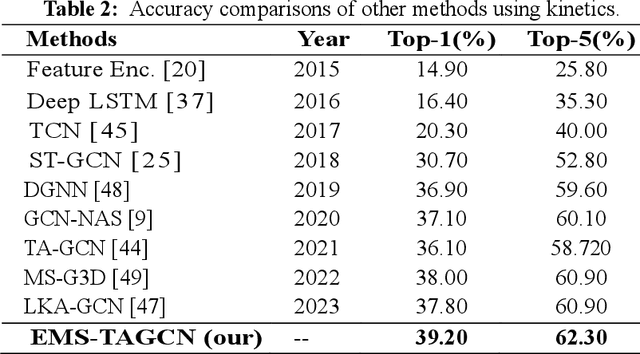
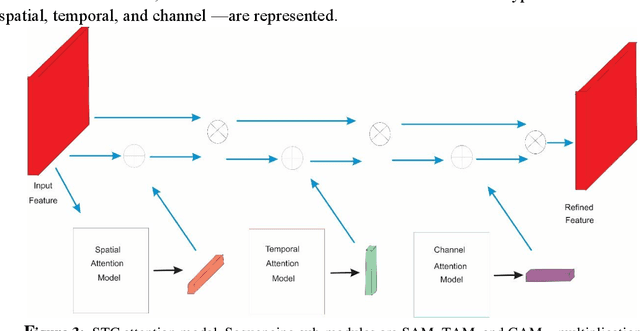
Graph convolutional networks (GCNs) are an effective skeleton-based human action recognition (HAR) technique. GCNs enable the specification of CNNs to a non-Euclidean frame that is more flexible. The previous GCN-based models still have a lot of issues: (I) The graph structure is the same for all model layers and input data.
$Classi
Jun 10, 2024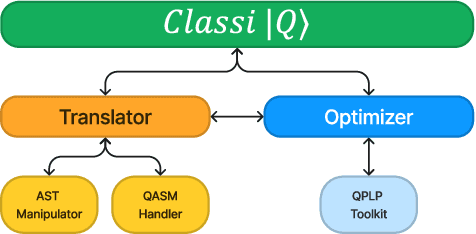
Quantum computing, albeit readily available as hardware or emulated on the cloud, is still far from being available in general regarding complex programming paradigms and learning curves. This vision paper introduces $Classi|Q\rangle$, a translation framework idea to bridge Classical and Quantum Computing by translating high-level programming languages, e.g., Python or C++, into a low-level language, e.g., Quantum Assembly. Our idea paper serves as a blueprint for ongoing efforts in quantum software engineering, offering a roadmap for further $Classi|Q\rangle$ development to meet the diverse needs of researchers and practitioners. $Classi|Q\rangle$ is designed to empower researchers and practitioners with no prior quantum experience to harness the potential of hybrid quantum computation. We also discuss future enhancements to $Classi|Q\rangle$, including support for additional quantum languages, improved optimization strategies, and integration with emerging quantum computing platforms.
Ethics of AI: A Systematic Literature Review of Principles and Challenges
Sep 12, 2021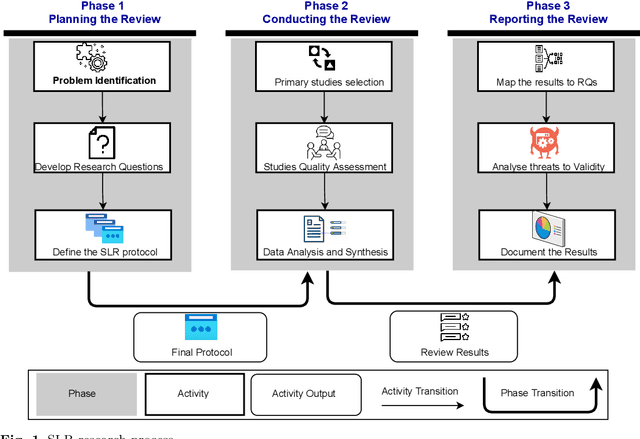
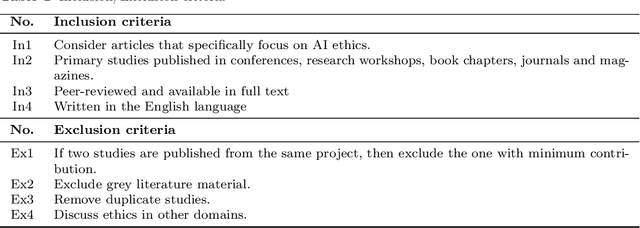
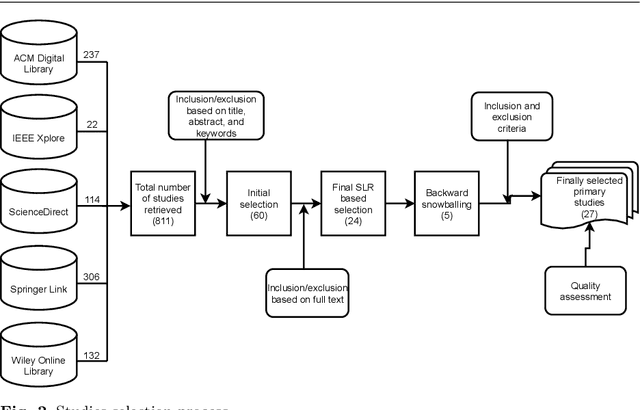
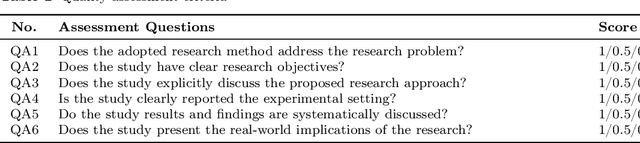
Ethics in AI becomes a global topic of interest for both policymakers and academic researchers. In the last few years, various research organizations, lawyers, think tankers and regulatory bodies get involved in developing AI ethics guidelines and principles. However, there is still debate about the implications of these principles. We conducted a systematic literature review (SLR) study to investigate the agreement on the significance of AI principles and identify the challenging factors that could negatively impact the adoption of AI ethics principles. The results reveal that the global convergence set consists of 22 ethical principles and 15 challenges. Transparency, privacy, accountability and fairness are identified as the most common AI ethics principles. Similarly, lack of ethical knowledge and vague principles are reported as the significant challenges for considering ethics in AI. The findings of this study are the preliminary inputs for proposing a maturity model that assess the ethical capabilities of AI systems and provide best practices for further improvements.